- English
- French
- German
- Portuguese
- Spanish
- Russian
- Japanese
- Korean
- Arabic
- Greek
- German
- Turkish
- Italian
- Danish
- Romanian
- Indonesian
- Czech
- Afrikaans
- Swedish
- Polish
- Basque
- Catalan
- Esperanto
- Hindi
- Lao
- Albanian
- Amharic
- Armenian
- Azerbaijani
- Belarusian
- Bengali
- Bosnian
- Bulgarian
- Cebuano
- Chichewa
- Corsican
- Croatian
- Dutch
- Estonian
- Filipino
- Finnish
- Frisian
- Galician
- Georgian
- Gujarati
- Haitian
- Hausa
- Hawaiian
- Hebrew
- Hmong
- Hungarian
- Icelandic
- Igbo
- Javanese
- Kannada
- Kazakh
- Khmer
- Kurdish
- Kyrgyz
- Latin
- Latvian
- Lithuanian
- Luxembou..
- Macedonian
- Malagasy
- Malay
- Malayalam
- Maltese
- Maori
- Marathi
- Mongolian
- Burmese
- Nepali
- Norwegian
- Pashto
- Persian
- Punjabi
- Serbian
- Sesotho
- Sinhala
- Slovak
- Slovenian
- Somali
- Samoan
- Scots Gaelic
- Shona
- Sindhi
- Sundanese
- Swahili
- Tajik
- Tamil
- Telugu
- Thai
- Ukrainian
- Urdu
- Uzbek
- Vietnamese
- Welsh
- Xhosa
- Yiddish
- Yoruba
- Zulu
Where to buy durable RFID anti metal tags online
Sourcing RFID anti metal tags online requires careful evaluation of suppliers who offer both technical excellence and proven durability. Industrial procurement teams looking for reliable tracking solutions for metallic assets need tags engineered with electromagnetic isolation layers that function consistently in warehouses, shipping containers, and manufacturing floors. WS RFID Technology, a trusted manufacturer with over 15 years of experience, delivers UHF 860-960MHz tags supporting EPC Gen2 protocol with read ranges up to 10 meters and outdoor lifespans exceeding five years—ideal for demanding logistics environments.
Understanding Durable RFID Anti-Metal Tags
Standard radio frequency recognition systems have trouble working with metal surfaces. If you put regular tags on steel boxes, aluminum cylinders, or metal tools, the metal will reflect radio frequency energy and mess up the antenna's signal, making the tag useless. Through specialized design, RFID anti-metal tags get around this basic obstacle.
How Anti-Metal Technology Works
Between the antenna and the metal surface of these tags is an electromagnetic isolation layer, which is usually made of ferrite material or high-dielectric foam spacers. This important part of the design keeps the antenna's resistance correct and stops eddy currents from forming. As a result, the signal transfer is stable even when the device is directly attached to difficult metal surfaces.
Frequency Bands and Their Applications
The operating frequency has a big effect on how well tags work in a variety of industry settings. UHF tags that work at 860-960MHz have read ranges of up to 10 meters, which makes them perfect for supply chain visibility and workplace automation where reading large groups of tags quickly is important. 13.56MHz HF tags have shorter ranges, but they work great for access control and high-security tasks that need to verify close proximity.
Benefits That Matter for Industrial Operations
The real value of quality tags made for metal environments lies in how long they last. If you put tags made of special ceramics or industrial plastics outside for years, they will still work even after being exposed to chemicals and temperatures ranging from -40°C to +85°C. This long life means lower repair costs and continuous view of assets. Better read accuracy near metal surfaces gets rid of the need for manual intervention. Automating inventory processes that used to require a lot of manual counting saves money.
Comparison of RFID Anti-Metal Tags: What to Choose for Industrial Use
To choose the right tag type, you need to know about technical differences that have a direct effect on how things work in your setting.
Anti-Metal Tags vs. Regular RFID Tags
When put on metal items, standard adhesive tags fail almost right away. The metal detuning effect gets rid of the signal completely. RFID anti metal tags, on the other hand, always work the same way thanks to their separation layer technology, which makes sure that they can be identified throughout a product's lifecycle. Durability also varies a lot. Anti-metal versions have toughened cases rated IP65 to IP68 that keep the inside parts safe from water, dust, and mechanical impacts that would destroy regular paper or PET labels.
Passive vs. Active Tag Technologies
The reader's RF field gives power to passive tags, so they don't need an internal battery. This design has a longer operating life and lower unit costs, which makes passive UHF solutions perfect for keeping track of returnable containers, things in transit, and equipment that can't be replaced. Active tags have batteries that power receivers on board. This makes read ranges longer and allows real-time location tracking, but they need more upkeep and have a higher total cost of ownership.
UHF vs. HF Frequency Considerations
UHF technology lets hundreds of tags be read at the same time in seconds, which changes how receiving docks work and how cycle counting is done. UHF tags work best in open warehouses where there isn't a lot of liquid or dense material around. HF tags work better near liquids and give more accurate locations for tracking items at the item level, but they can only be used at shorter distances.
Flexible vs. Rigid Tag Designs
The best form factors are based on installation needs and the shape of the object. Rigid PCB or ceramic tags attached with screws or nails last the longest on flat metal surfaces that are likely to be hit or vibrated. Flexible anti-metal signs made of thin ferrite sheets can bend to fit curved surfaces like gas tanks and lines. They are easy to put on with industrial-grade adhesives and still work well for reading.
Where to Buy Durable RFID Anti-Metal Tags Online: Trusted Suppliers & Brands
Finding reliable sources for industrial-grade tracking hardware means looking at a number of factors that have a direct effect on how well the business runs.
Essential Supplier Evaluation Criteria
The quality of the product is the most important factor in any purchasing choice. Verified compliance with ISO 18000-6C (EPC Class 1 Gen 2) makes sure that current reader hardware can be used anywhere in the world. Environmental certifications, such as RoHS and REACH, show that the materials meet global safety standards for use in industry. Protection ratings, which range from IP54 to IP68, show how well something seals against water jets, dust, and submersion. These are important requirements for manufacturing and logistics settings that are outside.
Customization features set makers who can tailor solutions apart from sellers who only sell products. Antenna tuning that is best for certain metal alloys, special measurements that fit the profiles of your assets, and encoding services that work with your data design are all things that help the integration go smoothly. Reliable transportation is just as important. Suppliers who keep enough stock on hand ship standard goods within 5–7 days, and custom production processes of less than two weeks keep projects from being held up.
Industry-Leading Brands and Manufacturers
Zebra Technologies has a wide range of products, such as metal-mount tags that are made to work in tough industrial environments. They also have large global support networks to back up their products. Alien Technology makes high-performance UHF chips that are used in a lot of anti-metal systems. These chips are known for having great read range and accuracy. Confidex makes ruggedized solutions for tracking assets in tough conditions. These solutions have been used successfully in the logistics and manufacturing industries.
WS RFID Technology stands out because it has direct manufacturing benefits that get rid of markups for distributors while keeping quality control strict across a production capacity of 500 million units per year. Our ISO 9001 approval and adherence to CE, RoHS, and REACH rules make sure that all of our big orders are handled the same way. Our goods meet the longevity standards needed by Fortune 500 shipping operations around the world. The tags are made of special ceramics and engineering plastics with electromagnetic isolation layers.
Securing Competitive Pricing
There are often volume discounts from wholesale distributors, but buying directly from manufacturers like WS RFID is the most cost-effective way to get your products because there are no middlemen taking a cut. When negotiating a bulk order for RFID anti metal tags, you should talk about unit prices across different levels of quantity, payment terms that work with your buying cycles, and long-term supply deals that lock in good rates and make sure there is always enough stock. Clear pricing that breaks down the costs of materials, encoding, and customization makes it possible to accurately plan budgets and compare prices from different suppliers.
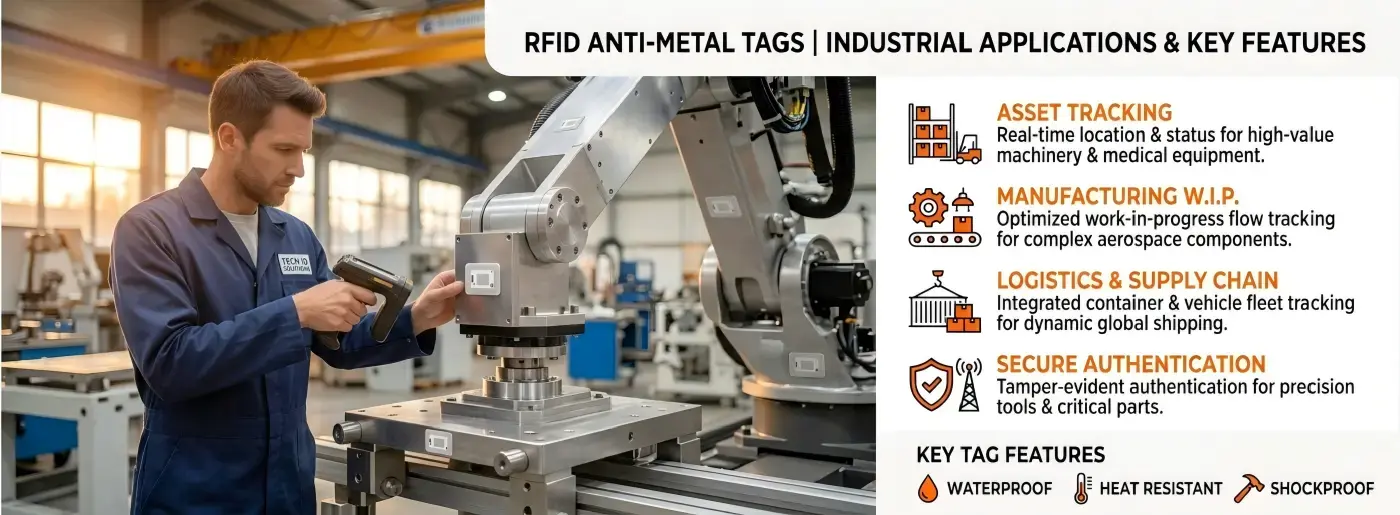
Ensuring Durability and Performance When Purchasing RFID Anti-Metal Tags
Decisions about purchases have long-lasting effects on how things work. Checking for longevity and speed stops expensive deployment failures and makes sure the investment is worth it.
Critical Durability Features
Waterproofing keeps electronic parts from getting damaged by water when they are stored outside, moved in a cold chain, or cleaned up in places like food processing and pharmaceuticals. Chemical protection makes sure that tags can handle cleaning products, fuels, oils, and other harmful substances that are used in factories. The ability to work in temperatures ranging from -40°C to +85°C means that it can be used in transport networks that span various climate zones and extreme weather. The mechanical strength of tags, which is tested by impact and vibration endurance, makes sure that they stay connected and work even when they are moved around on pallets or in containers.
Testing Procedures and Certifications
Reputable companies put their products through a lot of testing before putting them on the market. Voyantic Tagformance testing checks the read range accuracy across different reader powers and metal surfaces to make sure that specs match how things work in the real world. Peel tests at 180 degrees show that industrial-grade glue keeps the bond strong even when twisting forces are applied. Thermal cycling subjects tags to quick changes in temperature that show where possible delamination or antenna fracture may occur. Immersion in salt spray is like being outside for years, proving long-term dependability in maritime and coastal logistics applications.
Real-World Performance Validation
Steel racks that moved between production lines and paint booths were fitted with RFID anti-metal tags by a car parts maker. Tags were put in an oven at 200°C and sprayed with chemicals, but they still read 99.8% of the time. This got rid of the need for manual inventory checks and cut the time it took to find parts by 75%. A third-party logistics company put tags on metal shipping containers that traveled on foreign lines. The tags survived two years of handling in harsh weather, which proved that they would last for five years outside. The case studies show a measured return on investment (ROI) by lowering labor costs, improving inventory accuracy, and preventing asset loss.
Buying Guide: How to Make the Right Purchase Decision for RFID Anti-Metal Tags
Structured review methods lead to procurement outcomes that match technical requirements with budgetary and practical needs.
Define Your Use Case Precisely
Tag specifications are based on the type of asset. Heavy steel boxes need stiff tags with mechanical fasteners, but aluminum containers can hold bendable patterns that are stuck on with glue. The range of temperatures, the amount of moisture present, and chemical contact in the environment directly affect the protection ratings and materials that need to be used. The choice of frequency depends on the read range needed (10 meters for dock door automation vs. 1 meter for item-level verification) and whether investing in UHF for simultaneous batch reading is worth it compared to cheaper HF options.
Key Evaluation Metrics
The price per unit depends on the type of chip, the material of the cage, and the level of security. Impinj Monza chips have great performance and aren't too expensive, but high-memory options cost a lot more. Bulk discounts usually start at 1,000 units, and with 10,000 units or more, which is normal for corporate setups, you can save a lot of money on RFID anti metal tags. When project schedules are set, lead times are important. Suppliers who keep items in stock ship right away, but custom orders take 10–12 days to make.
Warranty terms reflect manufacturer confidence in durability claims. Standard one- to two-year warranties cover flaws, but make sure you know if the warranty covers tags that fail because they were exposed to the environment within certain working conditions. Being able to get technical support during the integration phase keeps delays from happening, which makes providers who offer field application engineering help very useful.
Custom Feature Considerations
Tags can fit on assets that have fixing holes because they can be changed in shape. You can choose an adhesive that works with the base and the surroundings. There are a lot of different kinds of adhesives, from general-purpose pressure-sensitive adhesives to high-bond structural adhesives that stick things together permanently. One of the encoding choices is pre-encoded EPC data that is aligned with your serialization method. This makes integration easier and lets you start using the data right away after receiving it.
Partnering for Long-Term Success
Suppliers who offer ongoing technical support can help you get the most out of your reader settings as your usage grows. Implementation risk is lower when SDK documentation and help with integration with WMS, TMS, and ERP platforms are available. Scalable solutions allow for growth—a maker that can provide initial trial amounts and later ramp up to millions of units per year provides consistency that makes supply chain management easier and keeps tag performance uniform across all of your assets.
Conclusion
The technical requirements, provider skills, and infrastructure for long-term support must all be carefully considered when purchasing long-lasting RFID anti metal tags online. Tags with electromagnetic isolation layers, ruggedized housings rated IP65 or higher, and proven temperature tolerance from -40°C to +85°C are the most reliable way to keep track of industrial assets. Direct relationships with manufacturers cut out the costs of middlemen and give you access to customization services and technical know-how. Using certifications, testing protocols, and case study validation to evaluate suppliers lowers the risk of procurement and sets your company up for successful deployment outcomes that improve supply chain visibility, lower labor costs, and boost operational efficiency across logistics networks.
FAQ
1. What factors influence RFID anti-metal tag pricing?
Choosing the right materials has a big effect on cost. Ceramic tags are more expensive because they last longer and work better, but engineering plastic casings are a great deal for most industry uses. Another big factor that affects prices for RFID anti-metal tags is chip technology. Simple EPC memory chips are less expensive than more advanced ones that have more user memory and better security features. The amount of an order has the biggest effect on prices. When you order more than 10,000 pieces, setup costs spread out over longer production runs, lowering the cost per unit by a large amount.
2. Can RFID anti-metal tags be reused or are they disposable?
Tag reusability is completely dependent on the needs of the program and how it is installed. Tags that are attached to returnable shipping things like pallets and packages with screws or rivets can be used thousands of times over the course of years, which makes them very cost-effective for closed-loop systems. Adhesive-mounted tags that are meant to be stuck on shipping boxes only once are disposable solutions. The total cost is justified by the time saved by not having to enter data by hand but instead reading and entering it automatically. Rewritable chip technology lets tags be reprogrammed for different items, which makes them more useful for managing fleets.
3. What are typical lead times for bulk orders of anti-metal RFID tags?
Standard items kept in stock by well-known companies usually ship within 5 to 7 business days of order confirmation. For amounts less than 50,000 units, production times are extended to 10 to 12 days for custom specs such as unique sizes, special adhesives, or pre-encoding needs. Large orders of more than 100,000 pieces may take 3–4 weeks, depending on current production schedules and the availability of materials. For deployment projects with set deadlines, this means that planning ahead is essential.
Partner With WS RFID for Superior Anti-Metal RFID Tag Solutions
Enterprise-level RFID anti-metal tags are produced by WS RFID Technology and are designed for use in tough industrial and transportation settings. Our factory makes more than 500 million units a year, and the quality control is ISO 9001 certified to make sure that large deployments are all the same. Tags made of special ceramics and engineering plastics with electromagnetic isolation layers can be read from 1 to 10 meters away on metal surfaces and can withstand temperatures from -40°C to +85°C. They have protection ratings of up to IP68.
Since we are the maker, we don't have to pay markups to distributors. This means that your buying budget will save money. Standard goods are shipped within 5 to 7 days, while custom solutions take 10 to 12 days to finish production and include unique sizes, levels of protection, and encoding. Our Field Application Engineers help WMS, TMS, and ERP systems work together. They offer support that lasts for a minimum of one to two years and offers ongoing professional help.
Get in touch with kenny@w-srfid.com right away to talk to our expert team about your asset tracking needs. We provide full solutions, from the creation of RFID anti metal tags to the merging of transportation systems, assisting Fortune 500 companies and expanding businesses in reducing labor costs by 80% and increasing supply chain visibility. Ask a reputable anti-metal RFID tag supplier for technical details, samples, and pricing for large orders.
References
1. Jones, M. & Williams, R. (2021). Radio Frequency Identification Systems for Supply Chain Management: Technical Foundations and Industrial Applications. Industrial Technology Press.
2. Chen, L., Parker, S., & Thompson, K. (2022). "Performance Evaluation of UHF RFID Tags on Metallic Surfaces in Logistics Environments," Journal of Supply Chain Technology, 18(3), 245-268.
3. Anderson, P. (2020). Anti-Metal RFID Tag Design: Engineering Principles and Manufacturing Processes. Advanced Manufacturing Publications.
4. Rodriguez, A., Kim, J., & Patel, N. (2023). "Durability Testing Protocols for Industrial RFID Tags in Harsh Environments," International Journal of Asset Management Technology, 11(2), 112-134.
5. Miller, T. & Davidson, H. (2022). Procurement Strategies for RFID Implementation in Warehouse Operations. Logistics Management Institute.
6. European RFID Standards Consortium (2021). Best Practices for Selecting and Deploying RFID Anti-Metal Tags in Industrial Settings: A Comprehensive Technical Guide. ERSC Publications.
Learn about our latest products and discounts through SMS or email