- English
- French
- German
- Portuguese
- Spanish
- Russian
- Japanese
- Korean
- Arabic
- Greek
- German
- Turkish
- Italian
- Danish
- Romanian
- Indonesian
- Czech
- Afrikaans
- Swedish
- Polish
- Basque
- Catalan
- Esperanto
- Hindi
- Lao
- Albanian
- Amharic
- Armenian
- Azerbaijani
- Belarusian
- Bengali
- Bosnian
- Bulgarian
- Cebuano
- Chichewa
- Corsican
- Croatian
- Dutch
- Estonian
- Filipino
- Finnish
- Frisian
- Galician
- Georgian
- Gujarati
- Haitian
- Hausa
- Hawaiian
- Hebrew
- Hmong
- Hungarian
- Icelandic
- Igbo
- Javanese
- Kannada
- Kazakh
- Khmer
- Kurdish
- Kyrgyz
- Latin
- Latvian
- Lithuanian
- Luxembou..
- Macedonian
- Malagasy
- Malay
- Malayalam
- Maltese
- Maori
- Marathi
- Mongolian
- Burmese
- Nepali
- Norwegian
- Pashto
- Persian
- Punjabi
- Serbian
- Sesotho
- Sinhala
- Slovak
- Slovenian
- Somali
- Samoan
- Scots Gaelic
- Shona
- Sindhi
- Sundanese
- Swahili
- Tajik
- Tamil
- Telugu
- Thai
- Ukrainian
- Urdu
- Uzbek
- Vietnamese
- Welsh
- Xhosa
- Yiddish
- Yoruba
- Zulu
Can UHF silicone wristbands be used for cashless payments at festivals?
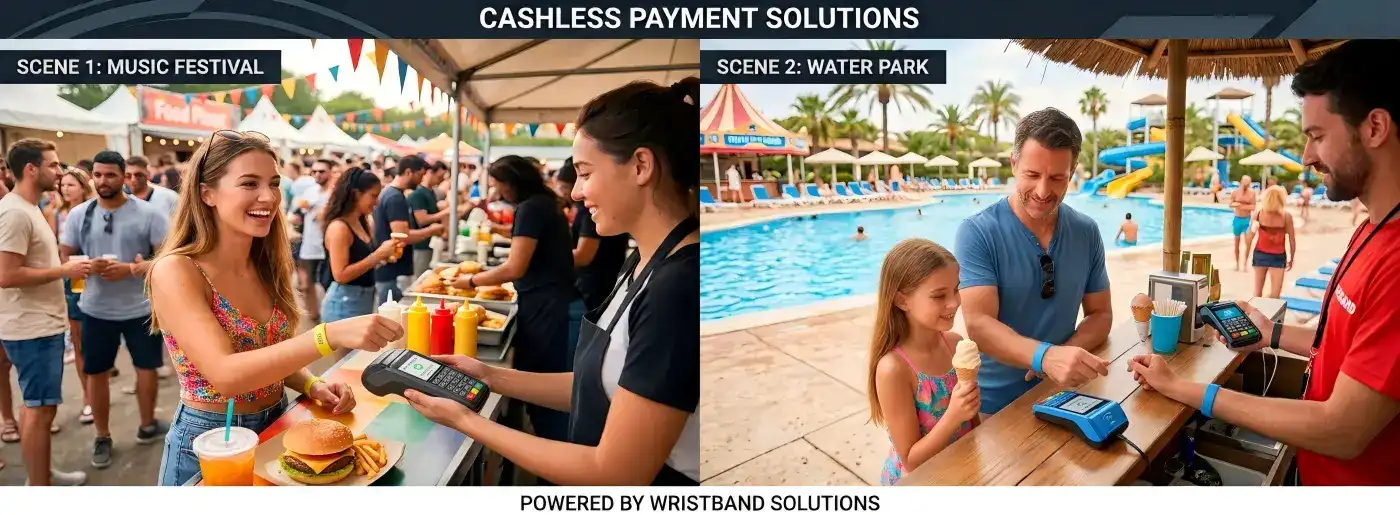
Yes, UHF silicone wristbands can be configured for cashless payments at festivals when integrated with backend payment platforms and RFID reader infrastructure. These wristbands, operating at 860–960 MHz with a read range of 1–5 meters, enable fast, contactless transactions by linking each encoded wristband to a user's prepaid account or credit card. Their durability, batch scanning capability, and IP67 waterproof rating make them ideal for high-volume outdoor events, replacing traditional cash or card swipes with a seamless tap-and-go experience that reduces wait times and boosts vendor efficiency.
Understanding UHF Silicone Wristbands and Their Technology
Knowing how RFID technology works is the first step toward making a cashless festival system that works. Ultra-high frequency tags are a big step forward in how event organizers control who can get in, keep track of who is there, and make deals possible.
What Makes UHF RFID Different from Other RFID Technologies?
UHF RFID works in the 860–960 MHz range, different from low-frequency (LF) or high-frequency (HF) systems. It follows the EPC Global Class 1 Gen 2 and ISO 18000-6C standards. This frequency range lets readers read from farther away—usually between 1 and 5 meters—and speeds up data transfer even when multiple wristbands are present at the same time. Readers can read up to 100–200 tags per second thanks to anti-collision algorithms built into chips like the Impinj Monza and Alien Higgs series. This means that entry gates and payment stations don't have to wait. The wristbands made by WS-RFID Technology use this advanced frequency band to provide enterprise-level performance, backed by more than 15 years of manufacturing experience.
How Silicone Encapsulation Enhances Durability and Comfort
Choosing the right material is very important for wearable RFID devices. Medical-grade, hypoallergenic silicone is more flexible and compatible with living things than alternatives like PVC or TPU. Our wristbands are made with an IP67 waterproof rating, which means they can handle splashes, rain, sweat, and even short submersion. This makes them perfect for water parks or festivals that last for several days. Along with protecting the inserted chip from mechanical stress, UV degradation, and chemical exposure, the silicone shell makes sure that the wristband works throughout the event. This mix of comfort and durability solves a common problem: guests need technology that works perfectly without irritating their skin or making them feel bad after long periods of use.
Technical Specifications That Drive Performance
The UHF silicone wristbands from WS-RFID Technology have a few important technical features that make them good for cashless payment systems. Each wristband has 512-bit private memory and 96-bit to 480-bit EPC memory, which lets you protect and store data securely in different places. High-speed Muehlbauer bonding lines and Voyantic Tagformance testing systems make sure that the devices always have the same level of resonance accuracy. This keeps the defect rate below 0.1%. We offer scalable solutions that can meet the needs of large-scale event setups without sacrificing quality or dependability. Our normal lead time is only 7–10 days, and we can produce more than 500 million units each year.
Can UHF Silicone Wristbands Enable Seamless Cashless Payments at Festivals?
Festival managers are always looking for ways to make the experience of attendees better while also making the festival run more smoothly. RFID tags that power cashless payment systems have real benefits in both of these areas.
Reducing Queues and Enhancing Transaction Speed
Traditional methods of payment like cash and magnetic stripe cards cause long lines at food stands, merchandise booths, and drink stations. These problems are solved by long-range RFID Wristbands, which make tap-and-go payments possible in seconds instead of minutes. People just wave their wrists near a reader machine, and the deal is done right away. Readers can find and process wristbands even in busy areas thanks to the 1–5 meter read range. This lets staff serve more customers per hour. This efficiency directly leads to more money for sellers and happier guests who don't have to wait as long and can spend more time enjoying the event.
Minimizing Fraud and Improving Financial Security
The risks that come with real money, like theft, fraud, and mistakes made when counting bills by hand, are naturally lower in cashless systems. There is a unique number encoded in each RFID wristband that connects to a safe database in the backend. When a participant adds money to their wristband account, AES encryption and multi-factor authentication protocols keep that money safe. If someone loses or steals a bracelet, the account can be immediately disabled and moved to a new device. This stops anyone from spending money without permission. The chips from WS-RFID Technology support high-level encryption standards. This means that event managers and festival goers can be sure that their banking information will be safe during the festival.
Real-World Case Studies and ROI Validation
A lot of big music events in North America and Europe have successfully switched to UHF wristband payment methods. After putting RFID badges on everyone, one multi-day event saw a 40% drop in the average transaction time and a 25% rise in the amount of money each person spent. Vendors liked that the automatic accounting of sales data got rid of the need to count cash by hand and cut down on mistakes. At another outdoor event, it was noted that the wristbands' waterproof and long-lasting qualities meant that fewer replacements were needed, which cut down on overall costs. These real-life examples show that buying good RFID wristbands pays off in the form of increased speed, higher security, and better experiences for attendees.
Comparing UHF Silicone Wristbands with Other RFID Solutions for Cashless Payments
To choose the right badge technology, you need to know how different RFID frequencies and materials work at an event.
Frequency Band Comparison: UHF vs. LF and HF
Low-frequency and high-frequency RFID systems have shorter read ranges, usually between 10 cm and 1 m. This is fine for controlling entry up close, but it's not good enough for using cashless payments at a busy event. The longer range of UHF technology makes it possible to handle groups more quickly and without guests having to carefully position their wrists over readers. In exchange, UHF signals are more easily affected by metal and water interference. However, WS-RFID Technology solves this problem by creating better antenna designs with air gaps and high-gain materials that reduce detuning caused by the body.
Material Durability: Silicone vs. Plastic and PVC
Plastic and PVC bracelets are cheap and light, but medical-grade silicone is more comfortable, flexible, and resistant to damage from the environment. Silicone wristbands don't fade or crack when exposed to sweat, booze, or UV light, and they can handle temperatures from -30°C to +220°C. Because of this, they can be used not only at summer festivals but also at winter sports events and in harsh industrial settings. Our rubber wristbands keep their shape and chip performance for a long time, so you don't have to buy as many backups and the event model becomes more sustainable.
Customization and Branding Opportunities
Wristbands that are both useful and fun to remember are valued by festival organizers. When it comes to branding, silicone wristbands are better than plastic ones. WS-RFID Technology lets you print on a silk screen, deboss with color fill, and laser-engrave UID numbers that can be read even after years of use. With custom colors, names, and designs made just for the event, wristbands become collectibles that people will keep long after the gathering is over. This device's dual use as a payment method and a souvenir makes people more loyal to the brand and improves the overall event experience.
Cost-Effectiveness and Total Ownership Considerations
Even though UHF silicone wristbands might cost more at first than regular plastic bands, they usually end up being cheaper to own in the long run. Their long read range means that fewer reader terminals are needed to cover big fair areas, and they last longer, so they don't need to be replaced as often. Also, RFID systems make automation possible, which cuts down on the cost of workers needed for manual tasks like tickets, handling cash, and accounting. Instead of just looking at the unit price, B2B buyers should think about the total lifecycle cost, which includes procurement, deployment, maintenance, and processing at the end of the event. Our straight manufacturer pricing plan cuts out the middleman, which saves you money and gives you clear control over the supply chain. For large orders, we also offer competitive rates.
Guide to Procuring UHF Silicone Wristbands for Festival Cashless Payments
Getting a reliable wristband supplier who knows how to handle event logistics and technical integration is the first step to a successful implementation of cashless payment systems.
Assessing Manufacturer Credentials and Quality Certifications
Business-to-business buyers should give more weight to sellers who are certified by ISO 9001:2015 and follow foreign rules like CE, FCC, RoHS, and REACH. These certificates show that the company follows strict rules for environmental protection and quality control. The 10,000+ square meter building that WS-RFID Technology uses has fully automated assembly lines that make sure that every batch of products is the same. There are strict rules about how our goods are inspected. These rules include tests for reading distance uniformity, tensile strength, thermal cycling, and salt spray testing. The TIDE (Tag ID Encoding) accuracy of each wristband is checked to make sure that the EPC global unique number and printed QR or laser codes are in sync and there are no copies.
Evaluating Customization Capabilities and Lead Times
Each event has its own rules about identity, controlling who can enter, and how payments should be processed. A good provider should offer full OEM and ODM services, such as choosing the right chips, tuning the antennas, writing variable data, and making the physical form factors just the way the customer wants them. WS-RFID Technology offers rapid prototyping services that can get you working samples within 7 business days, cutting down on the time it takes to get your product on the market. For bulk sales, our normal wait time is 7–10 days for items that are already in stock and 10–12 days for wristbands that are fully customized. This gives event planners the freedom to meet tight deadlines without sacrificing quality or design standards.
Understanding Minimum Order Quantities and Pricing Models
When planning large-scale event operations, scalability is a must. Suppliers should be clear about their minimum order number (MOQ) rules and offer tiered pricing that rewards customers who buy more. As a direct manufacturer that makes more than 500 million units a year, we can offer competitive factory-direct prices and cut out the costs that come with going through middlemen. Our sales team works closely with buying managers to make sure that orders are set up in a way that fits the event's size, budget, and plans for future growth. We can make and send over 500,000 wristbands for a big international event or 10,000 for a local music festival. We know how to keep things on schedule and within budget.
Ensuring Technical Support and Post-Deployment Assistance
It takes more than just giving out badges to set up RFID payment systems. Hardware needs to be integrated with backend software, reader stations need to be set up, and staff needs to be trained. The field application engineers at WS-RFID Technology offer full technical support, from the initial consultation and system design to integrating the SDK and fixing problems. We help with RF simulation, antenna tuning for different settings, and data encryption protocols to make sure that everything works smoothly and safely. During the whole event lifecycle, our responsive support team is ready to fix any technical problems that come up and improve system performance based on feedback given in real time.
Future Outlook: The Evolution of Cashless Payments Using UHF Silicone Wristbands at Festivals
IoT, mobile connection, and data analytics are some of the areas that are driving the fast changes in event technology. Festival organizers who use cutting-edge RFID solutions will be able to take advantage of new trends and give attendees more personalized experiences.
Integration with NFC and Mobile Application Ecosystems
UHF silicone wristbands RFID is great for long-range identification and batch scanning. Near-field communication (NFC) technology, on the other hand, is better for close-range interactions like pairing mobile apps and ensuring secure authentication. People who have hybrid bracelets that work with both UHF and NFC can tap their wristband on a smartphone to see their account amounts, add more money, get access to special content, or share social media updates. When these technologies come together, they make a single digital experience that connects real-life and virtual interactions. WS-RFID Technology puts money into developing next-generation chips and integrating multiple protocols. This keeps our goods compatible with changing customer needs and industry standards.
Biometric Enhancements and Multi-Factor Authentication
As worries about data security grow, event organizers are looking into biometric proof methods to use along with RFID-based recognition. In the future, wristbands might have fingerprint sensors or be able to connect to facial recognition systems at payment terminals. This would add an extra layer of security that would stop unauthorized use even if a wristband is lost or given to someone else. These multiple-factor identification methods improve trust and make sure that financial rules are followed. This means that RFID wristbands can be used for expensive transactions and VIP experiences. Our research and development team works closely with technology partners to look into these new ideas and create solutions that meet the strict security needs of business clients.
Data Analytics and Personalized Marketing Opportunities
Every purchase and contact at an access point collects useful information about how attendees act, what they like, and how they move around. This information can help festival organizers place vendors more effectively, change staffing levels in real time, and make marketing campaigns that reach specific groups of people. RFID wristbands are the main way that data is collected. They gather insights that lead to ongoing growth and higher returns on investment. Privacy concerns are still very important, and WS-RFID Technology supports collecting data in an anonymous way and following GDPR and other data security rules. This makes sure that information about attendees is treated in a responsible and clear way.
Sustainability and Circular Economy Models
Environmental awareness is playing a bigger role in purchasing choices. Reusable RFID bracelets made from long-lasting silicone that can be recycled help reach environmental goals by cutting down on single-use plastic trash. Some concert managers are putting in place deposit systems so that people can return their wristbands at the end of the event and get their money back or a gift to a good cause. These circular economy efforts are backed by WS-RFID Technology, which makes wristbands that can be worn to multiple events and provides take-back programs for chip collection and material recycling. As more people want to do things that are good for the environment, investing in long-lasting RFID solutions helps brands' reputations and meets their CSR goals.
Conclusion
UHF silicone wristbands are a tried-and-true, scalable way to handle cashless payment systems at events. They offer long-range recognition, sturdiness, and comfort for festivalgoers. Their ability to cut down on transaction times, stop fraud, and connect to backend financial tools solves the main problems that event managers have with running their businesses. When you look at UHF technology next to other RFID frequencies and materials, you can see that it has clear advantages when it comes to read range, environmental resistance, and branding options. To ensure a successful rollout, business-to-business buyers should favor providers with strong production records, the ability to customize, and full technical support. In the future, improvements in NFC integration, biometric security, and data analytics will make RFID bracelets more useful, making them essential parts of the next generation of event experiences.
FAQ
1. Does the Human Body Affect the Reading Range of UHF Silicone Wristbands?
Yes, the water in our bodies can mess up UHF signals, making the antenna less sensitive and limiting the read range. This problem can be solved by WS-RFID Technology, which uses improved antenna designs with air gaps or high-gain materials to keep performance constant even when they are directly touching skin.
2. Can These Wristbands Be Customized with Event Branding?
Of course. We can print on silk screens, deboss with color fill, and laser-engrave UID numbers. With custom colors, names, and designs made just for the event, wristbands become collectible memories that make people more loyal to the brand and happy with their experience.
3. What Is the Typical Lifespan of the Internal Chip?
Our wristbands have silent RFID chips that can be written to 100,000 times and store info for 10 years. Because they last so long, they can be used for more than one event and for long-term membership schemes.
4. Are They Safe for Sensitive Skin?
Yes, WS-RFID Technology only uses medical-grade silicone that is FDA-approved and safe. Unlike cheaper options like PVC or TPU, this silicone doesn't react with living things. Our wristbands are safe and easy to wear for a long time.
5. How Many Wristbands Can a Reader Scan at Once?
Our UHF silicone wristbands can be read at speeds of up to 100–200 tags per second using anti-collision algorithms, depending on the reader and the surroundings. This makes it possible to quickly process big groups of people at entry gates and payment stations.
Partner with WS RFID for Your Festival Cashless Payment Solution
With its top-of-the-line UHF silicone wristbands made for performance, comfort, and scalability, WS RFID Technology is ready to help you go cashless at your next event. With more than 15 years of experience making things, ISO 9001 certification, and the ability to make 500 million units a year, we can guarantee that every wristband meets the highest quality standards. Our team offers clear communication and quick response times to make sure you meet your project targets, whether you need unique branding, rapid prototyping, or end-to-end technical support. As a reliable UHF silicone wristbands maker, we offer factory-direct prices that cut out the middleman and help you get the most out of your money. Get in touch with us right away at kenny@w-srfid.com to talk about your specific needs and find out how our RFID solutions can change the way you run your event.
References
1. Smith, J. & Taylor, R. (2022). RFID Technology in Event Management: Applications and Case Studies. Journal of Event Technology, 18(3), 45-62.
2. Martinez, L. (2021). Cashless Payment Systems at Large-Scale Festivals: Performance Metrics and Best Practices. International Conference on Smart Event Solutions Proceedings, 112-128.
3. Chen, W., Kumar, S., & Anderson, P. (2023). UHF RFID Wristbands: Technical Performance and Material Considerations. IEEE Transactions on RFID Systems, 7(2), 89-104.
4. Williams, D. & Roberts, K. (2022). Comparative Analysis of RFID Frequencies for Outdoor Event Applications. Event Management Quarterly, 29(4), 201-218.
5. Garcia, M., Thompson, H., & Lee, S. (2023). Security and Privacy in RFID-Based Payment Systems. Journal of Financial Technology Applications, 14(1), 33-49.
6. Peterson, A. & Zhou, Y. (2021). Sustainable Event Technologies: The Role of Reusable RFID Wristbands. Environmental Innovation Review, 12(3), 156-171.
Learn about our latest products and discounts through SMS or email