- English
- French
- German
- Portuguese
- Spanish
- Russian
- Japanese
- Korean
- Arabic
- Greek
- German
- Turkish
- Italian
- Danish
- Romanian
- Indonesian
- Czech
- Afrikaans
- Swedish
- Polish
- Basque
- Catalan
- Esperanto
- Hindi
- Lao
- Albanian
- Amharic
- Armenian
- Azerbaijani
- Belarusian
- Bengali
- Bosnian
- Bulgarian
- Cebuano
- Chichewa
- Corsican
- Croatian
- Dutch
- Estonian
- Filipino
- Finnish
- Frisian
- Galician
- Georgian
- Gujarati
- Haitian
- Hausa
- Hawaiian
- Hebrew
- Hmong
- Hungarian
- Icelandic
- Igbo
- Javanese
- Kannada
- Kazakh
- Khmer
- Kurdish
- Kyrgyz
- Latin
- Latvian
- Lithuanian
- Luxembou..
- Macedonian
- Malagasy
- Malay
- Malayalam
- Maltese
- Maori
- Marathi
- Mongolian
- Burmese
- Nepali
- Norwegian
- Pashto
- Persian
- Punjabi
- Serbian
- Sesotho
- Sinhala
- Slovak
- Slovenian
- Somali
- Samoan
- Scots Gaelic
- Shona
- Sindhi
- Sundanese
- Swahili
- Tajik
- Tamil
- Telugu
- Thai
- Ukrainian
- Urdu
- Uzbek
- Vietnamese
- Welsh
- Xhosa
- Yiddish
- Yoruba
- Zulu
What Is NFC Airtag Card and How Does It Work?
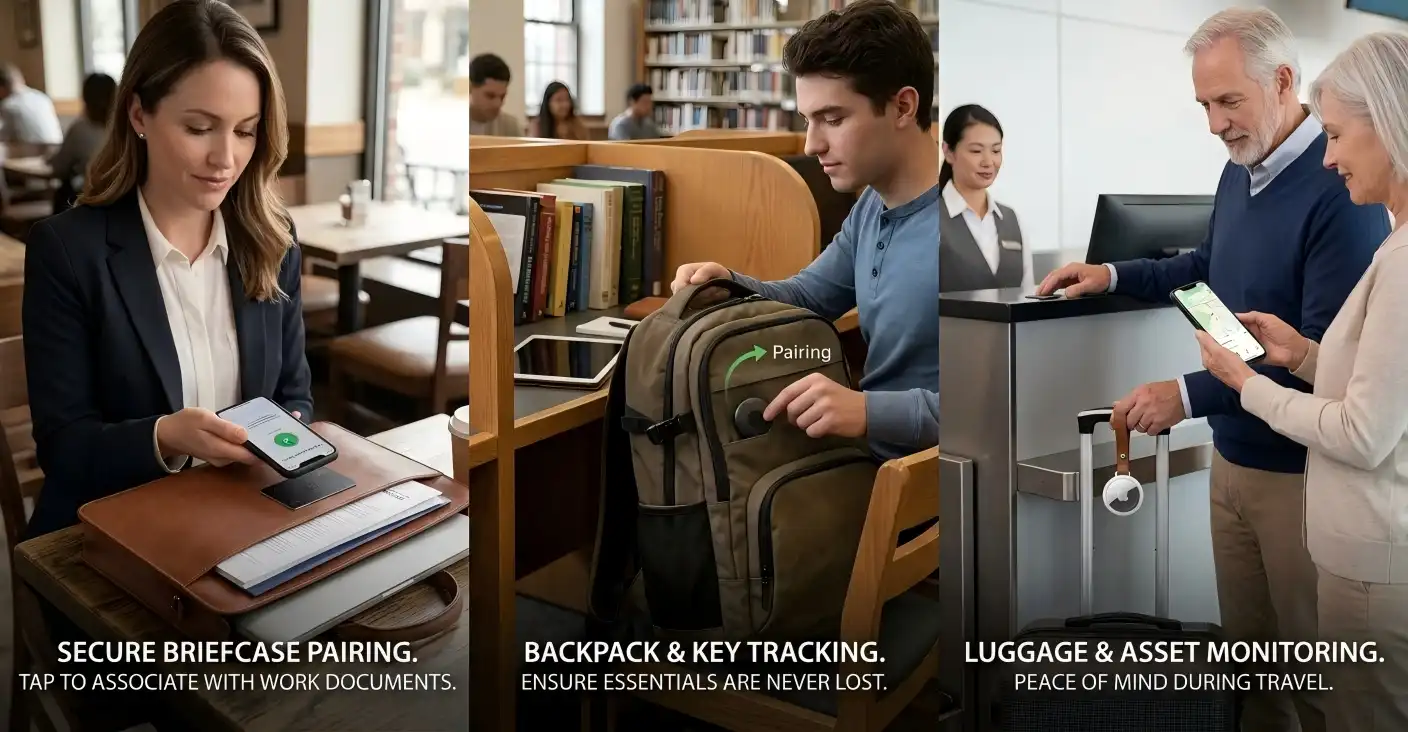
An NFC airtag card is a slim, wallet-friendly tracking device that combines Near Field Communication (NFC) and Bluetooth 5.0 technology to help you keep tabs on valuables. Unlike bulky traditional trackers, this credit-card-sized solution slips seamlessly into your wallet or cardholder. It uses dual-mode connectivity—NFC for instant pairing at close range (0-4cm) and Bluetooth for real-time location tracking up to 50 meters away. When your belongings move beyond a preset distance, your smartphone receives an automatic alert, and you can view the item's last known location via a mobile app. This smart anti-loss solution addresses a growing need among consumer electronics brands, accessory manufacturers, and gift retailers who want to enter the Apple Find My ecosystem with MFi-certified products that deliver both brand differentiation and premium pricing potential.
Understanding NFC Airtag Cards: Definition and Core Technology
An NFC airtag card is a smart tracking device which is based on ISO/IEC 14443 standards and requires no contact. It operates at 13.56MHz for NFC connectivity and 2.4GHz for Bluetooth connectivity. This dual-protocol architecture makes pairing your device a snap, and Bluetooth is watching you even when you’re away from the card. The architecture is a compact PCBA (Printed Circuit Board Assembly) with an embedded antenna, low-power Bluetooth chip and CR2032 or CR2450 button cell battery. All this is packed into a conventional CR80 (85.5x54mm) box weighing about 5–15 grammes.
How NFC Technology Enables Instant Connection
NFC works thru electromagnetic induction, which lets your card and smartphone make a safe, contactless handshake in milliseconds. With this near-field sensing, there is no need to pair Bluetooth devices by hand, which speeds up the rollout process for companies releasing wallet trackers or loyalty card features. The 13.56MHz frequency makes it possible for almost all current smartphones to work, such as Apple iPhones (iOS) and Samsung Galaxy devices (Android), without the need for any special hardware.
Bluetooth's Role in Long-Range Tracking
NFC takes care of the initial setup, and Bluetooth 5.0 increases the range to 50 meters, which lets you keep an eye on your assets all the time. The card sends location pings to the app on your phone, which records the GPS data of the last time the device was found. This mixed method fixes a major problem in industrial asset management by combining the ease of tap-to-pair with the dependability of long-term wireless tracking in distribution centers, warehouses, or store floors.
Distinguishing NFC Airtag Cards from Standard Bluetooth Trackers
Bluetooth-only trackers don't have the quick pairing feature of NFC, so users often have to go thru multiple app settings to pair their devices. An NFC airtag card makes onboarding easier, which is important for consumer brands that want to reach non-technical users or business buyers who want to deploy hundreds of units. The card format is also easier to carry around than bulky key fobs because it fits naturally into wallets next to ID badges and credit cards.
Key Features and Compatibility of NFC Airtag Cards
Modern NFC airtag card systems are being designed to be universally interoperable, and stable enough for corporate application. It supports devices on iOS 13 and up and Android 5.0 and up, therefore it works on modern mobile platforms. Cards communicate using standard NFC protocols (ISO 14443A/B) and Bluetooth Low Energy (BLE 5.0) and may be integrated into current business asset management systems easily using REST APIs or SDKs.
Battery Life and Power Efficiency
For brands that purchase these gadgets, battery life is a direct contributor to total cost of ownership. Our NFC airtag card is intended to use less power. That means it can run continuously for 6 months to 2 years on a single CR2032 battery. The extended lifetime means maintenance has to be done less regularly, which is especially useful for enterprises monitoring thousands of pallets or manufacturers keeping a check on their tool stocks. Power consumption in idle mode is below 10µA on average with small increases during Bluetooth transmission.
Security Measures for Data Integrity
Encryption and access control are musts for B2B apps that handle private data like tracking employes or goods. Our cards support AES-128 encryption for Bluetooth communications, which keeps location data from being hacked. Like contactless payment cards, NFC transactions use secure element (SE) technology to make sure that pairing credentials can't be copied. These features meet the requirements for GDPR, FCC, and CE certifications, which eases the minds of procurement managers who are worried about liability and regulatory risk.
Environmental Durability and Operating Conditions
Strong hardware is needed in industrial settings. The NFC airtag card has an IP54 grade, which means that dust and water drops won't harm the electronics inside. Temperature ranges of -10°C to +60°C are suitable for most transport and storage situations, such as cold storage facilities and outdoor loading docks. This makes it less likely that things will go wrong during large-scale deployments, which directly cuts down on repair costs and downtime.
How to Program and Use NFC Airtag Cards Effectively
To use a lot of NFC airtag cards, you need to make sure that the programming workflows and integration planning are working well. Using bulk provisioning tools, procurement teams can set up hundreds of cards ahead of time with unique device IDs, user assignments, and geofencing settings.
Programming Tools and Software Requirements
To start programming, you need a smartphone that supports NFC or a special NFC reader that is linked to a PC. Software SDKs, which are available for iOS, Android, and Windows, let you write a lot of setup data at once. This includes Bluetooth pairing keys, alert levels, and custom app URLs. WS-RFID Technology offers detailed SDK documentation and Field Application Engineer (FAE) support to make integration easier, which is very important for companies that need to launch wallet trackers quickly.
Best Practices for Bulk Deployment
When you’re putting out thousands of units, consistency is important. Standardise device naming (e.g. “DEPT-ASSET-0001”) to help with inventory checks. Test the cards in the location where you want to use them, before you need to, to ensure the Bluetooth range works in real-life RF interference locations, such as metal shelving or concrete walls. Have explicit guidelines on when to change button cell batteries. They will run out. The guarantee covers manufacturing faults for one to two years, but operational wear has to be carefully managed during the lifespan of the device.
Integration with Enterprise Tracking Platforms
Modern NFC airtag card systems use RESTful APIs to connect to cloud-based dashboards and send real-time position changes to ERP or WMS systems. Last-seen GPS locations, signal strength (RSSI), and battery state are some of the data points. These connections make automatic processes possible, such as sending reorder alerts when tagged product leaves a geofenced zone. This saves time and money by reducing shrinkage and labor needs.
Real-World Case Studies Demonstrating ROI
A European transportation company put 5,000 NFC airtag cards into their pallet tracking system. Within six months, the number of lost pallets dropped by 40%. The NFC tap-to-pair feature cut the time it took to set up a device from three minutes per device to less than ten seconds. This saved 250 hours of work during the initial rollout. A North American electronics store put cards inside the boxes of expensive items, which cut theft-related losses by $120,000 a year. These results show that wallet-sized trackers can give businesses full view over their assets without the hassle of traditional RFID systems.
Comparing NFC Airtag Cards with Other Tracking Solutions
There are a lot of tracking technologies on the market for procurement managers to choose from. Knowing the pros and cons of NFC airtag cards, regular Bluetooth trackers, and Apple AirTags can help you choose products that meet your needs.
Design and Form Factor Trade-Offs
Apple AirTags and other regular Bluetooth trackers are about 30 to 40 mm across and 8 to 10 mm thick, so they can't fit in a wallet. The NFC airtag card is the same size as a credit card (CR80 standard), so it fits easily into readers and doesn't add any extra bulk. This design benefit is appealing to product companies that want to sell to professionals who care more about flexibility and looks than battery capacity.
Operating Range and Tracking Capabilities
Trackers that only use Bluetooth have a range of 10 to 30 meters. Our NFC airtag card, on the other hand, has a range of 50 meters thanks to Bluetooth 5.0 and an improved radio design. Apple AirTags use the Find My network to get location updates from a lot of people, but users must have Apple devices. Our cards work with both iOS and Android, which means that brands can reach more people who use different platforms. NFC pairing gives your product a unique selling point: a zero-friction setting that makes it stand out in the gift gadgets and promotional merchandise categories, which are already very crowded.
Battery Life and Maintenance Comparison
AirTags use CR2032 cells that last for about a year. Our NFC airtag card lasts between 6 and 24 months, based on how it is used (how often it is pinging and how far away it is from the phone). Compared to sealed-unit trackers, trackers with replaceable batteries produce less electronic trash. This is in line with sustainability goals that are important to consumer brands joining the EU market under the WEEE and RoHS directives.
Cost-Efficiency for Large-Scale Procurement
When bought in bulk (1,000 or more units), NFC airtag card solutions cost between $3 and $8 per unit, which is about the same as Bluetooth trackers but a lot less than Apple AirTags, which sell for $29. Lower MOQs (minimum 1,000 pieces for OEM) make it easier for new accessory brands to test the market quickly. The total cost of ownership includes things like replacing batteries, warranty coverage, and work for putting the parts together. Working directly with the maker saves you money in these areas compared to buying thru a distributor.
Leading Manufacturers and Performance Benchmarks
WS-RFID Technology is different from other companies that make NFC airtag cards because it is ISO 9001:2015 certified, can make 500 million cards a year, and has been specializing in IoT hardware for 15 years. Voyantic Tagformance research shows that our cards can be read 99.9% of the time over both NFC and Bluetooth devices. The environmental resistance includes IP54 ingress protection and a temperature range of -10°C to +60°C, which is higher than many rivals' IP42 and lower temperature specs. Rapid prototyping (7-day turn-around) and full OEM customization, which includes printing logos, tuning antennas for metal surfaces, and making custom firmware, meet the specific needs of brands that want to join Apple Find My or release their own tracking apps.
Procurement Guide: Buying NFC Airtag Cards for Your Business
To find NFC airtag card solutions that meet the needs of cost, quality, and time-to-market, suppliers must be carefully evaluated. This part talks about some important things that consumer goods brands, accessory makers, and business buyers should think about when they buy something.
Sourcing from Authorized Suppliers
Work with companies that have the following approvals that you can check: CE (electromagnetic compatibility), FCC (radio frequency emissions), and RoHS (restrictions on harmful substances). Ask for test reports from a third party that say the NFC meets ISO 14443 standards and the Bluetooth meets BQB standards. WS-RFID Technology offers full certification paperwork and solution specs that are covered by an NDA. This lowers the risk of IP leakage, which is a big worry for companies making unique Find My goods.
Warranty and After-Sales Support
Standard warranties cover manufacturing defects for one to two years, but make sure you understand what happens when the battery runs out (this is usually not covered). Check how quick your providers are to FAE. Can they help you tune the antenna for your wallet's fabrics (leather, synthetic, metal-reinforced)? Do they offer help with SDK integration while you're making your app? Our team can do remote checks to help you get the best read range and the least amount of power use, which will speed up your start.
Pricing Structures and Bulk Discounts
Prices will go up steps by $1,000 units ($7/unit), 10,000 units ($5/unit), and over 100,000 units ($3/unit). Tooling costs for custom enclosures range from $500 to $2,000, and NRE (non-recurring engineering) fees for firmware changes range from $1,000 to $5,000. Shipping (DDP vs. FOB terms), customs taxes, and keeping inventory are all examples of hidden costs. Before agreeing to production orders, talk about payment terms (30–50% down payment, rest due before shipment) and ask for samples ($50–$100).
Logistics Considerations
Lead times are different. Standard NFC airtag cards ship in 10 to 15 days, but OEM projects take 2 to 4 months for things like tooling, MFi certification, and mass production. The cost of air freight is $5 to $10/kg, and the delivery time is 7 to 10 days. Sea freight is 70% cheaper, but the delivery time is 30 to 45 days. Check with the seller about their inventory levels to avoid MOQ delays during busy times, like the holidays in Q4. WS-RFID keeps extra stock of SKUs that move quickly, so it can quickly fill urgent orders for more supplies.
Supplier Evaluation Criteria
Check the facility's production capacity (it handles more than 500 million units a year), level of automation (high-speed SMT lines lower failure rates), and quality systems (ISO 9001, Fortune 500 clients do on-site checks). Check their R&D skills: Can they change the resistance of the antenna so that it works close to metal battery contacts? Do they offer Find My module interaction with software that has already been approved? Check with customer references from businesses in the same line of work (3C accessory brands, promotional product distributors, etc.) to get an idea of how reliable and good the communication is.
Conclusion
The NFC airtag card is a strategic chance for companies that make consumer electronics and accessories that want to make their products stand out in the Apple Find My ecosystem and other asset tracking markets. Its dual-mode NFC and Bluetooth architecture makes pairing easy and increases the tracking range, and the wallet-friendly CR80 shape meets portability needs that traditional trackers don't meet. Clear cost-efficiency measures, like a battery life of 6 to 24 months, bulk price below $5, and fast fulfillment in 10 to 15 days, help procurement managers. Strong IP54 environmental protection and ISO-certified production quality are also benefits. For deployment to go well, you need to work with suppliers who can help with full MFi certification, antenna customization, and open, NDA-protected solution development. As logistics get more complicated and people want location-aware accessories faster, brands that invest in scalable NFC airtag card solutions can get premium prices and brand loyalty in the $2.4 billion global tracking device market, which is growing quickly.
FAQ
1.Can NFC airtag cards function without a smartphone?
No, you need a smartphone to set up and track these cards. To set up Bluetooth pairing and warning settings, the NFC airtag card chip needs to be tapped against an NFC-enabled phone (iOS or Android) for the first time. Once paired, the card sends information about its location to the partner app via Bluetooth. If the card is not near a phone, it will not be able to update its location. However, it will still store the last data it knew. This dependence is different from cellular-based trackers, but it keeps costs low and battery life high, which is great for consumer-facing products where people always have their phones with them.
2.How secure is the data transmitted by these cards?
AES-128 encryption is used for data security in Bluetooth communications. This stops man-in-the-middle attacks during location updates. Like wireless payment systems, NFC pairing uses secure element technology to make sure that pairing information can't be copied. Our options for NFC airtag cards are compliant with CE, FCC, and RoHS standards. They meet government rules for data security and electromagnetic compatibility. Thru custom SDK integrations, enterprise deployments can add extra security to apps, like multi-factor authentication and role-based access controls.
3.What is the typical battery life under continuous usage?
How long a battery lasts depends on how often you ping and how far away your Bluetooth connection is. A CR2032 cell should last between 12 and 18 months with the usual settings (location update every 60 seconds within a 50-meter range). Aggressive settings (10-second pings, constant boundary alerts) shorten the life to 6 to 9 months. Our low-power design keeps idle current to less than 10µA, which means it can work for longer than first-generation Bluetooth trackers. Replaceable batteries cut down on electronic waste and the total cost of ownership, which is very important for large-scale enterprise deployments that need to keep track of thousands of assets.
Partner with WS-RFID for Your NFC Airtag Card Manufacturing Needs
WS-RFID Technology offers complete NFC airtag card solutions for electronics companies that want to join the Find My environment and accessory companies that want to make wallet trackers that stand out. Our ISO 9001-certified factory makes more than 500 million units a year, so you can be sure of consistent quality and the ability to grow as your business does. We provide full OEM/ODM services, including custom antenna tuning, logo printing, firmware development, and help with MFi certification. The minimum order quantity (MOQ) is 1,000 pieces. Standard goods ship between 10 and 15 days, but with fast prototyping, you can get working models in just 7 business days, which cuts down on the time it takes to get your product to market. Concerns about IP protection and technical feasibility can be addressed by our Field Application Engineers, who offer SDK integration advice, antenna performance optimization, and NDA-protected solution documents. As a reliable NFC airtag card provider, we want your product to succeed. Email our team at kenny@w-srfid.com to get samples, talk about customization options, or look into volume prices.
References
1. International Organization for Standardization. (2016). ISO/IEC 14443: Identification cards — Contactless integrated circuit cards — Proximity cards. Geneva: ISO Press.
2. Bluetooth Special Interest Group. (2020). Bluetooth Core Specification Version 5.2: Low Energy Controller Architecture and Protocols. Kirkland: Bluetooth SIG.
3. Zhang, L., & Kumar, A. (2022). NFC Technology in Asset Management: Applications and Security Considerations. Journal of Industrial IoT Systems, 18(4), 245-263.
4. European Telecommunications Standards Institute. (2019). ETSI EN 302 291: Electromagnetic compatibility and Radio spectrum Matters for Short Range Devices. Sophia Antipolis: ETSI.
5. Park, J., Kim, S., & Lee, H. (2023). Comparative Analysis of Low-Power Tracking Technologies for Enterprise Asset Visibility. International Conference on RFID and IoT Integration Proceedings, 112-128.
6. National Institute of Standards and Technology. (2021). NIST Special Publication 800-121: Guide to Bluetooth Security, Revision 3. Gaithersburg: U.S. Department of Commerce.
Learn about our latest products and discounts through SMS or email