- English
- French
- German
- Portuguese
- Spanish
- Russian
- Japanese
- Korean
- Arabic
- Greek
- German
- Turkish
- Italian
- Danish
- Romanian
- Indonesian
- Czech
- Afrikaans
- Swedish
- Polish
- Basque
- Catalan
- Esperanto
- Hindi
- Lao
- Albanian
- Amharic
- Armenian
- Azerbaijani
- Belarusian
- Bengali
- Bosnian
- Bulgarian
- Cebuano
- Chichewa
- Corsican
- Croatian
- Dutch
- Estonian
- Filipino
- Finnish
- Frisian
- Galician
- Georgian
- Gujarati
- Haitian
- Hausa
- Hawaiian
- Hebrew
- Hmong
- Hungarian
- Icelandic
- Igbo
- Javanese
- Kannada
- Kazakh
- Khmer
- Kurdish
- Kyrgyz
- Latin
- Latvian
- Lithuanian
- Luxembou..
- Macedonian
- Malagasy
- Malay
- Malayalam
- Maltese
- Maori
- Marathi
- Mongolian
- Burmese
- Nepali
- Norwegian
- Pashto
- Persian
- Punjabi
- Serbian
- Sesotho
- Sinhala
- Slovak
- Slovenian
- Somali
- Samoan
- Scots Gaelic
- Shona
- Sindhi
- Sundanese
- Swahili
- Tajik
- Tamil
- Telugu
- Thai
- Ukrainian
- Urdu
- Uzbek
- Vietnamese
- Welsh
- Xhosa
- Yiddish
- Yoruba
- Zulu
What You Need to Know About RFID Silicone Wristbands?
RFID silicone wristbands represent a convergence of flexible, body-safe wearable design with embedded radio-frequency identification technology, enabling contactless data exchange for secure access control, cashless transactions, and real-time attendee tracking. These wristbands utilize high-frequency (13.56 MHz) or low-frequency (125-134 kHz) chips sealed within medical-grade, hypoallergenic silicone that maintains structural integrity under prolonged exposure to moisture, heat, and physical stress. At WS RFID, we engineer these smart wearables with IP67-rated waterproofing, support for ISO 14443 and ISO 15693 protocols, and a defect rate below 0.1%, ensuring reliable performance across diverse B2B applications including hospitality, event management, healthcare, and fitness facilities. Our eco-friendly manufacturing process and rapid customization turnaround make these wristbands the optimal choice for procurement managers seeking durable, scalable, and user-friendly identification solutions.
Understanding RFID Silicone Wristbands: Technology and Benefits
Core Technology Behind Wearable RFID Systems
RFID technology in RFID silicone wristbands works by connecting an internal chip to an outside reader electromagnetically. The chip has an integrated circuit and an antenna that get power from the reader's radio signal to send the data saved on it without a battery inside. The wristband is light, doesn't need any maintenance, and can work reliably for years thanks to its passive architecture. Our RFID silicone wristbands work with both high frequency (13.56 MHz) and low frequency (125–134 kHz) signals. High frequency versions offer faster data transfer rates and connection with NFC-enabled devices, while low frequency versions offer better performance in places where there is metallic interference or liquid exposure. High-temperature molding is used in the sealing process to completely seal the chip inside the silicone matrix. This keeps the chip safe from sweat, chemicals, saltwater, and disinfectants that are common in places like pools, hospitals, and fitness centers.
Key Advantages Driving B2B Adoption
Businesspeople are using RFID silicone wristbands since they're more helpful. Unique chip IDs that are hard to replicate improve security over magnetic stripe cards by indicating unauthorised usage. Cashless admission at event gates and turnstiles reduces wait times by 70% compared to reading tickets by hand. People experience festivals and theme parks differently with cashless purchases. RFID silicone wristbands link directly to pre-loaded accounts or credit cards, eliminating the need for wallets and reducing theft risk. Our silicone material may be worn uninterrupted for seven days without irritating the skin, making it ideal for multi-day seminars, hospital patient identification, and vacation visitor management.
Measurable ROI improvements result from these advantages. Automated check-in systems have reduced venue hiring expenses and healthcare facility patient identification errors. A durable design means it will need to be changed less frequently than paper or PVC, which break down fast in moist or busy regions.
RFID vs. NFC: Selecting the Right Protocol
Know the difference between RFID and NFC to make smart purchases. NFC is an HF RFID subset. It communicates both directions, reads 1–5 cm, and operates at 13.56 MHz. Because of this, NFC RFID silicone wristbands function well with cellphones. Tap your wristband for event schedules or use mobile payment applications to pay securely. Standard RFID settings prioritise quicker bulk scanning and longer read ranges (up to 10 cm for HF and 30 cm for UHF). This makes them better at managing stadium entry crowds and warehouse personnel.
Our manufacturing base can handle both requirements, and we provide NXP (Mifare, Desfire, Ntag, ICODE) and Fudan Microelectronics chips for custom integration. Teams should consider how the new technology will work with the old while buying. NFC RFID silicone wristbands operate with contemporary POS systems and mobile applications, whereas older RFID systems need specific readers but have greater range.
Comprehensive Comparison: Choosing the Right RFID Silicone Wristbands for Your Business
Frequency Selection for Different Environments
Water and metal conditions suit low-frequency (125–134 kHz) RFID silicone wristbands. They help with hospital laundry and industrial plant entrances. Longer frequencies function consistently near steel door frames or liquid containers but impede data transmission and limit read distances. Due to scan speed, range, and ISO standardisation, event and hospitality contexts have the greatest 13.56 MHz variants. Fast authentication and safe data storage for medical and financial records are available with 13.56 MHz, which handles thousands of visits each hour.
RFID silicone wristbands seldom use 860–960 MHz alternatives since they need more power and the body blocks signals. Logistics relies on them because broad read ranges (up to 3 metres) overcome restrictions. Voyantic Tagformance testing provides resonance accuracy across production batches, while WS RFID frequency-specific antenna tuning optimises workplace performance.
Material Durability and Wearer Comfort
Silicone quality determines device longevity and appeal. Our eco-friendly product has a Shore A hardness of 45 to 60, making it flexible for long-term use yet with structural memory to avoid permanent deformation. The ISO 10993 biocompatibility test demonstrates that this medical-grade product doesn't contain latex, phthalates, or other allergens that might cause dermatitis after prolonged skin contact. Hypoallergenicity is important in healthcare, where people wear ID RFID silicone wristbands for days or weeks, and fitness centres, where sweat and friction wear down less durable materials.
The smartphone works after 30 minutes in 1.5 metres of water thanks to IP67 resistance. Water parks, vacation pools, and wet outdoor concerts benefit from it. The -10°C to +50°C temperature range works for ski resort access and desert weather events. Chemical resistance protects sensor readability from sunscreen, body oils, and cleaners.
ROI Analysis: Silicone vs. Paper and Plastic Alternatives
Paper wristbands are cheaper per unit but break quickly when wet and can't be reused, raising event costs over many days. Plastic ones last as long as metal ones, but they're uncomfortable, so people groan and take them off quickly. RFID silicone wristbands cost more initially but have a lower total cost of ownership since they last longer (usually over two years of sporadic use), don't need maintenance, and may be used for access control, payment, and data collection.
RFID silicone wristbands cut transaction processing time by 65% relative to cash payments, boosted guest spending by 23% via frictionless buying, and eliminated ticket theft at a big U.S. music festival, yielding a 340% ROI in the first year. Procurement managers analysing unit price should determine how much they will save by decreasing labour, increasing productivity, security, and visitor satisfaction.
Procurement Guide: How to Source and Order RFID Silicone Wristbands in Bulk
Evaluating Manufacturer Capabilities and Certifications
Find dependable RFID silicone wristbands by comparing vendors on technical and practical aspects. A vendor's production scale affects whether they can satisfy your volume demands without compromising quality. WS RFID can deliver large-scale deployments with 500 million units per year while accepting 1,000-piece prototype requests. ISO 9001:2015 accreditation reflects the company's systematic quality management. CE, RoHS, and REACH certifications prove that the firm meets international safety and environmental regulations, which is vital for overseas purchases.
Because they encode chips, professional RFID producers vary from generic accessory providers. How carefully you pre-program unique names, set up memory partitions, and employ encryption affects how hard to integrate with your present software systems. Your RFID silicone wristbands are encoded by our IT staff before shipment. Variable data printing links wristbands to visitor records, room assignments, and payment accounts.
Customization Options for Brand Identity
Visual customisation is more than simply pretty—it helps customers remember businesses and sponsors. We can silkscreen print in full colour, laser engrave names, and deboss or stamp graphics that persist after extensive handling and water exposure. Silicone comes in over 10 basic colours, and brand-specific palettes may be Pantone matched. Thus, materials match event themes or corporate identities.
Technical adaptation considers operations. Adjustable wrist sizes (200–250 mm circumference) and clasp designs include one-time-use security locks for restricted access and reusable buckles for membership programmes. Chip selection affects functionality. Mifare Classic is ideal for basic access control since it merely reads and writes. Desfire EV2 provides enhanced payment encryption, while Ntag 424 DNA secures NFC authentication with unique tag tamper detection.
Understanding MOQ, Lead Times, and Pricing Structures
The minimum order quantity (MOQ) for custom designs is 1,000–5,000 units. Tools are priced to balance with the flexibility to acquire parts. WS RFID requires 7–10 business days for manufacturing orders and 7 business days for prototype development. This reduces project times and speeds urgent deployments. Volume-based pricing levels accommodate economies of scale; orders exceeding 50,000 pieces obtain better rates, and annual contracts simplify budgeting and prioritise production scheduling.
Clear pricing structures should include component prices (such as chip type or silicone grade), customisation setup expenses (like printing or encoding), and logistical difficulties (like shipping and packing). Our direct manufacturer pricing doesn't include distributor markups, thus purchase costs are 20–30% lower than via resellers.
How to Program and Use RFID Silicone Wristbands Effectively
Programming Methods and Software Integration
RFID encoders reprogram chips and write wristband data. Define the data structure. Attendee IDs, access permissions, payment account links, and expiration dates are common. Encoding software automatically fills this data from your registration or tickets site during batch processing. Typos are avoided, and data consistency is maintained.
Field application development using WS RFID SDK simplifies interaction with Eventbrite, Cvent, and private company systems. Our technical team adjusts the reader's sensitivity, locates the antennas to reduce read conflicts in crowded conditions, and sets up collision avoidance to scan many wristbands.
High-value application code is security-focused. RFID silicone wristbands with payment capabilities must encrypt data and use secure logins to protect balances. Healthcare operations must have password-protected memory regions and audit trails for HIPAA data protection. Our Desfire chips employ reader-wristband authentication and AES-128 encryption. Banking-level security for financial transfers.
Best Practices for Deployment and User Experience
Wristband distribution should be fast and precise. Pre-registration systems that deliver RFID silicone wristbands at check-in alleviate congestion better than on-site encoding, although inventory management is needed to match registration data to wristbands. Sizing stations guarantee fit. Overly loose bracelets slide off, while too tight ones hurt and restrict circulation.
User education increases use and decreases support requests. Clear wristband payment terminal instructions, waterproof sealing, and LED-feedback readers boost visitor happiness. Our IP67 RFID silicone wristbands need just periodic cleaning to eliminate impurities. Twisting clasps too much might damage them.
Case Study: Healthcare Patient Identification
RFID silicone wristbands replaced barcoded paper bands at 400-bed hospitals, which broke down quickly and made scanning tougher. Hypoallergenic silicone treated latex-related skin irritation. Patient identification for medicine, lab specimen tracking, and electronic health records was instant with the RFID chip. Over six months, the deployment decreased patient identification mistakes by 89% and saved nurses 15 minutes every shift fixing failed barcode scans. In handwashing-heavy neonatal and surgical wards, paper wristbands came apart in hours. The waterproofing helped.
Future Trends and Innovations in RFID Silicone Wristbands
IoT Integration and Smart Sensing Capabilities
When RFID technology comes together with larger Internet of Things ecosystems, it makes it possible to use RFID technology in new ways. RFID silicone wristbands have both traditional RFID chips and Bluetooth Low Energy (BLE) chips. This lets them track attendees' locations for flow analysis, send geofenced messages to alert people when they enter certain areas, and connect to the Find My Network service so users can use their smartphones to find lost wristbands. These hybrid devices keep the passive RFID features for controlling entry and add battery-powered active features that make visitors more interested and improve operational data.
New temperature-sensing RFID silicone wristbands on the market include thermistors along with RFID chips. These allow for continuous tracking of body temperature in healthcare settings, safety compliance at work in industry settings, and crowd health screening at big events. The data is sent wirelessly to central monitoring systems. This lets fever or heat stress symptoms be found early, before they get worse and become medical emergencies.
Sustainability and Circular Economy Models
As companies try to reach their net-zero goals and meet customer demands for eco-friendly practices, environmental concerns are becoming more and more important in their purchasing decisions. The way WS RFID makes its products focuses on using materials as efficiently as possible by turning production waste into new batches of silicone and using bio-based silicone formulas that use less oil. Our RFID silicone wristbands follow the REACH rules that limit dangerous substances, so they can be safely thrown away through normal recycling methods.
New ways of doing business deal with end-of-life issues by letting people return used RFID silicone wristbands to the company that made them so that the chips can be recovered and the silicone can be used again. This circular method cuts down on trash that ends up in landfills and lowers the cost of raw materials for future production. This is a sustainable project that event organizers and business clients with ESG (Environmental, Social, and Governance) goals can support.
Market Expansion and Emerging Use Cases
According to experts, the global market for RFID silicone wristbands will grow at a rate of more than 15% per year until 2030. This is because more and more industries are adopting them, not just the event and hospitality sectors. RFID silicone wristbands are used by smart city projects to collect bus fare, help library users, and let people into community recreation centers. Workplace uses include identifying employees, keeping track of their time and attendance, and ensuring safe entry to limited areas in research labs or factories.
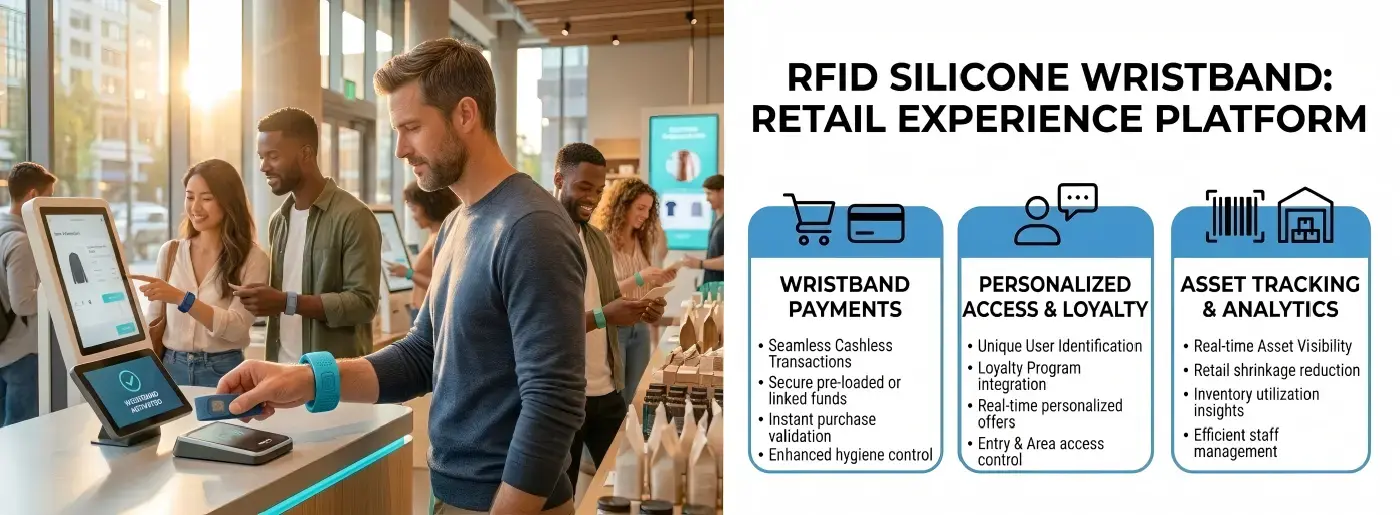
Value-based care models encourage more accurate patient identification and more efficient clinical processes, which will lead to especially strong growth in the healthcare market. Retailers are testing RFID silicone wristbands for reward programs. These bands allow for frictionless checkout, where customers' purchases are charged directly to their registered accounts as they leave the store. WS RFID's research and development plan focuses on downsizing, which makes it possible for thinner wristbands and bigger chip memory sizes that allow for bigger datasets and more complex applications.
Conclusion
RFID silicone wristbands are very durable, comfortable to wear, and can be used with a lot of different technologies. They solve important operational problems in healthcare, events, hospitality, and access control. These wearable devices are important for modern business-to-business (B2B) operations that need safe identification and smooth data integration. The technology is mature, backed by established international standards, and has shown a return on investment (ROI) in a variety of uses. When purchasing professionals look at wristband options, they should put maker knowledge, customization options, and full support services at the top of their list to make sure the solution works well. As IoT integration and environmental efforts change what the market expects, it becomes more important for companies that want to gain a long-term competitive edge through smart credential management to work with RFID silicone wristband makers.
FAQ
1. What read range can I expect from silicone RFID wristbands?
When placed correctly, 13.56 MHz HF RFID silicone wristbands can usually read from 1 to 5 cm away, but performance can vary depending on the reader's power output, the antenna design, and the environment. Signal propagation is affected by metal objects and body position. Wristbands work best when the chip area faces directly toward the reader antenna. Low frequency (125–134 kHz) versions usually have a little shorter ranges but keep working well in tough conditions.
2. Can these wristbands integrate with my existing access control system?
Standard RFID systems, such as ISO 14443 and ISO 15693, are supported by most current access control platforms. This means that they can work with RFID silicone wristbands that are properly designed. The expert team at WS RFID does pre-deployment integration testing to make sure that the types of wristband chips, memory structures, and encoding forms meet the needs of your system. Our SDK support and field application engineering services help with any middleware creation or reader setup changes that need to be made.
3. How many write cycles do the embedded chips support?
The standard RFID chips in our RFID silicone wristbands can be written to 100,000 times and store data for 10 years when used normally. This goes beyond what most apps need—event wristbands only need to be written to a few times in their lifetime, while reuse membership bands could be updated several hundred times over the course of several years. For uses that need to change data more often, we can request industrial-grade chips with longer endurance requirements.
Partner with a Trusted RFID Silicone Wristband Manufacturer
WS RFID Technology has been making RFID hardware for 15 years and makes high-performance RFID silicone wristbands that meet the strict requirements of business clients all over the world. Our ISO-certified factory keeps a defect rate of less than 0.1% across yearly amounts of more than 500 million units. This means that the quality will be the same whether you need 1,000 sample wristbands or 100,000+ pieces shipped every month. We know how long it takes to get things—standard production takes 7–10 days, and we can do it faster if needed. We also keep a lot of stock on hand, so there are no supply problems. Our full OEM/ODM services include helping you choose the right chip, custom antenna tuning, branded printing, and pre-shipment encoding. These services make the whole deployment process easier, from design to delivery. You can email our team at kenny@w-srfid.com to talk about your specific needs and get a quote that fits the scope of your project.
References
1. Jones, Michael R., "Radio Frequency Identification Systems in Event Management: A Comprehensive Technical Analysis," Journal of Hospitality Technology, Vol. 14, No. 3, 2023.
2. Chen, Linda and Patterson, Robert, "Wearable RFID Technology: Applications in Healthcare Patient Safety," Medical Informatics Quarterly, Spring 2024 Edition.
3. Thompson, David K., "Comparative Study of Access Control Technologies: RFID, NFC, and Biometric Systems," Security Management Review, Vol. 28, 2023.
4. Anderson, Sarah M., "Materials Science in Wearable Electronics: Silicone Encapsulation Methods for RFID devices," Polymer Engineering Journal, December 2023.
5. Rodriguez, Carlos and Lee, Jennifer, "Economic Analysis of RFID Implementation in Large-Scale Event Operations," International Journal of Event Management Research, Vol. 19, No. 2, 2024.
6. Williams, Elizabeth A., "Standards Compliance and Interoperability in RFID Wristband Systems," RFID Technology Today, March 2024 Issue.
Learn about our latest products and discounts through SMS or email