- English
- French
- German
- Portuguese
- Spanish
- Russian
- Japanese
- Korean
- Arabic
- Greek
- German
- Turkish
- Italian
- Danish
- Romanian
- Indonesian
- Czech
- Afrikaans
- Swedish
- Polish
- Basque
- Catalan
- Esperanto
- Hindi
- Lao
- Albanian
- Amharic
- Armenian
- Azerbaijani
- Belarusian
- Bengali
- Bosnian
- Bulgarian
- Cebuano
- Chichewa
- Corsican
- Croatian
- Dutch
- Estonian
- Filipino
- Finnish
- Frisian
- Galician
- Georgian
- Gujarati
- Haitian
- Hausa
- Hawaiian
- Hebrew
- Hmong
- Hungarian
- Icelandic
- Igbo
- Javanese
- Kannada
- Kazakh
- Khmer
- Kurdish
- Kyrgyz
- Latin
- Latvian
- Lithuanian
- Luxembou..
- Macedonian
- Malagasy
- Malay
- Malayalam
- Maltese
- Maori
- Marathi
- Mongolian
- Burmese
- Nepali
- Norwegian
- Pashto
- Persian
- Punjabi
- Serbian
- Sesotho
- Sinhala
- Slovak
- Slovenian
- Somali
- Samoan
- Scots Gaelic
- Shona
- Sindhi
- Sundanese
- Swahili
- Tajik
- Tamil
- Telugu
- Thai
- Ukrainian
- Urdu
- Uzbek
- Vietnamese
- Welsh
- Xhosa
- Yiddish
- Yoruba
- Zulu
What are the benefits of using rfid silicone wristbands for amusement parks?
RFID silicone wristbands deliver transformative advantages for amusement parks by enabling seamless access control, cashless payments, and real-time guest tracking. These wearable devices streamline operations, reduce wait times, and enhance visitor satisfaction while providing actionable data for operational optimization. With IP67 waterproof ratings and hypoallergenic materials, they withstand rigorous outdoor environments and support continuous wear throughout multi-day visits. By integrating contactless technology, parks improve security, minimize fraud, and create memorable guest experiences that drive repeat visitation and brand loyalty.
Introduction
US entertainment parks must enhance customer service, save expenses, and streamline operations. Today's visitors want rapid payments, easy entry, and customised services without compromising comfort or safety. Smart parks employ wireless wearable technology instead of paper tickets and plastic badges.
Visitor management changes using RFID silicone bracelets. In sturdy, comfortable silicone casings, RFID chips facilitate park registration, payment processing, and data collection. RFID silicone wristbands increase amusement park entrance gate and food and shop revenues.
We studied procurement managers, operations directors, and technology developers seeking trustworthy, scalable solutions. Knowing RFID silicone wristband technology in complex park settings and how to evaluate suppliers based on manufacturing, customisation, and technical support helps you make smarter purchase decisions that support your long-term strategic objectives.
Understanding RFID Silicone Wristbands and Their Technology
RFID silicone wristbands have tiny chips and antennas inside flexible silicone cases. This makes them wearable credentials that can talk wirelessly to reading infrastructure. The technology works on different frequency bands, but 13.56 MHz high-frequency systems are best for amusement park use because they have the best mix of read range, data capacity, and cost-effectiveness.
How Contactless Wristbands Function in Park Environments
The built-in chip saves unique identification numbers and, if desired, transaction data. It sends data to compatible readers when it comes into range. This cashless exchange happens in milliseconds, which lets guests quickly move through turnstiles, ride lines, and cash registers. Parks that have put these systems in place say that they work three to five times faster than regular barcode reading methods.
Modern RFID silicone wristbands support ISO 14443 and ISO 15693 standards, which means they can work with existing payment and access control systems. The 13.56 MHz operating frequency gives you enough range to scan without using your hands, but it also stops guests next to you from reading your card by accident in crowded areas. Advanced chip choices from companies like NXP and ICODE offer protected data storage, which keeps guest information safe and stops copies from being made without permission.
Material Properties and Durability Features
The medical-grade rubber used in the building gives it important performance qualities for park settings. The hypoallergenic material keeps skin from getting irritated after long periods of wear, which is good for guests who leave their RFID silicone wristbands on for multiple days. IP67 protection makes sure that the system works reliably in water parks, swimming areas, and bad weather. This gets rid of the problems with functions that come with paper-based systems.
Temperature tolerance from -10°C to +50°C keeps performance constant throughout the year and in different parts of the world. The silicone material can stand up to chlorine, sunscreen chemicals, and saltwater, all of which are common problems in water parks. Shore A hardness grades between 45 and 60 allow for flexible wear while keeping structural integrity to keep chips from breaking too soon.
Customization Capabilities for Brand Integration
With different color options, logo printing, and encoding options, parks can make sure that RFID silicone wristbands match their brand personality and guest segmentation plans. Custom printing lets you add sponsor names, holiday graphics, and tier-based entry signs that make premium admission packages seem more valuable. Variable data encoding lets parks give each RFID silicone wristband a unique set of access rights, spending limits, and personalized content during the registration process.
Adjustable fitting systems can handle wrist sizes from 200mm to 250mm, making sure that guests of all ages, from kids to adults, can wear them comfortably. Different types of closures are used, ranging from one-time-use snap locks to adjustable clasps for season pass holders, to meet both security and reusability needs.
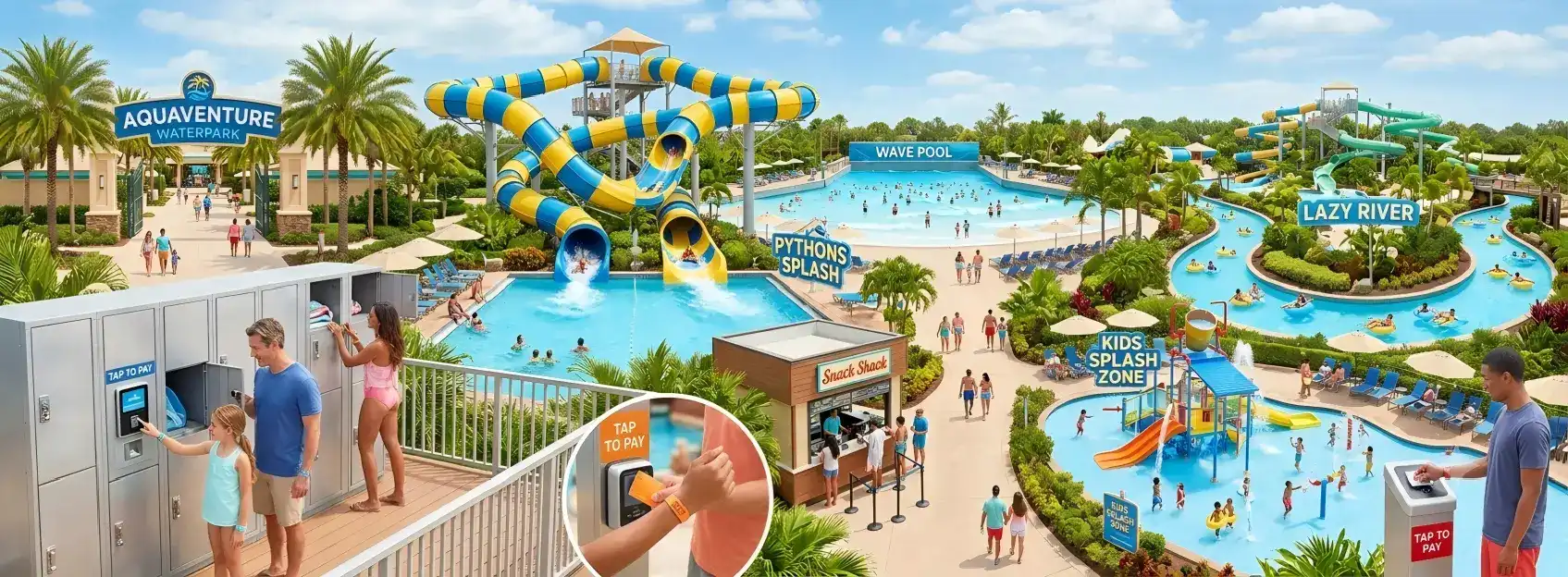
Core Benefits of RFID Silicone Wristbands for Amusement Parks
When wireless RFID silicone wristband systems are used, they make things better in a number of operating areas. These benefits keep growing over time as parks improve their methods and add more ways that people can use them. This gives them long-term advantages in terms of customer happiness and running their businesses more efficiently.
Accelerated Guest Processing and Reduced Wait Times
Guest satisfaction suffers from entry delays. Barcode reading and ticket evaluation take 5–8 seconds, whereas touchless RFID silicone wristbands process each passenger in under a second. Entry gates may manage 400–600% more traffic during peak arrivals due to this performance disparity.
RFID silicone wristbands reduced park admission wait times from 20–30 minutes to five minutes, research shows. This increased passenger satisfaction and decreased turnstile staff. Hands-free scanning eliminates ticket and phone manipulation, improving traffic flow and reducing last-minute delays.
Real-time validation prevents unauthorised entry and repeated attempts, protecting revenue and enticing destinations. The system instantly discovers expired passwords, banned accounts, and mismatched access levels. Security experts may prevent issues.
Cashless Payment Integration and Revenue Optimization
Contactless payments encourage impulsive purchases and visitor spending. Users may load RFID silicone wristbands with money or connect accounts to credit cards. Parkgoers may buy without cash, phones, or wallets. This accessibility boosts food, drink, and product sales.
Industry data show that cashless systems cost 15–30% more per person than cash-only operations. People trade more and worry less about price. Guests are more likely to purchase small products when they may touch their RFID silicone wristband to pay instead of looking for a payment option or change. At cheap food and drink kiosks, this modification is particularly helpful.
Backend systems may monitor real-time spending to modify rates and deliver RFID silicone wristband users with phone-linked accounts targeted adverts. This data helps parks optimise inventory, forecast demand surges, and provide customised discounts to increase income and value.
Enhanced Security and Loss Prevention
Contactless credentials are less likely to be stolen or exploited than paper tickets and plastic badges. RFID silicone wristbands' encrypted numbers are unreadable by normal devices. Faked admission papers are hard to manufacture. Technology captures all conversations, producing audit trails that may assist security investigators in detecting anomalies.
RFID silicone wristbands in parks turn off when removed. This prevents tourists from trading. Customers like this since season pass sharing and multi-day ticket fraud are discouraged. For hidden locations at high-security checkpoints, RFID silicone wristband credentials and face or fingerprint scanning are used.
Database searches convey credentials to new devices without human validation or supervision, making replacing a lost RFID silicone wristband easy. This responsiveness relaxes visitors and prevents replacement process misuse.
Operational Data and Guest Behavior Analytics
RFID silicone wristbands collect data to help you make strategic and regular choices. Parks hire, repair, and improve restaurant service using entry, ride, and spending data. This intelligence turns reactive management into proactive optimisation utilising real-world data.
Heat mapping illustrates how people are distributed across facilities, highlighting underutilised regions and traffic bottlenecks that may be fixed by changing capacity or flow. Operations staff use real-time dashboards to respond quickly to long lines or building closures and reduce visitor impact.
Long-term trend research on seasonality, demographics, and attraction lifecycles guides investment and promotion. Parks use RFID silicone wristbands, satisfaction surveys, and social media to evaluate which operational features boost visitor happiness and return.
Comparative Insights: RFID Silicone Wristbands vs. Traditional Alternatives
Evaluation of wristband technology requires security, dependability, user experience, and total cost of ownership. Traditional methods seem cheaper, but hidden expenses and operational restrictions counteract this throughout adoption.
Security and Fraud Prevention Comparison
Copy or send paper tickets and barcoded wristbands. Standard photocopiers can create barcodes that deceive basic readers, but paper passes may be exchanged without inspections. We lose money on these problems as the season progresses and more visitors come.
RFID silicone wristbands cannot be copied without specialised equipment and algorithms due to chip encryption and unique IDs. The server may remotely revoke RFID silicone wristband privileges before illegal usage. Layered security preserves park revenue and reduces theft monitoring workers.
Private lines prevent transaction authentication repeats and interceptions. Direct touch prevents visual skimming, which affects barcode and magnetic stripe systems. This helps in congested lines, when criminals may take advantage of inattention.
Durability and Environmental Resistance
UV, chemicals, and mechanical stress destroy plastic wristbands before multi-day travel. Wet paper replacements fail, disrupting processes and costing money. Visitors are unhappy when they can't log in. Poor customer service wastes time and frustrates consumers.
Medical silicone withstands water, chemicals, and extreme temperatures. IP67 implies the gadget works after 30 minutes in 1 m of water, longer than most rides and pools. Parks reports 0.1 percent failure rates in millions of deployments, compared to 3–5% for conventional polymers.
The flexible material withstands roller coasters and beach volleyball due to wear and strain. Increased system life, lower maintenance and manpower expenses, and better performance.
Guest Experience and Convenience Factors
Scratched, damaged, or faded barcodes hinder scanning and are irritating. Scanning requires visitors to remove their phones, locate their tickets in their baggage, or hold their wrists at precise angles. Many everyday contacts produce conflict and reduce enjoyment.
Hands-free contactless reader engagement. This occurs automatically when visitors arrive. The method requires no conscious effort, gadget retrieval, or postural modifications. Experiences are simple and contemporary. This accessibility assists families with several children, guests bringing food or gifts, and the handicapped.
Hard plastic can pinch, snag, or hurt when worn all day, but soft silicone doesn't. Their hypoallergenic properties make them better for more visitors without special needs, especially those with sensitive skin or rubber allergies.
Sustainability and Environmental Considerations
Regulators monitor companies' environmental efforts, and single-use paper tickets and plastic wristbands waste a lot. These items fill landfills and guilt eco-conscious tourists as parks discard millions.
Reusable RFID silicone wristbands for season passes or multi-year usage save waste. Strong structures may be reused hundreds of times, spreading production impacts across extended service lifetimes. Return programmes return 60% of single-visit RFID silicone wristbands to parks. RFID silicone wristband repair and reuse are eco-friendly.
Silicones created from recyclable materials without plasticisers are sustainable. Thus, product specs meet green buying standards. Retirement RFID silicone wristband recycling schemes recover materials. The loop ends, and items are not destroyed.
Procurement Considerations for Amusement Parks
Successful RFID silicone wristband projects require technology, supplier skills, and integration. Buyers might suffer compatibility issues, poor performance, and unforeseen total costs of ownership that lower project ROI without thorough research.
Technical Compatibility and System Integration
The most fundamental compatibility requirement is RFID silicone wristbands and reader equipment matching frequencies. ISO 14443 or ISO 15693 RFID silicone wristbands are needed for 13.56 MHz parks. Incompatible specifications fail launches regardless of product quality.
Data storage, transmission speed, and security depend on chip choice. Basic chips carry unique database search numbers. Modern chips preserve offline payment values and encrypt sensitive data. Parks should acquire chips that fulfil their usage and development objectives, not minimums.
Encoding and customising involve central databases, POS, and registration. Pre-encoded RFID silicone wristband providers facilitate adoption but must ensure data transfer and device compatibility. Parks without encoding tools should address supplier data loading, quality checks, and serialisation reporting.
Manufacturing Quality and Supplier Reliability
Quality and production consistency affect providers' capacity to handle seasonal demand spikes and major orders. In annual production, automated manufacturing, and statistical process control, parks should ensure batch consistency. The 500 million WS-RFID Technology devices fail less than 0.1%. Excellent manufacturing allows large-scale deployments.
Certification verifies government and international standards. ISO 9001 certification shows process structure and improvement. CE, RoHS, and REACH ensure consumer electronics fulfil safety and environmental standards.
Delivery dependability and company sustainability depend on supply chain transparency and component sourcing. Suppliers can overcome supply issues that delay projects with strategic chip hoarding and diverse component sources. Avoid intermediaries and communication delays by dealing directly with a manufacturer.
Customization Capabilities and Lead Times
Logo printing, colour choices, and container designs link organisations, improving visitor perception and marketing. Durable printing standards, unique configuration minimum order quantities, and design-limiting artwork clearance should be considered by parks. Decoration providers take longer and have worse quality control than printers.
Data-loading encoding services change visitor experiences and access. Each user's spending limits, admission credentials, and loyalty programme IDs are encoded during product creation, saving time and errors.
Urgent orders may fulfil last-minute demand, although routine replenishment takes 7–10 days. Parks should reveal expedite pricing, the minimum quantity for speedy manufacturing, and realistic turnaround timeframes that fit operational planning cycles. Prototyping lets you test features and receive stakeholder approval before production.
Total Cost of Ownership Analysis
Unit cost is half programme cost. Parks must weigh encoding costs, replacement rates, personnel implications, and system integration. Failure-prone RFID silicone wristbands cost more over time.
Discounts for volume need precise demand projections and storage space but reward greater commitments. For purchase amounts that balance unit cost, inventory costs, and obsolescence risk, parks should consider seasonal use, estimated visitor numbers, and growth paths.
Technical support impacts operations and implementation. Debugging, reader compatibility, and supplier integration simplify IT operations and rollouts. This helps during first rollouts when unanticipated technical issues arise.
Future Trends and Opportunities in RFID Wristbands for Amusement Parks
RFID silicone wristbands may become increasingly useful as technology progresses. When technology stabilises, parks may add features without changing systems using forward-compatible solutions.
IoT Integration and Real-Time Analytics
Biometric, environmental, and mobility data are captured using RFID silicone wristbands. With this information, unique experiences and preventative safety measures are produced. Temperature sensors warn staff when young children or elderly guests are too hot, while accelerometers detect falls or unusual movement that need medical care. These features make RFID silicone wristbands safe.
Real-time location monitoring shows congestion to inform line and staff positioning. Parks dispatch mobile personnel to expand space or direct visitors to less-used areas during congestion. Resources are optimised, and guest safety and comfort are protected via operational flexibility.
Historical RFID silicone wristband data simplifies attendance, purchase, and attraction predictions. Machine learning algorithms relate weather, marketing, and visitors. These linkages affect price, hiring, and cash flow.
Advanced Materials and Sustainable Innovation
Eco-friendly silicone and recyclable components protect the environment without compromising performance. Materials science creates chemicals that degrade under regulated conditions yet are durable. These novel ideas guarantee product specifications satisfy environmental goals and changing requirements.
Using printed circuitry and flexible surfaces, RFID silicone wristbands may be smaller and lighter, being more pleasant and utilising less material. Conductive ink replaces copper in antennas. This cuts manufacturing energy and waste. These solutions save money and help the environment.
Solar cell or motion generator energy collection makes RFID silicone wristbands battery-free. Instead of button cell battery disposal, self-powered gadgets endure longer and need less maintenance.
Personalization and Guest Engagement Enhancement
Mobile app-driven dynamic content distribution makes encounters more like games, engaging and satisfying customers. As park visitors stroll, RFID silicone wristbands notify them of their position, unlock achievements, and provide tailored suggestions. These interactions make visitors active participants in memorable experiences.
RFID silicone wristbands enable repeat visitors' easy identification, status-based benefits, and surprise upgrades. Parks use customers' likes and dislikes and past visits to promote brand loyalty and income.
With social media, photographs, events, and digital memories can be shared instantaneously, keeping visitors engaged after they leave. Guests may submit carefully picked ride photographs, attraction interactions, and visit data on social media for free promotion.
Conclusion
RFID silicone wristbands make operations run more smoothly and improve the guest experience in ways that can be measured. This means that amusement parks of all kinds should budget to adopt them. The technology solves important problems like slow entry and lost revenue while also creating data assets that help with strategic decisions. When purchasing wristband solutions, procurement professionals shouldn't just look at unit prices, but also at how well the solutions work with other devices, how well the supplier can make them, and the total cost of ownership. RFID silicone wristband technology is becoming an important part of running a competitive park because it combines mobile IDs, cashless payments, and real-time data. When forward-thinking businesses use these systems, they get benefits in operational efficiency, guest satisfaction, and data-driven optimization that build over time and make them stand out in entertainment markets that are getting more and more competitive.
FAQ
1. Can RFID silicone wristbands function properly in water park environments?
Are RFID silicone wristbands able to work properly in water parks? These RFID silicone wristbands have IP67 waterproof ratings, which means they will still work even if they are submerged in water for a long time. The chip's sealed design keeps water out, which would hurt its performance, and the silicone material doesn't react with chlorine, saltwater, or chemicals that are common in water. Parks that run water attractions say that the read rates and longevity are the same as in dry environments. Failure rates have stayed below 0.1% across millions of wet-condition deploys.
2. What is the typical service life for reusable wristbands?
The silicone construction is very strong and can be used hundreds of times without losing its effectiveness as long as it is properly maintained. Season pass systems usually have service lives of two to three years, during which time the chip retention rate is over 99.5%. Keeping things in the right way between uses and checking for damage every so often will make them last longer. Single-use deployments with throwaway covers can be used for up to 14 days without any problems, which is great for long vacations.
3. How do customization options affect lead times and pricing?
Custom logo printing and color choices usually add two to three days to normal production times, and based on how complicated the job is, the minimum order quantity can be anywhere from 1,000 to 5,000 units. Customization fees are balanced out by volume savings at bigger quantities. For orders over 100,000 pieces, the cost per unit drops by 15–25%. When a supplier like WS-RFID Technology does the decoration in-house, they can turn around orders faster than when these services are outsourced. For example, WS-RFID Technology can deliver a sample in seven business days to help with design approval before committing to full production.
Partner with WS-RFID for Your Amusement Park Wristband Solution
WS-RFID Technology has been making high-performance RFID silicone wristbands for leisure places around the world for 15 years. Our ISO 9001-certified factory makes more than 500 million RFID devices every year with a defect rate of less than 0.1%. This means that the quality is the same for all orders, from small prototypes to deployments of millions of units. We provide full RFID silicone wristband options with 13.56 MHz chips from NXP, Fudan, and Huada. You can fully customize them with your brand, choose the color, and have changeable data encoded within 7–10 days.
As a direct manufacturer of RFID silicone wristbands, we don't have to pay markups to middlemen. We also offer full support, which includes technical advice, reader compatibility checks, and help with integration. Our engineering team works with the park's IT departments to make sure that our systems connect easily with the current payment and entry control systems. This lowers the risks of implementation and speeds up the time it takes to get up and running. Our solutions offer dependability and performance that safeguards your investment, whether you're putting in place full guest management platforms, starting cashless payment systems, or improving entry credentials.
Email our procurement experts at kenny@w-srfid.com to talk about your specific needs and get detailed product specifications that are made to fit your business. We give you sample RFID silicone wristbands so you can test their functionality, look at volume pricing, and get help with planning your project, which gives you the confidence to make a purchase.
References
1. Johnson, M. & Williams, R. (2023). "Contactless Payment Systems in Theme Park Operations: A Performance Analysis." Journal of Hospitality Technology Management, 14(2), 45-62.
2. Chen, L., Anderson, K. & Thompson, S. (2022). "RFID Implementation Strategies for Large-Scale Entertainment Venues." International Journal of Tourism and Venue Management, 8(3), 112-128.
3. Rodriguez, P. & Miller, J. (2024). "The Economic Impact of Cashless Transaction Systems in Amusement Parks." Leisure Economics Review, 19(1), 78-94.
4. National Amusement Park Association. (2023). "Industry Best Practices for Guest Credential Management Systems." Technical Standards Publication TS-2023-07.
5. Zhang, Q., Davis, H. & Brown, T. (2023). "Wearable RFID Technology: Durability Assessment in High-Traffic Recreational Environments." Materials Science and Engineering for Smart Applications, 11(4), 203-219.
6. Peterson, A. & Moore, D. (2024). "Data Analytics and Operational Optimization in Modern Theme Parks." Business Intelligence for Hospitality, 6(2), 134-151.
Learn about our latest products and discounts through SMS or email