- English
- French
- German
- Portuguese
- Spanish
- Russian
- Japanese
- Korean
- Arabic
- Greek
- German
- Turkish
- Italian
- Danish
- Romanian
- Indonesian
- Czech
- Afrikaans
- Swedish
- Polish
- Basque
- Catalan
- Esperanto
- Hindi
- Lao
- Albanian
- Amharic
- Armenian
- Azerbaijani
- Belarusian
- Bengali
- Bosnian
- Bulgarian
- Cebuano
- Chichewa
- Corsican
- Croatian
- Dutch
- Estonian
- Filipino
- Finnish
- Frisian
- Galician
- Georgian
- Gujarati
- Haitian
- Hausa
- Hawaiian
- Hebrew
- Hmong
- Hungarian
- Icelandic
- Igbo
- Javanese
- Kannada
- Kazakh
- Khmer
- Kurdish
- Kyrgyz
- Latin
- Latvian
- Lithuanian
- Luxembou..
- Macedonian
- Malagasy
- Malay
- Malayalam
- Maltese
- Maori
- Marathi
- Mongolian
- Burmese
- Nepali
- Norwegian
- Pashto
- Persian
- Punjabi
- Serbian
- Sesotho
- Sinhala
- Slovak
- Slovenian
- Somali
- Samoan
- Scots Gaelic
- Shona
- Sindhi
- Sundanese
- Swahili
- Tajik
- Tamil
- Telugu
- Thai
- Ukrainian
- Urdu
- Uzbek
- Vietnamese
- Welsh
- Xhosa
- Yiddish
- Yoruba
- Zulu
RFID Container Tag: How It Works and When to Use It
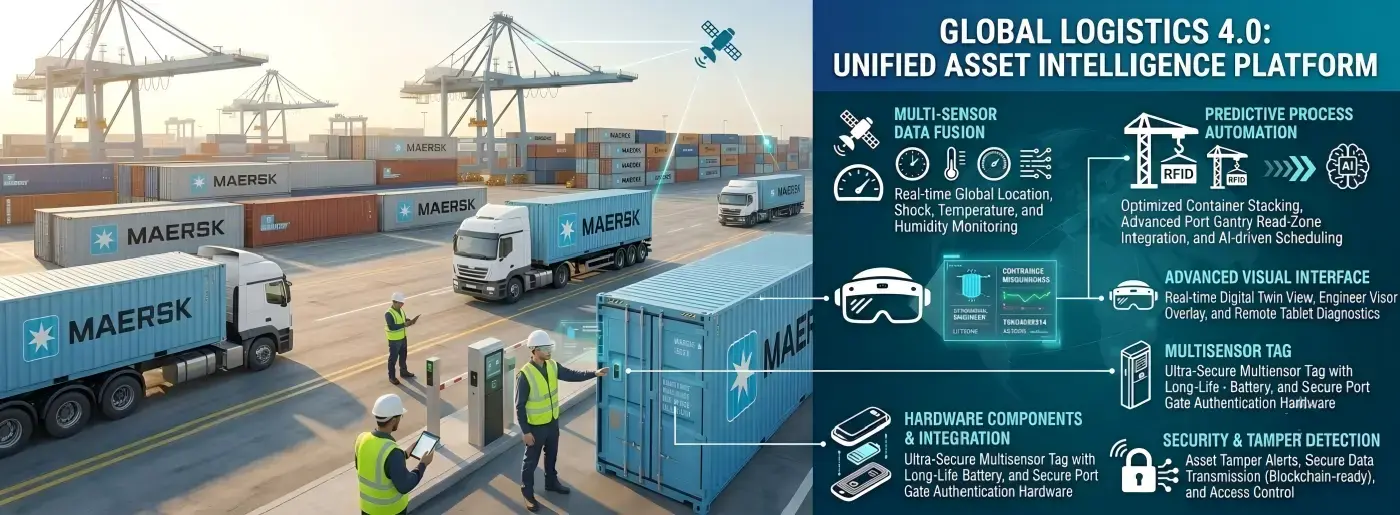
RFID container tags are specialized tracking devices engineered for global supply chain environments, utilizing radio frequency identification technology to enable automatic, non-contact identification of shipping containers. These rugged tags transmit unique identification data wirelessly to readers positioned at ports, rail yards, and warehouse gates, eliminating manual scanning and dramatically reducing human error. Operating primarily on UHF frequencies (860-960MHz), they support read ranges of 3-10 meters and comply with international protocols like EPC Gen2 and ISO 18185, making them indispensable for modern logistics operations.
Understanding RFID Container Tags: What They Are and How They Work
Container tracking has changed from using clipboards by hand to using complex digital systems. A small but strong device called an RFID container tags is at the heart of this change. It was made to handle the rough conditions of global shipping.
The Core Technology Behind Container RFID Tags
These tags have three important parts: a microchip that stores unique identification information, an antenna for wireless communication, and a protective shell that can withstand years of rough use. RFID container tags work in the UHF band (860–960MHz), which is different from consumer-grade RFID products. This gives them the longer read range they need for busy port activities. The microchip, which usually comes from a well-known company like Impinj Monza, Alien Higgs, or NXP UCODE, can hold anywhere from 96 to 512 bits of data, such as Electronic Product Codes and information about how the package was shipped.
How Radio Frequency Communication Enables Automated Tracking
When a container with an RFID tag moves close to an antenna on a reader, the reader sends out radio waves that turn on the inactive tag. In milliseconds, the tag sends the info it has saved back to the reader. Because there is no need for a line of sight for this contactless exchange to happen, containers that are stacked in yards with a lot of people can be inventoried at the same time. The connection uses EPC Gen2 protocols, which make sure that all port systems, customs checkpoints, and warehouse management tools can talk to each other.
Rugged Construction for Maritime and Intermodal Environments
Shipping containers have to deal with salt spray, temperature changes from -40°C to +85°C, constant shaking, and the odd hit. In these situations, most electronic gadgets break down very quickly. This problem can be solved with military-grade engineering: the housings are made of stainless steel, which doesn't rust, and the seals are rated IP68, which keeps out all water and dust. The chip is also protected by shock-resistant internal mounting when the tags are handled roughly. Because of this, the service life is more than 10 years, even when containers are moved between ports in the tropics and rail routes in the Arctic.
Benefits of Using RFID Container Tags in Global Shipping and Procurement
There is constant pressure on logistics managers to move things more quickly and for less money. Barcode scanning, handwritten filing, and GPS markers are all common ways to keep track of things, but they all have big problems. RFID container tags on containers solve these problems and make operations better in a way that can be measured.
Real-Time Visibility Across the Entire Supply Chain
Imagine being able to tell exactly where every container in your fleet is without having to call or check each one by hand. That's how these tags make things visible. Automatic updates are made to your WMS or TMS platform whenever containers pass through gates, rail crossheads, or warehouse docks with RFID readers. This real-time data flow gets rid of the "black holes" where packages go missing between checkpoints for days at a time. This lets procurement teams change plans ahead of time and give customers correct information.
Labor Cost Reduction Through Batch Identification
Verifying containers by hand takes a huge amount of time and effort. One gate worker can spend minutes on each container checking the numbers, comparing documents, and making changes to databases. This time is cut down to seconds by RFID container tags. Drive-through gates instantly read dozens of containers as cars go by at normal speeds. Ports that use this technology say that labor costs for yard management tasks have gone down by up to 80%. This frees up staff to do more important tasks like customer service and handling exceptions.
Enhanced Security and Tamper Detection
Theft of cargo and unauthorized entry are big problems for international shipping. Electronic seals can be added to RFID container tags to make systems that can't be tampered with. If someone tries to open or break into a sealed container, the circuit that holds the seal breaks, sending out instant alarms. The tag's constant presence also makes it easy to spot strange behavior. If a container shows up somewhere it shouldn't or goes off-route, security teams are immediately notified, giving them time to act before losses get worse.
Compliance Automation for Customs and Regulatory Reporting
For cross-border shipping, paperwork is a huge problem. Customs offices need detailed manifests, declarations of dangerous materials, and certificates of origin. Tags that are encoded with this info make accountability a lot easier. When containers get to inspection points, readers automatically pull out all the necessary information. This fills customs databases without having to enter the data by hand. This technology cuts clearance times from hours to minutes, stops mistakes in paperwork that cause delays that cost a lot of money, and keeps perfect audit trails for regulatory reviews.
Comparing RFID Container Tags with Traditional Alternatives
To choose the right identification technology, you need to know not only what it can do, but also how it will be used. There are different ways to track containers, and each has its own pros and cons.
RFID Versus Barcode Systems
For decades, barcodes were the standard in shipping, but when it comes to containers, their flaws become very clear. Barcode scanning needs a clear line of sight, clean label surfaces, and close proximity to the user. This is often not possible when containers are stacked three high with mud on them. When it's dark or rainy, read rates drop sharply. These problems are completely solved by RFID container tags. They read multiple containers at once from 5 to 15 meters away, even through dirt, darkness, and metal obstacles. Barcode labels are very cheap, but the labor and error-fixing costs that come with using them are much higher than the small amount of money that is spent on each unit of RFID technology.
Passive Tags Versus Active Tracking Devices
Most RFID container tags use passive RFID technology, which means they don't have batteries and only work when reader signals turn them on. This design means that it will last for ten years without any maintenance. Active RFID or GPS tags, on the other hand, send messages all the time and can find people's locations anywhere on Earth in real time. However, they need new batteries every few years and cost 10–20 times more per unit. Passive tags work best in controlled areas with reader infrastructure, such as port hubs and delivery centers. Active systems are useful for sending valuable goods over the seas or on long, remote land routes where precise location information is needed.
Frequency Selection: UHF Superiority for Container Applications
RFID works on a number of different frequency bands. Low Frequency (LF) and High Frequency (HF) systems can read from a few centimeters to a few meters, which is short enough for item-level tagging. UHF technology, which is the standard for container use, has read ranges of 3 to 10 meters and faster data transfer rates that are necessary for drive-through gates. UHF signals can pass through non-metallic materials and bounce off of metal surfaces. This makes the system work better when tags are placed correctly on steel crates. Global frequency assignments (860–960MHz) make sure that UHF tags can be used on transportation networks in North America, Europe, and Asia without having to be reconfigured.
When and How to Use RFID Container Tags: Best Practices for B2B Procurement
To properly deploy these tags, you need to do more than just buy tools. Strategic planning around use cases, integration, and lifecycle management is what makes the difference between tests that fail and implementations that change everything.
Ideal Deployment Scenarios
In certain operational situations, RFID container tags give the best return on investment. When automated gate systems take the place of human inspections, port terminals that handle thousands of container moves every day get instant value. Tags help e-commerce delivery centers keep track of the returnable container groups that move between distribution nodes. This cuts down on loss and makes the best use of pool size. Cold chain workers put tags on containers that need to stay cool. These tags use RFID technology to identify the containers and temperature monitors to keep the food fresh. Intermodal logistics companies benefit a lot when tags stay on during transfers from ship to rail to truck. This keeps data consistent across all modes of transport.
Integration with Existing Enterprise Systems
Standalone tags aren't very useful; their power comes from being able to connect easily to business platforms. Successful buying teams test for compatibility before deploying on a big scale. Standard methods should make it easy for tags to work with your Warehouse Management System (WMS), Transportation Management System (TMS), and Enterprise Resource Planning (ERP) platform. This process goes faster when vendors offer SDK support and integration consulting. Custom encoding services let you insert particular data fields that your systems need, like product codes, maintenance plans, or target routing.
Customization Considerations for Specialized Operations
Different transportation processes have different problems to solve. RFID container tags that are meant to be used on warm sea routes need to be able to withstand the most salt spray (IP68 approval). Chemically inert enclosures are needed for containers that go through automated washing systems for food-grade containers. Flat rack and open-top bins may need special bolts to be mounted. Reliable providers offer OEM/ODM services that can handle these differences, including custom enclosure sizes, different ways to connect (adhesive, bolt-through, rivet), and antenna tuning for metal surfaces that work best for each application. Customization usually starts with a minimum order quantity of 500 units, so even mid-sized businesses can get custom solutions.
Maintenance and Lifecycle Management
Passive tags don't need much upkeep, but smart lifecycle management makes them last longer. Set up rules for inspecting tags during routine maintenance on containers, making sure they are physically attached correctly and checking how well they work. When containers are being fixed up, you might want to update the tag data to reflect the new service parameters. Keep track of tag populations by the date they were deployed so that replacements can be planned before they break. Work with suppliers that offer field application engineering support. These companies can fix read-range problems that come up when the environment or reader infrastructure changes, making sure that the tag always works at its best.
Choosing the Right RFID Container Tags: Brands, Suppliers, and Buying Guide
More than just specs affect procurement choices; long-term success depends on how reliable the provider is, how well they follow certification rules, and the total cost of ownership.
Evaluating Supplier Credentials and Manufacturing Capability
Good RFID container tags come from providers who have a track record of being experts in the logistics business. Look for ISO 9001 certification to show that the product is managed in a systematic way, RoHS and REACH compliance to show that the product is environmentally friendly, and specific IP rating validation to back up claims that the product is waterproof. When projects are scaled up, production capacity is important. Companies with high-volume automatic assembly lines can keep quality consistent across orders of a million units, which smaller shops can't do. When international clients inspect a factory, it shows that they are committed to quality standards. WS RFID is a good example of this industrial size and quality assurance because it runs a 10,000㎡ facility that makes more than 500 million units every year.
Lead Times and Order Flexibility
Problems in the supply chain make delivery dependability very important. Suppliers who keep a lot of stock can ship common setups within 5 to 7 days, which keeps projects on schedule. When working with fast makers, custom orders usually take 10 to 12 days to make. Different policies have different minimum order quantities. For large-scale deployments, it's helpful when providers let you place orders as little as 500 pieces for custom setups while still letting you buy standard models by the carton for testing. Before making a big purchase, make sure you can get a sample. Reliable vendors should be able to send you functional samples within a week so you can test them in real-world settings.
Technical Support and Integration Assistance
Getting the hardware is only the beginning. Integrations with ERP, WMS, and TMS platforms that are complicated require technical know-how that many buyers don't have in-house. Choose suppliers that offer full support, such as software development kits (SDKs) for making custom apps, field application engineers who can help you find the best places to put readers and tune antennas for your environment, and quick-responding technical teams that can solve integration problems. With this help, vendors become partners, which lowers the risk of execution and speeds up the time it takes to get value.
Total Cost Analysis Beyond Unit Pricing
The lowest price per tag isn't always the best deal. Think about how often things break. For example, cheap RFID container tags that break after two years need to be replaced completely, which doubles the lifetime cost. Think about the costs of integration. Tags that don't work with your current readers may require expensive changes to your system. Costs of shipping and import taxes have a big effect on landing prices. These costs are lower when you buy from suppliers with transportation networks in your area. Longer guarantees (usually one to two years for quality tags) cover problems with the way the product was made. The factory-direct model of WS RFID gets rid of markups for distributors while maintaining strict quality control. This gives B2B clients a compelling total-cost-of-ownership.
Conclusion
RFID container tags have been used for a long time and are a cheap way to solve problems in the modern supply chain. Their ability to automate identification, get rid of manual tasks, and give real-time visibility leads to measurable improvements in cost control, asset security, and operational efficiency. To choose the right tags, you need to weigh technical details like read range and weather stability against the supplier's manufacturing scale, customization options, and support for integration. As global operations get more complicated, companies that use tough, standards-compliant container tracking technology will be able to compete well while still being able to quickly change to changing market needs.
FAQ
1. Can container tags be reused when containers change ownership or routes?
Of course. During their 10-year life, passive tags keep working even if the owner of the container changes. Authorized systems can change the data stored in the tag's memory using standard EPC Gen2 protocols. This lets new owners change information about route, maintenance, or who owns the tag. Because they can be used again and again, they are perfect for leasing companies that handle big amounts of returnable containers for many clients.
2. How do these tags perform in extreme temperature environments like refrigerated shipments?
Good RFID container tags are made to work in temperatures ranging from -40°C to +85°C. This means they can be used in almost all commercial shipping situations, such as deep-freeze containers and transit through the desert. The industrial-grade chip components and stainless steel housing keep the RF performance stable at these high and low temperatures. For ultra-cold chain applications below -40°C, there are specialized versions, but standard configurations are enough for 95% of logistics tasks.
3. Will existing RFID infrastructure work with new container tags?
Reader specifications and protocol support determine if two devices can work together. Tags that meet the standards of EPC Gen2 and ISO 18185 can be read by any reader system that is also compliant. This includes the great majority of RFID hardware used in business logistics. Make sure that the readers you have now work in the UHF frequency range (860–960MHz) and handle these protocols. Before buying, suppliers can give you technical specs to make sure that the tags will work with your system, and many of them sell reader gear along with the tags for full system setups.
Transform Your Container Tracking with WS RFID
To make your supply chain run more smoothly, you must first find the right RFID container tags provider. WS RFID Technology offers tracking solutions that are made for the needs of global shipping and are of industrial grade. Our tags are made of stainless steel and have IP68 protection, so they can withstand years of being used in marine environments. They also work on UHF 860-960MHz frequencies and are EPC Gen2 compliant, so they will work perfectly with your current warehouse and transportation management systems. We can make more than 500 million units a year, and our ISO 9001, RoHS, and REACH certifications back up our consistent quality for both pilot programs and large-scale deployments. Our standard inventory ships within 5 to 7 days, and we can make unique setups starting at 500 pieces through our OEM/ODM services. Our field application engineers offer full technical support, from lifecycle management advice to antenna optimization and SDK integration, to make sure your installation goes smoothly. Email kenny@w-srfid.com right now to get samples, talk about your unique tracking needs for containers, or get a full quote. Let our 15 years of experience making RFID tags cut your costs by up to 80% while giving your supply chain the real-time visibility it needs.
References
1. International Organization for Standardization. (2020). ISO 18185: Freight Containers – Electronic Seals – Part 1: Communication Protocol. Geneva: ISO.
2. EPCglobal Inc. (2015). EPC Radio-Frequency Identity Protocols Generation-2 UHF RFID Standard. GS1 Standards Document.
3. Swedberg, C. (2022). RFID in Supply Chain Management: Technologies and Applications. RFID Journal White Paper Series.
4. Maritime Technology Cooperative Research Centre. (2019). Automated Container Tracking Systems: Performance Evaluation in Port Environments. Australian Maritime College.
5. Chen, J. & Wang, H. (2021). Durability Analysis of Passive UHF RFID Tags in Marine Logistics Applications. Journal of Industrial Engineering and Management, 14(3), 487-502.
6. Supply Chain Digest Editorial Staff. (2023). ROI Analysis: RFID Container Tracking Versus Traditional Barcode Systems in Intermodal Transport. SCDigest Research Reports.
Learn about our latest products and discounts through SMS or email