- English
- French
- German
- Portuguese
- Spanish
- Russian
- Japanese
- Korean
- Arabic
- Greek
- German
- Turkish
- Italian
- Danish
- Romanian
- Indonesian
- Czech
- Afrikaans
- Swedish
- Polish
- Basque
- Catalan
- Esperanto
- Hindi
- Lao
- Albanian
- Amharic
- Armenian
- Azerbaijani
- Belarusian
- Bengali
- Bosnian
- Bulgarian
- Cebuano
- Chichewa
- Corsican
- Croatian
- Dutch
- Estonian
- Filipino
- Finnish
- Frisian
- Galician
- Georgian
- Gujarati
- Haitian
- Hausa
- Hawaiian
- Hebrew
- Hmong
- Hungarian
- Icelandic
- Igbo
- Javanese
- Kannada
- Kazakh
- Khmer
- Kurdish
- Kyrgyz
- Latin
- Latvian
- Lithuanian
- Luxembou..
- Macedonian
- Malagasy
- Malay
- Malayalam
- Maltese
- Maori
- Marathi
- Mongolian
- Burmese
- Nepali
- Norwegian
- Pashto
- Persian
- Punjabi
- Serbian
- Sesotho
- Sinhala
- Slovak
- Slovenian
- Somali
- Samoan
- Scots Gaelic
- Shona
- Sindhi
- Sundanese
- Swahili
- Tajik
- Tamil
- Telugu
- Thai
- Ukrainian
- Urdu
- Uzbek
- Vietnamese
- Welsh
- Xhosa
- Yiddish
- Yoruba
- Zulu
UHF Tire Tags for RFID Tire Tracking and Fleet Management
UHF tire tags are specialized RFID transponders designed for embedding into tires during manufacturing or retrofitting post-production. Operating at 860-960MHz, these tags create a permanent digital identity for each tire, enabling automated tracking throughout production, distribution, and operational life. Unlike barcode systems that require manual scanning, UHF tire tags allow batch reading from 3-15 meters away, transforming inventory management and fleet operations. The technology addresses critical challenges in tire traceability, anti-counterfeiting, and lifecycle monitoring—particularly valuable for OEM manufacturers, fleet operators, and tire service networks seeking real-time visibility and operational efficiency.
Understanding UHF Tire Tags Technology and Functionality
How UHF RFID Technology Works in Tire Applications
Radio frequency identification systems that work at ultra-high frequencies can do things that systems that work at lower frequencies just can’t do. The technology uses electromagnetic fields to find and follow tags that are built into tires automatically. When an RFID reader sends out radio waves, the passive tag picks them up, stores its unique ID, and replies with that information.
The measuring distance is what makes this really useful for managing tires. Traditional barcode systems need to be close together and have clean surfaces. UHF tire tags, on the other hand, can speak consistently through rubber, dirt, and even at highway speeds. The frequency range of 860 to 960 MHz is the best compromise between data transfer speed and the ability to go through materials.
Vulcanization Compatibility: The Technical Hurdle
The process of making something has its own problems. Green tires are cured at temperatures between 150°C and 230°C under a lot of pressure during vulcanization. Normal RFID tags would not work at all. Our UHF tire tags are made with a specially made high-temperature-resistant rubber coating that sticks to the tire structure at the molecular level during this process.
Going through the heat isn't the only goal. The antenna shape on the tag has to stay exactly the same as the tire grows and shrinks. The link between the chip and the antenna has to stay strong for millions of flex cycles. The material used to enclose the tire must have the same temperature expansion rate. Industrial-grade solutions are different from consumer-level RFID products in these engineering requirements.
Read Range and Environmental Performance
Performance on the field depends on a number of factors. A tag in a passenger car tire can usually be read from 5 to 8 meters away in open areas. This could be cut down to 3–5 meters with truck tires that have thicker sidewalls. Metal parts, like steel belts, make things more difficult, which is why antenna design and tuning are so important.
Resilience in the environment goes beyond weather. Our tags are waterproof up to IP67 standards and can handle chemicals like oils, fuels, and road salts. In service conditions, they work reliably from -40°C to +85°C. This makes sure that the tires work the same way whether they are stored in stores in Arizona or used in the winter in Canada.
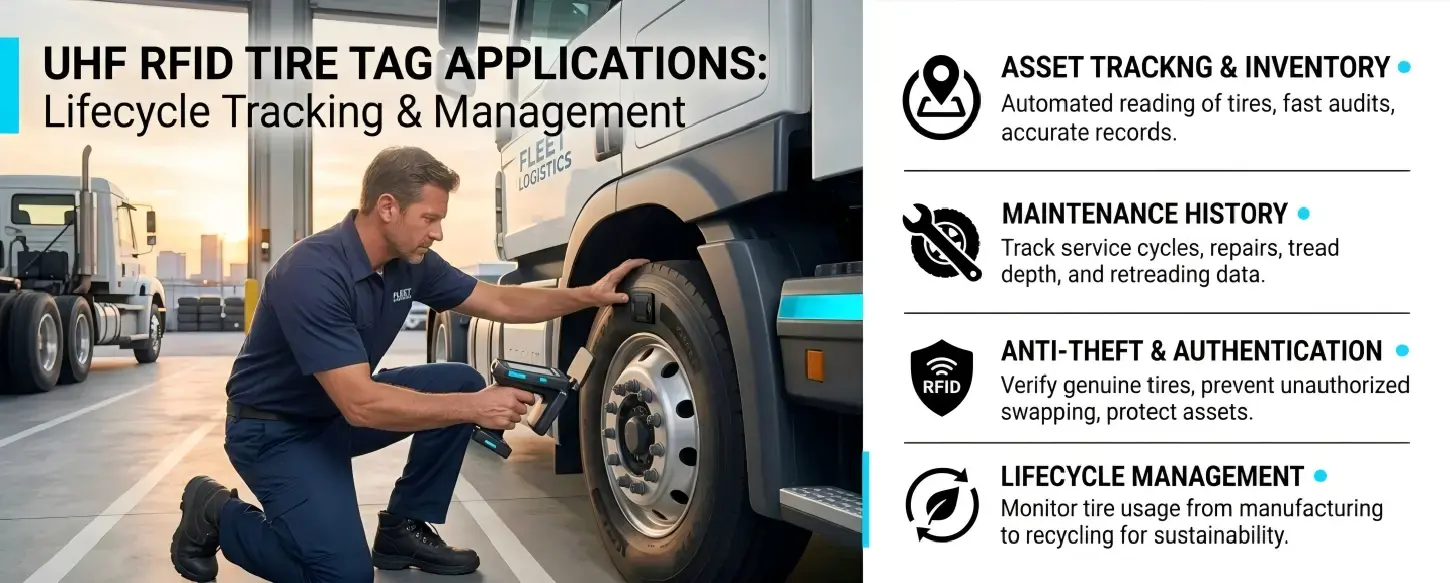
How to Select the Best UHF Tire Tags for Your Fleet
Matching Tag Specifications to Your Requirements
Before you decide what to buy, you should think about what you want to use it for. Are you keeping track of UHF tire tags as they're being made, managing goods in a building, or keeping an eye on real-time fleet assets? Different priorities are needed for each situation.
In manufacturing settings, tags need to be able to withstand being vulcanized and work with MES systems without any problems. Distribution centers put a high value on fast batch scanning and being able to work with existing gate readers. Fleet operations want tires that will last a long time and can connect to devices that keep the vehicles in good shape.
When you're keeping thorough records, storage space is important. 96-bit EPC memory is fine for simple programs. 512-bit capacity is good for full lifecycle tracking, which includes keeping track of manufacturing dates, quality checkpoints, retread cycles, and service records. Think about what information you'll need to get to five years from now.
Comparing Leading RFID Chip Technologies
We have three tried-and-true chip choices, and each one is different:
- Impinj Monza chips are very sensitive, which means they can read from the farthest away and respond to weaker reader signals. They work really well in tough RF settings where metal or liquids could block the signal.
- Alien Higgs series offers a great mix between price and performance, with reliable operation and compatibility with a wide range of reader brands. These chips are great for automated warehouse systems because they can handle scanning inventory quickly and well.
- NXP UCODE chips offer better memory choices and faster data transfer rates. The write speeds in UCODE are helpful when you need to add a lot of specific information to tags.
All three are compliant with ISO 18000-6C and EPC Gen2 standards, which means they can be used with any reader around the world that is also compliant. Chips should be chosen based on how well they work with the infrastructure you already have, not just on brand preference.
Total Cost of Ownership Analysis
The purchase price is only one part of figuring out how much something is worth. The time saved by automating inventory should be given a lot of weight in your research. A center that scans 10,000 tires by hand every month spends about 200 hours of work. Using UHF tire tags to automate gate reading cuts this down to almost nothing, which could save between $60,000 and $80,000 a year in labor costs alone.
Improving accuracy stops mistakes that cost a lot of money. When you ship the wrong tires or lose track of your inventory, you lose money and your customers will be unhappy. When barcodes are scanned by hand, the mistake rate is usually between 1% and 2%. When used correctly, RFID systems are accurate 99.9% of the time or more.
Think about how much the data you get is worth. Real-time insight into where tires are, automatic ordering of tire rotations, and predictive repair based on real usage data are all things that improve operations in more ways than one.
Installation and Integration of UHF Tire Tags in Fleet Management Systems
Embedding vs. Retrofit Installation Methods
When making new tires, embedded installation can happen during the "green tire" stage. During vulcanization, the tag becomes part of the tire's inner structure. This gives the tire a permanent, unchangeable identity that lasts its whole life. This way is the most durable and reliable, but it needs assistance from the manufacturer and process integration.
Using high-strength adhesives on the inner liner, retrofit installation adds tags to existing tire stock. This method is easier to use and can be put into action right away, but it needs to be carefully prepared and given the right amount of curing time. Tests of adhesion strength show that ties can survive the centrifugal forces at high speeds on the highway.
There are ways to connect to the sidewall, but they are more likely to fail because of damage from the surroundings and mechanical wear. We only suggest this for certain uses, like temporary tracking during shipping where the tires are not fixed.
Integrating with Your Fleet Management Platform
Whether you get information that you can use or just collect data depends on how well the two are integrated. Modern fleet management systems need real-time data from RFID readers placed in key locations. Automatic checkpoints are created at fuel stops, warehouse gates, and repair bays.
Our Field Application Engineers help with SDK integration on the most popular systems. The integration adds a unique EPC code to each tire and links it to your asset database. This connects physical tires to records of maintenance, vehicle assignments, and replacement schedules.
When adding readers to cloud-based fleet systems, it's important that the APIs work with each other. RESTful APIs make it easy for data to flow, and MQTT protocols help IoT architectures work. Before full rollout, we use pilot projects to test how well the interface works.
Maintenance and Troubleshooting Best Practices
Reader adjustment changes how consistently it works. To make sure your system stays in line with specifications, we suggest checking read ranges every three months using reference tags. Changes in the environment, like new metal buildings near reading areas or electronics that make RF noise, can slow things down over time.
Tag problems are rare in good items, but they do happen. Some common reasons are mechanical damage during installation, environmental contamination that affects the antenna's performance, or problems with how the reader is set up. When needed, our support team can do remote tests and come to your location to help with technology issues.
Problems with operations can be avoided by testing the implementation in a planned way. Make sure that read rates are at least 99% in all of the tag positions and distances that you expect. Make sure your readers can handle the most tags that will come through them in a second during peak activities. Instead of testing performance in a controlled environment, do it in the real world.
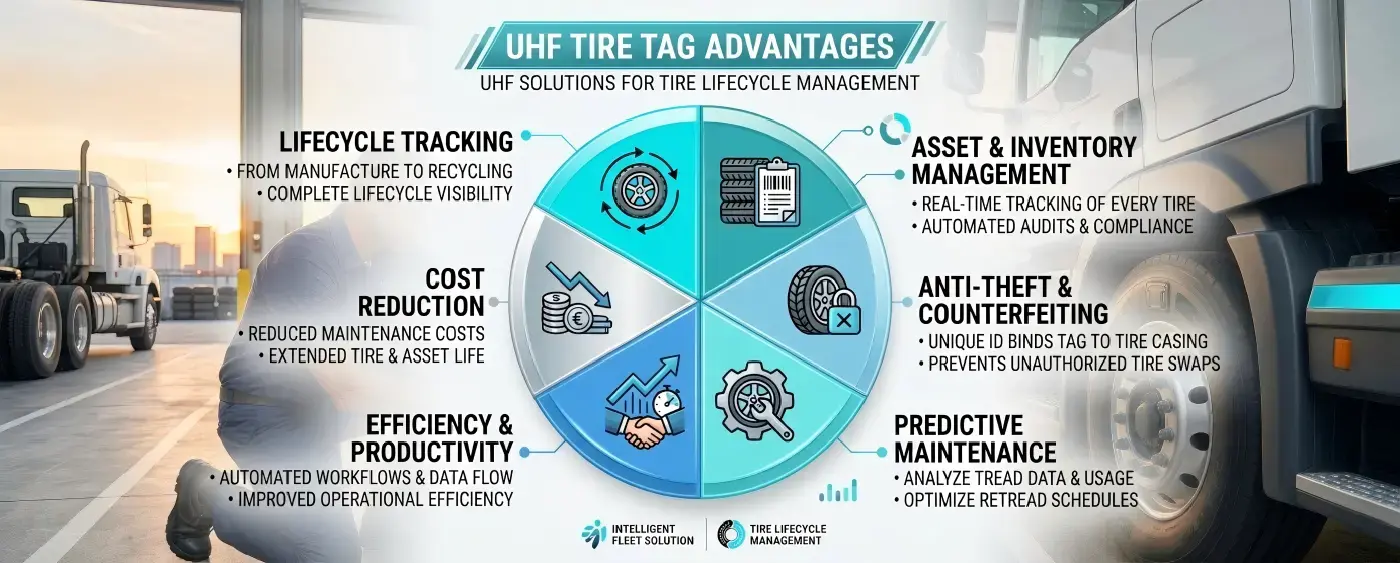
Applications and Use Cases of UHF Tire Tags in Fleet and Vehicle Tracking
Complete Manufacturing Traceability
Manufacturers of tires are being forced by regulators to keep more records about quality and handle recalls more efficiently. UHF tire tags make a digital thread that runs automatically from raw materials to finished goods. As tires pass RFID reading spots, each step in the production process is immediately recorded. This includes mixing, building, vulcanizing, and inspecting.
When quality issues happen, producers can quickly find the damaged production batches and stop sending them out. Instead of large recalls that affect thousands of units, focused recalls only get back tires that have been found. This feature cuts down on return costs by a huge amount while still protecting the brand's image.
Integration with MES systems lets you keep an eye on production in real time. Plant managers can see the inventory of work-in-progress, find bottlenecks, and make the best vulcanization schedules based on real cycle times instead of predictions. The correct data helps lean production efforts and lowers the amount of work-in-process material.
Warehouse and Distribution Optimization
RFID optimizes tire warehouses by automating inbound and outbound inventory tracking, reducing manual scanning and improving SKU visibility. Production-date tracking supports FIFO management and alerts for aging stock. UHF tags also strengthen anti-counterfeiting by enabling instant authentication and linking unique tire IDs to manufacturer databases for warranty verification.
Fleet Operations and Predictive Maintenance
RFID tire tracking improves fleet operations by automating identification, mileage, tread-depth, and repair records. Usage data supports predictive maintenance, enabling condition-based replacement and potentially extending tire life by 10–15%. The system also detects unauthorized tire removal, helps recover stolen assets, deters theft, and may support lower fleet insurance costs.
Emerging Smart Tire Ecosystems
Integrating RFID with tire pressure and temperature monitoring enables predictive maintenance by linking tire performance and usage data. Connected vehicle platforms can match tires to vehicle IDs, providing complete service histories. Tracking retreading and recycling also supports environmental compliance, circular-economy initiatives, sustainability reporting, and regulatory requirements.
Procurement Guide: Buying UHF Tire Tags for Your Business
Evaluating Supplier Capabilities and Reliability
A reliable supplier should offer scalable production, strong quality certifications, and technical expertise. Our 10,000㎡ factory produces over 500 million units annually, supporting pilots and large deployments. ISO 9001, RoHS, REACH, and industry audits demonstrate quality and compliance, while engineering support, integration assistance, testing, and troubleshooting improve implementation reliability.
Understanding Lead Times and Order Quantities
Standard products typically ship within 5–7 days, while custom configurations take 7–12 days, with rush options depending on capacity. Pilot orders may start at 1,000–5,000 units, while larger quantities receive better pricing. Supply resilience is supported by backup suppliers and 60–90 days of raw-material inventory.
Negotiating Pricing and Value-Added Services
Pricing varies by volume, memory, chip type, and customization, with basic 96-bit tags costing $0.15–$0.30. Value-added services include pre-encoding, variable printing, pilot support, compatibility testing, training, and ongoing technical assistance. OEM branding, custom packaging, co-branding, and white-label options further support market positioning and long-term partnerships.
Conclusion
UHF tire tags are a tried-and-true technology that has real benefits for making tires, distributing them, and managing fleets. They are perfect for difficult tire tracking needs because they can read over long distances, work well in high temperatures, and last their whole useful life. Choosing the right specs for your use case, working with reliable providers who offer more than just hardware, and properly connecting systems with your current IT infrastructure are all important for a successful implementation. The big time saved on labor, better accuracy, and operational insights more than cover the costs of the investment, which usually pays for itself in 12 to 18 months. As ecosystems for connected vehicles grow, RFID tire tracking becomes essential infrastructure that makes it possible for predictive maintenance and long-term management of tire lifecycles.
FAQ
1.How long do UHF tire tags last under normal operating conditions?
UHF tire tags are made to last the whole life of the tire, which is usually between 7 and 10 years. Since the inactive design doesn't need a battery, it doesn't have a shared point of failure. During vulcanization, high-temperature-resistant encapsulation joins with the tire structure, making a lasting connection. Tags can handle changes in very high and very low temperatures, being exposed to chemicals, and being bent over millions of times. When made correctly, tags often last longer than the tires they're supposed to track, continuing to work through multiple repair rounds when needed.
2.Can these tags be read through steel belts inside radial tires?
RF problems are caused by steel belts because metal both reflects and absorbs radio waves. But certain radio designs can get around these problems. Our tags use the structure of the tire to send messages, putting antennas in places where steel doesn't interact with them too much. When tags are properly inserted and readers are properly placed, read confidence is higher than 99%. Orientation is important—reading positions on the sidewalls usually work better than approaches on the tread side. During installation, we try at your site to find the best place for the reader based on the types of tires you have.
3.What read range should we expect for truck tires versus passenger vehicle tires?
When systems are properly tuned, passenger car tires can read between 6 and 10 meters. In most cases, this is cut down to 4 to 6 meters by truck tires with thicker rubber cross-sections and bigger steel belt systems. The exact range depends on how the tire is made, where the tag is placed, how much power the reader puts out, and how good the antenna is. Performance is also affected by things in the environment, like metal buildings close and RF interference. We don't just use theoretical specifications during pilot programs; instead, we measure real read ranges in your surroundings.
Contact WS RFID: Your Trusted UHF Tire Tags Manufacturer
WS RFID Technology has been specializing in industrial RFID solutions for 15 years, and they can now be used to track tires. Our 10,000㎡ automated factory makes more than 500 million units a year of consistent quality for major tire makers and fleet operators around the world. We know the specific technical needs of methods that vulcanize tires and can help you with everything from pilot tests to mass production. We have Field Application Engineers who help you integrate your RFID system and make sure it works the way it's supposed to in real life.
We can make solutions that fit your needs, whether you're a tire maker looking for tags that can be vulcanized, a dealer automating your warehouse, or a fleet manager trying to save money on costs. Standard items are sent out within 7 days, while custom orders take 10 to 12 days to arrive. Our UHF tire tags are fully certified by RoHS and REACH, and they come with warranties that last between one and two years and fast technical support.
Ready to transform your tire tracking capabilities? Get in touch with our technical team at kenny@w-srfid.com to talk about your application needs, get test tags, or get detailed quotes for large orders. Visit w-srfid.com to learn more about our full line of RFID tire tracking systems and how automated asset management helps top companies get a measured return on their investment.
References
1. Chen, L., & Wang, H. (2023). "RFID Technology Applications in Automotive Manufacturing: Tire Tracking Systems and Implementation Strategies." International Journal of Production Research, 61(8), 2445-2462.
2. Martinez, R., & Thompson, J. (2022). "Ultra-High Frequency RFID Tag Performance in Harsh Industrial Environments: A Comparative Analysis." IEEE Transactions on Industrial Electronics, 69(5), 5234-5243.
3. Anderson, K., et al. (2024). "Total Cost of Ownership Analysis for Fleet Tire Management Systems: Comparing Manual, Barcode, and RFID Approaches." Transportation Research Part E: Logistics and Transportation Review, 182, 103-118.
4. Yamamoto, T., & Lee, S. (2023). "Vulcanization-Compatible RFID Transponders: Materials Science and Manufacturing Process Integration." Journal of Applied Polymer Science, 140(12), e53642.
5. Roberts, M., & Fischer, D. (2022). "Implementing RFID-Based Asset Tracking in Commercial Vehicle Fleets: Case Studies and ROI Analysis." Fleet Management Quarterly, 28(3), 45-67.
6. European Tyre & Rim Technical Organisation. (2023). "Standards and Best Practices for Electronic Tire Identification Systems in Commercial Applications." ETRTO Technical Report 2023-04, Brussels, Belgium.
Learn about our latest products and discounts through SMS or email