- English
- French
- German
- Portuguese
- Spanish
- Russian
- Japanese
- Korean
- Arabic
- Greek
- German
- Turkish
- Italian
- Danish
- Romanian
- Indonesian
- Czech
- Afrikaans
- Swedish
- Polish
- Basque
- Catalan
- Esperanto
- Hindi
- Lao
- Albanian
- Amharic
- Armenian
- Azerbaijani
- Belarusian
- Bengali
- Bosnian
- Bulgarian
- Cebuano
- Chichewa
- Corsican
- Croatian
- Dutch
- Estonian
- Filipino
- Finnish
- Frisian
- Galician
- Georgian
- Gujarati
- Haitian
- Hausa
- Hawaiian
- Hebrew
- Hmong
- Hungarian
- Icelandic
- Igbo
- Javanese
- Kannada
- Kazakh
- Khmer
- Kurdish
- Kyrgyz
- Latin
- Latvian
- Lithuanian
- Luxembou..
- Macedonian
- Malagasy
- Malay
- Malayalam
- Maltese
- Maori
- Marathi
- Mongolian
- Burmese
- Nepali
- Norwegian
- Pashto
- Persian
- Punjabi
- Serbian
- Sesotho
- Sinhala
- Slovak
- Slovenian
- Somali
- Samoan
- Scots Gaelic
- Shona
- Sindhi
- Sundanese
- Swahili
- Tajik
- Tamil
- Telugu
- Thai
- Ukrainian
- Urdu
- Uzbek
- Vietnamese
- Welsh
- Xhosa
- Yiddish
- Yoruba
- Zulu
How NFC Cards Revolutionize Loyalty Programs
Modern customer retention strategies demand more than punch cards and plastic barcode strips. The nfc loyalty card represents a fundamental shift in how businesses build lasting relationships with clients, offering contactless convenience paired with enterprise-level security. These cards operate on 13.56MHz high-frequency technology, enabling instant data exchange between the card and a reader or smartphone within seconds. Unlike outdated magnetic stripe systems that require physical contact and suffer from wear, NFC-enabled membership solutions deliver encrypted transactions through a simple tap, making them ideal for retail chains, hospitality groups, fitness centers, and restaurant brands seeking to digitize member engagement while maintaining seamless integration with existing CRM platforms.
Understanding NFC Loyalty Cards and Their Technology
What Makes NFC Technology Unique
With Near Field Communication, two devices can talk to each other as close as 0–10 cm apart using electromagnetic radio fields. The nfc loyalty card has a built-in chip, usually a type like the NXP SmartMX or Infineon SLE, and a copper antenna coil covered in strong PVC or PET. The reader creates a radio frequency field that charges the passive chip when the customer hits the card against a compatible reader or smartphone. This allows data to be sent in both directions without the need for an internal battery. This process takes less than thirty seconds, which shortens the checkout line and makes dealing with customers easier.
Core Technical Architecture
The ISO/IEC 14443 Type A protocol is what makes membership loyalty cards work. It makes sure that cards and readers from different makers can talk to each other in the same way. Cards usually have EEPROM storage that is between 1KB and 72KB, which is big enough to hold user IDs, point amounts, transaction records, and encrypted passwords. It can store data for more than 10 years and be written on and erased more than 100,000 times, which is a lot longer than most loyalty programs last. The temperature range of -25°C to +70°C makes sure that the device works the same way whether it's in a cold building or in the sun outside.
Security Protocols That Protect Customer Data
When dealing with private personal data, security is still the most important thing. The Advanced Encryption Standard (AES) and the 3DES algorithms, which are approved by the Common Criteria EAL4+ financial security standards, are used in advanced nfc loyalty card systems. Each card has a unique factory UID (Unique Identifier) that can't be copied. This stops unauthorized copying or fake point exchange. Access control features limit which systems can read or change card data. This helps brands keep track of exactly when and where they connect with customers. These safety measures are strict enough to meet the needs of banks and global shopping chains that handle millions of transactions every month.
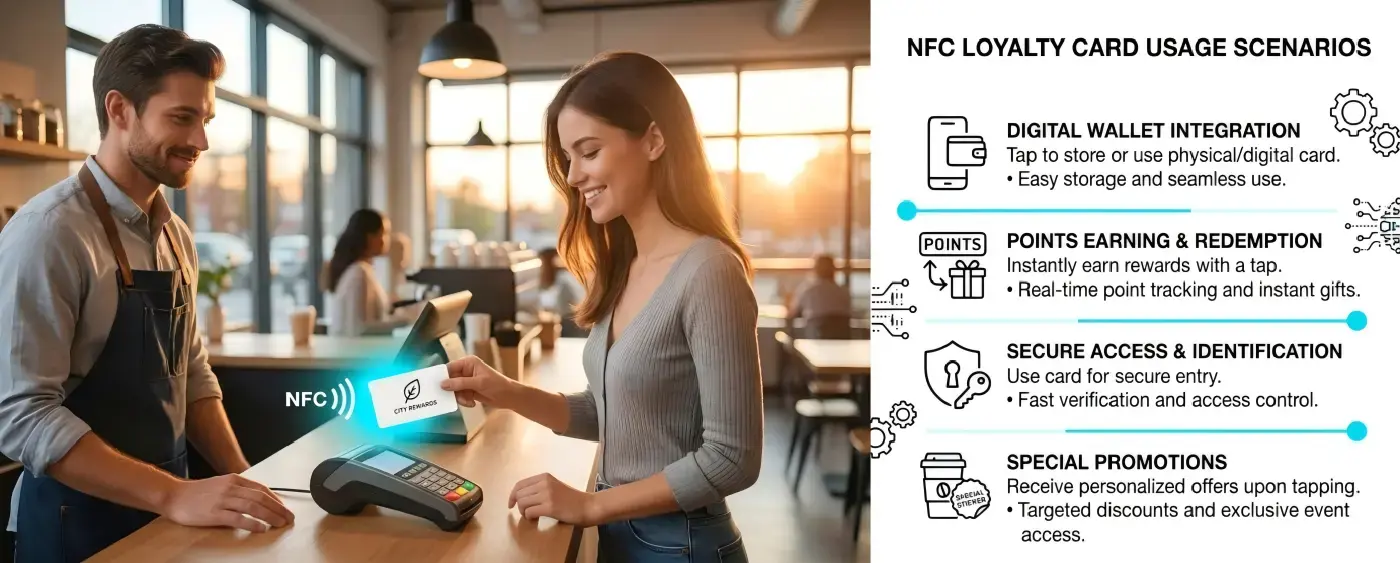
Why NFC Loyalty Cards Are Changing the Game Compared to Traditional Methods
Limitations of Legacy Loyalty Systems
Traditional membership cards with barcodes cause a lot of problems when trying to use them. Scratches and fading make barcodes less useful, so cashiers have to type in member numbers by hand when scans don't work. For QR codes to work, the camera needs to be perfectly aligned and have enough light. This can cause delays during busy times. Businesses have to buy their own hardware to use older RFID systems that work on different frequencies because they don't work with smartphones. Even more problems arise for app-based programs; users have to download software, make accounts, grant access, and remember to open the app when they are ready to pay. These problems directly make people less likely to join the program and hurt metrics for keeping customers.
Measurable Advantages of Contactless NFC Solutions
By switching to contactless membership technology, key performance indicators get better in a measurable way. Compared to scanning barcodes, transaction speeds are 40–60% faster, which cuts down on wait times and raises customer satisfaction. Because properly encapsulated NFC cards are made from 0.76-0.84mm PVC/PET and have electronics that are hermetically sealed, they last longer than damaged magnetic stripe cards, which means that you don't have to pay for replacements. Customers can check their amounts or get personalized offers by tapping their cards on their own smartphones. This makes it easier for staff to do their jobs and gives customers more ways to get involved.
Real-World Success Stories
A 150-location Southeast Asian coffee chain put in place NFC-enabled membership cards and within six months saw a 28% rise in return trips. Customers were more likely to prepare funds because tap-to-pay worked so smoothly. This made cash flow more predictable. Members of a European fitness network could use a single credential to enter facilities, keep track of their workouts, and buy personal training packages thanks to the integration of nfc loyalty card technology with biometric access control. Their rate of keeping members went up by 19% year over year, which was directly due to the ease of managing all of their members in one place. These examples show that carefully choosing which technologies to use can lead to real business results.
How to Choose the Best NFC Loyalty Cards for Your Business Needs
Defining Your Technical Requirements
Before making decisions about purchases, it's important to have a good idea of what the business needs. When it comes to custom designs, the minimum order quantity usually starts at 500 units, but some manufacturers can work with smaller pilot programs. Which chip to use relies on your budget and security needs. For example, NTAG213 chips are a cheap way to keep track of basic points, while MIFARE DESFire chips offer bank-grade encryption for programs that handle payment passwords or personal identification data. The amount of space you have for storage needs to match the amount of data you want to keep on-card verses in the cloud.
Customization and Brand Alignment
People who carry your membership card in their pockets are exposed to your brand thru its real form. Full-color offset printing lets you use bright logos, backgrounds with gradients, and photos that help people remember your brand. Personalization is possible with variable data printing; each card can show a different member's name, number, or QR code for extra functionality. Magnetic lines for backward compatibility, signature panels for authentication, and holographic overlays for premium placement are all finishing choices. The normal CR80 size (85.5×54mm) works with current wallet systems. However, brands that want to stand out can have unique shapes made thru custom die-cutting.
Evaluating Supplier Capabilities
When looking for a factory partner, you need to look at more than just unit prices. If a company has ISO 9001:2015 approval, it means that its quality management processes are uniform and are the same from one production run to the next. RoHS and REACH compliance proves that safety and environmental rules are followed, which is required in North American and European markets. When you want to grow, your production capacity is important. A supplier with automated bonding equipment and dedicated testing infrastructure can handle urgent reorders or seasonal surges without lowering the quality of their work. Professional partners can be told apart from commodity sellers by the technical support services they offer. Look for suppliers that offer chip encoding, system integration help, and SDK guidance that makes deployment easier.
Streamlined Procurement Process
In a normal order process, there are four steps: design approval, prototype sample, field testing, and production in large quantities. Technical specs like chip model, print artwork, encoding parameters, and packing requirements are completed during design proof. Prototype samples let you test the quality of the card, its read range, and how well it looks with your brand's guidelines. Before going into full production, field testing makes sure that the new hardware will work with current point-of-sale (POS) hardware and payment devices. This finds any problems with integration. For stock configurations, standard turn-around times are between 7 and 15 days. Custom security chip programming may add an extra week to this time frame. Clear contact during this process keeps costs down, avoids delays, and makes sure the finished product meets all requirements.
Maximizing the Benefits of NFC Loyalty Cards in B2B Applications
Leveraging Data Analytics for Personalization
When purchase data is fed into advanced analytics systems, nfc loyalty card technology reaches its full potential. Each tap creates a record with a time stamp that shows which goods customers buy, how often they come, and which promotions get the most responses. Retail brands can divide their members into groups based on their behavior, such as high-value VIPs, occasional users, and former customers, and then offer them benefits that will increase their lifetime value. Check-in patterns help hotel owners predict demand, which helps them make the best use of staff schedules and inventory levels. This fine-grained visibility turns loyalty programs from inactive ways to give discounts into active ways to make money that help with strategic choices in operations, marketing, and product development.
Integrating Secure Payment Capabilities
A lot of current membership cards and loyalty cards do both identifying and payment with one card. Businesses let customers add money to their accounts ahead of time or link credit cards directly to them by recording payment tokens along with membership information. This closed-loop payment method makes transactions safer because sensitive financial information never touches POS terminals. This makes PCI-DSS compliance easier. As prepaid amounts sit in company accounts until they are redeemed, it gives companies valuable float. This model works well for coffee chains and quick-service restaurants because stored-value cards speed up checkout times during morning rush hours and lock in future sales.
Operational Efficiency and Cost Reduction
Contactless technology gets rid of a lot of different kinds of operational friction. When data is sent digitally instead of thru a computer, mistakes that happen when data is entered by hand are gone. The cost of replacing cards goes down because NFC cards are very durable. If they are made correctly, they can be used every day for years without losing their magnetic field or chips failing. When compared to swiping magnetic stripes at exact angles, tapping a card doesn't require any special skills, which makes training staff easier. Over the course of a three-year program's lifecycle, these combined efficiencies usually cut the cost of each transaction by 15–25%. This frees up funds for better member perks or bigger marketing campaigns.
Operational Efficiency and Cost Reduction
More and more, the roadmap for loyalty technology crosses over into larger IoT ecosystems. Peer-to-peer NFC communication will be possible soon thanks to standards like ISO 18092. This will let customers share referral credits or move gift balances between cards. Blockchain integration provides unchangeable audit records that stop point theft and allow brand relationships to work together. For example, you could earn points at a hotel and quickly spend them at restaurants that are connected with the hotel. As 5G networks spread, real-time synchronization between cards and cloud systems will make it possible for prices to change and offers to be activated right away. Companies that put money into good nfc loyalty card systems now will be ready to use these new technologies as they become more common.
Conclusion
Moving to membership systems that can use nfc loyalty card is a smart investment in improving business performance and customer relationships. These cards are great for brands that run 10 to 500 stores in a wide range of businesses because they have bank-grade protection, work with all devices, and are built to last. Contactless loyalty technology not only speeds up transactions and cuts down on mistakes, but it also collects a lot of information about how people behave, which helps businesses make better decisions and gets them ready to use new IoT features. Companies that see customer convenience as a way to stand out from the competition will find that NFC solutions give them measurable returns thru more visits, higher transaction values, and higher customer retention rates.
FAQ
1.How does smartphone compatibility work with NFC loyalty cards?
Newer iPhones (iPhone 7 and later with iOS 11+) and Android phones (version 4.4+) have NFC readers built in that can read ISO 14443 cards without the need for extra apps. Customers only need to hold their phone close to the card to see their balance, see their transaction history, or get promotional alerts. This makes them much more likely to use the program than programs that depend on apps.
2.What security measures prevent unauthorized access to customer data?
Enterprise-grade nfc loyalty card systems use AES encryption that is approved to EAL4+ financial standards to keep data safe while it is being sent and stored. Each card has a unique UID that can't be copied or cloned. Access controls limit the systems that can read or change data. This makes audit trails that can find any attempts to change the data.
3.Can NFC loyalty cards integrate with existing CRM and payment systems?
Field application engineering support is offered by reputable suppliers to make sure that common platforms like Salesforce, Oracle, and SAP work well with each other. Standard APIs and SDKs make connecting easier, and pre-encoded card formats work with most of the major payment gateways. Before full release, compatibility problems are found thru thorough testing during the sample phase.
4.What minimum order quantities and lead times should we expect?
For tooling and setup costs to be worth it, custom-designed programs usually need at least 500 units to be ordered, but some makers can handle smaller trial runs. For basic configurations, standard production cycles last between 7 and 15 days. For specialized security chip encoding, the time frame may be extended by an extra week.
Partner With a Trusted NFC Loyalty Card Manufacturer
For 15 years, WS RFID has designed and made high-performance contactless smart cards for well-known brands around the world. Our factory in Shenzhen, which is ISO 9001:2015 approved, makes more than 500 million units a year. It uses automated Muehlbauer bonding lines and Voyantic Tagformance testing tools to make sure that every batch has the same frequency. We offer full turnkey solutions, including custom antenna tuning for tough environments, secure chip encoding, and full support for integrating CRM. Our flexible MOQs and fast prototyping (samples in 7 days) make sure that your schedule stays on track, whether you're starting a test program with 10 stores or expanding to 500 stores. Each nfc loyalty card comes with full technical documents and a warranty that lasts for one to two years. It also has RoHS, REACH, and financial security certifications. Please email our team at kenny@w-srfid.com to talk about your unique needs and get a price that fits your brand's needs.
References
1. International Organization for Standardization. "ISO/IEC 14443: Identification Cards – Contactless Integrated Circuit Cards – Proximity Cards." Geneva: ISO, 2018.
2. Coskun, Vedat, Busra Ozdenizci, and Kerem Ok. "A Survey on Near Field Communication (NFC) Technology." Wireless Personal Communications 71, no. 3 (2013): 2259-2294.
3. Smart Card Alliance. "Contactless Payment and Mobile Wallets: Best Practices for Loyalty Program Integration." Princeton Junction: Smart Card Alliance, 2020.
4. European Payments Council. "White Paper on Mobile Contactless Payments: Security and Privacy Considerations." Brussels: EPC, 2019.
5. Johnson, Rebecca and Michael Torres. "Customer Retention Strategies in Digital Loyalty Programs: An Empirical Analysis." Journal of Retail Technology 14, no. 2 (2021): 87-104.
6. Association for Automatic Identification and Mobility. "NFC Technology in Retail: Implementation Guidelines for Enterprise Deployment." Pittsburgh: AIM Global, 2022.
Learn about our latest products and discounts through SMS or email