- English
- French
- German
- Portuguese
- Spanish
- Russian
- Japanese
- Korean
- Arabic
- Greek
- German
- Turkish
- Italian
- Danish
- Romanian
- Indonesian
- Czech
- Afrikaans
- Swedish
- Polish
- Basque
- Catalan
- Esperanto
- Hindi
- Lao
- Albanian
- Amharic
- Armenian
- Azerbaijani
- Belarusian
- Bengali
- Bosnian
- Bulgarian
- Cebuano
- Chichewa
- Corsican
- Croatian
- Dutch
- Estonian
- Filipino
- Finnish
- Frisian
- Galician
- Georgian
- Gujarati
- Haitian
- Hausa
- Hawaiian
- Hebrew
- Hmong
- Hungarian
- Icelandic
- Igbo
- Javanese
- Kannada
- Kazakh
- Khmer
- Kurdish
- Kyrgyz
- Latin
- Latvian
- Lithuanian
- Luxembou..
- Macedonian
- Malagasy
- Malay
- Malayalam
- Maltese
- Maori
- Marathi
- Mongolian
- Burmese
- Nepali
- Norwegian
- Pashto
- Persian
- Punjabi
- Serbian
- Sesotho
- Sinhala
- Slovak
- Slovenian
- Somali
- Samoan
- Scots Gaelic
- Shona
- Sindhi
- Sundanese
- Swahili
- Tajik
- Tamil
- Telugu
- Thai
- Ukrainian
- Urdu
- Uzbek
- Vietnamese
- Welsh
- Xhosa
- Yiddish
- Yoruba
- Zulu
The Technology Behind RFID Dual Interface Cards: How Do They Really Work
In an RFID dual interface card, both touch and contactless communication options are built into a single smart card. This high-tech ID card has a unified microchip that can be accessed through either a physical contact plate or an embedded RF antenna. It works at 13.56MHz frequency. Dual interface smart cards have synchronised data storage, which is different from hybrid cards that have two separate chips. This means that users can authenticate using either ISO/IEC 7816 contact readers or ISO 14443 contactless terminals without worrying about data being lost.
What Are RFID Dual Interface Cards?
Understanding the Core Components
Dual interface smart cards are a big step forward in technology for controlling access. At their core is a single secure element chip that can hold encrypted data of up to 8KB. The chip is linked to both a gold-plated contact pad on the card's surface and a copper antenna coil inside the card. The contact interface is based on ISO/IEC 7816 standards and needs to be physically put into a reader. The frictionless interface, on the other hand, follows ISO 14443 standards, which lets it talk to a reader within 10 centimetres.
The antenna design needs to be very precise. WS-RFID Technology uses magnetic coupling techniques to get rid of weak solder points, which are the most common way that cheap goods break. Our production method uses automated bonding lines to make sure that the link between the antenna and the chip doesn't break after more than 100,000 read-write cycles.
Frequency Standards and Interoperability
There are good reasons why the 13.56MHz high-frequency band is used most often in dual interface implementations. This frequency strikes a good mix between read range and power use, while still working with the rest of the world's NFC system. Our cards can send data at speeds of up to 848 kbit/s, which is fast enough for quick authentication in places with a lot of people, like underground stations or business lobbies.
Following international rules makes sure that integration goes smoothly. For the contactless mode, ISO 14443 Type A and Type B protocols are used, and ISO/IEC 7816 Parts 1–4 describe the requirements for the contact interface. These frameworks are strictly followed by WS-RFID, which is shown by its CE and FCC certifications. Our quality control teams check each batch of products against Voyantic Tagformance systems to make sure the resonance frequencies are accurate to within 50kHz.
Material Composition and Durability
Standard card making uses PVC boards that are 0.76-0.84mm thick, which is the ISO/IEC 7810 ID-1 style that wallet users all over the world are familiar with. High-quality PVC is easy to print custom logos on and stays flexible even when the temperature changes. Our cards can handle being heated and cooled from -25°C to +70°C, which means they can be used at outdoor entry points and readers on vehicles.
The process of layering is very important. At WS-RFID's 10,000㎡ facility, we use controlled heat and pressure to stick card layers together, which gives us peel strengths higher than 0.35 N/mm. This keeps the layers from coming apart when they are handled normally or when they are wet. RoHS and REACH compliance makes sure that our goods don't contain any harmful substances. This means that they can be used in the food and healthcare industries, where strict material controls are needed to meet safety standards.
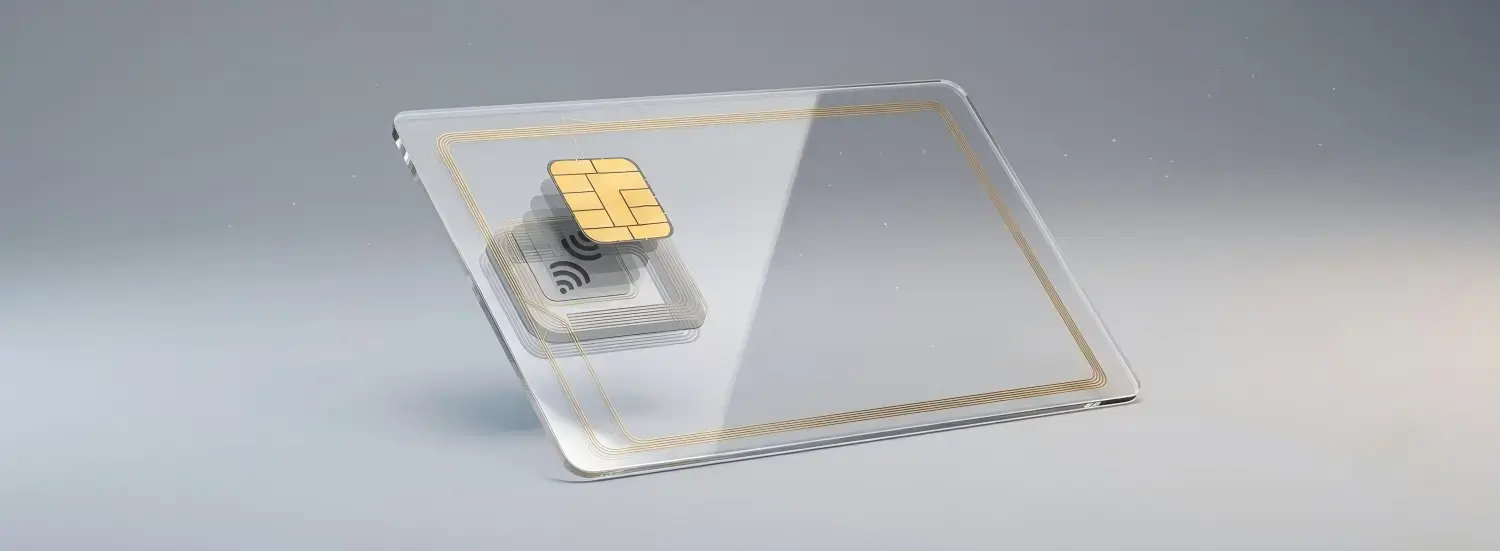
The Technology Behind RFID Dual Interface Cards
Microprocessor Architecture
The secure element chip is like the brain of the RFID dual interface card. Modern ones use EAL5+-rated cryptographic processors with hardware that is specifically designed for AES-128 or 3DES encryption. When a reader starts talking, either through the contact pads or the RF field, the chip goes through mutual authentication protocols and then releases any stored credentials. Clone attacks, which are common with older magnetic stripe methods, can't happen with this.
Power management is very different between interfaces. Contact mode gets power straight from the reader through physical pins. This lets it handle data faster and do more cryptographic operations. The electric field made by the reader's receiver is used to power the contactless mode. Our antenna tuning achieves a power transfer efficiency of 70–80%, which is enough to power up the chip and finish transactions in 300 ms.
Dual-Mode Communication Protocols
One of the hardest things in engineering is making seamless interface change possible. The card needs to be able to tell which interface is being used and respond correctly without any help from the user. The WS-RFID implementation uses smart mode detection circuitry that checks the strength of both the RF field and the contact pins. When you put the card into a touch reader, mechanical switches turn off the contactless radio to keep it from interfering. On the other hand, if you put the card close to a contactless reader while the contact interface is off, communication will automatically go through the RF pathway.
The unified memory architecture is what keeps data in sync across interfaces. Whether you change your credentials by touching them or not, the changes are made right away in the shared EEPROM storage. This gets rid of the misunderstanding and security holes that come with hybrid card systems, where two different chips can become out of line.
Security Features and Encryption
Efforts to stop cloning start with silicon. The chip makers we work with put in unique identification numbers (UIDs) that can't be changed after the chip is made. During setup, we encode the cryptographic keys for your organization into secure memory areas that can only be accessed by commands that have been verified. If you try to read these areas without the right permissions, you will set off tamper detection systems that can stop the card for good.
Encrypting data transmission keeps credentials safe when communicating wirelessly. Challenge-response authentication is used for the contactless interface. This is when the reader and card trade encrypted tokens before sending private data. Even if bad people put RF sniffers near the transaction point, this stops eavesdropping attempts. Physical connections that are shielded and naturally resistant to wireless interception are helpful for contact mode transactions.
Comparing RFID Dual Interface Cards with Other Technologies
Advantages Over Single Interface Solutions
Traditional contact-only cards have to be physically inserted, which wears out the reader slot and makes transactions take longer. Users mess up when they try to align the cards correctly, which slows down entry points. It's fast to use contactless credentials, but they don't have enough processing power for the complex cryptographic processes that are needed in high-security areas. Smart cards with two interfaces are both useful and safe.
The difference in costs turns out to be doable. Even though dual interface cards cost 15-20% more per unit than single-interface cards, the practical benefits quickly make up for it. You don't have to keep two separate systems running at the same time—one for quick access and one for safe activities. When people use contactless taps instead of repeatedly inserting cards, readers wear out less mechanically, so maintenance costs go down.
Performance in Challenging Environments
Professional-grade RFID cards are designed for durability in demanding environments. WS-RFID products meet ISO 10373 standards, withstand repeated bending, and resist chemicals such as sweat, alcohol cleaners, and sanitisers. Optimised antenna designs provide over 99.5% read reliability in high-interference environments by using stable inductive coupling technology.
Maintenance and Lifespan Considerations
Dual interface smart cards offer longer lifespans than magnetic stripe or barcode credentials due to their durable solid-state design. They typically last 5–10 years under normal use and support repeated reprogramming. WS-RFID cards can exceed 100,000 write cycles, allowing frequent updates while reducing replacement needs caused by wear or changing security requirements.
Applications and Benefits for Global B2B Procurement
Enterprise Access Control Systems
Today's office buildings need very specific security. RFID dual interface card solutions work great in tiered access situations where contactless readers control entry points with a lot of foot traffic while contact readers protect sensitive areas like server rooms or executive floors. The employee's identity is checked at the parking gate using contactless technology with the same card. After biometric verification, the card allows entry to the vault through a contact reader.
The options that WS-RFID offers work with well-known access control platforms from companies like Honeywell, ASSA ABLOY, and HID. Our technical support team can help you with field application engineering to find the best places to install antennas and readers based on your building's layout. Less than 0.1% defect rates mean fewer service calls and happier users across your deployment.
Hospitality and Guest Management
Hotels need IDs that are both safe and easy to use. Guests expect to be able to tap and go into their rooms, but the front desk staff needs reliable contact-based programming stations to record room numbers and lengths of stays. This operational split can be fixed with dual interface hotel key cards. Staff use contact readers for enrolment and checkout, while the contactless interface lets people quickly get in and out of the building.
Customisation makes a brand's identity stronger. We use edge-to-edge printing methods that keep cards durable when we print hotel logos, guest names, and advertising pictures. Sequential numbering and changeable data printing are two types of encoding that can be used to keep track of goods and send personalised messages to guests. Standard lead times of 7–10 days can handle changes in seasonal demand, and fast production can handle sudden property openings.
Transportation and Ticketing Platforms
Every day, millions of deals happen on public transport services. Contactless operation speeds up the process at turnstiles, while touch interfaces make it easier to handle accounts at kiosks. People tap their cards to quickly deduct the fare, and then they insert the same card into station machines to check their balances or add money—all without having to carry around extra cards or cash.
When used in public places, durability is very important. Transit cards can be carried in your pocket, tapped a lot, and even dropped on concrete steps. Our products can withstand ISO 10373 drop tests from 1.5 meters and keep working even after being exposed to rain, snow, and the sudden changes in temperature that are common in outdoor stations. Our Shenzhen factory can make 500 million pieces a year, which is enough to support large-scale municipal operations with uniform quality over multiple years.
Healthcare Patient and Asset Tracking
Hospitals have to keep track of how to identify patients, let workers in, and find lost tools. Dual interface smart cards can do more than one thing. Nurse badges let you open doors without touching them in an emergency, and contact interfaces keep track of when you enter drug storage areas so that you can pass an audit. Card-shaped wristbands for patients store medical histories that can be accessed through contact readers during admissions but use contactless protocols for quick scanning at the bedside.
Data privacy laws require strong security. To follow HIPAA and GDPR rules, data must be stored securely and patterns must be impossible to change. The healthcare-focused goods from WS-RFID have safe features that meet FIPS 140-2 Level 3 standards. These features give the necessary cryptographic power for storing protected health information (PHI). In hospital settings, pathogens are less likely to spread when PVC surfaces have antimicrobial coatings that are not required.
How to Procure and Program RFID Dual Interface Cards
Supplier Evaluation Criteria
Supplier selection should consider production capacity, certifications, and customization abilities beyond price. Reliable manufacturers provide consistent lead times through advanced production systems, maintain ISO, CE, and RoHS compliance, and offer tailored options such as card designs, encoding, materials, antenna tuning, and chip selection to meet specific application requirements.
Encoding and Initialization Procedures
For programming dual interface smart cards, you need hardware and software that work together. Standard ISO 7816 readers linked to PCs running credential management systems are used for contact encoding. NFC writers that talk to each other using ISO 14443 standards are used for contactless programming. Both methods use the same memory areas, but contact interfaces usually send data more quickly when doing a lot of things at once.
Security initialisation is done according to the rules of the organization. During encoding, you'll make master keys, set up access control groups, and give each key a unique identity. WS-RFID can pre-encode cards in the factory according to your instructions, making them ready to be sent out. This makes deployment easier and makes sure that the configuration is the same for all large orders. We support sending protected data during programming so that credentials don't get stolen during transportation.
Quality Assurance and Compliance Verification
International certifications keep procurement teams safe from claims made by suppliers. ISO standards spell out how to test for things like data integrity (ISO 7816-3), mechanical durability (ISO 10373), and radio frequency performance (ISO 14443-2). Reputable manufacturers do these tests in-house or through approved labs, so the results can be tracked.
Supply chain openness is becoming more and more important. Find out where the chips come from, where the materials come from, and how the company works with subcontractors. WS-RFID has direct relationships with top chip makers and gets its PVC from providers that are ISO-certified. From etching the antennas to the final packaging, we do everything ourselves. This lowers the risks in the supply chain and makes sure that everything can be tracked for compliance reporting.
Ongoing quality monitoring detects production drift. Statistical process control (SPC) methods at our plant find problems with radio resonance, chip bonding strength, or print registration so that bad batches don't get sent out. The defect rate of less than 0.1% is due to processes for continuous improvement and automated optical inspection that looks at all cards, not just a sample. This means that there will be fewer failures in the field, and you will spend less on support over the life of your deployment.
Conclusion
In conclusion, RFID dual interface cards bring together ease and security, letting businesses update their entry control systems without getting rid of old systems. Faster throughput, less maintenance, and better user experiences are all measurable benefits of the technology. When looking for an RFID dual interface card supplier, give more weight to companies that have a history of producing high-quality products, all the necessary certifications, and the ability to make changes that fit your unique business needs. Because WS-RFID Technology has been making products for 15 years and is dedicated to quality control, we are a great partner for businesses that need reliable, high-performance credentials that can be used for everything from test projects to global deployments.
FAQ
1.What differentiates dual interface cards from hybrid cards?
Dual interface smart cards have a single chip that works with both touch and contactless interfaces. This makes sure that data stays in sync no matter how the card is accessed. Hybrid cards have two separate chips, one for each interface. If credentials are changed through only one interface, data can become inconsistent. The unified architecture of dual interface designs gets rid of problems with synchronisation and makes manufacturing easier.
2.Can mobile phone signals damage dual interface cards?
Electromagnetic compatibility (EMC) designs on modern dual interface smart cards keep cellular signals, Wi-Fi routers, and other common RF sources from interfering with the cards. Cross-talk is not possible because the 13.56MHz working frequency is very low compared to cellular bands, which are usually 700MHz to 5GHz. WS-RFID's products go through strict EMC testing that meets ISO standards. This makes sure that they work reliably in places with a lot of electromagnetic noise, like airports and convention centers.
3.How do manufacturers prevent antenna breakage inside cards?
WS-RFID uses magnetic coupling technology to connect the radio coil directly to the chip module using machines. This gets rid of the need for hand-soldered connections that can break under stress. During lamination, our production process uses controlled pressure and temperature to embed the antenna in protective PVC layers. ISO 10373 flex testing proves that cards can be bent over 2,000 times without losing their antennas, which is a lot more than most people use them for.
Partner with WS-RFID for Your Dual Interface Card Requirements
WS-RFID Technology is ready to help your business make the switch to advanced dual interface credentials. We have been making RFID dual interface cards for a long time and our products are certified by ISO 9001:2015 and RoHS. They are of high quality and meet the strictest security and durability standards. Our 10,000㎡ factory makes 500 million units a year, so projects of all sizes can always get what they need.
Email our engineering team at kenny@w-srfid.com to talk about your technical needs and how you'd like things to be customised. We offer full support from choosing the chip to delivering it. Standard lead times are 7–10 days, but faster options are also available. Our dual interface smart cards give you the speed and dependability your operations need, whether you're using them for business access control, managing hotel guests, or transportation tickets.
References
1. Finkenzeller, Klaus. RFID Handbook: Fundamentals and Applications in Contactless Smart Cards, Radio Frequency Identification and Near-Field Communication. 3rd Edition. Wiley, 2010.
2. International Organization for Standardization. ISO/IEC 14443: Identification Cards – Contactless Integrated Circuit Cards – Proximity Cards. Geneva: ISO, 2018.
3. Rankl, Wolfgang, and Effing, Wolfgang. Smart Card Handbook. 4th Edition. Wiley, 2010.
4. International Organization for Standardization. ISO/IEC 7816: Identification Cards – Integrated Circuit Cards. Geneva: ISO, 2020.
5. Hendry, Michael. Smart Card Security and Applications. 2nd Edition. Artech House, 2007.
6. Coskun, Vedat, Ok, Kerem, and Ozdenizci, Busra. Professional NFC Application Development for Android. Wrox Press, 2013.
Learn about our latest products and discounts through SMS or email