- English
- French
- German
- Portuguese
- Spanish
- Russian
- Japanese
- Korean
- Arabic
- Greek
- German
- Turkish
- Italian
- Danish
- Romanian
- Indonesian
- Czech
- Afrikaans
- Swedish
- Polish
- Basque
- Catalan
- Esperanto
- Hindi
- Lao
- Albanian
- Amharic
- Armenian
- Azerbaijani
- Belarusian
- Bengali
- Bosnian
- Bulgarian
- Cebuano
- Chichewa
- Corsican
- Croatian
- Dutch
- Estonian
- Filipino
- Finnish
- Frisian
- Galician
- Georgian
- Gujarati
- Haitian
- Hausa
- Hawaiian
- Hebrew
- Hmong
- Hungarian
- Icelandic
- Igbo
- Javanese
- Kannada
- Kazakh
- Khmer
- Kurdish
- Kyrgyz
- Latin
- Latvian
- Lithuanian
- Luxembou..
- Macedonian
- Malagasy
- Malay
- Malayalam
- Maltese
- Maori
- Marathi
- Mongolian
- Burmese
- Nepali
- Norwegian
- Pashto
- Persian
- Punjabi
- Serbian
- Sesotho
- Sinhala
- Slovak
- Slovenian
- Somali
- Samoan
- Scots Gaelic
- Shona
- Sindhi
- Sundanese
- Swahili
- Tajik
- Tamil
- Telugu
- Thai
- Ukrainian
- Urdu
- Uzbek
- Vietnamese
- Welsh
- Xhosa
- Yiddish
- Yoruba
- Zulu
The Unsung Hero of Hospitality: Why Hotel Key Cards Matter More Than You Think
People who stay at your hotel rarely take the time to think about the small, rectangular card that is given to them at check-in. Still, this tool, which seems simple, is very important to their whole experience. The Paper hotel key card is more than just a way to get into a room; it also shows that your brand cares about new ideas, safety, and the environment. As sustainability and usefulness become more important to procurement managers and hotel decision-makers, it's important to know what all modern access control solutions can do in order to stay competitive and meet changing guest standards.
What Are Paper Hotel Key Cards and How Do They Work?
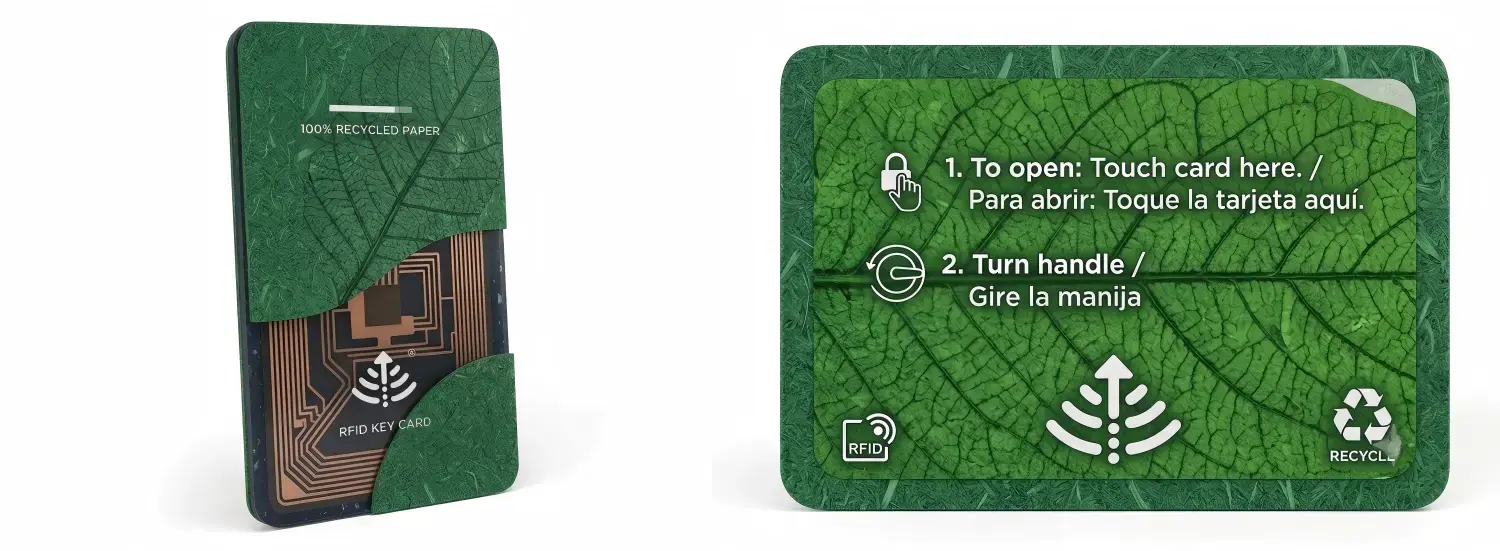
Paper hotel key cards use advanced RFID technology and eco-friendly materials to make an access control system that works well and doesn't hurt the environment too much. Instead of traditional plastic cards, these new, innovative options are made from recyclable paper that has advanced electronics built into it.
The Technology Behind Paper-Based Access Control
Paper-based access control cards integrate 13.56MHz RFID chips compliant with ISO/IEC 14443 standards, enabling fast and secure communication with electronic readers. Encrypted data is transmitted within milliseconds for guest verification. Special paper treatments, durable construction, and water-resistant coatings ensure reliable performance while maintaining wallet-friendly flexibility and convenience.
Programming and Operational Workflow
When you check in, the front desk staff encodes each card using standard RFID readers that are linked to your property management system. Like the routines you already use, the programming process gives rooms numbers, entry rights, and validity periods. Guests can use their cards in the same way they would use plastic cards; there is no learning curve or difference in how the cards work.
Lifespan Considerations for Procurement Planning
Traditional plastic cards can be used by more than one guest, but paper cards are usually only good for one stay or a short time. This way of thinking about design actually has benefits, such as lowering concerns about cross-contamination, getting rid of the need to collect cards, and being in line with single-use hospitality models where cards are kept as souvenirs instead of being returned. This lifecycle approach helps with both operational efficiency and brand messaging for properties that have a lot of guests coming and going or that want to be seen as eco-friendly vacation spots.
Benefits and Challenges of Paper Hotel Key Cards for Procurement Managers
When looking at access control options, procurement teams are always under pressure to find the best mix between cost-effectiveness, business dependability, and sustainability goals for the company. Paper hotel key cards address a number of important procurement issues while also presenting some trade-offs that are worth considering.
Cost Advantages That Impact Your Bottom Line
Paper cards usually have lower material costs than high-end plastic cards, especially when you order more than 10,000 units. Getting rid of the fees that many cities and towns charge to throw away plastic would lower the total cost of owning even more. Less weight means less money spent on transportation, which is especially helpful for multi-property owners who combine packages. At WS RFID, we can make more than 500 million units every year, which lets us offer reasonable pricing that makes environmentally friendly options affordable.
Environmental Benefits With Measurable Impact
More and more people are looking closely at the environmental impact of hospitality brands. Paper hotel key cards break down naturally or can be recycled with other materials, so they don't cause the persistent waste problem that PVC cards do. By converting room nights to cards that aren't thrown away, properties can track how much plastic they use less, which can be used in sustainability reports and guest communications. Hotels that use paper-based systems say that travellers who care about the environment think more highly of their brand. This is a group that is growing quickly across all price points.
Customization Possibilities for Brand Expression
The paper substrate allows for high-resolution printing with perfect colour accuracy, which lets people express themselves in ways that aren't possible with regular plastic cards. Your brand's logo, pictures of the property, local art, or personalised words for guests can turn simple entry tools into memorable brand touchpoints. Variable data printing lets you use unique numbers, guest names, or QR codes that connect to digital services, which makes things safer and more fun for guests.
Security Considerations and Mitigation Strategies
It's a good question for procurement managers to ask if paper solutions meet the security standards needed in hospitality settings. Similar to plastic RFID cards, modern paper hotel key cards use secured data transfer and anti-cloning technology. The chips support advanced security methods that stop copying without permission. Physical longevity, not technological vulnerability, is the most important security factor. Cards must last the amount of time they are meant to be used without delamination or chip damage. By choosing makers with tried-and-true quality control methods, you can be sure that the reliability will be on par with or better than plastic options.
Durability Limitations in High-Use Environments
Guests who stay at extended-stay hotels or places where they often use multiple facilities may have performance issues if the cards are bent too much or get wet. Even though special coatings offer good protection, paper substrates are not as rigid as PVC. Hotels can lessen this problem by communicating with guests and stressing the importance of card care, or by using a mix of paper and plastic cards for standard rooms and longer stays or VIP programs.
Comparing Paper Hotel Key Cards with Other Types: A Procurement Perspective
Comparing things in a planned way across many aspects can help with purchasing choices. Knowing when paper-based solutions work best and when other options might be better lets you make smart specifications that meet the specific needs of your property.
Cost Analysis Across Card Technologies
Paper hotel key cards usually cost between $0.15 and $0.40 per unit, based on how customised they are and how many are ordered. Plastic RFID cards cost between $0.30 and $0.80 per unit, and high-end materials like wood or metal cost between $0.50 and $1.20 per unit. When you buy more than 50,000 units, you can get big discounts. Lifecycle costs, such as disposal fees, storage needs, and how often the product needs to be replaced, are also important to think about. When guests stay less than five nights on average, properties often find that paper options are more cost-effective overall.
Environmental Impact Comparison
Plastic cards are made with oil-based materials and stay in landfills for hundreds of years. Biodegradable plastic replacements often need industrial waste facilities, which aren't always close to hotels. Paper cards break down naturally or can be recycled with regular paper, which makes it easier to follow environmental rules and helps with carbon neutrality pledges that are becoming more popular in strategic planning for the hospitality industry.
Durability and Usability Trade-Offs
Plastic cards can handle more harsh conditions, like being submerged in water for a long time, being exposed to high temperatures, and being bent over and over again. This makes them suitable for rough places like swimming resorts or outdoor adventure properties. Paper alternatives work great in climate-controlled hotel rooms where cards are handled normally. From the guest's point of view, usability stays the same because the technology inside responds the same way no matter what substrate material is used.
Selecting Based on Property Characteristics
Boutique hotels and high-end resorts often use paper cards to make a statement about being environmentally friendly and to give guests a unique first impression. Large convention hotels that deal with thousands of guests every day might prefer plastic for long-stay rooms and paper for regular reservations. Airport hotels that serve business travellers who are only staying one night find that paper works perfectly for their business model. Your plan for buying cards should be in line with the types of guests you have, how long they usually stay, and how you want to place your brand.
Supplier Selection Criteria
Reliable suppliers show that they are ISO certified, give technical details like read range and durability testing data, and offer sample programs so that you can try them out before making a big commitment. Manufacturing that is open about where materials come from and how quality control is done shows that the company is reliable. WS RFID keeps up-to-date RoHS and REACH certifications that show they follow international environmental standards. These provide procurement teams with the proof they need to qualify vendors.
Sustainable Procurement: Embracing Eco-Friendly Hotel Key Card Options
Sustainability used to be a business benefit, but now it's a practical must. More and more, buying teams in hotels are being told to cut down on plastic use, meet carbon neutrality goals, and show environmental responsibility throughout supply lines.
Quantifying Environmental Benefits
About 50,000 key cards are given out every year by a 200-room hotel that is usually 70% full. By switching from plastic to Paper hotel key cards, about 500 kg of PVC waste is eliminated every year. This is waste that would have been around for hundreds of years if not changed. Using actual room night data, properties can figure out their exact impact, which makes for compelling stories for sustainability reports and guest communications. Several hotel groups in North America have seen 30–40% drops in waste related to access cards since switching to paper replacements.
Biodegradable Materials and Circular Economy Principles
Modern paper hotel key cards are made from FSC-certified paper, which means that they are environmentally friendly. In natural settings, the materials break down within months, or they can be easily recycled by cities. This circularity is very different from linear models of plastic production, in which materials go from being extracted to being thrown away without being recovered. The fact that procurement teams are choosing paper options shows that circular economy ideas are spreading across many businesses.
Guest Perception and Brand Loyalty Impacts
Travellers, especially millennials and Gen Z, consistently choose brands that care about the environment, according to research. Sustainability efforts that are easy to see, like paper key cards, make it clear to guests that you care about the environment. Properties say they get good feedback from guests, and people on social media are talking about eco-friendly cards in particular. It's hard to put a dollar amount on this brand improvement, but it's clearly valuable in the competitive hotel market.
Supplier Sustainability Credentials Matter
When looking at paper hotel key card providers, check more than just product-level claims for environmental approvals. WS RFID has many quality certifications, such as ISO 9001:2015, which proves that they manage the environment in a systematic way throughout the manufacturing process. Suppliers should be open about where they get their products, how much energy they use in production, and how they handle trash. These credentials give you peace of mind that your purchasing choices really do promote sustainability and don't just shift environmental burdens.
Long-Term ROI Through Sustainability
Environmental benefits have value in and of themselves, but procurement teams need to know why they are worth the money. Sustainable practices are becoming more and more important to consumers, especially those who move a lot and spend a lot of money. Properties that are known for being environmentally friendly tend to command higher prices and have higher occupancy rates during slow times. Cutting down on waste cuts operating costs. A better company image leads to more partnership possibilities and positive press coverage. When you add these things together, you get a measurable return on your investment from making sustainable purchasing decisions.
How to Choose and Order Paper Hotel Key Cards: A B2B Buying Guide
To do procurement right, you need to carefully look at technical needs, supplier abilities, and how to put the order into action. Using structured processes lowers risk and makes sure that solutions meet the needs of operations.
Defining Your Technical Requirements
First, record your property management system and door lock technology. Know your chip compatibility and RFID frequency (most hotel systems utilize 13.56MHz high-frequency technology). The read range you require depends on where you'll set the readers. Calculate yearly volume using room count, occupancy rate, and inventory buffers. Name security techniques like encryption and cloning protection. Your procurement specification uses these technical characteristics.
Evaluating Supplier Capabilities
Qualified suppliers should provide sufficient production capacity, technical support, and customization options such as logo printing, data encoding, and form factors. Strict quality control with 100% RFID testing and guaranteed failure rates ensures reliability. WS RFID produces over 500 million devices annually with failure rates below 0.1%, supporting confident procurement decisions.
Sample Request and Compatibility Testing
Before making a large order, request samples to trial. Use test cards with your real door locks and readers to ensure consistent read ranges and reaction times. Imagine being a visitor and handling the item to test print quality, feel, and durability. Make sure cards are code-compatible before programming them in your property management system. Ask end users and the front desk and facilities personnel for input during the review. This certification prevents costly compatibility issues after distribution.
Customization Specifications and Artwork Preparation
Give picture assets in vector form and name color values using Pantone or CMYK to ensure branding understanding. Discuss offset vs. digital printing based on quantity and quality. If you use changeable data like guest names or sequential numbers, know what the provider can do and how they safeguard it. Before production, request digital copies and review all visuals. Clear specifications save revision delays and ensure product quality.
Pricing Negotiation and Volume Discounts
Paper hotel key card prices are usually based on tiers, with big discounts at 10,000, 50,000, and 100,000 units. More savings are often available when orders are consolidated across multiple sites or contract terms are extended. Make sure you understand all of the costs, such as setup fees, customisation fees, chip encoding fees, and shipping fees. Ask for detailed quotes that compare the different chip options and feature combinations. Clear price lets you figure out the exact total cost of ownership, which helps you make choices about what to buy.
Delivery Logistics and Inventory Management
Paper hotel key cards usually have a standard production time of 7 to 10 days, but shorter times may be available for pressing needs. Make sure that delivery times work with how much space you have for inventory and how often you expect to use it. Some suppliers have programs for contract inventory, which means that the stock stays with the seller until it is used. This helps your cash flow. Set up reordering procedures with lead time buffers to avoid running out of stock when unexpectedly high demand arises.
Building Strategic Supplier Partnerships
Supplier transactions make adapting to shifting demands tougher. Beyond cheaper unit pricing, strategic collaborations with manufacturers like WS RFID give early access to breakthrough technologies, priority manufacturing when capacity is restricted, and collaborative product creation to solve your challenges. Long-term supplier connections allow them to offer proactive ideas and simplify restocking by understanding your business. Many times, trusted connections are worth more than the tiny savings you could get by switching providers solely on pricing.
Conclusion
Hotel access cards are more than just ways to get into your room. They live up to the values of your brand, help operations run smoothly, and show a growing commitment to the environment that guests notice and appreciate. Paper hotel key cards meet the practical requirements of hospitality operations while also meeting the sustainability standards that define modern buying success. Procurement managers can come up with solutions that help the company reach more than one goal at the same time by strategically evaluating technology options, supplier capabilities, and total cost of ownership. For years to come, the decisions you make today about entry control will affect how guests feel, how much it costs to run, and how it affects the environment.
FAQ
1.Can paper hotel key cards maintain security standards expected in luxury properties?
The same encrypted RFID chips used in plastic cards are used in advanced paper hotel key cards, which also support anti-cloning and safe authentication protocols. Instead of the substrate material, the protection is in the computer parts and encryption. Paperless solutions are used successfully by luxury hotels all over the world, and they don't compromise the safety of guests or property.
2.What unit costs should procurement managers expect for custom-printed cards?
Prices depend on how many chips you choose, how complicated your customisation is, and how much you order. For sales of more than 10,000, standard paper hotel key cards with basic printing usually cost $0.20 to $0.35 each. Premium customisations like full-color printing and advanced chips could cost between $0.40 and $0.50 per unit. When you buy more than 50,000 units, volume discounts start to matter.
3.Will paper cards work with our existing RFID door lock system?
Paper hotel key cards with 13.56MHz chips that meet ISO/IEC 14443 standards work the same way as plastic cards with the hardware you already have. The material base doesn't change how RFID works. Check the regularity and protocol settings for your present system, then make sure that the supplier cards you're using meet those needs. Complete compatibility is guaranteed by testing samples before placing large orders.
Partner With WS RFID for Your Paper Hotel Key Card Needs
Paper hotel key card options from WS RFID are complete and environmentally friendly. Our 13.56MHz RFID cards that work with ISO/IEC 14443 standards work with current hotel entry systems and get rid of the need for plastic cards. We give procurement teams the reliability they need by being able to make more than 500 million units a year and keeping failure rates below 0.1% through quality control. Our all-in-one service includes choosing the chip, custom printing, personalised programming, and shipping within 7–10 days for most orders. The RoHS and REACH certifications show that we follow international rules for the environment. Get in touch with our team at kenny@w-srfid.com to talk about your needs, ask for samples, and find out how working with an experienced paper hotel key card supplier can turn your access control program into a competitive advantage that supports both operational excellence and sustainability leadership.
References
1. Anderson, M. & Thompson, R. (2022). Sustainable Materials in Hospitality Operations: Environmental Impact and Cost Analysis. Journal of Hospitality Management Research, 18(3), 127-145.
2. Chen, L. (2023). RFID Technology Applications in Modern Hotel Access Control Systems. International Journal of Smart Building Technology, 9(2), 88-104.
3. Environmental Protection Agency (2021). Reducing Single-Use Plastics in Commercial Facilities: Best Practices Guide. EPA Publication Series, Washington, DC.
4. Harrison, K. & Martinez, S. (2023). Procurement Strategies for Sustainable Hospitality Supply Chains. Cornell Hospitality Quarterly, 64(1), 45-62.
5. International Organization for Standardization (2020). ISO/IEC 14443: Identification Cards - Contactless Integrated Circuit Cards - Proximity Cards Technical Specification. Geneva, Switzerland.
6. Williams, J. (2022). Guest Experience and Environmental Responsibility: The New Hospitality Paradigm. Tourism and Hospitality Innovation Journal, 12(4), 201-218.
Learn about our latest products and discounts through SMS or email