- English
- French
- German
- Portuguese
- Spanish
- Russian
- Japanese
- Korean
- Arabic
- Greek
- German
- Turkish
- Italian
- Danish
- Romanian
- Indonesian
- Czech
- Afrikaans
- Swedish
- Polish
- Basque
- Catalan
- Esperanto
- Hindi
- Lao
- Albanian
- Amharic
- Armenian
- Azerbaijani
- Belarusian
- Bengali
- Bosnian
- Bulgarian
- Cebuano
- Chichewa
- Corsican
- Croatian
- Dutch
- Estonian
- Filipino
- Finnish
- Frisian
- Galician
- Georgian
- Gujarati
- Haitian
- Hausa
- Hawaiian
- Hebrew
- Hmong
- Hungarian
- Icelandic
- Igbo
- Javanese
- Kannada
- Kazakh
- Khmer
- Kurdish
- Kyrgyz
- Latin
- Latvian
- Lithuanian
- Luxembou..
- Macedonian
- Malagasy
- Malay
- Malayalam
- Maltese
- Maori
- Marathi
- Mongolian
- Burmese
- Nepali
- Norwegian
- Pashto
- Persian
- Punjabi
- Serbian
- Sesotho
- Sinhala
- Slovak
- Slovenian
- Somali
- Samoan
- Scots Gaelic
- Shona
- Sindhi
- Sundanese
- Swahili
- Tajik
- Tamil
- Telugu
- Thai
- Ukrainian
- Urdu
- Uzbek
- Vietnamese
- Welsh
- Xhosa
- Yiddish
- Yoruba
- Zulu
The Best Contactless RFID Cards for Secure Transactions and Convenience?
When searching for the best contactless RFID cards for secure transactions and convenience, businesses need solutions that combine reliability, advanced security, and seamless integration capabilities. An RFID contactless card equipped with ISO-compliant chip technology operating at 13.56 MHz or 125 kHz delivers fast, touch-free authentication and encrypted data transmission. These smart cards eliminate physical wear, reduce transaction times to milliseconds, and support multi-application environments across access control, payment systems, and asset management—making them indispensable for procurement managers seeking scalable, future-proof solutions.
Understanding RFID Contactless Cards: Technology and Benefits
RFID contactless card technology changes the way businesses handle safe transactions and access control in a big way. At the heart of every contactless smart card is an integrated circuit chip and an antenna that were carefully designed to work together. Together, these parts talk to readers using radio frequency signals, so they don't have to touch each other. This makes transactions much faster and cleaner.
Frequency Ranges and Their Applications
Contactless cards work on different frequency bands, and each one is best for a certain type of use. Low Frequency (LF) cards that work at 125 kHz to 134 kHz work well in places where metals can interfere, and they are often used in workplace access control systems. High Frequency (HF) cards at 13.56 MHz, which is the standard in the industry, can send data faster, up to 848 kbit/s. This makes them perfect for use in corporate security systems, transit ticketing, and processing payments. When procurement workers understand these differences in frequency, they can match card specs exactly to practical needs.
Core Components and Construction
A professional-grade RFID contactless card is made up of three important layers. The base, which is usually high-durability PVC that is between 0.76 and 0.84 mm thick, keeps the structure together and prevents breaking stress. The antenna, which is usually made of copper or aluminum, creates the electromagnetic field needed for data and power transmission inside this substrate. The chip itself saves encrypted data, runs verification routines, and handles read/write cycles of more than 100,000 processes. The data is kept for more than 10 years.
Security Advantages Over Legacy Systems
Traditional forms of identification like magnetic stripe cards and barcodes are fundamentally weak. It's easy to read magnetic data, and barcodes get less useful over time. Advanced encryption algorithms like AES-128 and mutual authentication procedures used in contactless smart cards protect against illegal copying and data theft in multiple ways. Cards with NXP's MIFARE DESFire EV3 or HID iCLASS technology use secure messaging and key diversity to make sure that each transaction creates a unique set of session keys that stop replay attempts.
These security features directly meet compliance needs in fields that deal with private information. Using tamper-evident designs and cryptographic standards that meet ISO/IEC 14443 and ISO/IEC 15693 specifications can help healthcare facilities keep track of patient records, banks control who can access vaults, and the government keep audit trails.
Choosing the Right RFID Contactless Card: Key Decision Factors for Procurement
To choose the best smart cards, you need to carefully consider their technical specs, how well they work in different environments, and their total cost of ownership. Managers of procurement have to weigh short-term budget cuts against long-term operating efficiency and security risks.
Technology Comparison: RFID vs. Alternative Solutions
Even though magnetic stripe cards are cheap at first, they end up costing you a lot because they wear out quickly and can become demagnetized. Barcode readers need to be able to see the barcode, which can slow things down when there is a lot of traffic. NFC cards, which are a type of HF RFID technology, can be used with smartphones, but they might not be tough enough for use in hard industrial settings. RFID contactless card solutions are very durable; they can work in temperatures ranging from -25°C to +70°C, are waterproof, and can't be damaged by chemicals. These are important features for manufacturing floors, outdoor parking lots, and food processing plants.
Frequency Selection: Matching Performance to Use Case
Which frequency to use—125 kHz or 13.56 MHz—depends on the needs of the application. LF cards can get through metal and liquid barriers better, which makes them good for asset tags on machinery and systems that let you get into vehicles. HF cards are the best choice for payment systems, public transportation, and multi-application credentials that let you enter buildings and buy things without cash. They can send and receive data faster and can use advanced security.
Material Considerations for Longevity
Standard PVC cards work fine in climate-controlled office settings, but they need to be made of better materials for uses that involve high temperatures or mechanical stress. PET and PETG materials are more flexible, while polycarbonate structures can be bent over and over again without coming apart. WS RFID can make cards with customized material choices that meet ISO/IEC 7810 physical characteristics standards. This makes sure that cards keep their structural integrity for more than 100,000 use cycles.
Compliance and Certification Essentials
International standards must be followed when a global supply chain is integrated. ISO/IEC 14443A approval makes sure that readers from different companies can work together, so there are no worries about vendor lock-in. Cards with CE, FCC, RoHS, and REACH standards make it easier for regulators to approve deployments across borders. Teams in charge of buying things should make sure that sellers show proof of testing at the batch level. This should include readings of the Q-factor and resonance frequency to make sure that the read ranges are consistent across production runs.
Top RFID Contactless Card Solutions and Leading Manufacturers
Established technology companies and specialized manufacturers with different value offers make up the competitive environment.
Industry Leaders and Their Offerings
With iCLASS SE® platforms that allow Secure Identity Object® (SIO®) credentials, HID Global leads the way in high-security apps. Through combined printing and encoding systems, Zebra Technologies does very well in both the retail and hospital markets. NXP Semiconductors makes chips that power most of the world's transit systems. Avery Dennison, on the other hand, focuses on supply chain visibility applications that use RFID and clothing tags together.
WS RFID Technology's Competitive Position
Vertically combined production, which includes chip selection, antenna design, encoding, and personalization, is what makes WS RFID Technology stand out. Our 10,000-square-meter facility has high-speed Muehlbauer bonding lines that can make more than 500 million units a year with defect rates below 0.1%. This scale makes factory-direct pricing possible, which gets rid of markups for distributors while still following strict quality control rules.
Our technical edge comes from being able to handle both 13.56 MHz high-frequency (HF) and 125 kHz low-frequency (LF) standards within the same product lines. This lets users standardize card shapes across a wide range of reader infrastructures. Custom antenna tuning services make read ranges work best in specific settings, like anti-metal designs for tracking warehouse pallets and liquid-resistant styles for identifying drink containers.
Customization and Value-Added Services
Leading makers set themselves apart by offering a wide range of customization options. Full-color CMYK offset printing can handle complicated brand designs, and laser etching and thermal rewrite technologies let you personalize serialized credentials with changeable data. With pre-encoding services, cards come ready to be used right away, with sector keys already coded and access rights set up the way the customer wants them to be.
As part of its OEM/ODM services, WS RFID also develops new functions for products. Our Field Application Engineers work with clients to create custom firmware that supports their own authentication protocols, set up dual-interface functionality that combines contact and contactless features, and add sensor payloads for monitoring temperature in cold chain logistics applications.
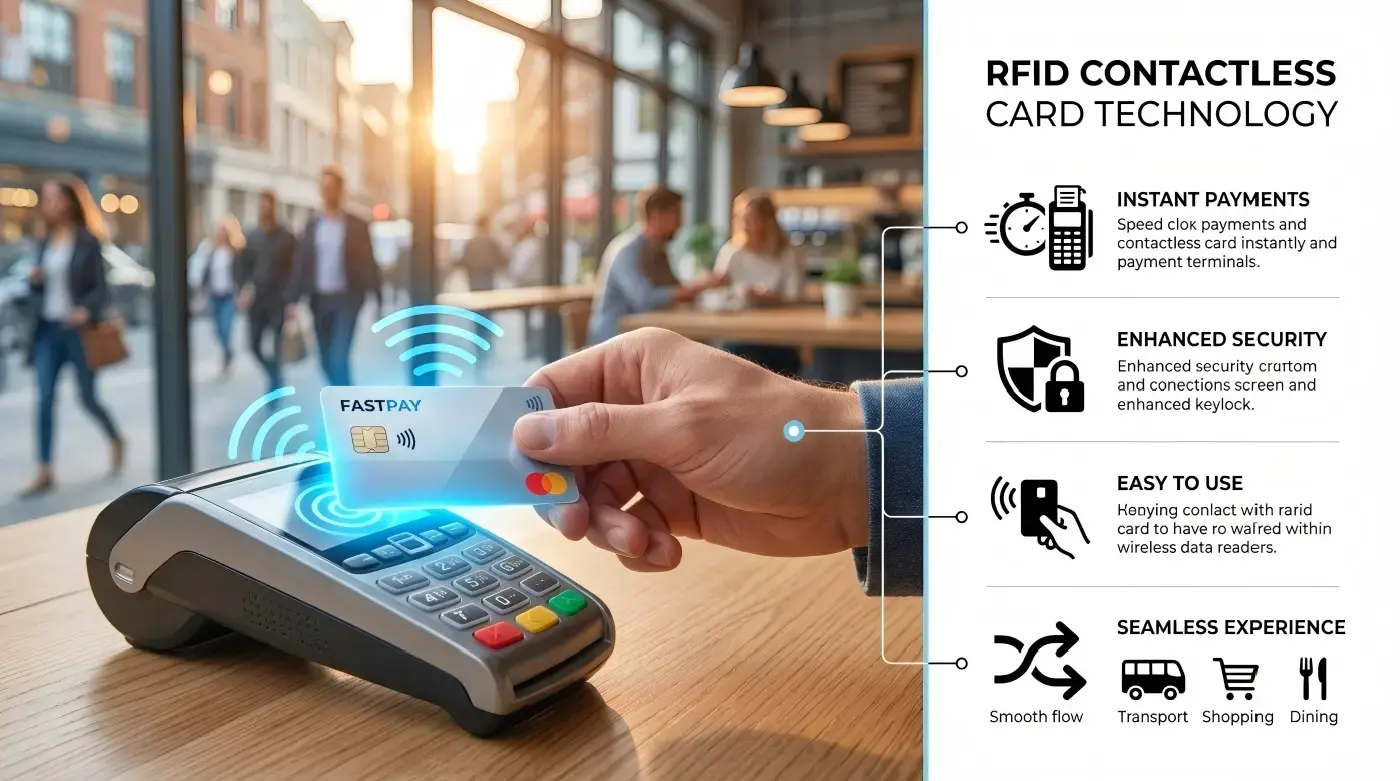
Navigating Procurement: How to Buy RFID Contactless Cards for Bulk Transactions
To strategically source RFID contactless cards, you need to carefully evaluate suppliers, look at prices, and set up strong quality control systems.
Supplier Selection Criteria
Professionals in procurement should look at possible sellers from a number of different angles. The ability to grow with demand depends on the manufacturing capacity. Facilities that make less than 50 million units a year may have trouble with enterprise-level operations. Lead times and shipping costs are affected by how close two locations are to each other. North American businesses gain when suppliers keep regional inventory buffers. During the integration phase, technical support infrastructure is very important. Vendors that offer Field Application Engineering resources shorten the time it takes to set up and fix problems.
Pricing Models and Cost Optimization
Contactless card prices depend on the type of chip chosen, the card's memory size, how complicated the personalization is, and how many cards are ordered. Basic 125 kHz proximity cards with fixed UID numbering are priced at the entry level, while 13.56 MHz DESFire EV3 cards with 8 KB of memory and cryptographic features are priced at the high end. Volume limits have a big effect on unit costs; orders over 10,000 units usually qualify for tiered discounting structures.
Quality Assurance and Testing Protocols
As part of the incoming inspection process, the mechanical stress tolerance should be checked using ISO 10373 bending and twisting tests. This will make sure that the antenna-to-chip bonding integrity can handle daily handling. Using tools like Voyantic Tagformance devices for electrical performance evaluation checks the accuracy of the resonance frequency and the read range. Checks for data security make sure that all chips are initialized successfully and that each production batch has a unique UID.
Setting up vendor scorecards that keep track of defect rates, on-time delivery performance, and how quickly technical support responds creates ways to hold vendors accountable and encourages continuous improvement. WS RFID's quality management system includes automated functional and optical testing at several stages of production. This helps us keep defect rates below 0.1%, which shows how committed we are to making the best products possible.
Implementing RFID Contactless Cards Successfully in Your Business
A successful rollout includes more than just buying the product. It also includes planning how it will work together, teaching users, and making improvements all the time.
Encoding and Personalization Best Practices
Redundancy checks should be built into card programming processes to stop encoding mistakes that cause problems with operations. Using specialized encoding units with verification readers makes sure that the data is correct before the cards are sent out. When variable data personalization is used to connect card UIDs to employee records, room assignments, or account amounts, it is important to make sure that personally identifiable information is kept safe throughout the production process.
Real-World Performance Improvements
A multinational hotel chain put RFID contactless card key cards in 200 properties, which cut check-in times by 40% and got rid of the mechanical lock problems that come with magnetic stripe systems. The encrypted credentials let the system work with property management systems, which changed the room access rights immediately when the guest checked out and stopped anyone else from entering without permission.
Emerging Trends and Future-Proofing Strategies
The next step forward for smart card apps is to include the Internet of Things (IoT). Environmental conditions are monitored by sensors built into card substrates. For example, RFID tags with built-in thermometers can be used to track temperature-sensitive pharmaceutical packages and provide real-time cold chain proof. Contactless cards are used as real access keys to digital identity files in blockchain-based authentication systems. This lets trustless verification work in decentralized apps.
In high-security areas, new threats are dealt with by better security protocols that combine biometric fusion, which is when contactless cards are paired with fingerprint or facial recognition. Strategies for buying things should give more weight to vendors who show they are investing in research and development for next-generation technologies. This will make sure that current deployments can still work with new standards and threats.
Conclusion
In conclusion, when it comes to a wide range of application settings, the best RFID contactless card options make transactions faster, safer, and more efficient. Procurement experts can lower security risks and improve total cost of ownership by choosing the right frequency bands, chip technologies, and material constructions for each business use case. Working together with manufacturers that offer full customization options, strict quality control, and quick technical support makes sure that the system will work well for a long time. As IoT integration and more advanced security methods keep pushing contactless technology forward, businesses that make smart investments in scalable, standards-compliant solutions will stay ahead of the competition.
FAQ
1. How do I determine the optimal read range for my application?
The read range is affected by the power of the reader antenna, the shape of the card antenna, and the surroundings. Standard proximity cards work consistently at distances of 2 to 10 cm, making them good for limited entry points where people have to show their IDs on purpose. Longer ranges increase the chance of security breaches due to accidental activation or eavesdropping; shorter ranges increase privacy but may make users frustrated. The engineering team at WS RFID does site surveys where they look at metal structures, electromagnetic interference, and throughput needs to come up with the best configurations that balance security and usability.
2. Can existing magnetic stripe readers be upgraded to support contactless cards?
Hybrid reader options work with both magnetic stripe and wireless interfaces, which lets you move to new systems in stages. This method lets businesses give out new RFID contactless cards while still being able to use older cards during changeover times. Completely replacing the infrastructure gives better performance, but all entry points need to be set up at the same time. WS RFID's project management help makes staged rollouts possible, which minimizes business disruptions.
3. What security measures prevent unauthorized card duplication?
Mutual authentication is used by high-security cards that use cryptographic protocols like MIFARE DESFire. This means that both the card and the reader have to prove they are real before any data can be sent. If individual credentials are looked at, they can't take down the whole system because each card has its own unique set of keys. Updating encryption algorithms and rotating master keys as part of regular security checks keeps defense against new attack methods. For private tasks, you should stay away from basic UID-only cards because they don't have encryption protection and can still be copied.
Partner with WS RFID for Your Contactless Card Solutions
WS RFID Technology has the best production skills and the most in-depth technical knowledge to meet all of your RFID contactless card usage needs. As a reputable RFID contactless card maker, we offer direct factory access to premium proximity smart cards designed to work in tough conditions. Our ISO-certified production plant consistently produces high-quality goods for all orders, no matter how big or small. Standard delivery takes 7 to 10 days, and faster production is available for projects that need to be done quickly. Our OEM/ODM services can make solutions that are exactly what you need, whether you need simple proximity cards for access control or advanced protected passwords for systems that use more than one app. Email our team at kenny@w-srfid.com to talk about your project needs and get detailed technical specifications that are made to fit your operational environment.
References
1. International Organization for Standardization. (2020). ISO/IEC 14443: Identification cards — Contactless integrated circuit cards — Proximity cards. Geneva: ISO Press.
2. Finkenzeller, K. (2010). RFID Handbook: Fundamentals and Applications in Contactless Smart Cards, Radio Frequency Identification and Near-Field Communication (3rd ed.). Chichester: John Wiley & Sons.
3. Thornton, F., Haines, B., Das, A., Bhargava, H., Campbell, A., & Kleinschmidt, J. (2006). RFID Security. Rockland: Syngress Publishing.
4. Juels, A. (2006). RFID security and privacy: A research survey. IEEE Journal on Selected Areas in Communications, 24(2), 381-394.
5. Want, R. (2006). An introduction to RFID technology. IEEE Pervasive Computing, 5(1), 25-33.
6. Landt, J. (2005). The history of RFID. IEEE Potentials, 24(4), 8-11.
Learn about our latest products and discounts through SMS or email