- English
- French
- German
- Portuguese
- Spanish
- Russian
- Japanese
- Korean
- Arabic
- Greek
- German
- Turkish
- Italian
- Danish
- Romanian
- Indonesian
- Czech
- Afrikaans
- Swedish
- Polish
- Basque
- Catalan
- Esperanto
- Hindi
- Lao
- Albanian
- Amharic
- Armenian
- Azerbaijani
- Belarusian
- Bengali
- Bosnian
- Bulgarian
- Cebuano
- Chichewa
- Corsican
- Croatian
- Dutch
- Estonian
- Filipino
- Finnish
- Frisian
- Galician
- Georgian
- Gujarati
- Haitian
- Hausa
- Hawaiian
- Hebrew
- Hmong
- Hungarian
- Icelandic
- Igbo
- Javanese
- Kannada
- Kazakh
- Khmer
- Kurdish
- Kyrgyz
- Latin
- Latvian
- Lithuanian
- Luxembou..
- Macedonian
- Malagasy
- Malay
- Malayalam
- Maltese
- Maori
- Marathi
- Mongolian
- Burmese
- Nepali
- Norwegian
- Pashto
- Persian
- Punjabi
- Serbian
- Sesotho
- Sinhala
- Slovak
- Slovenian
- Somali
- Samoan
- Scots Gaelic
- Shona
- Sindhi
- Sundanese
- Swahili
- Tajik
- Tamil
- Telugu
- Thai
- Ukrainian
- Urdu
- Uzbek
- Vietnamese
- Welsh
- Xhosa
- Yiddish
- Yoruba
- Zulu
Where to buy reusable plastic hotel door key cards in bulk
When searching for where to buy reusable plastic hotel door key cards in bulk, procurement professionals have multiple channels to explore—from specialized RFID manufacturers like WS-RFID Technology to established B2B marketplaces such as Alibaba and Global Sources. Partnering with a direct manufacturer ensures competitive pricing, technical customization, and consistent quality. WS-RFID Technology offers turnkey solutions including RFID hotel key cards at 125kHz or 13.56MHz frequencies, supporting ISO/IEC 14443 protocols with rapid delivery within 7-10 days and annual production capacity exceeding 500 million units—positioning them as a trusted supplier for hotels, resorts, and hospitality distributors across North America.
Understanding Reusable Plastic Hotel Door Key Cards
Hotel key cards that can be used more than once are a more advanced form of entry control than standard metal keys. The main technology behind these IDs is RFID, which uses built-in chips that can directly talk to electronic door locks. Unlike paper tickets or barcodes that can only be used once, a durable plastic hotel door key card can be programmed and issued hundreds of times. This saves money and reduces waste.
What Are Reusable RFID Key Cards?
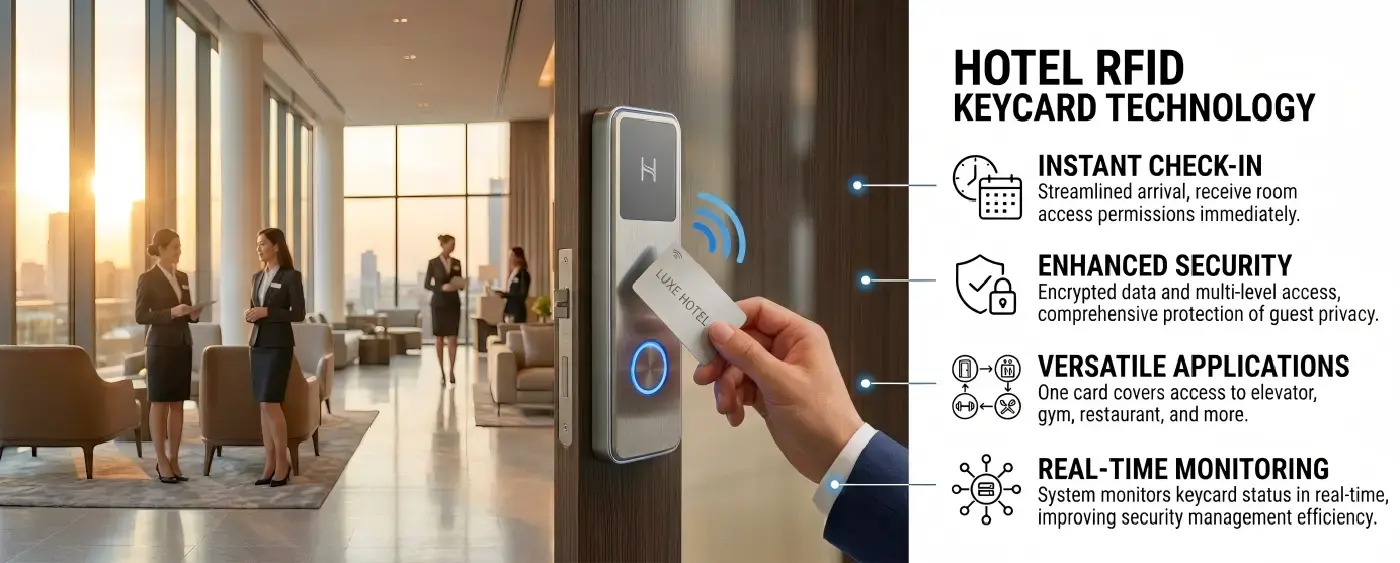
Modern plastic hotel door key cards that can be used more than once are made from high-quality PVC or PET plastic and have a standard thickness of 0.76 to 0.84mm, which meets ISO/IEC 7810 ID-1 standards. In the hospitality industry, there are two main radio frequencies: 13.56MHz high-frequency (HF) cards that meet ISO/IEC 14443 standards offer faster data transfer and better security encryption; and 125kHz low-frequency (LF) cards that work well in electrically noisy environments and don't cause interference. Both technologies make it easy for guests to check in, get rid of the hassle of keeping track of physical keys, and connect directly to Property Management Systems to create real-time audit trails.
Reusable vs. Disposable: Why Sustainability Matters
In hospitality settings with a lot of change, disposable magnetic stripe cards and paper-based options make a lot of trash. A hotel with 300 rooms can throw away thousands of cards every year, which adds to the amount of trash in landfills. On the other hand, reusable cards can handle more than 100,000 write cycles and keep their data safe for more than 10 years. This durability saves money in the long run and fits with corporate sustainability efforts that eco-friendly guests are asking for more of and with rules like REACH and RoHS certifications.
Key Technology Types: Matching Your System Needs
Procurement teams can choose the best option if they know about the technical differences. Low-frequency 125kHz cards work best in places where metal can cause interference, like hotels with steel-reinforced buildings or places with a lot of wireless networks. High-frequency 13.56MHz RFID cards can be read more quickly (within a range of 5 to 15 cm), support more advanced encryption methods, and can be used for more than one thing, like making payments without cash or integrating reward programs. Which NXP Mifare, Desfire, Ntag, or Fudan chip to use depends on which lock system it works with and how secure you want it to be.
Key Considerations When Purchasing Reusable Plastic Hotel Door Key Cards in Bulk
There's more to choosing a large provider than just comparing prices per unit. To make sure operations keep running smoothly and guests are happy, good buying strikes a balance between the quality of the materials, their security features, their ability to be customized, and how reliable the suppliers are.
Evaluating Material Quality and Durability
High-quality cards have strong PVC or eco-friendly PET cores that don't bend at temperatures ranging from -25°C to +70°C. Consistency in thickness is important—cards that are too thick or too thin can get stuck in card readers or fail mechanical tests. Antenna bond quality is very important; RFID antennas that aren't properly joined cause "dead on arrival" cards, which are annoying for front desk staff during busy check-in times. Manufacturers with a good reputation, like WS-RFID Technology, make sure that overlay lamination can handle being handled by guests and weather stress by doing strict peel strength tests that follow ISO 10373-1 standards.
Security Features: Protecting Guest Privacy
Leaks of data and unauthorized entry to rooms are very bad for your liability. These days, hotel key cards have anti-cloning chip designs, encrypted data transfer, and rolling code authentication methods. High-coercivity (HiCo) magnetic bands at 2750 Oersted don't get demagnetized by cell phones and other electronics, which is a problem that a lot of older Low-Coercivity (LoCo) cards have. RFID solutions that use AES encryption stop people from copying credentials without permission, making sure that only authorized Property Management Systems can encode valid credentials.
Customization Options: Branding and Guest Experience
In addition to being useful, a plastic hotel door key card is also a way to promote the brand. Hotels can show names, advertising messages, and pictures of the property with full-color CMYK printing that can be done by offset, screen, or digital means. Variable data printing lets you add sequential numbers, QR codes for digital concierge services, and unique names for each guest. Finishing options like glossy, matte, or frosted surfaces make things feel better to touch. Custom card forms and sizes are less common, but they set high-end properties apart when they want to connect with their guests in a unique way.
Supplier Reliability: Lead Times and Support
Business-to-business buyers need to look at a supplier's production ability, quality control methods, and customer service after the sale. A company with ISO 9001:2015 approval and automatic production lines makes sure that each batch is the same. Standard wait times of 7–12 days allow for regular restocking, and during busy times, faster production can handle pressing replacements. Technical help that is quick to respond, like remote integration checks and encoding troubleshooting, keeps operations running smoothly and saves money on downtime.
Where to Buy Reusable Plastic Hotel Door Key Cards in Bulk: Supplier Overview and Recommendations
Finding the right source channel for plastic hotel door key cards relies on the number of orders, the level of tailoring needed, and the location of the business.
Direct Manufacturers: WS-RFID Technology and Industry Leaders
When you work with a direct producer, you cut out the middleman and get clear control of the supply chain. WS-RFID Technology has an ISO-certified facility that is over 10,000 square meters and can make more than 500 million units per year. They can make anywhere from 500 to 500,000 cards per order. Their turnkey OEM/ODM services include choosing the chip, tuning the antenna, custom encoding, and batch distribution, which makes it easier for hotel chains with multiple properties to buy things. Well-known global names like HID Global and Allegion offer business-level options that work with a lot of lock systems, but they usually cost more.
B2B Marketplaces: Alibaba and Global Sources
Platforms like Global Sources and Alibaba bring together thousands of sellers, making it possible to compare prices and find niche providers. Buyers should check the credentials of the supplier through third-party audits, ask for samples to see how well the print and chips work, and read reviews from other customers. People who want to get competitive bids on standard goods should use these platforms. However, customization times may take longer because of problems with communication and longer shipping routes.
Regional Distributors: Balancing Speed and Service
For small hotels and pressing restocking needs, local wholesalers in North America and Europe are a good choice because they offer faster delivery, lower freight costs, and more personalized service. A lot of the time, these partners keep popular chip types in stock and can help you place smaller orders. Unit prices, on the other hand, are usually higher than direct manufacturer rates. This makes this route perfect for test programs or sites where demand changes quickly.
Best Practices for Supplier Evaluation
Before placing large orders, smart procurement teams ask for samples to check the card dimensions, print quality, and read rate stability across different lock readers. You can protect yourself from bad batches by negotiating volume discounts, flexible payment terms, and clear warranty policies (usually 1-2 years). When you form long-term partnerships with manufacturers like WS-RFID, you get access to new technologies like NFC-enabled mobile credentialing, priority production slots, and stable prices.
How to Program and Manage Reusable Plastic Hotel Door Key Cards
For operations to run smoothly, physical credentials and digital management systems must work together without any problems. How to set up and manage plastic hotel door key cards that can be used more than once involves seamless integration between physical credentials and digital management systems.
Programming Methods: Magnetic Stripe vs. RFID Encoding
Magnetic stripe cards need special encoders that put data directly onto LoCo or HiCo strips. This is a process that can wear out after thousands of rounds. RFID chip programming uses contactless readers and writers to store encrypted guest passwords, room numbers, and entry times on the chip's memory, which is usually an EEPROM with 1KB, 4KB, or 8KB of space. This method works with modern Property Management Systems directly through APIs or middleware, and it is faster and more reliable.
PMS Compatibility and Integration
Making sure that the card technology you choose works with the lock system you already have in place will save you a lot of money on upgrades. Some chip systems, like Mifare Classic, Mifare Plus, or Desfire EV2, are supported by major lock brands like Saflok, VingCard, and ASSA ABLOY. Field application engineers at WS-RFID Technology do remote checks to make sure that the antenna is tuned correctly, that the read range is optimized, and that the encryption handshake works. This lowers the risks of deployment.
Lifecycle Management Best Practices
Unauthorized access is stopped by keeping track of card inventory, keeping an eye on reuse cycles, and setting up secure reprogramming workflows. Hotels should have rules in place for immediately deactivating lost or stolen cards through PMS commands. Regular checks of the card stock, which include getting rid of any physically broken or demagnetized cards, keep the system reliable and keep guests happy.
Cost Analysis and Environmental Impact of Bulk Reusable Plastic Key Cards
When buying in bulk, choices about money and the earth come together. Plastic hotel door key cards usually cost between $0.20 and $2.00 per unit, but this depends on the type of chip technology used, how complicated the customization is, and how many are ordered.
Pricing Factors and Volume Discounts
Basic 13.56MHz Desfire cards with full-color printing cost $1.50 or more per unit, while basic 125kHz proximity cards cost about $0.30 per unit in quantities over 10,000. When you buy 50,000, 100,000, or 500,000 units, you can get big savings. Companies like WS-RFID offer tiered pricing that cuts costs by 15 to 30 percent as you buy more.
Long-Term ROI Through Durability
Premium cards cost more up front, but they last longer (10+ years, 100,000+ write cycles), so they're a better investment than throwaway cards that need to be replaced all the time. A 200-room hotel that replaces disposable cards every three months spends about $4,000 a year on new cards. If they switch to reusable RFID cards, they only have to be replaced every six months or more often, which saves them 60% over five years.
Environmental Benefits and Compliance
Reusable cards cut down on plastic waste by a lot—one card can replace thousands of single-use cards over the course of its life. Picking PET over PVC is even better for the environment because it can be recycled more easily. RoHS and REACH certifications make sure that cards don't contain any harmful chemicals like lead and phthalates. This is in line with green building standards like LEED certification, which is being used more and more by hotel businesses.
Conclusion
To get a lot of reusable plastic hotel door key cards, you have to find a seller that meets your technology needs and is reliable while also being cost-effective. Direct makers like WS-RFID Technology offer full solutions, such as RFID chips that are compatible with ISO standards and work at 125kHz or 13.56MHz frequencies, as well as full customization services that can be completed in 7–10 days. Knowing about material quality, security encryption, and PMS compatibility makes sure that everything works together smoothly. The long-term benefits of high quality and sustainability make the investment worth it. Hospitality procurement teams get reliable credentials that improve the guest experience and operational efficiency by working with experienced suppliers who offer turnkey support and strong quality assurance.
FAQ
1. Are reusable key cards compatible with all electronic lock systems?
How well two chips work together depends on their system and frequency. Some older locks need 125kHz EM4100 cards, but most current locks can use 13.56MHz ISO/IEC 14443A cards (Mifare, Desfire). Always check the manufacturer's instructions for your lock before placing an order. WS-RFID Technology can tune your antennas and encode data so that it works with the rest of your system.
2. How long do reusable plastic hotel door key cards last?
Quality cards can handle more than 100,000 write cycles and keep the data safe for more than 10 years in usual circumstances. How the cards are handled affects how long they last. Cards used in places with a lot of turnover may start to show wear after 3–5 years, while cards used in controlled settings last forever. Cleaning them regularly and keeping them away from high heat or magnetic fields will make it last longer. Why do plastic hotel door key cards break after a while? Regular cleaning and avoiding exposure to extreme heat or magnetic fields extend usability.
3. Can I customize key cards with my hotel logo and guest information?
Of course. Full-color CMYK printing for logos and branding is part of customization. Guest names, room numbers, and QR codes can also be encoded with changeable data. Different suppliers have different minimum orders. For small properties, WS-RFID can handle runs as low as 500 cards. Different styles and budgets can be met with digital, laser, and screen printing.
Partner with WS-RFID Technology for Reliable Plastic Hotel Door Key Card Supply
As a top manufacturer of plastic hotel door key cards, WS-RFID Technology is ready to help you with your bulk buying needs. Our ISO-certified facility makes enterprise-level RFID credentials with chip options of 125kHz or 13.56MHz. We also offer full customization services and fast 7–10-day production cycles. With 15 years of engineering experience and the ability to make 500 million units a year, we promise failure rates below 0.1% and offer full technical help from choosing the chip to deploying it. Get in touch with kenny@w-srfid.com right away to get samples, talk about OEM/ODM options, or get a price that fits your hotel project.
References
1. International Organization for Standardization. (2020). ISO/IEC 14443: Identification cards—Contactless integrated circuit cards—Proximity cards. Geneva: ISO Press.
2. American Hotel & Lodging Association. (2022). Technology in Hospitality: RFID and Access Control Systems. Washington, DC: AHLA Publications.
3. Smith, J. & Chen, L. (2021). RFID Technology for Asset Management in the Hospitality Industry. Journal of Hospitality Technology, 15(3), 45-62.
4. European Commission. (2019). REACH Regulation: Compliance Guidelines for Electronic Components. Brussels: EC Environmental Affairs.
5. Global Market Insights. (2023). RFID in Hospitality Market Report: Growth Trends and Forecasts 2023-2030. Delaware: GMI Research.
6.. National Institute of Standards and Technology. (2021). Cybersecurity Framework for Access Control Systems. Gaithersburg: NIST Special Publication 800-116.
Learn about our latest products and discounts through SMS or email