- English
- French
- German
- Portuguese
- Spanish
- Russian
- Japanese
- Korean
- Arabic
- Greek
- German
- Turkish
- Italian
- Danish
- Romanian
- Indonesian
- Czech
- Afrikaans
- Swedish
- Polish
- Basque
- Catalan
- Esperanto
- Hindi
- Lao
- Albanian
- Amharic
- Armenian
- Azerbaijani
- Belarusian
- Bengali
- Bosnian
- Bulgarian
- Cebuano
- Chichewa
- Corsican
- Croatian
- Dutch
- Estonian
- Filipino
- Finnish
- Frisian
- Galician
- Georgian
- Gujarati
- Haitian
- Hausa
- Hawaiian
- Hebrew
- Hmong
- Hungarian
- Icelandic
- Igbo
- Javanese
- Kannada
- Kazakh
- Khmer
- Kurdish
- Kyrgyz
- Latin
- Latvian
- Lithuanian
- Luxembou..
- Macedonian
- Malagasy
- Malay
- Malayalam
- Maltese
- Maori
- Marathi
- Mongolian
- Burmese
- Nepali
- Norwegian
- Pashto
- Persian
- Punjabi
- Serbian
- Sesotho
- Sinhala
- Slovak
- Slovenian
- Somali
- Samoan
- Scots Gaelic
- Shona
- Sindhi
- Sundanese
- Swahili
- Tajik
- Tamil
- Telugu
- Thai
- Ukrainian
- Urdu
- Uzbek
- Vietnamese
- Welsh
- Xhosa
- Yiddish
- Yoruba
- Zulu
How to Use RFID Laundry Tags – Installation & Benefits
Using RFID laundry tags means putting special radio frequency identification transponders—mostly made of silicone or TPU—directly on clothes by sewing, heat-sealing, or sticking them on. With these tags, which work on UHF 860-960MHz bands and support the EPC Gen2 protocol, items can be tracked automatically during wash processes. To install a tag, you need to choose the right type for the fabric, attach it securely so it can withstand temperatures up to 150°C, and use a handheld reader to make sure the tag can be read. Real-time visibility of inventory, lower labour costs by up to 80%, and better lifecycle management are some of the benefits that can be seen in healthcare, hospitality, and commercial laundry operations.
Keeping track of thousands of sheets, uniforms, and towels by hand wastes time and money and can lead to mistakes. Hospitals lose track of the gowns used for surgery. Hotel linen levels are hard to get right. There are billing conflicts at industrial laundries over things that are missing. Because of these organisational pain points, we need a system that is accurate, quick, and reliable. That's where modern cloth tracking technology turns daily tasks into streamlined, data-rich ones that save money and make service better.
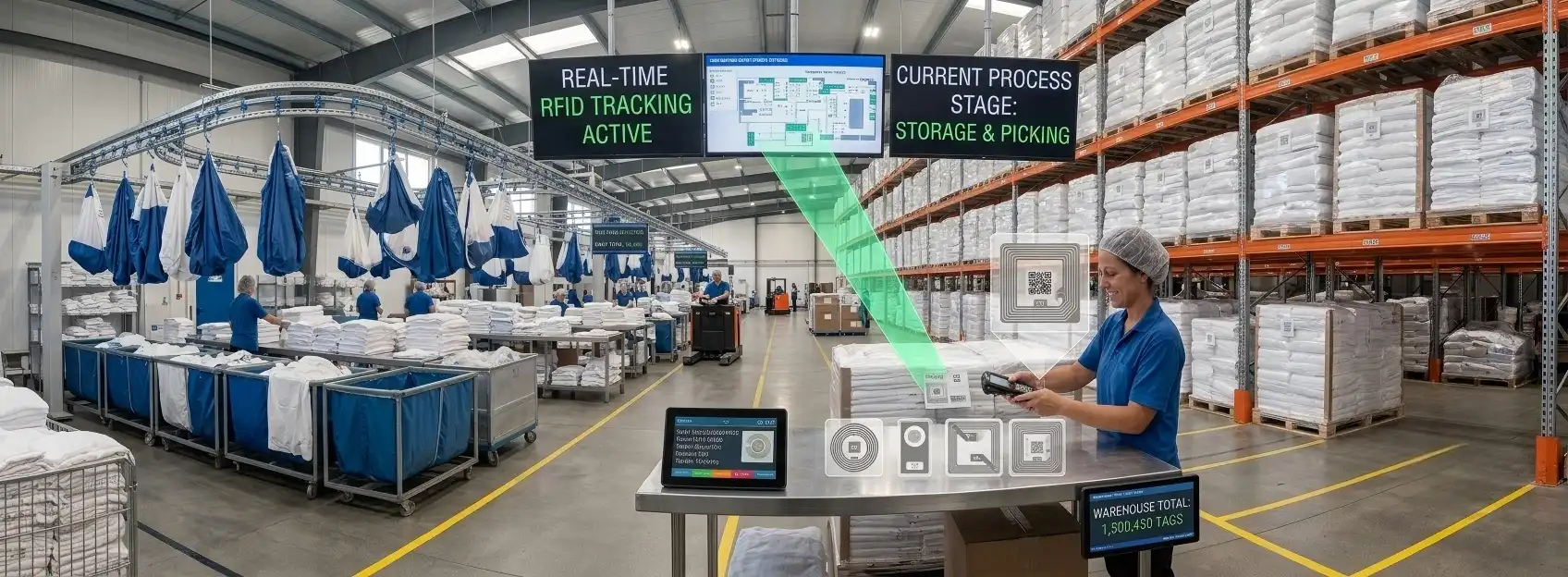
Understanding RFID Laundry Tags – Basics and Technology
Radio frequency identification devices made for managing textiles are a specific type of IoT tracking gear. These transponders are different from generic labels because they are made to last in the harshest industrial laundry environments while still working properly.
What Makes RFID Tags Different from Barcodes?
Line-of-sight scanning and manual handling are needed for traditional barcode systems. For optical detection, each item has to be placed separately, which slows down organising and inventory counts. RFID laundry tags get rid of this problem completely. Multiple items stacked on carts, bins, or conveyor systems can be read at the same time from one to three meters away, without being able to see them directly. Instead of visual patterns, the technology uses electromagnetic fields, which allows for bulk processing that speeds up output by many orders of magnitude.
Core Technology Components
Each tag has three important parts: a microchip that stores unique identification information, a transmitter for sending signals, and a covering that protects the chip. WS RFID's solutions use special chip architectures that work best with UHF frequencies between 860 and 960 MHz. This makes sure that they work with frequency rules in North America, Europe, and the Asia-Pacific markets. Support for the EPC Gen2 standard makes sure that it can work with current laundry software and warehouse management systems.
The premium silicone or thermoplastic polyurethane (TPU) are used as sealing materials because they are tough and durable enough for these uses. These polymers keep their shape even after being exposed to bleach solutions, alkaline detergents, and the mechanical stress of industrial washing machines over and over again. Temperature resistance goes up to 150°C during normal operations, and higher temps can be tolerated for short periods of time during the pressing and finishing steps.
Passive vs. Active Systems
Most industrial laundry businesses use inactive tags that get their power from the reader's electromagnetic field instead of batteries inside the tags. This choice of design gives the product an unlimited useful life without the need for upkeep. The tags don't do anything until they are read by a reader. This makes them perfect for clothes that get washed hundreds of times over many years. Active tags have longer read ranges, but they come with costs for replacing batteries and disposal issues that make them hard to use for high-volume textile management.
Installation Process of RFID Laundry Tags – Step-by-Step Guide
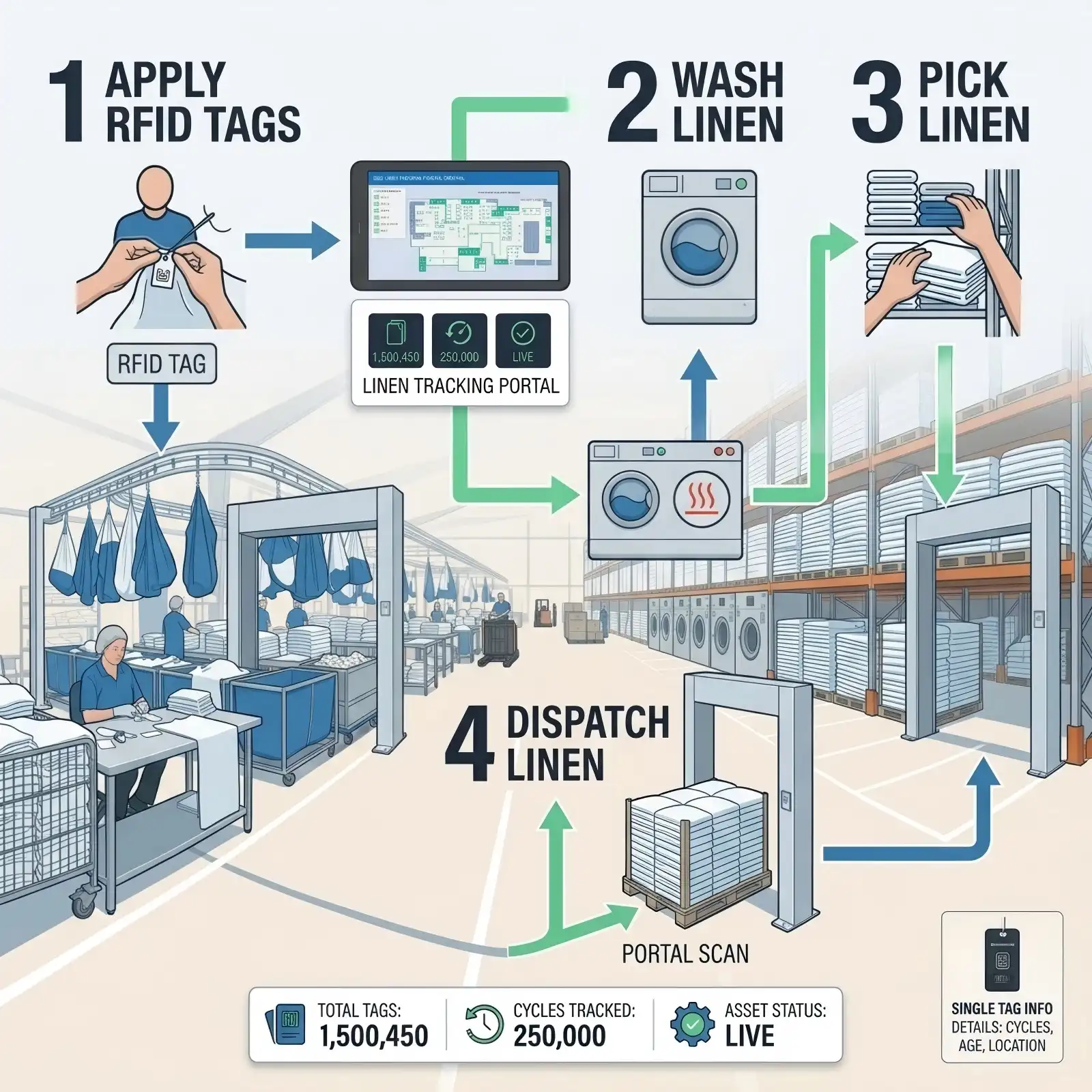
Successful implementation hinges on proper attachment methods that balance security with tag life. The way it is installed depends on the type of textile, how much processing is needed, and the needs of the business.
Identifying Suitable Textiles and Tag Placement
Items like hospital sheets, hotel sheets, work uniforms, and business towels are all great options for tracking. The place where the RFID laundry tags are attached is very important—they should be placed away from high-abrasion areas like hems and edges, where washing puts a lot of mechanical stress on them. Inside seams near care marks protect well while still letting you read them. Do not put it near metal fixings or layers of thick fabric that could block radio signals.
Tag Selection Criteria
The industry is dominated by three main attachment methods:
1. Sew-in tags are the most durable way to make sure that textiles last a long time. These units come in fabric pouches that can be sewn directly into clothing or added to clothes that are already on the market using reinforced stitching. This method has the strongest retention force, so it can be used for things that are processed more than 200 times a year.
2. Heat-seal tags stick to synthetic fabrics directly by applying controlled heat. This method makes a permanent connection in seconds without using needles. It works great for polyester-blend materials that are common in healthcare and hospitality. To keep from hurting either the cloth or the tag encapsulation, the seal has to be put on at a certain temperature.
3. Adhesive tags make it easy to quickly put them on rental items or things with short lifecycles. Industrial-grade glue made for laundry rooms keep their bond strong through many washing cycles. Even though they are easier to use than sewn options, they usually don't last as long in harsh handling circumstances.
Attachment Execution
Proper technique will make sure that tags last in the harsh environment of an industrial laundry. When you sew, use strong thread and more than one stitch point to spread out the mechanical loads. Lay the tag flat on the fabric to keep it from bending, which could cause internal parts to crack. For heat sealing to work, the equipment needs to be properly calibrated. If you press too lightly, the bond will fail, and if you press too hard, the chip will crack. For adhesive uses, textile surfaces must be clean, dry, and free of fabric softener residues that make bonding less effective.
Post-Installation Verification
Every tag that has been put must be read before it can be used. Handheld UHF readers make sure that the chip is encoded correctly and that the signal strength meets the needs of the operation. Before linens get to customers, batch testing methods find problems with the way they were installed. WS RFID offers full SDK support for adding verification steps to existing quality control workflows. This makes sure that only fully functional items that have been tagged get into circulation.
Benefits of Using RFID Laundry Tags in B2B Environments
The practical benefits go far beyond just being able to count items. These systems make information that can be used, which changes textile management from responding to problems to strategic asset optimisation.
Real-Time Inventory Visibility and Loss Prevention
Manual physical counts that are done on a regular basis aren't always accurate because they're based on past conditions. Staff spend hours counting and sorting things, but they only find mistakes weeks after the losses happen. This lag is completely gone when tracking is done automatically. Installing portal readers at the points of receiving, washing, and sending textiles automatically records every movement. Real-time information about inventory amounts, processing progress, and position is shown on management screens. When things go missing, they set off quick alerts that let people look into it right away, before the tracks go cold. Commercial laundries say that within the first six months of deployment, their loss rates dropped by 60 to 75%.
Enhanced Textile Lifecycle Monitoring
Every time a cloth is washed, exposed to chemicals, or dried at high temperatures, its structure is lost. Traditional systems don't show how much stress is building up on each item, which means that useful items are thrown away too soon or worn over and over again, which lowers the quality. RFID laundry tags keep track of every wash that an item has been through. Based on customisable cycle counts, the system automatically alerts users when textiles are getting close to the end of their useful life. This lets users set up replacement plans that are both cost-effective and meet quality standards.
Healthcare centers that use WS RFID systems say that optimised rotation methods make linens last 20 to 30 percent longer. Hotels get the same results by finding inventory that isn't being used and switching it out for items that are processed often. This spreads wear more evenly across their textile pool.
Compliance and Hygiene Traceability
Healthcare regulations require cleaning procedures and contamination protection that can be checked. Systems that use manual documentation rely on records at the batch level that don't go down to the item level. Textiles that are labelled leave permanent audit trails that show the exact steps that were taken to process them, including water temperatures, chemical contact, and sterilisation cycles. Infection control teams can quickly find out where an item came from and how it was handled, which helps them find possible sources of contamination during investigations into outbreaks.
The technology also makes sure that clean and dirty inventory are kept separate. At the borders of departments, readers stop mixing that could put patients at risk. These features helped a hospital with 500 beds get Joint Commission accreditation after their old manual systems failed audits of their documentation.
Labor Cost Reduction and Process Automation
RFID automation greatly reduces labor involved in sorting, counting, and matching textiles. Overhead readers and automated sorting systems use tag data to route items by customer, type, and delivery needs without manual checks. From receiving to dispatch, RFID improves efficiency across operations, reducing labor requirements by 70–80% and allowing staff to focus on quality control and customer service.
Choosing the Right RFID Laundry Tags – Key Considerations for Procurement
When choosing the right hardware, you have to weigh the technical specs against the working needs and funds. Not all RFID laundry tags work the same way in all kinds of situations.
Frequency and Protocol Considerations
UHF systems working at 860-960MHz are most common in industrial laundry uses because they can read more items at once and read them all at once. The longer wavelength goes deeper into textile stacks than HF options, which lets scanning at the cart level without having to unpack. Compliance with the EPC Gen2 protocol makes sure that systems can work with global supply chains and protects investments for the future, even if facilities grow or merge their systems.
Material Durability Requirements
Industrial laundry subjects tags to temperatures that stay above 90°C while they are being washed, spinning forces that are greater than 60 bars during extraction, and impact loads from machines that handle things automatically. Premium silicone encapsulations can handle these conditions for more than 200 cycles without breaking down. Cheaper options made from lower-quality plastics might pass the first tests, but they will fail quickly when put through continuous production loads, wasting money on repair costs and causing problems with operations.
Supplier Evaluation Criteria
Elite RFID suppliers stand out through consistent manufacturing, quality control, and customization capabilities. WS RFID uses ISO 9001-certified facilities, automated production lines, and Voyantic Tagformance testing to maintain defect rates below 0.5%. The company also supports customized sizes, memory options, and encoding formats, with low MOQs from 500 pieces, enabling tailored solutions for specific operational needs.
Cost Structure Analysis
Unit price is only one part of the total cost of ownership. Compare predictions of how long something will last with how often it needs to be replaced to find the true cost-per-cycle numbers. A tag that costs 20% more but lasts twice as long is a better deal than a cheaper one that needs to be replaced all the time. When you compare vendors, you should look at integrated support, warranty coverage, and the dependability of the supply chain. Production capacity is very important—suppliers who can't keep up with rising demand cause bottlenecks that make expansion plans less likely to work out.
Best Practices for Maintaining and Maximizing RFID Laundry Tags Lifespan
Using the right operating methods will make RFID laundry tags last longer and protect your technology investment over years of heavy use.
Optimizing Wash Processes
Tags can handle normal washing conditions, but harsh conditions speed up wear that isn't necessary. Keep the wash temperatures within the range recommended by the equipment's maker instead of setting them to the highest possible level. Too much heat doesn't help with cleaning much and damages both fabrics and electronics that are built into them. Use the right amount of soap for the amount of dirt—overdosing exposes more chemicals to the soil without making the cleaning better. When washing machines are well taken care of, mechanical damage from worn drums, loose parts, or doors that aren't lined up right can be avoided.
Handling and Storage Protocols
Teach your staff not to intentionally bend or twist tagged fabrics while they are being sorted and folded. Normal handling is fine for tags, but putting stress on the same spot over and over again can wear down sealing materials over time. Temperatures and humidity levels in storage areas should stay about normal. Extreme heat or moisture that is exposed for a long time between processing cycles may weaken adhesive bonds or speed up the breakdown of polymers.
Troubleshooting Read Failures
Even when systems are working properly, read problems can happen from time to time. Signals can be weakened by things in the environment, such as close metal structures, electrical interference from motors and lights, or reader antennas that aren't lined up correctly. Before you assume a tag has failed, test known-good reference tags to make sure the reader works. Check the connections and placement of the antenna. Check the fabric itself—too much moisture retention or detergent buildup can temporarily stop signals from travelling. If isolated failures keep happening after environmental factors have been ruled out, don't try to fix them; instead, replace the tags that are broken.
Replacement Scheduling
Failures that come with age can cause problems, but proactive repair stops them before they happen. Most industrial-grade tags can be washed more than 200 times before they start to lose their effectiveness. Set up tracking systems that will let you know when things are getting close to the end of their useful life so that they can be replaced during regular maintenance windows. When compared to reactive replacements that fix individual problems, bulk replacement programs spread the cost of labour across many items while reducing downtime.
Conclusion
In conclusion, RFID laundry tags use tried-and-true technology to solve basic problems in managing cloth assets. When you combine automated tracking, lifecycle visibility, and process automation, you get a measurable return on investment (ROI) through lower losses, longer textile lifespan, and a lot less work that needs to be done. To make implementation work, you need to know the technical details that make something last, follow the right steps for installation, and choose suppliers who have a history of producing high-quality products and providing excellent integration support. Companies that carefully use these systems gain competitive benefits through improved service quality, business efficiency, and decision-making based on data, which is something that manual processes can't do.
FAQ
1.How do these tags survive harsh industrial laundering?
Standard tags don't protect things as well as specialised encapsulation materials made for laundry applications do. High-quality TPU and silicone polymers can handle chlorine bleach, alkaline detergents, and temperatures that stay high for a long time up to 150°C. The materials don't become brittle when heated and cooled many times like cheaper alternatives do. Instead, they stay flexible. Internal chip and antenna systems are made with strain-relief features that let them bend without breaking wire bonds or cracking solder joints. Before putting a plan into production, WS RFID makes sure it works by trying it quickly over 200+ industrial wash cycles.
2.What read range should I expect in real operations?
Reading ranges of 1 to 3 meters are typical for standard UHF readers when conditions are normal. The actual range depends on how the RFID laundry tags are positioned, the amount of moisture in the fabric, the materials around them, and how the reader's antenna is set up. When antenna arrays are optimised and installed in portals, reads are reliable across the whole width of the cart. When checking things by hand, handheld readers work best at a range of 0.5 to 1.5 meters. When clothes are very wet right after being washed, their range is briefly limited until the moisture content drops during the drying stages.
3.Can these systems integrate with existing laundry management software?
Standard interaction methods, such as RESTful APIs, database synchronisation, and middleware platforms, are supported by modern tracking systems. To make integration projects go more smoothly, WS RFID offers full SDK instructions and help from Field Application Engineers. The majority of implementations connect using existing network infrastructure, so they don't need any special hardware other than readers and antennas. The systems send data in formats that can be read by ERP platforms, billing systems, and route optimisation software that is popular in commercial cleaning businesses.
Partner with WS RFID for Industrial-Grade Laundry Tracking Solutions
WS RFID offers full textile control systems that are designed to meet the specific needs of business laundry facilities. As a trusted RFID laundry tags supplier, we provide UHF 860-960MHz tags that can survive more than 200 industrial wash cycles and still have reliable read ranges of 1 to 3 meters, making bulk processing more efficient. As a manufacturer with ISO 9001 certification and the ability to make 500 million items per year, we offer factory-direct prices without markups for distributors. We can also customise your order starting at 500 pieces to meet your specific needs.
Our tech team has worked with RFID in healthcare, leisure, and industrial textile settings for 15 years. We help you with your implementation from choosing the first tag to integrating it into your system. We do this by providing SDK resources, Field Application Engineer support, and a warranty that lasts one to two years. To keep your projects on track, standard products ship in 5 to 10 days and custom solutions in 10 to 12 days.
Email our team at kenny@w-srfid.com to talk about how to track textiles. We'll send you sample tags to test in your real processing environment and work with you to come up with custom solutions that make your operations run more smoothly. WS RFID has the reliable technology and quick support that can turn textile management from a cost center to a competitive edge. This is true whether you're in charge of hospital linens, hotel supplies, or business uniform services.
References
1. Smith, J. & Anderson, K. (2022). RFID Technology in Industrial Textile Management: Performance Analysis and Implementation Strategies. Industrial Automation Press.
2. Healthcare Laundry Accreditation Council. (2023). Best Practices for Linen Tracking and Infection Control in Healthcare Facilities. HLAC Publications.
3. Thompson, R. (2021). Supply Chain Visibility Through Radio Frequency Identification: Case Studies from Hospitality and Healthcare. Logistics Management Review, Vol. 18, Issue 3.
4. International Organization for Standardization. (2020). ISO/IEC 18000-6C: Information Technology – Radio Frequency Identification for Item Management. ISO Standards Catalogue.
5. Martinez, L. & Chen, W. (2023). Cost-Benefit Analysis of Automated Textile Tracking Systems in Commercial Laundries. Journal of Industrial Engineering, Vol. 45, No. 2.
6. European Textile Services Association. (2022). Technical Guidelines for RFID Implementation in Industrial Laundry Operations. ETSA Industry Report Series.
Learn about our latest products and discounts through SMS or email