- English
- French
- German
- Portuguese
- Spanish
- Russian
- Japanese
- Korean
- Arabic
- Greek
- German
- Turkish
- Italian
- Danish
- Romanian
- Indonesian
- Czech
- Afrikaans
- Swedish
- Polish
- Basque
- Catalan
- Esperanto
- Hindi
- Lao
- Albanian
- Amharic
- Armenian
- Azerbaijani
- Belarusian
- Bengali
- Bosnian
- Bulgarian
- Cebuano
- Chichewa
- Corsican
- Croatian
- Dutch
- Estonian
- Filipino
- Finnish
- Frisian
- Galician
- Georgian
- Gujarati
- Haitian
- Hausa
- Hawaiian
- Hebrew
- Hmong
- Hungarian
- Icelandic
- Igbo
- Javanese
- Kannada
- Kazakh
- Khmer
- Kurdish
- Kyrgyz
- Latin
- Latvian
- Lithuanian
- Luxembou..
- Macedonian
- Malagasy
- Malay
- Malayalam
- Maltese
- Maori
- Marathi
- Mongolian
- Burmese
- Nepali
- Norwegian
- Pashto
- Persian
- Punjabi
- Serbian
- Sesotho
- Sinhala
- Slovak
- Slovenian
- Somali
- Samoan
- Scots Gaelic
- Shona
- Sindhi
- Sundanese
- Swahili
- Tajik
- Tamil
- Telugu
- Thai
- Ukrainian
- Urdu
- Uzbek
- Vietnamese
- Welsh
- Xhosa
- Yiddish
- Yoruba
- Zulu
RFID laundry tags
• Chip Technology: Dedicated chip solution, operating frequency UHF 860-960MHz.
• Communication Protocol: Supports EPC Gen2, resistant to high temperature and pressure, waterproof and chemical detergent resistant.
• Identification Performance: Reading distance 1-3 meters, supports rapid inventory counting.
• Materials and Processes: Special silicone or TPU, temperature resistant up to 150°C, highly durable, adaptable to various application environments.
• Customization Services: Supports customized sizes, printing, and functions.
• Company Advantages: WS RFID provides a complete solution from tag production to system integration.
• Quality Certifications: Certified by the industry, RoHS, REACH, etc.
• Production Cycle: Standard products delivered in 5-10 days, supports mass production.
• Application Value: Improves management efficiency, reduces labor costs, and enables intelligent management.
RFID Laundry Tags - Durable & High-Performance Solutions for Industrial Textile Management
It can be hard to keep track of thousands of sheets, clothes, and other fabrics. WS-RFID Technology's RFID laundry tags solve this problem with accuracy and longevity that are good enough for businesses. Our tags can resist temperatures of up to 200°C and more than 100,000 washings. They can still be read from 1 to 8 meters away. With the UHF 860-960MHz band and EPC Gen2 protocol support, you can scan a lot of items quickly, which cuts down on labour costs by up to 80%. With more than 15 years of experience and the ability to handle 500 million units per year, we offer solid options that change the way textile tracking is done.
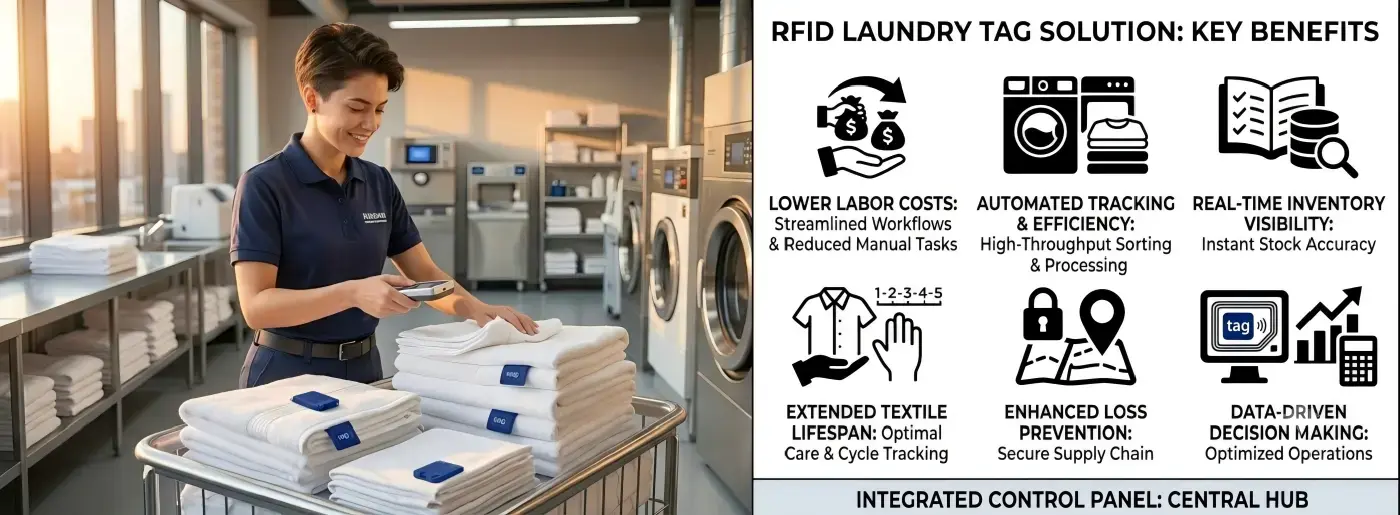
Why Choose Our Industrial Laundry Tracking Solutions?
Built for Extreme Conditions
Every day, your sheets are hard on them. Our tags are made to last through anything.
Special silicone and TPU materials can stand up to chemicals, high temperatures, and physical stress. They can handle being washed, dried, and ironed in a factory without any problems.
You won't have to worry about tag loss. Each unit keeps working well throughout its whole life.
The distance for reading stays the same at 1 to 8 meters. This makes sure that the scanner works correctly even when the laundry cart is very full.
Lightning-Fast Inventory Management
It takes a lot of time to count by hand. Our technology changes that in a big way.
In seconds, you can scan a lot of things. The UHF band lets more than one tag be read at the same time.
It's easy to do batch processing. The staff just waves a reader near the sheets that have been sorted.
Data that is updated in real time goes straight into your management system. You always know what is available, what is being handled, and what is in motion.
Better customer service and faster turn-around times are the results of this speed boost.
Proven Durability Metrics
This is what numbers really show about how reliable a tag is.
It can handle temperatures up to 200°C. Your tags can stand up to industrial machines and steam pressing.
You can choose from 96bit, 128bit, or 512bit EPC memory for storage. Pick the one that works best for your info.
Data is kept for longer than 10 years. There are more than 100,000 write and wipe rounds.
The temperature range for operation is from -40°C to +85°C. Tags can be used in both cold storage and hot factories.
It stays below 0.5% that we have defects. Quality control makes sure that millions of units all work the same way.
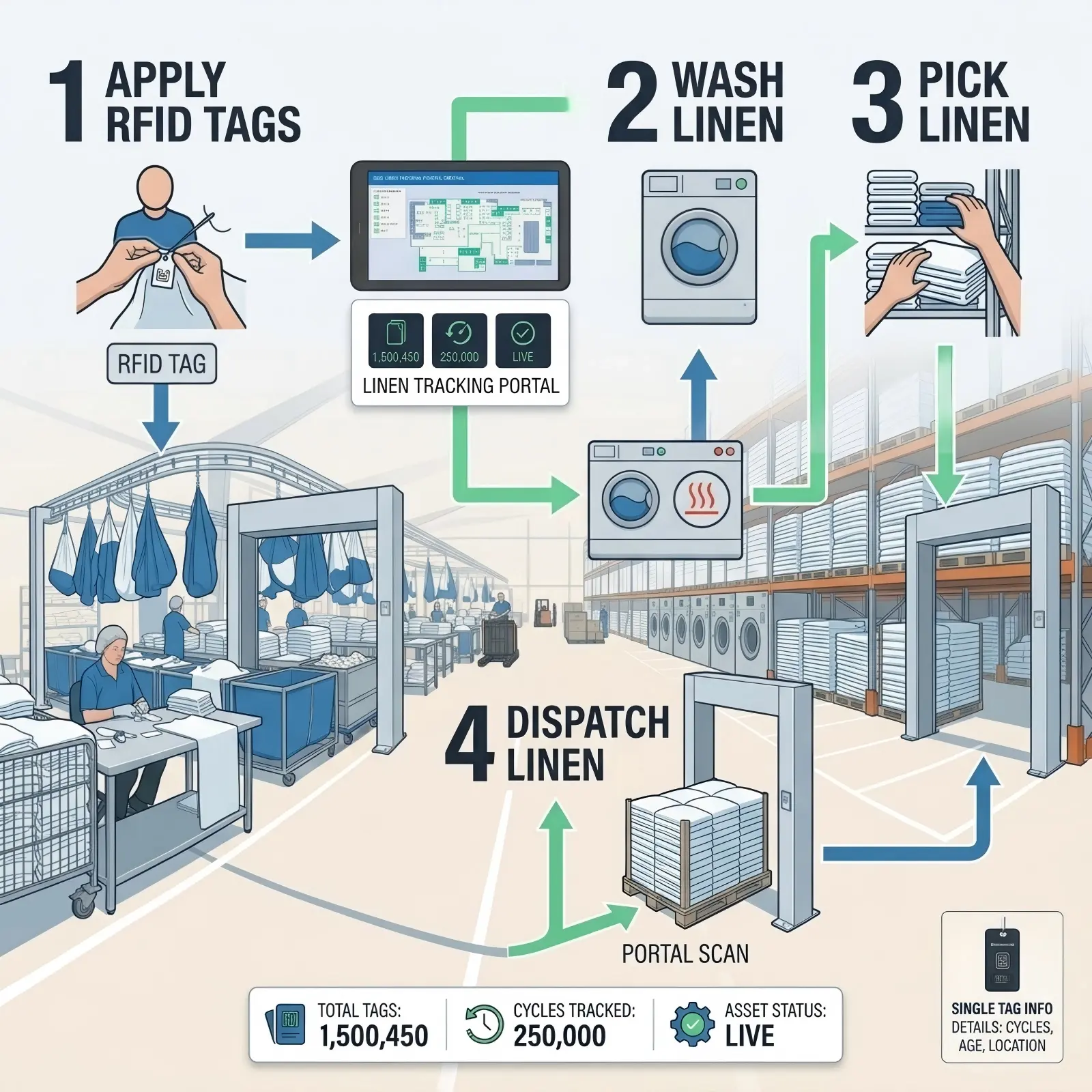
Technical Specifications
| Parameter | Specification |
|---|---|
| Operating Frequency | UHF 860-960MHz |
| Communication Protocol | EPC Gen2 |
| Reading Distance | 1-8 meters |
| Storage Capacity | 96bit/128bit/512bit EPC, optional user area |
| Data Retention | 10+ years |
| Write/Erase Cycles | 100,000+ cycles |
| Operating Temperature | -40°C to +85°C |
| Material | Special silicone or TPU |
| Temperature Resistance | Up to 200°C |
| Available Chip Models | Impinj Monza, Alien Higgs, NXP UCODE |
| Installation Methods | Adhesive, sewing, riveting, hanging |
| Defect Rate | <0.5% |
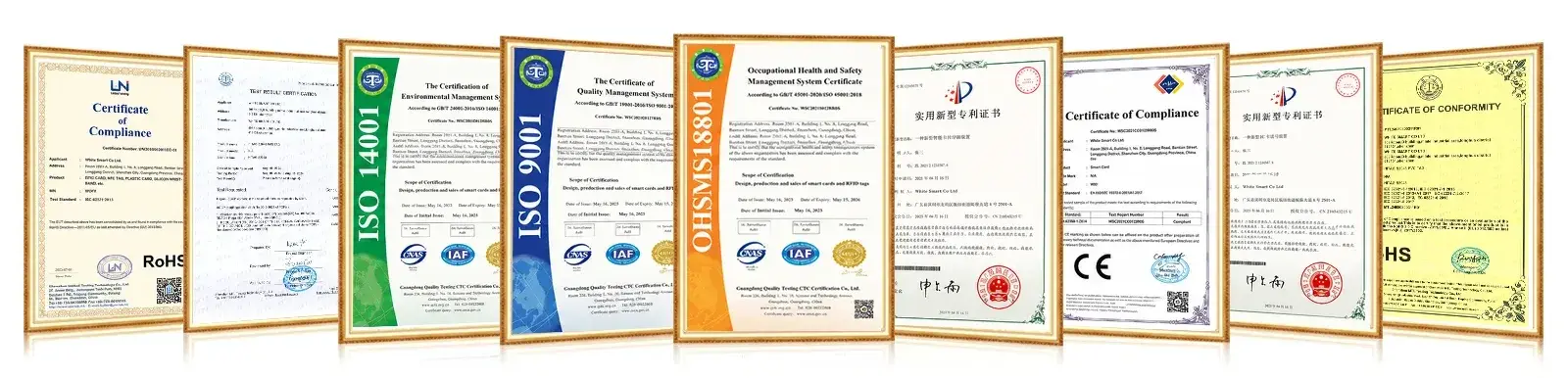
Flexible Solutions for Every Application
Commercial Laundries
Watch each customer's things one by one. Avoid losing or misplacing things that could hurt your image.
Sort things automatically by client, item type, or stage of handling. Cut down on human mistake by a huge amount.
Hospitality Industry
Take good care of the hotel's sheets, towels, and staff outfits. Check the amount of goods at any time.
Find trends of use and make the best use of stock levels. Better lifetime tracking can help you save money on repair costs.
Healthcare Facilities
Make sure that medical sheets are properly tracked for sterilisation. Make sure that cleanliness guidelines are being followed.
Keep track of the clothes, bed sheets, and gowns for patients. Cross-contamination can be avoided by correctly identifying each person.
Industrial Uniform Services
Watch how clothes are moved between different client places. Bill correctly based on real use.
Plan ahead for repair and upkeep. Make choices based on facts to extend the life of textiles.

Customization That Fits Your Needs
Every activity has its own needs. It's easy for us to make our RFID laundry tags work with yours.
You can pick from different sizes, from small tags for fragile things to big tags for heavy-duty uses. Choose the way of installation that works best for your textiles. Adhesive is quick and easy, sewing is lasting, riveting is strong, and hanging is flexible.
You can change chip types to fit your unique memory and read range needs. You can put names, serial numbers, or colour codes on it to make it your own.
The smallest amount you can buy from us is 500 pieces. This means that customisation is possible even for very specific apps.
Products that are standard ship between 5 and 10 days. Custom solutions have a clear production time frame of 10 to 12 days.
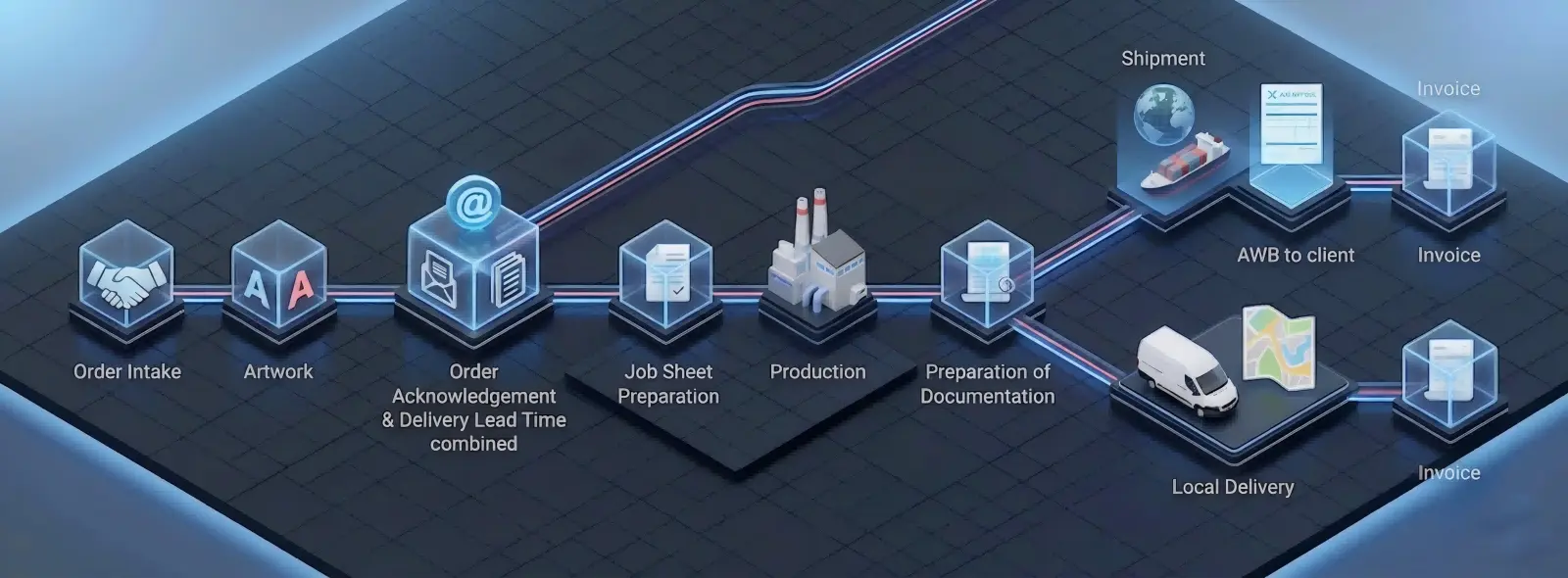
Enterprise-Grade Manufacturing Excellence
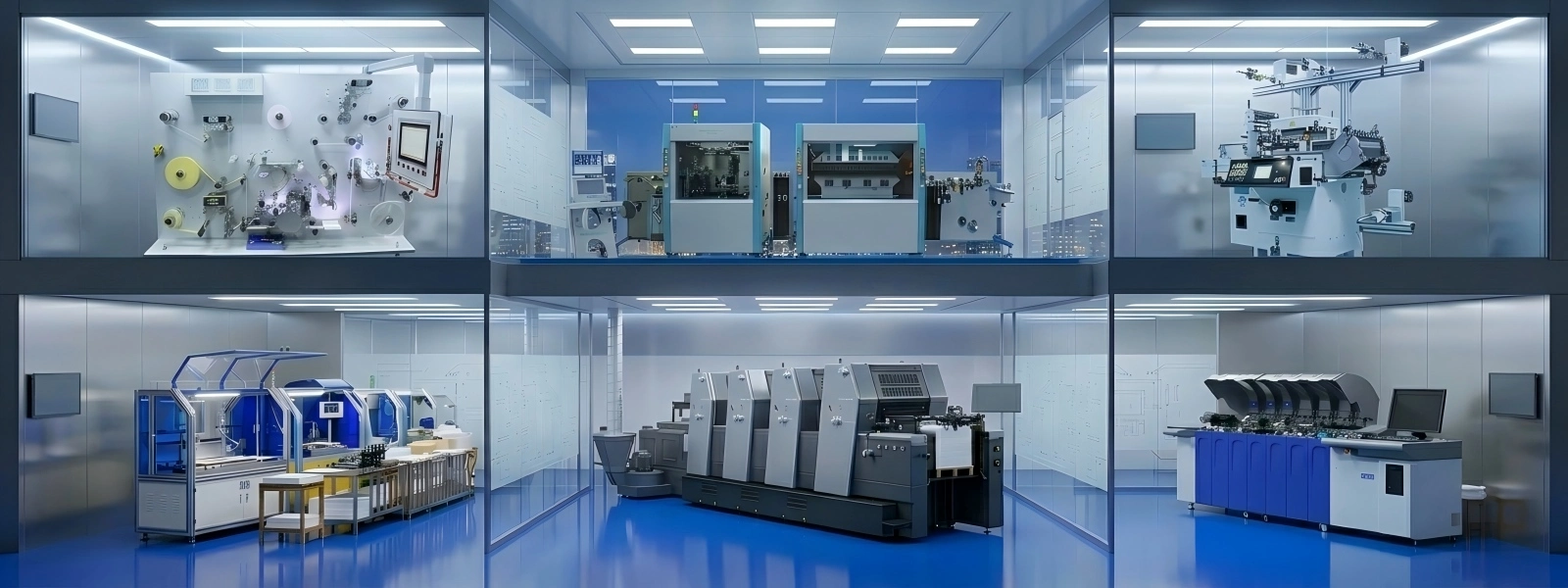
Our 10,000 building is run by high-tech robotics. In this way, every tag that is made is the same.
More than 500 million pieces can be made each year. During busy times, you'll never run out of supplies.
SOP-based strict production management ensures quality on a large scale. Before being sent out, each batch goes through a lot of tests.
We are certified by ISO 9001 and follow the rules for CE, RoHS, REACH, and POPS. International companies check out our processes by auditing our factories.
With factory-direct prices, there are no markups for the middleman. You get top-notch quality at a reasonable price.
Complete Technical Support
Delivery is not the end of implementation. During merging, our team is here to help.
SDK and software integration help makes sure that the link with your current systems goes smoothly. When help is needed, professional Field Application Engineers are there to help.
There is a guarantee on every item for one to two years. Quick expert help fixes problems fast.
We can help you connect to ERP systems, tools for managing goods, and your own apps.
FAQ
Q: How many wash cycles can these tags survive?
Our tags endure 100,000+ wash cycles while maintaining full functionality. This translates to years of reliable service in commercial environments.
Q: Will the tags work with our existing RFID readers?
Yes. Our tags follow the EPC Gen2 protocol standard, ensuring compatibility with most UHF RFID readers on the market. We can also recommend readers if you're building a new system.
Q: What's the minimum order quantity for custom tags?
Customization starts at 500 pieces. This includes custom sizes, printing, and specific chip selections tailored to your application.
Q: Can these tags handle dry cleaning chemicals?
Absolutely. The special silicone and TPU materials resist common laundry chemicals, including those used in dry cleaning processes.
Q: How do I attach the tags to different textile types?
We offer multiple installation methods. Adhesive backing works for quick application, sewing provides permanent attachment for uniforms, riveting suits heavy industrial textiles, and hanging works well for items with loops or tags.
Q: What happens if a tag fails during the warranty period?
Contact our technical team immediately. We provide fast replacement and investigate the cause to prevent future issues. Our sub-0.5% defect rate means failures are rare.
Q: Can you help design a complete tracking system?
Yes. We provide end-to-end solutions including tag selection, reader recommendations, software integration support, and system optimization guidance.
Contact Us
Ready to upgrade your textile management system with RFID laundry tags? Contact our team at kenny@w-srfid.com to discuss your specific requirements and receive a customized solution proposal.
Learn about our latest products and discounts through SMS or email