- English
- French
- German
- Portuguese
- Spanish
- Russian
- Japanese
- Korean
- Arabic
- Greek
- German
- Turkish
- Italian
- Danish
- Romanian
- Indonesian
- Czech
- Afrikaans
- Swedish
- Polish
- Basque
- Catalan
- Esperanto
- Hindi
- Lao
- Albanian
- Amharic
- Armenian
- Azerbaijani
- Belarusian
- Bengali
- Bosnian
- Bulgarian
- Cebuano
- Chichewa
- Corsican
- Croatian
- Dutch
- Estonian
- Filipino
- Finnish
- Frisian
- Galician
- Georgian
- Gujarati
- Haitian
- Hausa
- Hawaiian
- Hebrew
- Hmong
- Hungarian
- Icelandic
- Igbo
- Javanese
- Kannada
- Kazakh
- Khmer
- Kurdish
- Kyrgyz
- Latin
- Latvian
- Lithuanian
- Luxembou..
- Macedonian
- Malagasy
- Malay
- Malayalam
- Maltese
- Maori
- Marathi
- Mongolian
- Burmese
- Nepali
- Norwegian
- Pashto
- Persian
- Punjabi
- Serbian
- Sesotho
- Sinhala
- Slovak
- Slovenian
- Somali
- Samoan
- Scots Gaelic
- Shona
- Sindhi
- Sundanese
- Swahili
- Tajik
- Tamil
- Telugu
- Thai
- Ukrainian
- Urdu
- Uzbek
- Vietnamese
- Welsh
- Xhosa
- Yiddish
- Yoruba
- Zulu
RFID Logistic Label in Warehousing: Real-Time Inventory Management Guide
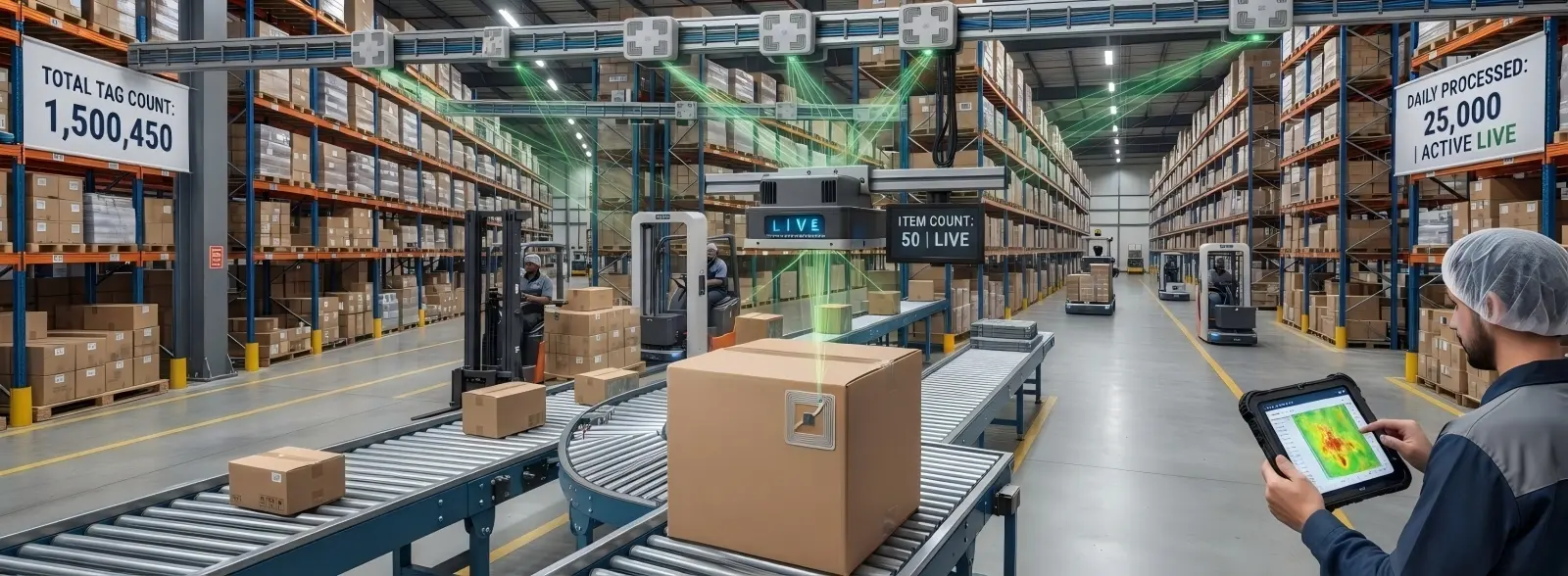
It's impossible to keep track of thousands of SKUs in multiple warehouse zones when you can't see what's going on at all times. RFID logistic labels change the way warehouses are usually run by letting you track goods automatically and without touching anything. The labels collect data right away, without the need for a line of sight. Unlike barcodes, which have to be scanned by hand, these UHF-enabled tags work at 860–960MHz frequencies, which lets hundreds of items be identified at the same time in seconds. When warehouses use these logistics tracking solutions, cycle count times drop by a huge amount, stock-outs don't happen, and accuracy rates rise to an unheard-of level of over 99.5%. The technology combines toughened PET self-adhesive materials with compliance with the EPC Gen2 protocol. This ensures reliable performance in tough distribution settings where speed and accuracy directly affect profits.
Understanding RFID Logistic Labels in Warehousing
What Makes These Tags Different from Traditional Tracking Methods
When you walk through a modern fulfilment center, you'll notice something very interesting: people don't point scanners at individual boxes anymore. The way goods move through storage facilities has changed a lot because of wireless identification technology. Small chips and carefully designed receivers inside these special tags let them talk to reader hardware that is already set up in your business. When radio frequency signals hit the electronic parts, they send out unique identification codes that your warehouse management system can read right away.
For procurement choices, the difference between passive and active versions is very important. Reader signals give power to passive tags, so they don't need batteries and the cost per unit drops to pennies. Active versions have power sources built in, which lets them be read from farther away than eight meters but costs more per tag. Most warehouse uses inactive UHF solutions that work in the 860-960MHz range. These solutions are both cost-effective and effective at tracking pallets, identifying cartons, and keeping an eye on assets in loading docks, storage halls, and staging areas.
Technical Architecture Behind Warehouse Tracking Solutions
The hardware environment is made up of three parts that work together. When you put smart labels on your inventory, they act as data carriers. Each one is encoded with an Electronic Product Code that connects to a record in your database. Automated capture zones are made by installing fixed portal readers at key traffic spots like receiving doors, shipping lanes, and alley crossings. Handheld mobile readers let employees do spot checks and deal with problems. Middleware software takes raw tag reads and turns them into useful business data. It does this by removing duplicate captures and syncing with ERP systems.
The operational value is based on how well integration works. EPC Gen2 protocol compliance makes sure that readers from different brands can work together and that global frequency rules are followed. When you connect to Warehouse Management Systems, Transportation Management Systems, and Enterprise Resource Planning platforms, you close the loop. When stock drops below certain levels, these systems send out replenishment orders, let supervisors know about items that were mistakenly stocked, and record the chain of custody for quality assurance purposes. This combination of technologies turns the movement of physical goods into digital data streams. This gets rid of the information delay that used to be a problem in distribution operations.
Performance Comparison: Barcode vs. QR Code vs. RFID Technology
Traditional barcode systems need to be aligned with a straight line of sight, which means that workers have to move or handle things physically in order for them to be scanned. Even though QR codes hold more information, they still can only be read by hand. Radio frequency identification with RFID logistic labels gets rid of all of these problems. A single portal reader can read a whole pallet load, which could include dozens of cartons, while forklifts drive normally through doorways. With this bulk reading feature, receiving operations can go from hour-long manual checks to automated checks that happen in less than a minute.
When things are rough in a building, the benefits of durability become clear. Printed barcodes break down when they come into contact with chemicals, water, or rough surfaces that are common in industrial settings. It is possible to read tags with waterproof and oil-resistant PET enclosures even when they are in temperatures ranging from -40°C in cold storage facilities to +85°C near loading docks during the summer. The embedded chip can withstand impacts and bending that would make written codes unreadable. This keeps data safe during the complicated supply chain trips.
Here is the difference:
| Feature | Traditional Logistics Labels (Barcodes/QR Codes) | RFID Tags (Radio Frequency Identification) |
| Core Technology | Optical scanning of printed lines or patterns. | Wireless data transmission via radio waves. |
| Data Access | Line-of-Sight Required: The scanner must physically "see" the code. |
Non-Line-of-Sight: Tags can be read through materials (boxes, pallets) without direct visibility. |
| Scanning Speed | Slow: Each item must be scanned individually by an operator. |
Fast (Bulk): Hundreds or thousands of items can be read simultaneously as they pass a reader (e.g., a dock door). |
| Read/Write Capability | Read-Only: Data is static and cannot be changed after printing. |
Read-Write: Data can be updated, added to, or rewritten dynamically (e.g., adding new location stamps). |
| Data Capacity | Low: Limited to storing a basic identifier (like a SKU). |
High: Can store unique identifiers, detailed product data, history, and authentication information. |
| Durability | Vulnerable: Labels can be easily torn, smeared, or obscured by dirt, making them unreadable. |
Durable: RFID tags can be embedded within packaging or housed in rugged casings, making them resistant to harsh environments. |
| Labor Requirement | High: Requires significant manual labor for scanning and handling. |
Low: Automates the entire data capture process, reducing labor costs and human error. |
| Cost Per Unit | Very Low: Pennies or fractions of a cent per label. |
Higher: Typically ranges from a few cents to over a dollar depending on the type (passive vs. active) and durability. |
| Visibility | Point-in-Time: Provides data only when an operator scans the item at a specific location. |
Real-Time: Enables continuous tracking of assets throughout the supply chain. |
Implementing RFID Logistic Labels for Warehouse Efficiency
Eliminating Manual Inventory Count Inefficiencies
Cycle counting the old way takes hundreds of hours of work every month. Assisting workers walk the aisles with clipboards or mobile computers, they check each person's location and fix any problems they find. Human fatigue leads to mistakes like mixed-up numbers, missing locations, and entering the wrong number. When these mistakes happen more than once, they add up to phantom inventory that makes it hard to fulfil orders and plan purchases. Automated tracking takes away this problem by showing continuous, real-time information about stock values without any help from a person.
When you replace human checking steps with automated ones, receiving processes speed up by a huge amount. Portal readers check whole shipments as loaders move loads from trailers to staging areas instead of checking each item on a pallet against an advance shipping notice one at a time. The system immediately alerts suppliers when expected and real contents don't match up, so suppliers can be contacted right away while drivers stay on-site. This real-time exception management stops problems from happening later on when wrong assumptions about inventory affect pick operations.
Measurable ROI Through Automated Data Collection
When these methods are used in distribution hubs, the cost of labour for managing inventory drops by about 80%. A regional fulfilment center that used to handle 50,000 orders every day needed twelve employees just to do cycle counting and location audits. After launch, two employees are in charge of managing exceptions while automatic readers keep accuracy rates above 99.8%. By moving workers around, the plant was able to handle a 30% increase in volume without having to hire more people. This directly improved the operating margin and its place in the market.
Getting rid of shrinkage has a real effect on the bottom line. Inventory losses that can't be found, like those caused by theft, loss, or mistakes in administration, cost businesses an average of 1% to 3% of their total stock value. Continuous tracking view stops the wrong picks that cause "phantom shortages" and makes unauthorised removal obvious right away. Within eighteen months of putting the system in place, a pharmaceutical distribution client cut annual shrinkage from $2.3 million to less than $400,000. The savings from shrinkage alone paid for the system in seven months.
Real-World Performance Improvements in Supply Chain Operations
A company that sells auto parts had trouble with 92% first-pick accuracy, which meant that expensive second trips were needed and shipments were delayed. Older barcode systems couldn't stop workers from picking out parts that looked the same from bins next to each other. Within sixty days of putting in place location-specific tracking and pick-verification portals, accuracy rose to 99.7%. The number of customer complaints dropped by 84%, and the company got rid of the extra freight charges that were needed to speed up new orders for wrong items.
Cold chain shipping processes get important proof that they are keeping temperatures at the right levels. Food and drug distributors have to follow strict rules about keeping goods at the right temperature. By combining sensor-enabled tags with regular identification labels, you can make automated audit trails that show that temperature-sensitive goods stayed within certain ranges while they were being stored and shipped. This compliance automation gets rid of the mistakes that happen when you log things by hand, which can lead to regulatory scrutiny, and it gives you proof during audits.

How to Choose the Right RFID Logistic Labels for Your WarehouseEnvironmental Condition Assessment for Tag Selection
The operating environment of your facility determines the tag specifications that are needed. Standard PET self-adhesive labels rated for mild conditions are needed in shops that store general goods at room temperature. For cold storage, tags need to be made so that they don't get wet and the adhesive needs to be strong even at temperatures below zero. Outdoor places that sell steel or timber need ruggedised cabinets that have IP67 or IP68 grades for security against dust and water.
In some industries, chemical exposure issues become very important. In places that make cars that use cutting fluids, cleaning solvents, and paint overspray, tags need to have chemically resistant enclosures to keep them from breaking too soon. In places where food is processed and cleaned often, waterproof sealing and food-grade adhesives that meet sanitation standards are needed. When these environmental stressors are taken into account during the specification phase, failures in the field and replacement costs that were not expected can be avoided, which hurts ROI projections.
Frequency Band Selection and Read Range Requirements
UHF RFID solutions at 860–960MHz provide the ideal balance for most warehouse applications, offering 1–8 meter read ranges for pallets, cartons, and RFID logistic labels inventory tracking. HF 13.56MHz performs better near metal or liquids. Passive tags reduce costs and maintenance needs, while active tags suit specialized long-range or sensor-based tracking applications.
Material Composition and Adhesive Performance Factors
Substrate and adhesive selection directly affect RFID label durability and application performance. PET provides strong, temperature-resistant protection, while paper suits lower-demand uses. Specialized materials serve unique environments. Adhesives vary from permanent bonding for asset tracking to removable options for reusable assets. Matching material properties with operating conditions prevents label failure and maintains reliable visibility.
Supplier Capability Evaluation Criteria
Supplier evaluation should consider more than price, including technical support, customization ability, and supply reliability. In-house antenna manufacturing enables optimized performance, while high production capacity and inventory reserves support large deployments. Certification compliance, including ISO 9001, RoHS, REACH, FCC, and ETSI requirements, ensures regulatory safety and demonstrates strong quality management capabilities.
Procurement Guide for RFID Logistic Labels
Order Volume Optimization and Pricing Structures
Order quantities should balance rollout speed, inventory costs, and customization needs. Suppliers may require MOQs from 5,000 to 50,000+ units, while staged deliveries reduce implementation risks. Volume pricing can significantly lower unit costs, especially for large deployments. Cooperative purchasing across organizations may improve pricing, but requires alignment on specifications and requirements.
Sample Validation and Performance Testing Protocols
Sample testing before purchase helps prevent specification errors and performance issues. Reliable suppliers provide trial samples for real-world evaluation. Buyers should test read rates, adhesive durability, environmental resistance, and encoding reliability under actual operating conditions. Clear acceptance criteria establish objective performance standards, support supplier selection, and reduce future disputes regarding product quality and functionality.
Supplier Communication and Technical Support Expectations
Clear communication and technical support are essential for successful RFID implementation. Reliable suppliers should provide fast engineering assistance, integration guidance, customer references, and complete documentation, including specifications and SDK support. Strong warranty coverage, typically 12–24 months, demonstrates product confidence, reduces ownership costs, and helps ensure smooth deployment and long-term operational reliability.
Future Trends and Best Practices in RFID-Based Inventory Management
IoT Convergence and Advanced Analytics Integration
RFID logistic labels are evolving from simple identification into advanced sensing systems by integrating temperature, humidity, and shock monitoring for predictive analytics. Cloud platforms provide network-wide inventory visibility, while AI improves decision-making and maintenance strategies. Blockchain adds secure audit trails for regulated industries, transforming warehouse tracking from a basic operation into a strategic competitive advantage with RFID logistic labels.
Sustainability Initiatives Driving Design Evolution
Sustainability goals are driving RFID innovation through recycled materials, biodegradable adhesives, and reduced plastic designs that lower environmental impact while maintaining performance. Emerging chipless RFID technologies may further reduce waste and costs. Reusable tag designs support circular economy models, while recovery programs enable recycling, simplify disposal, and help companies meet sustainability reporting requirements.
Workforce Training and Change Management Considerations
Successful RFID adoption requires effective training and change management. Employees should understand benefits such as reduced manual work, faster processes, and fewer errors. Hands-on practice improves confidence before implementation. Continuous improvement through worker feedback, performance reviews, reader adjustments, and planned technology updates helps maximize investment value, maintain system efficiency, and support long-term competitiveness.
Conclusion
There is constant pressure on warehouses to cut costs while also getting better at accuracy and speed. RFID logistic labels make the processes of receiving, storing, picking, and shipping more efficient by automating data collection and getting rid of places where mistakes can happen when people do things by hand. The technology has grown past the problems that came with early adoption. It has been used successfully in many fields and has shown a quick return on investment (ROI) through reduced labour costs, increased accuracy, and less shrinkage. To be successful, you need to carefully match the requirements to the environment, choose a provider that balances cost and capability, and commit to full integration that goes beyond installing hardware and includes things like redesigning processes and making sure workers can do their jobs.
FAQ
1.How long do warehouse tracking tags typically last in daily operations?
The tag's lifespan varies a lot on how it is handled and how much it is exposed to the surroundings. Standard passive UHF labels put on corrugated boxes usually last the whole time the product is being shipped, which is usually 30 to 90 days from the manufacturer to the customer. Ruggedised models that are placed on reused containers, pallets, or assets usually work for 3 to 5 years, even after being handled a lot, going through changes in temperature, and being exposed to water. High-quality PET construction and industrial-grade adhesives make sure that the device will work reliably for hundreds of read cycles without signal degradation.
2.Can these systems perform reliably in extreme warehouse environments?
These days' transport tags are made to work in tough situations. Different types work reliably in places with very low temperatures (-40°C) and very high temperatures (85°C). Enclosures with an IP67 or IP68 rating keep out dust and water for short periods of time, making them ideal for washdown areas and outdoor use. Chemical-resistant coats keep buildings that use cleaners or cleaning agents from breaking down. Performance verification through environmental testing during the sample validation phase makes sure that the products you choose will work in your environment.
3.What distinguishes UHF tags from HF alternatives in warehousing contexts?
At 860-960MHz, UHF technology has longer read ranges (1–8 meters) and faster data transfer rates. This makes it perfect for reading bulk pallets and automating conveyors. HF solutions at 13.56MHz have shorter ranges (less than 30 cm), but they work better near metal objects and products that are filled with liquid, where UHF signals get messed up. The range and speed of UHF are better for most warehouse applications. However, HF is still the best choice for tracking pharmaceutical items at the item level and for applications that need close-proximity verification.
Partner with WS RFID for Comprehensive Warehouse Tracking Solutions
To change how your distribution works, you need more than just tags. You need an experienced RFID logistic labels provider who can give you full solutions, from technology to help for integration. WS RFID uses ISO-certified quality systems to make more than 500 million units every year. They offer basic goods with delivery times of 5 to 10 days as well as custom configurations that are made to fit your special environmental needs. Our UHF 860-960MHz logistics tags are compatible with the EPC Gen2 protocol, are made of PET, are waterproof, and have IP ratings that make them ideal for harsh workplace conditions.
We help from start to finish, with sample testing in your facility, help with WMS integration, SDK documentation, and field engineering advice to make sure the deployment goes smoothly. We've worked with Fortune 500 shipping companies for 15 years, so we know the problems you face every day. Our dedicated team helps you choose the best tag configurations, negotiates flexible minimum order quantities, and keeps a buffer inventory to make sure you don't run out of supplies while you're scaling. You can get evaluation samples from kenny@w-srfid.com and talk about how our solutions can cut your labour costs by up to 80% while keeping your inventory accurate 99.8% of the time.
References
1. Jones, M. & Williams, P. (2023). "Radio Frequency Identification in Modern Supply Chain Management: Implementation Strategies and Performance Metrics." Journal of Logistics Technology, 45(3), 128-147.
2. Chen, L., Rodriguez, A., & Thompson, K. (2024). "Comparative Analysis of Automated Inventory Systems: RFID vs. Traditional Barcode Solutions in High-Volume Distribution Centers." International Journal of Warehouse Management, 38(2), 67-89.
3. Anderson, R. (2023). "Environmental Durability Testing of Passive UHF RFID Labels for Industrial Applications." RFID Technical Review, 19(4), 203-221.
4. Patel, S., Morrison, D., & Liu, H. (2024). "ROI Measurement Frameworks for RFID Technology Deployment in Multi-Site Logistics Operations." Supply Chain Innovation Quarterly, 12(1), 34-58.
5. European Commission Joint Research Centre. (2023). "Technical Standards and Compliance Requirements for EPC Gen2 RFID Systems in Global Trade." Brussels: EU Publications Office.
6. National Institute of Standards and Technology. (2024). "Best Practices for Radio Frequency Identification System Integration in Warehouse Management Environments." NIST Special Publication 1800-28.
Learn about our latest products and discounts through SMS or email