- English
- French
- German
- Portuguese
- Spanish
- Russian
- Japanese
- Korean
- Arabic
- Greek
- German
- Turkish
- Italian
- Danish
- Romanian
- Indonesian
- Czech
- Afrikaans
- Swedish
- Polish
- Basque
- Catalan
- Esperanto
- Hindi
- Lao
- Albanian
- Amharic
- Armenian
- Azerbaijani
- Belarusian
- Bengali
- Bosnian
- Bulgarian
- Cebuano
- Chichewa
- Corsican
- Croatian
- Dutch
- Estonian
- Filipino
- Finnish
- Frisian
- Galician
- Georgian
- Gujarati
- Haitian
- Hausa
- Hawaiian
- Hebrew
- Hmong
- Hungarian
- Icelandic
- Igbo
- Javanese
- Kannada
- Kazakh
- Khmer
- Kurdish
- Kyrgyz
- Latin
- Latvian
- Lithuanian
- Luxembou..
- Macedonian
- Malagasy
- Malay
- Malayalam
- Maltese
- Maori
- Marathi
- Mongolian
- Burmese
- Nepali
- Norwegian
- Pashto
- Persian
- Punjabi
- Serbian
- Sesotho
- Sinhala
- Slovak
- Slovenian
- Somali
- Samoan
- Scots Gaelic
- Shona
- Sindhi
- Sundanese
- Swahili
- Tajik
- Tamil
- Telugu
- Thai
- Ukrainian
- Urdu
- Uzbek
- Vietnamese
- Welsh
- Xhosa
- Yiddish
- Yoruba
- Zulu
How to choose durable plastic hotel door key cards for hotels
Selecting the right plastic hotel door key card is essential for ensuring guest satisfaction, operational efficiency, and security. A durable card should offer RFID or magnetic stripe technology compatible with your lock system, be manufactured from high-quality PVC or PET materials with a thickness of 0.76- 0.84 mm, and support at least 100,000 write cycles for longevity. The card must also feature anti-cloning encryption, customizable branding, and comply with ISO/IEC 14443 standards. Procurement managers should evaluate supplier certifications, lead times, and cost per unit while balancing durability with environmental responsibility to optimize the total cost of ownership.
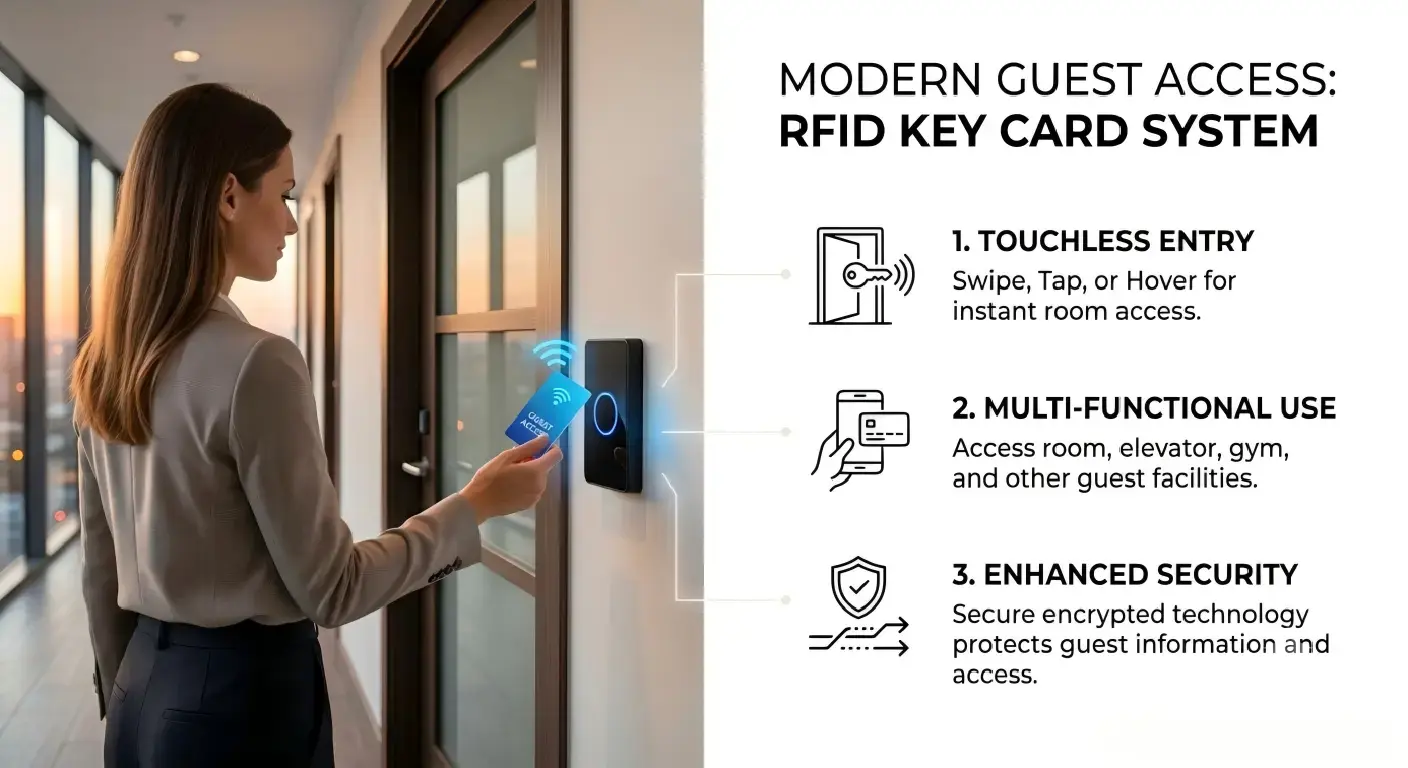
Understanding the Key Features of Plastic Hotel Door Key Cards
To choose a reliable way to get in, you should first know what makes a hotel key card strong and safe. The combination of technology, materials, and security protocols creates a credential that can be used every day and keeps guest access safe.
RFID and Magnetic Stripe Technologies
There are two main technologies that are used in modern hotel access cards. RFID cards work at 125kHz (low frequency) or 13.56MHz (high frequency), which lets you get in without touching anything and communicate securely. The ISO/IEC 14443 guidelines for these cards make sure that they work with well-known lock makers like ASSA ABLOY, Salto, and Onity. Different types of magnetic stripe cards, called Low-Coercivity (LoCo) and High-Coercivity (HiCo), store guest information mechanically but need to be swiped. It's better for HiCo cards to resist demagnetization from cell phones and other electronics, so guests don't have to worry about trying to get into their rooms and failing.
RFID technology lasts longer than other types because cards and locks don't have to touch readers, so they don't wear out as quickly. The chip and antenna inside the card allow read ranges of 5 to 15 cm, so guests can open doors without having to be perfectly lined up. This makes it easier for guests to check in and cuts down on calls to the front desk for new cards.
Material Composition and Durability Standards
The base material has a direct effect on how long the card lasts. PVC is still the standard because it is cheap, flexible, and can be printed on. The structure of PVC cards stays the same even after being handled many times, and they can go through over 100,000 programming rounds without losing any data. PET plastic is more durable in extreme temperatures; it works regularly from -25°C to +70°C, making it perfect for homes in hot areas or cold mountain resorts.
Standard card thickness is between 0.76mm and 0.84mm, which meets CR80 requirements (85.5mm × 54mm). This exact size makes sure that it works with card readers, encoders, and guest wallets. Cards made in approved facilities have dimensions that are accurate to within ±0.02mm. This keeps automatic encoding equipment from getting stuck during busy check-ins.
Security and Anti-Cloning Protocols
Strong security is built into every plastic hotel door key card to keep guests safe. Modern RFID chips use AES encryption and safe verification methods to stop people from making copies without permission. Handheld readers can't copy card information because of anti-cloning technology. This protects against both random theft and planned security leaks.
Quality cards keep data for more than ten years, which means that encoded access permissions stay stable for as long as the card works. In milliseconds, encrypted data is sent between the card and reader. This leaves a record that is used by property management systems to keep track of entry events, guest movement trends, and security issues.
Core Criteria to Evaluate When Choosing Durable Plastic Hotel Door Key Cards
When making choices about what to buy, you should weigh technical performance, cost-effectiveness, and seller dependability. By systematically evaluating these factors, you can choose cards that will need to be replaced less often and cause fewer complaints from guests.
Material Selection and Environmental Resistance
Based on where you will be using the products, compare PVC, PET, and PETG. PVC is good for normal indoor settings and has great print quality for room numbers and logos. PET can handle higher temperatures and won't bend in humid seaside areas or when left out in the sun. PETG is the best of both worlds because it is more resistant to chemicals like hand sanitizers and cleaning solvents that are commonly used in hospitality settings.
Tolerance to temperature is very important. Cards given to people who are staying at ski areas or hotels on tropical beaches must work regularly even when they are frozen or in very hot cars. Standards for testing, like ISO 10373-1, make sure that cards keep their read performance and structural integrity even after being heated and cooled many times.
Technology Compatibility with Existing Lock Systems
Which card system works best for you will depend on how your door locks are set up now. Properties that still use old magnetic stripe systems can keep giving out HiCo magnetic cards, but switching to RFID will protect them in the future and make things easier for guests. RFID cards can work with two different frequencies: 125kHz for older systems and 13.56MHz for newer ones. This means that changes can be made in stages, without having to replace all of the lock hardware at once.
Cards with both RFID chips and magnetic stripes are called "hybrid cards," and they give you more options as technology changes. Guests are given a single pass that works in both upgraded and old lock zones. This makes property-wide rollouts easier and makes handling multiple card types less complicated.
Customization and Branding Capabilities
A plastic hotel door key card is a way for guests to interact with the brand every time they use it. Full-color CMYK printing with offset, screen, or digital methods lets you show logos, pictures of the property, and instructions for guests clearly and brightly. Matte, glossy, or shiny finishes make things feel better to the touch and make them look better.
With variable data printing, you can give each guest a unique name, number them in order, and use QR codes to connect to digital concierge services. Custom encoding sets different levels of access, so VIP guests can go into executive lounges but standard rooms can't go into secret areas like server rooms or staff zones.
Cost Efficiency and Bulk Procurement
Look at the total cost of ownership instead of just the price per unit. A $0.30 card that lasts three years works better than a $0.15 card that needs to be replaced every six months. Find the replacement rates by looking at the number of guests, the average length of stay, and the number of card losses.
Buying in bulk cuts the cost per unit by a large amount. When you order 10,000 or more cards, you usually get a discount and free setup for personalization. Talk to suppliers whose minimum order amounts are flexible about wait times and payment terms. Reliable manufacturers like WS RFID can usually get standard orders to you in 7 to 10 days, but they do offer faster options for urgent restocks.
Comparing Popular Types of Plastic Hotel Door Key Cards for Durability and Performance
Depending on your property's protection needs and the types of guests you have, different card systems offer different benefits.
RFID Cards vs. Magnetic Stripe Cards
RFID cards are more durable than magnetic stripe cards because they don't have to be swiped, which causes friction and wear. Over time, magnetic stripes lose their strength because being read over and over again wears away the magnetic particles that store guest data. Because RFID chips are inside the card's plastic seal, they are safe from damage and the environment.
Failure rates make this difference very clear. Failure rates for high-quality RFID cards from certified manufacturers stay below 0.1%, which means that less than one out of every thousand cards made is faulty. Magnetic stripe cards, especially LoCo versions, have a higher failure rate of 2 to 5 percent because they lose their magnetic properties when they are close to cell phones and electronic key fobs.
High-Security Cards for Premium Properties
High-security plastic hotel door key cards with advanced encryption and designs that make it impossible to change the cards are useful for high-end hotels and spas. These cards have Desfire EV2 or EV3 chips inside them, which help the card and reader verify each other's identities. This stops relay attacks and identity cloning.
Visual security features like tamper-evident holograms and UV-reactive inks help staff quickly spot fake cards. Properties that handle valuable items or host VIP guests should ask for these extra security features when they are buying them to lower the risks that come with smart security threats.
Alternative Access Solutions
Mobile credentials sent through smartphone apps get rid of plastic cards completely, which is good for guests who are tech-savvy and good for the environment. But guests who want to use mobile access have to keep their devices charged and download special apps, which makes check-in more difficult. Plastic cards are still easy for everyone to get because they don't require any technology knowledge or gadget compatibility.
Metal key cards feel better in your hand and last longer than plastic ones, but they cost a lot more—often $2 to $5 per unit compared to $0.20 to $0.50 for plastic ones. Properties that are trying to save money can get the same level of guest satisfaction by using high-quality plastic cards with nice finishes.
How to Select and Procure Durable Plastic Hotel Door Key Cards for Your Hotel
To do strategic procurement, you need to list your needs, find suitable providers, and negotiate terms that fit with your business goals.
Defining Your Property's Requirements
Check the rate of guest turnover to get an idea of the yearly card number. Every year, about 17,000 cards are given out by a 200-room hotel that is 70% full and has average stays of three nights. You should plan for 10-15% waste due to mistakes in encoding, lost cards, and damage.
Material choices are affected by goals for sustainability. Properties that want to get LEED recognition or run carbon-neutral businesses should ask their suppliers to show proof that they follow environmental rules, such as RoHS and REACH certifications.
Evaluating Suppliers and Certifications
Work with producers who can show that they have the production ability and quality certifications you need. Suppliers should show proof of quality management according to ISO 9001:2015, test records from a third party confirming card performance, and contact information from hospitality customers.
WS RFID is a good example of a qualified source because they have been making things for 15 years, can make more than 500 million units a year, and have many standards, such as RoHS and REACH. Their turnkey services, which include everything from choosing the chip to encoding and packaging it, make buying easier and make sure the quality is always the same.
Ordering Logistics and Lead Times
It usually takes between 7 and 12 business days to print your own design on off-the-shelf cards. It could take up to four to six weeks for complicated orders that need special chips, custom sizes, or advanced security features. Before placing a big order, ask for samples and try the cards in your actual lock system to make sure they work and are compatible.
Cost Analysis and Negotiation Strategies
Quality RFID plastic hotel door key cards cost between $0.25 and $0.60 each on the market right now, depending on the type of chip, the level of customization, and the size of the order. Each magnetic stripe card costs between $0.15 and $0.35. To find ways to negotiate, ask for detailed quotes that break down the costs of materials, customization, and shipping.
Form partnerships with vendors that offer blanket purchase orders with set release dates. This method locks in prices for 12 months and lets you call off goods as needed, which lowers the cost of storage and the amount of money that is stuck in extra stock.
Best Practices to Maximize the Lifespan and Reliability of Plastic Hotel Door Key Cards
Using and storing cards properly can make them last longer, which lowers the cost of replacements and makes guests happier.
Proper Handling and Storage Protocols
Blank cards should be kept in temperature- and humidity-controlled areas that are between 15°C and 25°C. Extreme temps and wetness can cause card layers to warp, peel, and lose their glue. Keep cards sealed in their original packaging until you need them. This will keep them safe from dust and UV light, which can damage the print.
Teach the people who work at the front desk to hold cards by the edges so that fingerprints don't get on the magnetic stripe or RFID antenna. Card readers don't work as well when oils from skin contact them, and the smudging makes it look unprofessional to guests.
Encoding and Programming Best Practices
Use accurate encoding equipment that is kept up to date according to the manufacturer's instructions. When encoder heads are dirty or not lined up right, they send weak magnetic signals or don't finish RFID writes, which causes cards to fail when guests try to use them. Maintain your machine every three months by cleaning the heads, making sure the settings are correct, and validating the test cards.
Program cards with the right amount of time to use them. Passwords that expire at checkout time make things safer by stopping people who aren't supposed to be there from getting back in. You can extend the validity for long-term guests or seasonal staff while setting up your property management system to automatically deactivate workflows.
Sustainable Reuse and Recycling Programs
Set up programs to collect cards and encourage people to do so at the register. Cards that have been collected can be erased, re-encoded, and issued again, which makes them useful for more than one guest cycle. With the right care, a single high-quality plastic hotel door key card can be used by more than fifty people over the course of three years.
When cards hit the end of their useful life, work with recycle companies that specialize in recovering PVC and PET. These services collect used plastic materials to be used in new products. This cuts down on trash in landfills and supports your business's environmental goals.
Conclusion
When choosing lasting plastic hotel door key cards, you need to think about technology, materials, security, and cost. RFID cards that work at 125kHz or 13.56MHz are more durable and easier for guests to use than magnetic stripe cards. Quality cards made from PVC or PET materials and with the right thickness specs can be encoded over 100,000 times and still hold data for ten years. To be successful in procurement, you need to work with qualified providers who can offer full customization, dependable lead times, and proven production capacity. Using the right methods for handling, storing, and reusing cards will make them last longer and help reach sustainability goals. By looking at these factors in a planned way, people who work in hospitality can find access solutions that improve safety, lower costs, and make the whole experience better for guests.
FAQ
1. How is a plastic hotel door key card safer than a traditional metal key?
Modern cards have RFID chips that are protected using AES methods to stop people from making copies without permission. Metal keys are easy to copy at hardware shops, but RFID IDs need special tools and cryptographic keys that are only known by your property management system. Portable readers that try to steal card data are caught and blocked by anti-cloning technology. Cards also create digital audit trails that record every entry event with timestamps and the user's name. This makes it possible to quickly look into security issues.
2. Can I put my own logo on the cards without making them less durable?
When done right, quality printing processes don't shorten the life of cards. In offset and screen printing, inks are used that bind molecularly to the PVC or PET base. This makes images that can't be scratched. Digital printing lets you use changeable data for things like QR codes and guest names. During lamination, protective overlays are put on top of printed designs to protect them from scratches, UV fading, and chemical damage. When you place your order, be sure to choose quality inks and lamination choices so that the branding stays bright even after being handled many times.
3. How long does it take to get tailor-made orders?
Standard plastic hotel door key cards with custom printing usually get sent out 7 to 10 business days after the order is confirmed. Lead times are increased to 3–4 weeks for requirements that are hard to meet and need specialized chips like Desfire EV3, unique form factors, or advanced security features. Keeping popular chip types in stock at all times by suppliers speeds up production. Ask for sample approval before full production runs to make sure the design is correct and the function works properly. This will add 3–5 days to the total time needed.
Get Started with WS RFID: Your Trusted Plastic Hotel Door Key Card Supplier
WS RFID offers enterprise-level hotel access solutions made for people who work in the hospitality industry and need solutions that are reliable, safe, and quick. Our plastic hotel door key cards work with both 125kHz and 13.56MHz RFID frequencies. They are made from high-quality PVC and PET materials and can be written on over 100,000 times. The data on them is also retained for ten years. With ISO approvals, RoHS compliance, and 15 years of production experience, we keep failure rates for our 500 million units a year below 0.1%. Standard orders ship between 7 and 10 days, but there are choices to ship faster. Our production can be scaled up or down to meet your needs, whether you need 500 cards for a small hotel or 500,000 for a large company. Get in touch with kenny@w-srfid.com right away to get samples, talk about customization options, and get reasonable prices from a plastic hotel door key card manufacturer that is dedicated to your business's success.
References
1. International Organization for Standardization. (2020). ISO/IEC 14443: Identification Cards – Contactless Integrated Circuit Cards – Proximity Cards. Geneva: ISO Press.
2. Smith, J. & Williams, R. (2022). Hotel Security Systems: Technology Integration and Guest Safety. New York: Hospitality Technology Publishers.
3. Anderson, M. (2021). RFID in the Hospitality Industry: Access Control and Guest Experience Enhancement. Journal of Hotel Management Technology, 15(3), 234-251.
4. European Committee for Standardization. (2019). EN 15693: Identification Card Systems – Surface Transport Applications – Contactless Integrated Circuit Card and Terminal Interface. Brussels: CEN Publications.
5. Thompson, K. (2023). Sustainable Procurement Practices in Hospitality: Balancing Cost, Quality, and Environmental Responsibility. International Journal of Hospitality Operations, 28(4), 412-430.
6. National Institute of Standards and Technology. (2021). FIPS 197: Advanced Encryption Standard (AES) for Secure Access Control Applications. Washington, D.C.: U.S. Department of Commerce.
Learn about our latest products and discounts through SMS or email