- English
- French
- German
- Portuguese
- Spanish
- Russian
- Japanese
- Korean
- Arabic
- Greek
- German
- Turkish
- Italian
- Danish
- Romanian
- Indonesian
- Czech
- Afrikaans
- Swedish
- Polish
- Basque
- Catalan
- Esperanto
- Hindi
- Lao
- Albanian
- Amharic
- Armenian
- Azerbaijani
- Belarusian
- Bengali
- Bosnian
- Bulgarian
- Cebuano
- Chichewa
- Corsican
- Croatian
- Dutch
- Estonian
- Filipino
- Finnish
- Frisian
- Galician
- Georgian
- Gujarati
- Haitian
- Hausa
- Hawaiian
- Hebrew
- Hmong
- Hungarian
- Icelandic
- Igbo
- Javanese
- Kannada
- Kazakh
- Khmer
- Kurdish
- Kyrgyz
- Latin
- Latvian
- Lithuanian
- Luxembou..
- Macedonian
- Malagasy
- Malay
- Malayalam
- Maltese
- Maori
- Marathi
- Mongolian
- Burmese
- Nepali
- Norwegian
- Pashto
- Persian
- Punjabi
- Serbian
- Sesotho
- Sinhala
- Slovak
- Slovenian
- Somali
- Samoan
- Scots Gaelic
- Shona
- Sindhi
- Sundanese
- Swahili
- Tajik
- Tamil
- Telugu
- Thai
- Ukrainian
- Urdu
- Uzbek
- Vietnamese
- Welsh
- Xhosa
- Yiddish
- Yoruba
- Zulu
How do RFID contactless cards work for transit systems
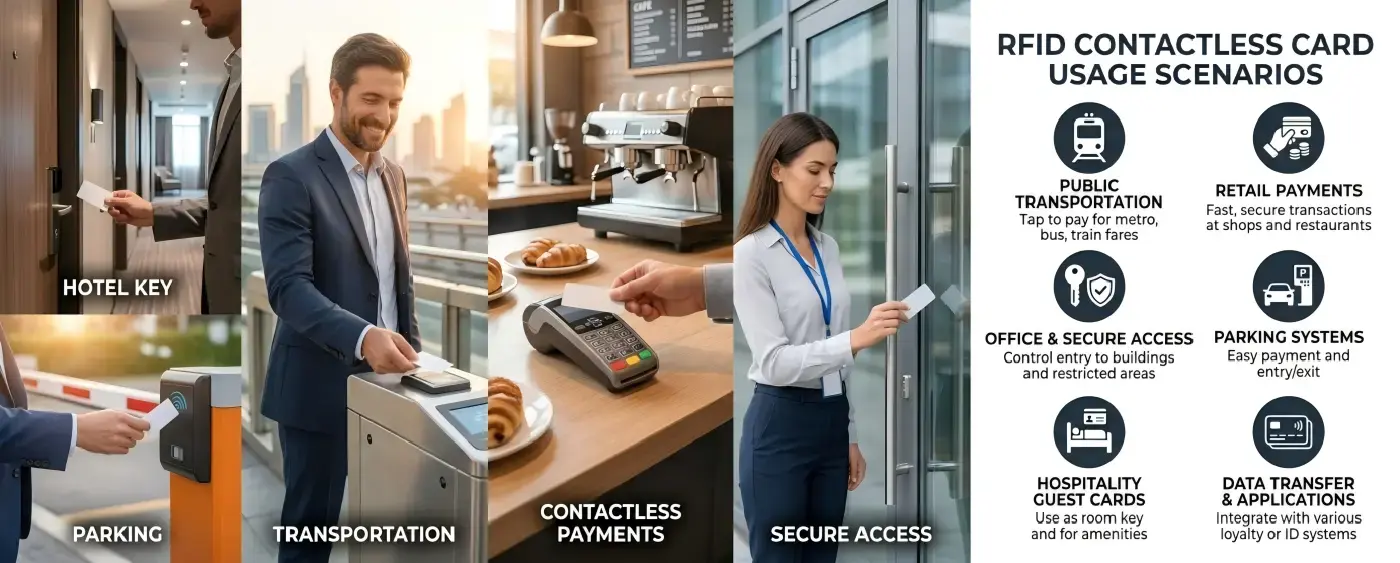
RFID contactless cards revolutionize transit fare collection by embedding a microchip and antenna within a durable card substrate, enabling wireless communication with readers through radio frequency signals at 13.56 MHz. When passengers tap their card near a reader, electromagnetic induction powers the passive chip momentarily, transmitting encrypted fare data in milliseconds without physical contact or battery requirements. This tap-and-go mechanism accelerates boarding, reduces mechanical wear on infrastructure, and supports diverse fare structures across buses, metros, and commuter rail networks. Transit agencies worldwide rely on these cards for their speed, reliability, and ability to handle millions of daily transactions while maintaining data security through ISO 14443A compliance.
Understanding RFID Contactless Cards in Transit Systems
Core Components and Architecture
There are three main parts that make up an RFID contactless card that describe how it works. The built-in microchip saves unique identification information and a record of all transactions. It usually has between 1KB and 8KB of EEPROM memory and can keep data for more than 10 years. The internal antenna is perfectly tuned to vibrate at the working frequency. It picks up radio waves from the reader and uses electromagnetic coupling to power the chip. The substrate, which is usually made of high-quality PVC and is 0.76- 0.84 mm thick, protects these parts and stays flexible and strong through more than 100,000 read-write cycles.
Operating Frequency and Communication Protocols
High-frequency cards that work at 13.56 MHz are mostly used in transit systems because they have the best read range (usually 0–10 cm) and transaction speed. This frequency band is in line with international standards ISO/IEC 14443A and ISO 15693. This means that readers from different makers and transit networks will be able to work together. The communication protocol controls how information is sent and received. When an RFID contactless card enters the reader's electromagnetic field, the chip modifies the field to send stored information. This completes identification and ticket deduction in 100 to 300 milliseconds.
Passive vs. Active Card Technology
Passive RFID contactless cards are best for transit uses because they don't have a battery inside and get all of their power from the reader's field. Because of this design, replacing batteries is no longer necessary, and the card will last longer than ten years with regular use. Passive cards can work in harsh environments, as temperature ranges from -25°C to +70°C. This means they can be used at outdoor turnstiles, bus validators, and transportation hubs that are open all year. The strong building and hermetic seals keep water and chemicals out, which is important for public facilities.
Security Architecture and Encryption
Modern transit cards have many security layers to stop scams and illegal copying. Mutual authentication protocols and advanced encryption algorithms like AES-128 check both the RFID contactless card and the reader before transactions are processed. NXP's MIFARE DESFire and similar chip platforms have divided memory structures that let transit operators store different apps—like ticket payment, parking access, and shop micropayments—on a single card that is safe and secure. The main problem with older magnetic stripe methods was that data could be stolen and fake items were sold. These steps fix that problem.
Benefits of RFID Contactless Cards for Transit Systems
Operational Efficiency and Passenger Flow Optimization
Contactless fare collection cuts boarding times by a huge amount compared to standard methods of ticket proof. Since each transaction takes less than 30 seconds, transit companies can handle more passengers during rush hours without having to hire more staff or set up more real gates. This efficiency directly leads to more reliable service and less platform congestion, especially in metro areas with a lot of people, where throughput determines the overall system capacity. People can use the same RFID contactless card on buses, trains, and regional transit networks because the technology allows open payment integration.
Cost-Effectiveness and Durability
RFID contactless cards are more expensive to buy at first than magnetic stripe cards, but they end up being much cheaper to own in the long run. Since there is no mechanical contact, there is no reader wear and tear. This means that maintenance intervals and equipment replacement frequencies are shortened. Cards last a lot longer than magnetic tickets—they usually last between 5 and 7 years with daily use, while magnetic tickets only last 1 to 2 years. WS RFID's manufacturing skills guarantee consistent quality on a large scale. Their automated production lines achieve defect rates below 0.1% across annual outputs of more than 500 million units, which means they can provide reliable supply chains for large transit purchases.
Scalability and System Integration
Transit agencies benefit from the fact that RFID contactless card systems are flexible and can be easily added to central fare control platforms or updated with new technology in the future. Different types of fare systems are supported by the cards, such as rates based on distance, rates based on time of day, and multi-modal transfer credits. All of this is controlled by centralized software, so the cards don't need to be reissued. This adaptability lets growing transport networks and changing fare policies work together. Compatibility with ISO standards makes sure that current cards will still work even if agencies add more readers or improve the ones they already have. This protects both operators' and travelers' investments.
How to Select the Best RFID Contactless Card for Transit Procurement
Technical Specifications and Compatibility Requirements
Professionals in charge of buying things should make sure that the RFID contactless cards being considered work at the right frequency for the reader equipment they already have. For most modern systems, this is 13.56 MHz, and for older systems, it's 125 kHz. Communication system compatibility (ISO 14443A, ISO 15693) tells us if cards can work with validators and gates that are already in place. Read range requirements are important: cards must reliably trigger from 2 to 10 cm away so that they can work with wallet taps and bag close situations without needing to be placed exactly. Memory size should match the apps that are being planned. 4KB is enough for basic storage, and 8KB lets you launch multiple applications.
Chip Selection and Supplier Ecosystem
Chips from top companies like NXP (MIFARE family) and Infineon, as well as chips from smaller companies in the region like Fudan and Huada, all work differently. NXP's DESFire platform offers the highest level of security, making it ideal for government-backed transit systems. For medium-security applications, the NTAG series chips strike a good mix between price and usefulness. WS RFID Technology lets chip designers make full changes to the RFID contactless card, so transit operators can pick the best silicon based on price, security needs, and transaction speed goals. Our field application engineers do integration audits to make sure that the chips you choose work properly with your fare collection software.
Bulk Procurement Considerations
Large-scale transit deployments need suppliers who can handle orders for millions of RFID contactless cards and guarantee consistent quality and delivery times. Different kinds of packaging, like single sleeves or large boxes, affect how much it costs to ship and how quickly it gets to customers. Pre-encoding services make distribution easier by sending cards that are already set up with starting values and unique identifiers. This means that there are no steps needed to be done on-site. Standard production times at WS RFID are 7–10 days for in-stock items and 10–12 days for custom runs. This makes project timelines reliable, and faster choices are available for quick rollouts.
Common Technical Challenges and Troubleshooting in Transit Applications
Signal Interference and Environmental Factors
Near readers, metal surfaces like turnstile frames and car body panels can detune card antennas and shorten the range at which they can be read. To fix this, readers need to be placed carefully, and in some cases, anti-metal RFID contactless cards with special antenna designs that keep working when pressed against conductive materials are needed. Similar problems can happen with liquid interference, but this is less of a problem if the cards are properly made and have waterproof seals built in. Transit workers should try all of their deployment sites in the field to find places where interference is most common. They should then move readers or lower the power levels as needed.
Security Vulnerabilities and Countermeasures
Even with encryption, attackers with enough determination may try relay attacks or UID cloning on RFID contactless cards with less security. Transit systems that store high-value amounts should require cards with two-factor authentication and secure countermeasures that stop simple copying. Regular firmware changes to the hardware of readers stop any newly found security holes before they can be used. The MIFARE DESFire EV3 cards from WS RFID have the newest anti-tampering features, such as secure messaging and randomized UIDs that make it impossible to track across readers. Following ISO security standards gives you some protection, but you still need to be very careful all the time.
Programming and Initialization Standards
When RFID contactless cards are encoded correctly, the transit network can be sure that each unit has valid credentials. When there are encoding mistakes, like wrong sector keys, bad data formatting, or unfinished initialization, deals are rejected, and customers are upset. These problems can be avoided by using ISO-compliant encoding tools and following the chip manufacturer's instructions. WS RFID provides pre-programmed card delivery with personalized data structures that meet the needs of your fare system. These cards are backed by 100% electrical performance proof during manufacturing to get rid of any defective units before they are shipped.
Future Trends and Innovations in RFID Contactless Cards for Transit
Mobile Integration and Multi-Channel Authentication
The next generation of collecting transit fares will be shaped by how physical RFID contactless cards and mobile payment platforms work together. People using hybrid systems can either tap a card or use NFC-enabled smartphones that are pre-loaded with virtual credentials. This gives more people access while keeping the security of dedicated cards for people who don't have computers. Backend systems use cloud analytics more and more to keep track of passenger trends, find the best service rates, and spot illegal use of both physical and digital payment methods.
Sustainable Materials and Environmental Responsibility
RFID contactless cards made from reusable or organic materials are becoming more popular as people become more aware of environmental issues. WS RFID is looking into PLA-based substrates and plastic-free alternatives that are as durable and good at RF performance as traditional PVC cards but have less of an effect on the environment over their whole lifecycle. Suppliers that offer takeback programs for expired cards help transit agencies that are trying to get green certifications. These programs allow for material recycling and circular economy practices. Following the rules for RoHS, REACH, and POPS makes sure that our modern production uses as few harmful materials as possible.
Enhanced Security Through Biometric and Blockchain Technologies
New technologies combine RFID contactless cards with biometric proof. For example, fingerprint scanners can be built into card substrates or tied to face recognition systems at gates. This two-factor security keeps card sharing from happening without permission while keeping transaction speeds fast. Even though blockchain-based ticket validation is still in its early stages, it promises transaction records that can't be changed and decentralized fraud protection. With these improvements, transit companies will be able to meet changing security standards while keeping the easy-to-use tap-and-go experience that current cashless systems are known for.
Conclusion
RFID contactless cards are the key to making transit fare collection fast, safe, and scalable. They combine tried-and-true technology with new ideas all the time to meet the needs of modern city life. Their fast transaction speeds, high durability, and ability to work with new payment ecosystems make them essential for transit operators who deal with millions of passengers every day. To make sure long-term operating success, choosing the right cards takes a thorough look at their technical specs, security features, and the supplier's abilities. As public transportation systems move toward more sustainable and integrated mobility platforms, contactless card technology continues to adapt by adding mobile features, using eco-friendly materials, and implementing advanced security measures that protect both operators and travelers.
FAQ
1. What distinguishes high-frequency and low-frequency RFID contactless cards in transit?
High-frequency cards with a frequency of 13.56 MHz can send data more quickly and securely, making them perfect for complicated fare systems that store value and have many uses. Low-frequency cards at 125 kHz offer simpler UID-only authentication that is good for basic access control. However, they don't have the memory or encryption features needed for safe financial transactions in today's transit networks.
2. Can RFID contactless cards be easily duplicated or cloned?
Cloning is still possible with standard UID-only cards, but AES encryption and mutual identification on newer transit cards with secure chips like MIFARE DESFire EV3 make it almost impossible to copy without permission. The level of security is determined by how well cryptographic methods are used during system deployment. This is why it's important to work with experienced providers like WS RFID that know how to do safe initialization.
3. How does card material affect performance in harsh transit environments?
When you laminate high-quality PVC boards the right way, they prevent water and last a long time, which is important for outdoor validators and use in all kinds of weather. The RFID contactless cards from WS RFID can handle temperatures ranging from -25°C to +70°C and common chemicals. This means that they will work reliably whether people tap them at warm indoor stops or cold outdoor platforms. The hermetic chip-antenna sealing stops water from getting in, which would lower the electrical performance.
Partner With WS RFID for Your Transit Contactless Card Solution
Transit agencies and system developers looking for a dependable RFID contactless card provider can get all the help they need at WS RFID Technology. Our ISO 9001-certified production facilities and 15 years of experience making cards ensure consistent quality for all orders, from small pilot programs to network-wide deployments of millions of cards. We can fully customize everything, from the chip you choose and the radio setting to the full-color CMYK printing of your transit brand. We also offer pre-encoding services that make cards ready to be used right away. Our standard 7–10 day delivery time and faster production choices keep your projects on track, and technical help from our field application engineers makes sure that they work well with your current fare collection system. Get in touch with kenny@w-srfid.com right away to talk about your transit card needs and find out how our factory-direct prices and OEM/ODM options can help you save money without sacrificing the safety and durability your people expect.
References
1. International Organization for Standardization. (2016). ISO/IEC 14443: Identification cards — Contactless integrated circuit cards — Proximity cards. Geneva: ISO.
2. Finkenzeller, K. (2010). RFID Handbook: Fundamentals and Applications in Contactless Smart Cards, Radio Frequency Identification and Near-Field Communication (3rd ed.). Chichester: Wiley.
3. Pelletier, M., Trépanier, M., & Morency, C. (2011). Smart card data use in public transit: A literature review. Transportation Research Part C: Emerging Technologies, 19(4), 557-568.
4. European Telecommunications Standards Institute. (2018). Smart Card Platform Technical Specification for Public Transport. Sophia Antipolis: ETSI.
5. Rankl, W., & Effing, W. (2010). Smart Card Handbook (4th ed.). Chichester: John Wiley & Sons.
6. Transit Cooperative Research Program. (2015). Guidebook for Measuring, Assessing, and Improving Performance of Demand-Response Transportation. Washington, DC: Transportation Research Board.
Learn about our latest products and discounts through SMS or email