- English
- French
- German
- Portuguese
- Spanish
- Russian
- Japanese
- Korean
- Arabic
- Greek
- German
- Turkish
- Italian
- Danish
- Romanian
- Indonesian
- Czech
- Afrikaans
- Swedish
- Polish
- Basque
- Catalan
- Esperanto
- Hindi
- Lao
- Albanian
- Amharic
- Armenian
- Azerbaijani
- Belarusian
- Bengali
- Bosnian
- Bulgarian
- Cebuano
- Chichewa
- Corsican
- Croatian
- Dutch
- Estonian
- Filipino
- Finnish
- Frisian
- Galician
- Georgian
- Gujarati
- Haitian
- Hausa
- Hawaiian
- Hebrew
- Hmong
- Hungarian
- Icelandic
- Igbo
- Javanese
- Kannada
- Kazakh
- Khmer
- Kurdish
- Kyrgyz
- Latin
- Latvian
- Lithuanian
- Luxembou..
- Macedonian
- Malagasy
- Malay
- Malayalam
- Maltese
- Maori
- Marathi
- Mongolian
- Burmese
- Nepali
- Norwegian
- Pashto
- Persian
- Punjabi
- Serbian
- Sesotho
- Sinhala
- Slovak
- Slovenian
- Somali
- Samoan
- Scots Gaelic
- Shona
- Sindhi
- Sundanese
- Swahili
- Tajik
- Tamil
- Telugu
- Thai
- Ukrainian
- Urdu
- Uzbek
- Vietnamese
- Welsh
- Xhosa
- Yiddish
- Yoruba
- Zulu
A Comprehensive NFC Epoxy Tag Sticker Guide for Beginners
NFC epoxy tag stickers are a high-tech way to identify things because they mix Near Field Communication (NFC) with industrial-grade epoxy resin coating. These advanced tagging solutions are very long-lasting and dependable, which makes them perfect for B2B procurement workers in the healthcare, retail, manufacturing, and transportation sectors who need strong identification systems. This guide tells you about everything from technical specs and use cases to buying options for these smart tags. This will help you make smart choices about how to use them in your business.
What is an NFC Epoxy Tag Sticker?
Understanding the Core Technology
A 13.56MHz high-frequency chip and a radio circuit are built into an NFC epoxy tag sticker. The whole thing is sealed inside a clear or coloured epoxy resin covering. When you use epoxy to encapsulate something, you make an airtight layer that keeps out water, dust, chemicals, and mechanical stress. Unlike paper labels or regular PVC labels, the resin coating gives the label a three-dimensional, clear finish that doesn't fade or scratch.
These tags talk to each other using ISO/IEC 14443 protocols, which means they work with all modern smartphones and other NFC-enabled devices. The read range is usually up to 10 cm, which lets you share info without touching it or using any special tools. Memory sizes range from 144 bytes for simple URL redirects to 888 bytes for storing large datasets like serial numbers, authentication codes, and records of maintenance.
Key Technical Specifications
Industrial-grade materials that meet IP67 waterproof standards are used by WS-RFID Technology to make NFC epoxy tag stickers. The tags reliably work in temperatures ranging from -25°C to +70°C, so they can be used in both cold stores and harsh industrial settings outside. The very thin profile—usually only 1 to 2 mm thick—makes it possible to attach it to products without changing their look or how they work.
The epoxy coating uses UV-resistant ingredients that keep the colour from turning yellow, so the product stays clear and looks good for a long time. Strong adhesive backings, which usually use 3M compounds, make sure that the backing stays attached to a wide range of surfaces, like plastics, metals, glass, and textiles.
How NFC Data Exchange Works
Electromagnetic induction powers the passive chip inside the NFC epoxy tag sticker when a smartphone or reader gets close enough. In response, the chip sends saved data that is quickly decoded by the reader. This contactless interaction can be used for many things, from verifying products to interacting with customers, and it doesn't need batteries or maintenance.
Benefits and Common Applications of NFC Epoxy Tag Stickers
Superior Durability Advantages
The construction of epoxy resin has real advantages over other tagging technologies. When humidity or wear and tear hit paper labels, they break down quickly. Standard plastic tags, on the other hand, often crack when put under mechanical stress. Sealed NFC epoxy tag stickers stay structurally sound and readable even after being exposed to industrial oils, cleaning solvents, and bad weather for a long time.
This longevity means that replacement costs will go down and info will be more reliable. Tags that work throughout an asset's entire lifetime are useful for keeping track of pallets in warehouses, medical tools in hospitals, and production assets in factories.
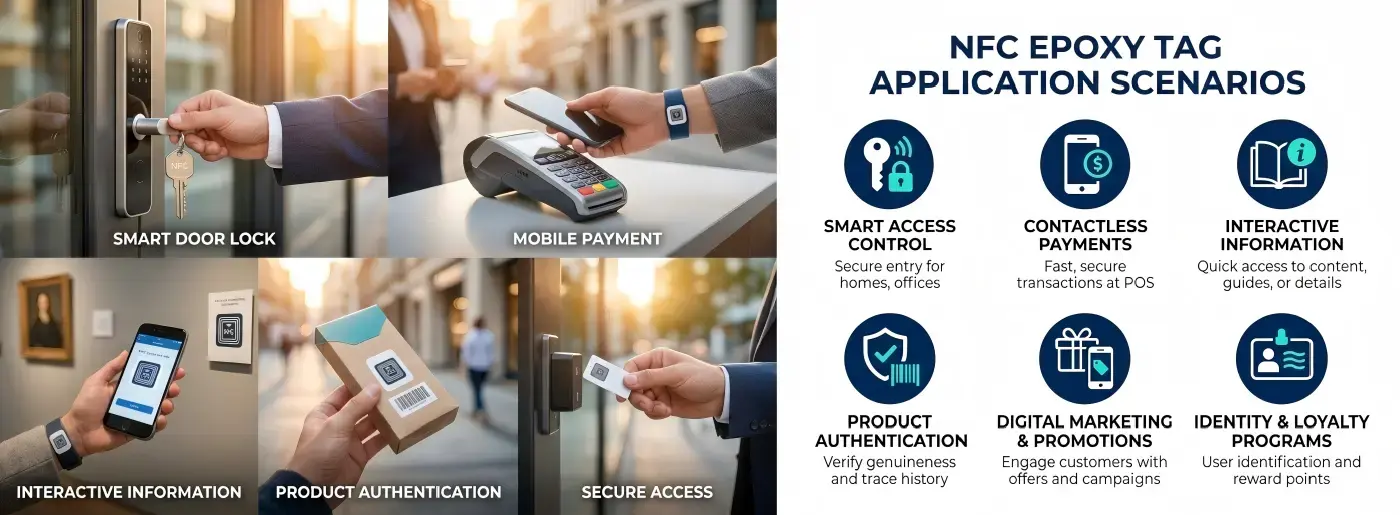
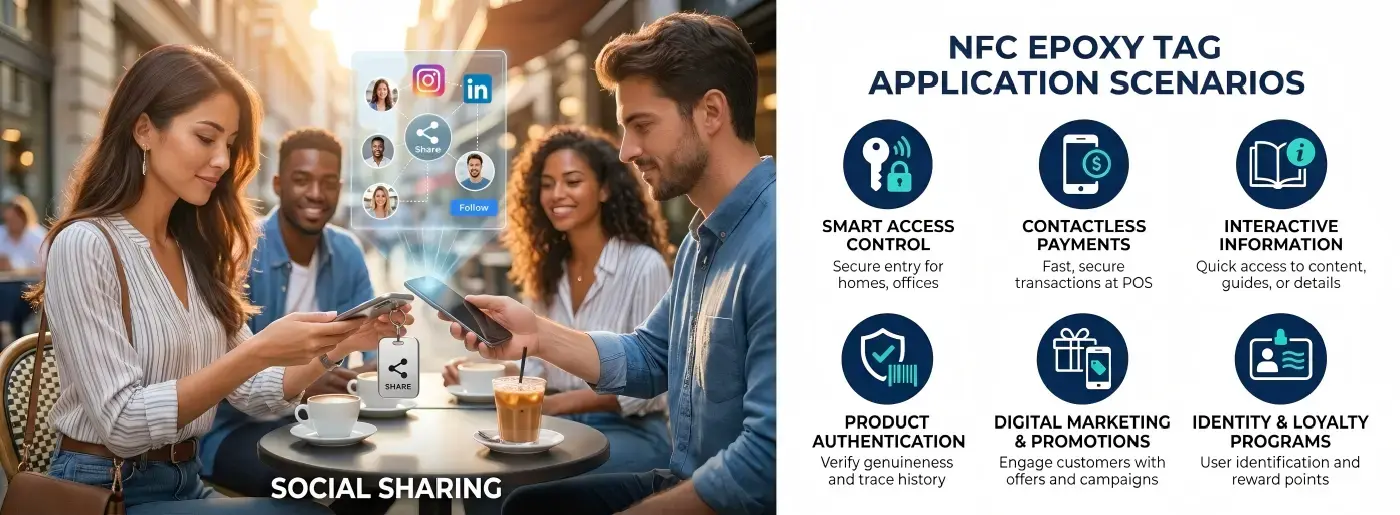
Diverse Industry Applications
Fashion stores put NFC epoxy tag stickers on high-end handbags and shoes, which lets customers quickly verify the authenticity of items and read brand stories and care directions. Using crystal-clear glue to make something look expensive helps build a brand's reputation while private data storage keeps fakes out.
These tags are put on returnable containers and pallets by logistics companies. This makes it easy to keep track of inventory as items move through supply chains. The IP67 grade makes sure that the device works the same way even if it gets wet, dusty, or the temperature changes while it's being shipped. When keeping an eye on refrigerated goods, people who work in the cold chain value this reliability even more.
Tags that are encased in epoxy are used on wheelchairs, IV pumps, and surgical instruments in hospitals. The chemical protection can handle multiple cleaning processes, and the secure glue stops people from taking it off without permission. Patient wristbands with adhesive tags allow for accurate identification and can be worn every day and washed many times.
NFC epoxy tag stickers are used by hotels as long-lasting room access IDs and keyless entry systems. Festival organisers put them on wristbands so that attendees can be verified and payments can be made without cash. The waterproof design means you don't have to worry about sweat, rain, or spilt drinks during events that last more than one day.
Comparison with Alternative Technologies
Paper NFC labels are cheaper at first, but they need to be replaced more often in harsh conditions. Plastic tags are pretty durable, but they don't look as good or be as resistant to chemicals as polymer tags. Standard RFID tags can be read from farther away, but they need special equipment to work. NFC tags, on the other hand, can be read by smartphones that are already out there.
When projects need to last a long time and work on all smartphones, NFC epoxy tag stickers are the best choice. The three-dimensional clarity also makes the brand stand out visually, which reinforces the idea that it is of high quality.
How to Choose the Right NFC Epoxy Tag Sticker for Your Business
Evaluating Material and Environmental Requirements
Environmental assessment should come before any decisions about procurement. NFC epoxy tag sticker formulations with better chemical resistance are needed for tasks that involve solvents, oils, or cleaning agents. For outdoor use, UV-stable plastics that don't change colour are needed. For metal surface installation, tags need to have ferrite protecting layers to keep interference from happening.
Temperature variations are very important. Standard tags work well in most commercial settings, but they might need special versions that can handle high temperatures or cryogenic temperatures for use in industrial kilns, freezers, or cars.
Memory Capacity and Data Needs
144-byte NTAG213 chips work well for simple product authentication that needs URL storage. 888-byte NTAG216 configurations are useful for full traceability systems that keep track of manufacturing dates, batch numbers, maintenance plans, and records of the chain of ownership. The economics of a project are best when memory needs are balanced against per-unit costs.
Adhesive Selection and Surface Compatibility
The adhesive backing has to be the same type as the substrate. Textured surfaces need stronger, more aggressive adhesives that don't peel easily, but normal versions work well with smooth plastics. Permanent glue stop people from moving tags without permission, which is very important for anti-counterfeiting uses. Stickers that can be taken off work well for temporary tracking situations where tags need to be moved.
Cost Considerations and Volume Economics
Unit prices go down a lot as the order quantity goes up. Standard WS-RFID Technology goods ship in 5 to 7 days, while custom designs take 10 to 12 days to make. Procurement managers need to weigh the needs of the present with the potential savings that come from ordering in bulk.
Options for customisation, such as full-color printing, laser engraving, and personalising the serial number, add value but raise the cost per unit. By comparing these features to what the application needs, you can avoid spending money on things that aren't needed and make sure the tags meet their useful goals.
Supplier Evaluation Criteria
Manufacturers you can trust have ISO 9001 certification, follow RoHS and REACH rules, and have clear quality control processes. WS-RFID Technology runs an automated factory that is 10,000 square meters and makes more than 500 million units a year with a failure rate of less than 0.3%. This manufacturing scale makes sure that quality and delivery efficiency are always the same, which is important for large-scale operations.
During implementation, the expert help that a supplier can provide is very important. Field application engineers who help with SDKs and integration reduce the risks of rollout and speed up the time it takes to start using the system.
How to Program and Use NFC Epoxy Tag Stickers
Encoding Process and Software Tools
To program NFC epoxy tag stickers, you need a smartphone that supports NFC or a USB reader that works with software for encoding. Free programs like NFC Tools and TagWriter let you write simple data like URLs, contact information, and plain text. For large operations, batch encoding solutions are helpful because they quickly write unique serial numbers and encrypted identification codes to thousands of tags.
Getting the writer close, choosing the data type, entering the information, and making sure the write operations went well are all parts of the encoding process. Password-protected tags should add this security layer during the initial programming phase to stop unauthorised changes to data.
Optimal Placement Strategies
The position of tags has a big effect on how reliably they are read. The best read range and accuracy are achieved when placed on flat, non-metallic surfaces. When mounting on metal is not an option, using special anti-metal versions with ferrite layers keeps the functionality. Don't put tags near edges or corners, where mechanical stress could make the adhesive bond weak.
Retail applications benefit from places that customers can get to easily and that encourage interaction without needing help. Tags should be placed on industrial assets so that workers can read them easily during normal tasks without having to bend over or reach too far.
Testing and Quality Verification
Testing after installation makes sure everything works right before full launch. For verification, you should use target devices to measure the read range, check the strength of the glue bond, and make sure the data is correct. Before starting mass production, longevity claims are checked by putting sample tags through expected temperature changes, chemicals, and physical wear and tear.
Procurement and Ordering Guide for NFC Epoxy Tag Stickers
Identifying Reliable Suppliers
When you deal directly with a manufacturer, you avoid the markups that come from middlemen and get access to technical support. WS-RFID Technology has factory-direct price and clear quoting methods that explain chip specifications, customisation choices, and pricing tiers based on volume for every NFC epoxy tag sticker order. The company keeps a lot of inventory on hand so that common setups can be filled quickly.
Understanding Lead Times and Logistics
Standard NFC epoxy tag stickers are sent out 5 to 7 business days after the order is confirmed. Ten to twelve days are needed to complete custom projects with odd shapes, special printing, or non-standard chip configurations. International shipping usually takes an extra 3–7 days, but it depends on where it's going and which service you choose.
When buying sensitive computer parts, you need to think about how to package them. Suppliers with a good reputation use anti-static materials and moisture barriers to keep tags safe while they're being shipped. Having the ability to track shipments and choose from different insurance options makes sending valuable items even safer.
Negotiation and Contract Considerations
A lot of the time, promises to buy in bulk lead to better prices and earlier schedules for production. Long-term supply deals are good for everyone because they keep demand forecasts stable and make sure that rates stay low. Including options for prototyping, sample approval, and changing specifications can help the project meet its changing needs.
Quality Assurance and Post-Sale Support
Frequency resonance testing, peel strength evaluation, and accelerated ageing protocols are all parts of full quality control. To make sure IP67 ratings are correct, WS-RFID Technology tests for salt spray and vacuum leaks. These thorough checks make sure that goods meet the requirements before they are shipped.
The warranty usually lasts for one to two years and covers problems with the way the product was made but not damage caused by overuse or bad fitting. Having quick technical support that can answer questions about integration and fix problems is very helpful throughout the lifecycle of a product.
Conclusion
NFC epoxy tag stickers work very well when it comes to durability, looks, and being compatible with all devices. Knowing about technology specs, application needs, and the best ways to buy things helps you make smart decisions that improve practical results. These strong identification solutions give modern businesses the dependability they need, whether they're used to stop fake luxury goods, automate asset tracking across industrial sites, or make smart packing more engaging for customers. Epoxy-encapsulated tags are the best choice in many B2B industries because they look great, are compatible with smartphones, and are resistant to chemicals.
FAQ
1.Can NFC epoxy tags function reliably on metal surfaces?
When standard designs are placed on conductive materials, they cause signal interference. Specialised anti-metal variants made by WS-RFID Technology include ferrite shielding layers that allow them to work properly on machinery, metal containers, and electronics without affecting read range or reliability.
2.Does the epoxy resin yellow or degrade under UV exposure?
High-quality formulations that use UV-stable compounds keep their clarity and transparency even after being exposed to the sun for a long time. Accelerated ageing tests on WS-RFID products show that the resin stays clear for years without changing colour, so the products keep their functionality and good looks.
3.What programming tools work with these tags?
These tags can be read and encoded by any device that works with NFC Forum Type 2 or Type 4. Standard programming apps can be used on smartphones running iOS or Android, and USB PC drivers let businesses encode many files at once. Software development kits help make custom changes to systems that are already in place.
4.How does memory capacity affect application possibilities?
With 144-byte chips, basic authentication and URL redirection work fine. 888-byte configurations are good for full traceability systems that store manufacturing dates, maintenance logs, and chain-of-custody records. Finding the right memory size for the data you need saves money without losing usefulness.
Partner with WS-RFID for Premium NFC Epoxy Tag Solutions
WS-RFID Technology stands as your strategic NFC epoxy tag sticker supplier, bringing 15 years of manufacturing excellence and new ideas to every project. Our ISO-certified factory makes more than 500 million units every year, and failure rates are less than 0.3%. This means that your operations will always be reliable. We offer full customisation, which includes printing in full colour, laser engraving, and chip configuration that is made to fit your needs.
We offer full technical support in addition to manufacturing through field application engineers who help with SDK integration and rollout optimisation. Standard items are sent out within 5 to 7 days, while custom orders are made and sent out in just 10 to 12 days. Our factory-direct model cuts out the middleman, which means we can offer competitive prices without lowering the quality of our products.
Get in touch with kenny@w-srfid.com to talk about your identification needs. Our team gives you expert advice throughout the whole procurement process, whether you're looking for standard tags that can be used right away or custom solutions for unique uses. You can look at all of our products at w-srfid.com and ask for full specs for your next project.
References
1. International Organization for Standardization. "ISO/IEC 14443: Identification cards — Contactless integrated circuit cards — Proximity cards." Geneva: ISO, 2018.
2. NFC Forum. "NFC Forum Type 2 Tag Operation Specification: Technical Specification." Wakefield, MA: NFC Forum, 2020.
3. Chen, L., and Wang, S. "Epoxy Resin Materials for Electronic Encapsulation: Properties and Applications." Journal of Applied Polymer Science 138, no. 12 (2021): 50145-50159.
4. Smith, J. R. "RFID and NFC Technologies in Supply Chain Management: A Comprehensive Review." International Journal of Logistics Management 32, no. 4 (2021): 1089-1112.
5. Martinez, A., and Thompson, K. "Durability Assessment of Epoxy-Encapsulated Electronic Tags in Industrial Environments." IEEE Transactions on Industrial Electronics 68, no. 9 (2021): 8756-8765.
6. Global Industry Analysts Inc. "NFC Tags and Labels: Global Market Trajectory and Analytics." San Jose: Global Industry Analysts, 2023.
Learn about our latest products and discounts through SMS or email