- English
- French
- German
- Portuguese
- Spanish
- Russian
- Japanese
- Korean
- Arabic
- Greek
- German
- Turkish
- Italian
- Danish
- Romanian
- Indonesian
- Czech
- Afrikaans
- Swedish
- Polish
- Basque
- Catalan
- Esperanto
- Hindi
- Lao
- Albanian
- Amharic
- Armenian
- Azerbaijani
- Belarusian
- Bengali
- Bosnian
- Bulgarian
- Cebuano
- Chichewa
- Corsican
- Croatian
- Dutch
- Estonian
- Filipino
- Finnish
- Frisian
- Galician
- Georgian
- Gujarati
- Haitian
- Hausa
- Hawaiian
- Hebrew
- Hmong
- Hungarian
- Icelandic
- Igbo
- Javanese
- Kannada
- Kazakh
- Khmer
- Kurdish
- Kyrgyz
- Latin
- Latvian
- Lithuanian
- Luxembou..
- Macedonian
- Malagasy
- Malay
- Malayalam
- Maltese
- Maori
- Marathi
- Mongolian
- Burmese
- Nepali
- Norwegian
- Pashto
- Persian
- Punjabi
- Serbian
- Sesotho
- Sinhala
- Slovak
- Slovenian
- Somali
- Samoan
- Scots Gaelic
- Shona
- Sindhi
- Sundanese
- Swahili
- Tajik
- Tamil
- Telugu
- Thai
- Ukrainian
- Urdu
- Uzbek
- Vietnamese
- Welsh
- Xhosa
- Yiddish
- Yoruba
- Zulu
Guide to RFID Key Fob: Benefits, and Best Practices
In the last ten years, access control technology has changed a lot, and contactless RFID key fobs are now the most important part of keeping businesses safe and running smoothly. An RFID key fob has a chip and an antenna built into a sturdy case. It sends data via radio frequency to quickly verify users' identities. This guide looks at the main benefits and best practices for procurement managers, facility owners, and OEM partners who want reliable, scalable access solutions in a range of fields, from manufacturing and transportation to hospitality and healthcare.
Understanding RFID Key Fob Technology
Traditional mechanical keys aren't enough for modern access control. By utilising radio frequency identification, a technology that allows for automated data exchange between a portable credential and a fixed reader, RFID key fobs provide contactless authentication.
Core Components and Operating Principles
RFID key fobs have an integrated circuit (IC) inside that is connected to a copper or etched antenna and covered in ABS, silicone, or PPS. When the chip is put close to a reader that works with it, electromagnetic induction powers it up and starts sending data. This contactless method doesn't cause physical wear, so it can be used more than 100,000 times and still keep the data safe for more than 10 years.
Frequency Options and Their Implications
The read range, data movement speed, and environmental compatibility are all based on the operating cadence. Low Frequency (LF) systems at 125 kHz offer simple proximity identification within 2–10 cm, making them perfect for low-cost uses like home entry. High Frequency (HF) solutions at 13.56 MHz support ISO 14443A and ISO 15693 protocols. This lets NFC-enabled devices on corporate campuses and in hotels make secure transactions possible. Ultra High Frequency (UHF) versions can reach up to one metre, making them good for parking management and vehicle access where a longer read range increases throughput.
Security Features for Enterprise Protection
AES-128 encryption is used in more advanced key fobs to stop unauthorised copying, which fixes problems with basic LF systems. Technologies like MIFARE DESFire and HID iCLASS use mutual authentication protocols to make sure that both the credential and the reader check the other's legitimacy before letting the person in. Anti-copying tools keep places like R&D labs, data centers, and pharmaceutical factories safe, where intellectual property and following the rules are very important.
Benefits of Using RFID Key Fobs in Business Applications
Switching from old systems to contactless credentials improves security across many industries and makes operations more efficient.
Enhanced Security and Access Control
Granular permission management is made possible by RFID key fobs, which also create real-time audit records and limit access to only authorised staff. Hotels use encrypted fobs instead of traditional room keys to lower the cost of replacements and the risk of copies being made without permission. Rugged fobs made for tough environments are used in factories to control who can get into dangerous areas and keep track of employees' movements through multiple checks. Hospitals use fobs with wristbands to identify patients in two ways, which improves safety and makes work easier for staff.
Cost Efficiency and Durability
When mechanical keys are lost or stolen, they need to be rekeyed, which costs money for both the labour and the gear. Contactless fobs can be deactivated and reprogrammed from a distance, so locks don't have to be replaced physically. Our products have enclosures that can withstand drops from 1.5 meters and work successfully in temperatures ranging from -25°C to +70°C. This toughness is very important for places like cold storage facilities, outdoor parking lots, and logistics warehouses where extreme weather can make normal credentials impossible.
Operational Speed and User Experience
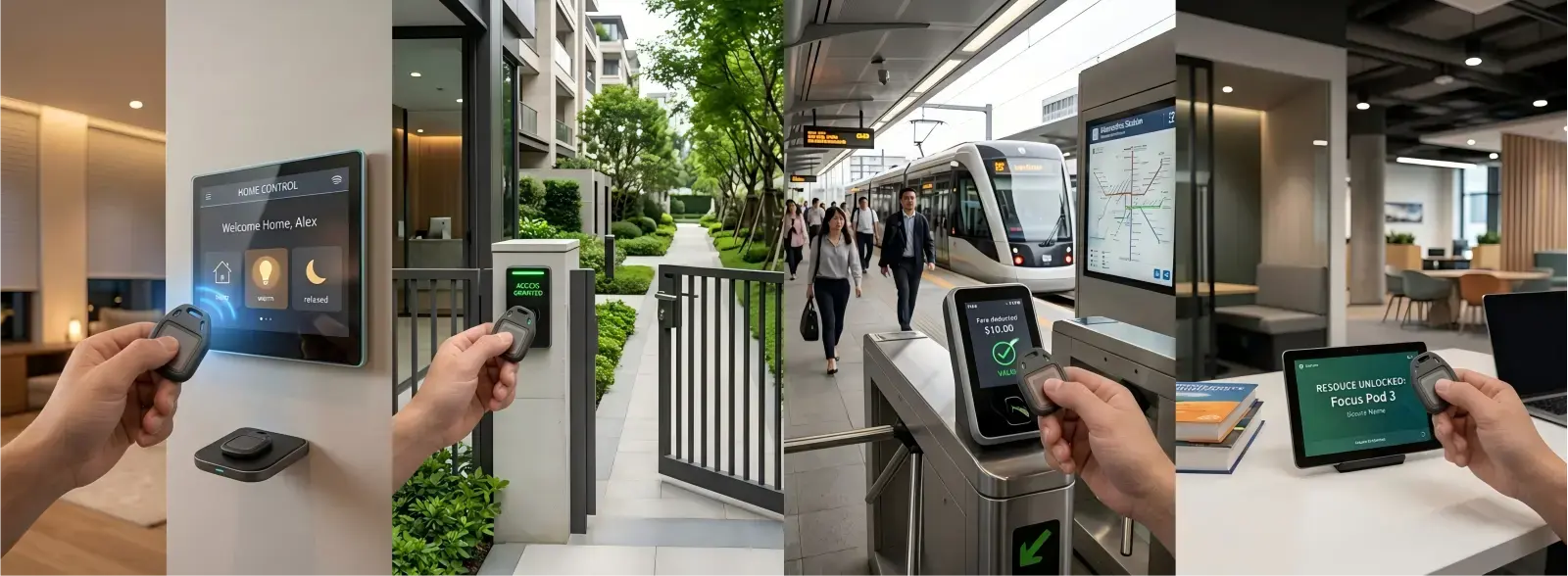
Contactless authentication speeds up entry more than card-swipe or keypad systems. Small sizes let you attach them to keychains, lanyards, or belts, making them portable without being bulky. This makes it easy for a lot of people to buy tickets at once, which helps theme parks and entertainment places move people quickly through the entry gates. Corporate offices use fobs to track attendance, which automates time and attendance recording and gets rid of the need for punch cards.
These benefits directly address common problems: mechanical keys pose higher security risks, repair costs are high, and identification processes are slow, which makes it hard to get into buildings.
How to Choose the Best RFID Key Fob for Your Business Needs
To make sure the contactless credential works well in the long term, you need to look at its technical specs, the properties of the material, and the supplier's abilities.
Evaluating Frequency and Compatibility
Match the working frequency to the equipment you already have. For older proximity readers, 125 kHz LF fobs with EM4100 chips are usually needed. For newer systems that use ISO 14443A protocols, 13.56 MHz HF solutions like the NXP MIFARE or NTAG series work better. To avoid expensive system overhauls, make sure that the protocols work with each other. Our engineering team does pre-deployment testing to make sure that everything works well with readers that are already installed.
Material Selection for Environmental Resilience
Material choice is based on the application setting. Standard ABS enclosures work well in controlled indoor spaces like stores and office buildings. Silicone fobs are waterproof up to IP67 or IP68, which is important for swimming pools, gyms, and outdoor concerts. For industrial uses that involve chemicals or high temperatures, PPS housings that are more resistant to rust and thermal shock are needed.
Customization and Branding Capabilities
OEM partners and resellers need unique credentials to set their businesses apart. Full-color logo printing by offset, screen, or digital means are just a few of the customisation services we offer. We also offer custom shapes made to fit specific design languages and pre-programmed encoding with unique identifiers or access codes. Branded packaging turns plain fobs into goods that are ready to sell and help strengthen a company's brand. Before placing a bulk order, testing samples lets you make sure of the print quality, read performance, and mechanical durability.
Supplier Evaluation Criteria
Supplier screening is the first step in reliable procurement of rfid key fob. Give more weight to makers who are certified to ISO 9001:2015 and follow RoHS, REACH, and CE rules. This will protect the environment and make sure that rules are followed. Check the facility's production capacity to make sure it can meet volume needs. Our factory makes more than 500 million units a year, which guarantees a supply that can grow with enterprise deployments. Chips should come from reputable companies like NXP, Fudan, and Huada Electronics. Be clear about where the parts come from and ask about failure rates. These should stay below 0.1% thanks to strict quality control.
Best Practices for Implementing and Programming RFID Key Fobs
Getting the right hardware is only one part of effective operation. Systematic programming, security procedures, and ongoing upkeep are also important.
Programming and Encoding Procedures
Contactless fobs need to be set up before they can be used. Write unique identifiers (UID), access permissions, and user metadata to each credential using dedicated RFID readers that are linked to configuration software. Batch programming tools make large-scale rollouts easier by cutting down on manual work and mistakes made by people. As part of our technical support, we offer SDK instructions and help from field application engineers to make sure that interaction with old or proprietary access systems goes smoothly.
Security Management and Risk Mitigation
Use multiple layers of protection to keep people from getting in without permission. Encrypt HF fobs to stop people from listening in on data transmissions. Set up rules for the whole lifetime of a credential, such as keeping track of when it was issued, doing regular checks to find fobs that aren't being used, and deactivating them right away if an employee leaves or loses them. Limit who can physically access the encoding equipment to stop people from making fake credentials. Security assessments are done on a regular basis to find holes and make sure that protocols are working properly.
Maintenance and Troubleshooting
Regular inspections keep the system reliable and extend the life of the fob. Users should be taught how to handle the antennas properly so that they don't break when they are bent, exposed to magnetic fields, or left in high-heat places for long periods of time. During the first deployment, test the system's performance under operational conditions by using salt spray to see how well it resists corrosion and thermal cycling between -25°C and +70°C. Watch for consistent readings; a decreasing range could mean that the antenna is failing or that the reader's calibration is shifting. To keep database conflicts from happening, replacement fobs should keep their UIDs unique.
Common problems with deployment include not planning security well enough, not teaching users well enough, and maintenance that is reactive instead of proactive, all of which damage system integrity.
Procurement Guide: Buying RFID Key Fobs for Large-Scale Use
When you buy in bulk, you need to plan ahead to make sure you get the best prices, quality, and delivery times while also building relationships with dependable suppliers.
Supplier Certification and Quality Assurance
Before placing a big order, check the manufacturer's qualifications. RoHS and REACH compliance shows that a company cares about the environment and makes sure its products are safe. ISO 9001:2015 approval shows that a company has a quality management system in place. Ask for test reports from a third party that confirm the frequency accuracy, read range consistency, and mechanical durability. Voyanic Tagformance tools test all of our production to make sure it works perfectly. This makes sure that the resonance is within ±3% of what it should be and gets rid of any faulty units before they are shipped.
Pricing Negotiation and Volume Discounts
With factory-direct procurement, markups by distributors are taken away, which cuts the cost per unit by 20–30%. Talk about different prices based on the number of items you want to buy. Usually, packages of 10,000 or more items get better prices. To avoid surprises, be clear about how to pay, who is responsible for shipping, and how the exchange rate will work. To make sure your budget is clear, ask for thorough quotes that list the base hardware, customisation fees (like printing and encoding), and packing options.
Sample Testing and Validation
Never go ahead with bulk orders before checking samples first. Ask for groups of prototypes that match the final specs for things like chip type, enclosure material, and printing quality, and test them in real-life settings that are typical of the final product. Check the read range in normal conditions, make sure the data stays the same after being exposed to the environment, and check the mechanical integrity by dropping and twisting the device. Our free sample program lets you try the product out for yourself, which lowers the risk of buying it and makes sure it meets operational needs.
Logistics and Lead Time Planning
When using in-stock inventory, standard RFID key fobs can be shipped within 5 to 7 days, but custom orders take 10 to 12 days to make. Flexible manufacturing schedules allow expedited choices to meet quick deployments. Coordinate shipping logistics to find the best balance between speed and cost. For projects that need to be done quickly, consolidated air freight is best, while ocean freight saves money on large volumes. Keep a safety stock on hand in case there are problems with the supply chain. This is especially important for when there are seasonal highs in the hospitality or event management industries.
Comprehensive procurement planning addresses important buyer concerns, such as quality uncertainty, cost overruns, delivery delays, and not enough support after the purchase, all of which put the success of the project at risk.
Conclusion
In the leisure, healthcare, logistics, and industry sectors, RFID key fobs are a proven investment in safe, scalable entry control that also saves money. By choosing the right frequency, material, and security level, you can be sure of long-term performance that fits your needs. Strategic relationships with suppliers based on certifications, clear prices, and expert help make buying easier and lower the risk of mistakes. Best practices for programming, managing security, and maintenance help get the most out of your investment and keep your system running smoothly. As mobile identity continues to replace older methods, organisations that make smart decisions will be ready to meet the changing needs of security.
FAQ
1.Can contactless access fobs be easily duplicated?
Cloning tools can read basic 125 kHz LF fobs because they don't have encryption. HF fobs that use MIFARE DESFire or HID iCLASS have AES-128 bit encryption and mutual authentication built in, which stops copying without permission. For high-security uses, you should always choose secured versions.
2.What read range should I expect from standard fobs?
With the right antenna size and reading power, LF and HF key fobs can usually be read from 2 to 10 cm away. In ideal conditions, UHF versions can reach one metre, but metal surfaces and electromagnetic interference can shorten this range. Do site inspections to make sure the work is getting done.
3.Why do some fobs fail after heat exposure?
Too high of temperatures can cause thermal expansion, which could break the bond between the antenna and the chip in standard ABS enclosures. When the temperature in an industrial setting goes above 70°C, PPS housings that are more thermally stable are needed. When placing in industrial or outdoor areas, you should choose high-temperature variants.
Contact WS-RFID for Enterprise-Grade Access Control Solutions
WS-RFID Technology offers RFID key fob options that come straight from the factory and are designed to be reliable, safe, and easy to use across all businesses around the world. Our 15 years of experience making credentials and ISO-certified production make sure that every credential meets strict quality standards and is compliant with RoHS and REACH. Our customisable fobs, which come in 125 kHz LF and 13.56 MHz HF frequencies, give your operations the performance they need whether you're upgrading hotel access systems, securing corporate buildings, or putting in place large-scale logistics tracking. Standard orders ship between 5 and 7 days, but urgent projects can be shipped faster if needed. Email our engineering team at kenny@w-srfid.com to get samples, talk about OEM customisation, or get bulk prices from a reliable RFID key fob maker that wants your business to succeed.
References
1. Jones, M. & Patterson, R. (2022). RFID Systems: Research Trends and Challenges in Access Control Technologies. International Journal of Information Security.
2. Chen, L. (2021). Contactless Authentication: A Comprehensive Guide to RFID and NFC Implementation. Technology Press.
3. Smith, A. (2023). Industrial IoT and Smart Access Management: Best Practices for Enterprise Deployments. Business Technology Review.
4. Williams, T. & Kumar, S. (2020). Encryption Standards for RFID Systems: Protecting Data in Wireless Identification. Cybersecurity Quarterly.
5. Roberts, J. (2022). Supply Chain Optimization Through RFID: Case Studies in Logistics and Manufacturing. Operations Management Journal.
6. Davis, H. (2023). Material Science in RFID Hardware: Durability and Environmental Resistance. Advanced Materials Research.
Learn about our latest products and discounts through SMS or email