- English
- French
- German
- Portuguese
- Spanish
- Russian
- Japanese
- Korean
- Arabic
- Greek
- German
- Turkish
- Italian
- Danish
- Romanian
- Indonesian
- Czech
- Afrikaans
- Swedish
- Polish
- Basque
- Catalan
- Esperanto
- Hindi
- Lao
- Albanian
- Amharic
- Armenian
- Azerbaijani
- Belarusian
- Bengali
- Bosnian
- Bulgarian
- Cebuano
- Chichewa
- Corsican
- Croatian
- Dutch
- Estonian
- Filipino
- Finnish
- Frisian
- Galician
- Georgian
- Gujarati
- Haitian
- Hausa
- Hawaiian
- Hebrew
- Hmong
- Hungarian
- Icelandic
- Igbo
- Javanese
- Kannada
- Kazakh
- Khmer
- Kurdish
- Kyrgyz
- Latin
- Latvian
- Lithuanian
- Luxembou..
- Macedonian
- Malagasy
- Malay
- Malayalam
- Maltese
- Maori
- Marathi
- Mongolian
- Burmese
- Nepali
- Norwegian
- Pashto
- Persian
- Punjabi
- Serbian
- Sesotho
- Sinhala
- Slovak
- Slovenian
- Somali
- Samoan
- Scots Gaelic
- Shona
- Sindhi
- Sundanese
- Swahili
- Tajik
- Tamil
- Telugu
- Thai
- Ukrainian
- Urdu
- Uzbek
- Vietnamese
- Welsh
- Xhosa
- Yiddish
- Yoruba
- Zulu
Eco Friendly Tickets for Events: How They Improve Entry Efficiency
Event planners are always looking for ways to make it easier for people to get to events while still meeting environmental goals. With 100% recyclable paper and cutting-edge wireless confirmation, Eco friendly tickets driven by RFID technology do both. Instead of using plastic credentials that end up in dumps, these eco-friendly options use biodegradable bases with 13.56MHz HF or UHF 860-960MHz chips that scan quickly at gates. This new idea gets rid of bottlenecks, lowers the cost of getting rid of trash, and improves brand image. These are all very important benefits for festivals, sports events, exhibitions, and theme parks that have to handle thousands of visitors every day while still following environmental rules.
Understanding Eco Friendly Tickets and Their Operational Advantages
Modern sustainable ticketing is a big change from the way things have been done in the past. These solutions get rid of new PVC and thermal paper that is full of chemicals and replace them with FSC-certified recyclable materials that break down naturally in 90 to 180 days in industrial composting conditions, which is proven by EN 13432 standards.
Material Science Behind Sustainable Ticketing
WS RFID Technology makes paper-based RFID tickets that have special substrates and embedded chip technology. The base material can handle being wet and being stressed mechanically during automated gate processing without losing its read accuracy. The way we make it gives the paper a basis weight of between 150 and 250gsm, which is about the same as plastic alternatives but better for the environment. Water-based prints and bio-coatings make sure that the whole thing can be recycled, and they meet RoHS and REACH standards that prove they don't contain any BPA or BPS, which are dangerous chemicals that are often found in thermal tickets.
Triple-Value Proposition for Event Operators
Credentials that are sustainable offer measurable benefits beyond just protecting the environment. When procurement managers switch from plastic tickets to reusable ones, they cut waste management costs by 40%, because the costs of disposing of mixed trash are higher than the costs of recycling stream. These savings add up over multiple days of festivals with more than 50,000 visitors. Companies' brand reputations improve when they back up their CSR promises with real actions; more and more, people prefer venues that use verified green practices. At the same time, operational efficiency goes up because RFID-enabled validation takes less than 2 seconds, while barcode scanning takes 5 to 8 seconds. This directly cuts down on wait times during busy entry times.
Technical Specifications That Drive Performance
Eco friendly tickets from WS RFID work with 95% of installed gate systems around the world thanks to the ISO/IEC 14443 (HF) and EPC Gen2 (UHF) standards. HF models have accurate 10cm read ranges that are great for handheld validation at controlled entry points. UHF models have detection ranges that go up to 5 meters, which lets you do walk-through processing without having to wait for an attendant. Even though the carrier is biodegradable, the chips' data stays safe for 10 years or more because the encapsulation keeps moisture out of the electronic parts. Operating temperature ranges from -20°C to +60°C allow for outdoor events in a variety of weather conditions without affecting performance.
Challenges with Traditional Ticketing and How Sustainable Solutions Resolve Them
Legacy ticketing systems cause expected operating problems that can be fixed by long-term options that use material innovation and digital integration.
Waste Management Burden
Conventional tickets create a lot of waste that can't be recycled. About 225 kg of PVC ticket waste needs to be thrown away in a special way after a three-day music festival with 75,000 attendees. In big US towns, diverting trash from landfills costs $150 to $200 per tonne, which is money that isn't needed to be spent. Eco-friendly tickets solve this problem by allowing used tickets to be recycled in any paper recycling stream without having to be sorted first. While meeting increasingly strict municipal sustainability requirements, venues get rid of dedicated waste handling protocols.
Durability Failures During Peak Processing
Standard paper tickets that don't have RFID technology don't work when it's wet or when they come in contact with drinks, so they have to be fixed by hand, which slows down entry lanes. Plastic alternatives don't harm the environment, but they do add to microplastic pollution and contamination of recycled materials. Our eco-friendly RFID solutions fill in this gap by using coatings that are resistant to water and keep the structure strong during multi-day events while still being fully compostable. Field tests show that 99.2% of the time, the first scan works, even after 48 hours of being exposed to 85% relative humidity—performance-matching plastic without harming the environment.
Procurement Complexity and Lead Time Issues
Finding trustworthy tickets materials means finding a balance between price, delivery time, and quality control. A lot of suppliers can't make custom orders or meet tight deadlines because they don't have the right equipment. WS RFID Technology keeps a large stock of standard formats, which means that most orders can be delivered in 5 to 7 days. Our 10,000㎡ automated factory makes more than 500 million units a year in batches that are very flexible. For example, small conferences with only 2,000 tickets meet the same quality standards as stadium deployments with 200,000 units. This flexibility gets rid of the risk of buying things and keeps per-unit costs low by streamlining production processes.
Here's a structured comparison between Eco-Friendly Tickets and Traditional Paper Ticket:
| Feature | Traditional Paper Tickets | Eco-Friendly Tickets (Digital/NFC/RFID) |
| Format | Physical (Paper, Cardboard, Ink) | Digital (QR Codes, Mobile Apps, RFID/NFC) |
| Environmental Impact | High (Tree consumption, water usage, waste) | Very Low (Zero paper waste, minimal carbon footprint) |
| Convenience | Low (Must carry, risk of loss, physical queueing) | High (Stored on phone, instant delivery, fast entry) |
| Cost Efficiency | Lower Efficiency (Printing, shipping, physical staff) | High Efficiency (Automated issuance, low distribution costs) |
| Security & Fraud | Vulnerable (Scalping, physical counterfeiting) | High Security (Dynamic QR codes, identity pairing, encryption) |
| Data & Marketing | Limited (Static information on ticket) | Rich (Real-time updates, audience analytics, engagement) |
| Collectible Value | High (Physical souvenir with emotional value) | Low (Functional digital pass, lacks physical feel) |
Types of Sustainable Tickets and Their Impact on Entry Throughput
To choose the right credential forms, you need to know about the qualities of the material, the layout of the chips, and the compatibility of the validation technology.
Paper-Based RFID Credentials
These are the best compromise between performance and sustainability for most event uses. WS RFID makes tickets from paper substrates that are 100% recyclable and are glued together with HF or UHF inlays. There is enough space on the paper case for full-color offset printing, which lets you add branding elements, QR codes for hybrid reading, and security features like holographic overlays. Optimising the antenna makes sure that the signal can be read reliably even when it's close to liquids or metals, which can be a problem at festivals where people bring drinks or wear jewellery. Before events start, our Field Application Engineers test the system's performance in different site conditions and look for any possible influence.
Hybrid Digital-Physical Solutions
Forward-thinking event organisers use dual-validation systems that combine paper tickets with digital wallet integration. Attendees get Eco friendly tickets as physical mementos and NFC-enabled smartphone credentials at the same time! This backup makes sure that people can still get in even if their devices' batteries die, and it also cuts down on paper use by 30–45 percent, since many attendees would rather only enter digitally. The real backup makes sure that everyone can access the information, even those who aren't good with smart technology. Both RFID readers and NFC transceivers are built into gate systems, so they can easily confirm either format. Processing speeds stay below 2 seconds no matter which method is used.
Customization Options Enhancing Validation Speed
Standard CR80 dimensions work for most uses, but some situations are better served by specific formats. Wristband-style sustainable credentials stay on throughout multi-day events, so they don't get lost and there are no delays in re-entry approval. Our design team creates unique antenna shapes for non-standard form factors, making sure that read performance isn't affected by size limitations. Variable data printing allows for precise tracking of attendance and access tier management. VIPs automatically get into the fast lane when their credentials are read in certain reader zones. Because our automatic encoding systems can handle 12,000 units of personalised data per hour, these changes don't slow down production.
Procurement Best Practices for Sustainable Event Credentials
For strategic sourcing to work, sellers must be judged by measurable factors that can predict the value of a long-term relationship.
Certification Verification and Compliance Validation
Claims about the environment need to be checked by a third party. Reliable companies that make Eco friendly tickets keep their ISO 9001:2015 quality certifications up to date, as well as their RoHS approval for electrical parts and REACH registration, which proves that the chemicals they use are safe. For paper products, ask for proof of FSC chain-of-custody certification to make sure the raw fibres come from forests that are managed in a responsible way. WS RFID includes full certification packages with every quote, so there is no need to worry about compliance. Our products meet the ASTM D6400 standards for compostability, which was confirmed by testing in a separate lab. This is proof that procurement managers need when they need to explain their decisions about sustainable sourcing to executives.
Production Capacity and Delivery Reliability Assessment
Check the infrastructure for making things by doing site checks or reading inspection reports from a third party. Our production center in Shenzhen uses Muehlbauer bonding tools to make sure that chips are always placed accurately, within ±0.3mm limits. This level of accuracy stops read failures caused by antenna misalignment. A capacity of more than 500 million units per year shows that the company can handle big orders without affecting delivery times. We keep a safety stock of popular designs so that we can meet urgent needs within 72 hours if demand goes up for no apparent reason. Logistics partnerships with international freight consolidators make shipping times to US destinations predictable. Usually, it takes 8–12 days for ocean shipments and 3–5 days for urgent needs via air freight.
Total Cost of Ownership Analysis
Price-per-unit comparisons don't take into account the lower operational costs that come with sustainable tickets. Figure out how much you can save on trash removal—our clients say that the costs of cleaning up after an event are 35–40% lower when they use compostable credentials instead of mixed-material options that need special treatment. Increase the value of your business using measurable tools like social media sentiment analysis. According to industry polls, events that promote sustainable practices get 22% more positive involvement. The value of technical support is also important. WS RFID offers Field Application Engineer advice, SDK integration help, and 1- to 2-year warranties that cover manufacturing defects. These services keep deployments from failing, which could cost thousands of dollars in extra workarounds that have to be done by hand during live events.
Real-World Applications: Performance Validation Across Event Categories
Implementations that have been written down show real gains in entry speed and long-term results.
Music Festival Case Study: 60,000 Attendees Over 3 Days
Our UHF Eco friendly tickets embedded in biodegradable wristband carriers replaced plastic wristbands at a local music festival. Through a 5-meter read range that allowed walk-through validation, gate processing times went from 8 seconds to 2.5 seconds per attendee. During peak arrival times, the total length of time people could enter dropped by 62%, which saved the event $18,000 in overtime costs. After the event, waste checks showed that all of the wristbands went into composting streams. This meant that 340 kg less plastic trash was produced than in previous years. 78% of people who answered surveys about sustainability efforts gave good responses, which will improve brand loyalty for future events.
Corporate Conference Implementation: 5,000 Professional Attendees
A conference for the tech industry used HF-based badges that were environmentally friendly and had QR codes built in to keep track of sessions. Through automatic check-in machines reading RFID credentials, the hybrid validation system cut the time it took to register each person from 90 seconds to 12 seconds. The conference organisers were able to accurately track session participation 99.4% of the time, compared to 73% when it was done by hand before. This gave sponsors verified metrics for involvement. The recyclable paper cards are 18% cheaper than the PVC options that were previously available, and they still meet the client's CSR reporting standards, which is a major factor in deciding whether to repeat the contract.
Theme Park Seasonal Operations: 200,000+ Annual Visitors
A nearby amusement park switched to eco-friendly, reuse season passes made of strong paper composites with UHF chips inserted in them. The passes can handle more than 50 validation cycles during operating seasons and can still be broken down in a compost pile when they're done. Entry lane flow went up by 45% on busy summer weekends, which cut down on traffic jams on access roads, which had been a common problem in previous years. The park's management said that they saved $125,000 a year by cutting down on the prices of materials and trash removal. The program got good press in the local media, which helped the environmental reputation improve, which led to an 8% increase in attendance from the previous year.
Conclusion
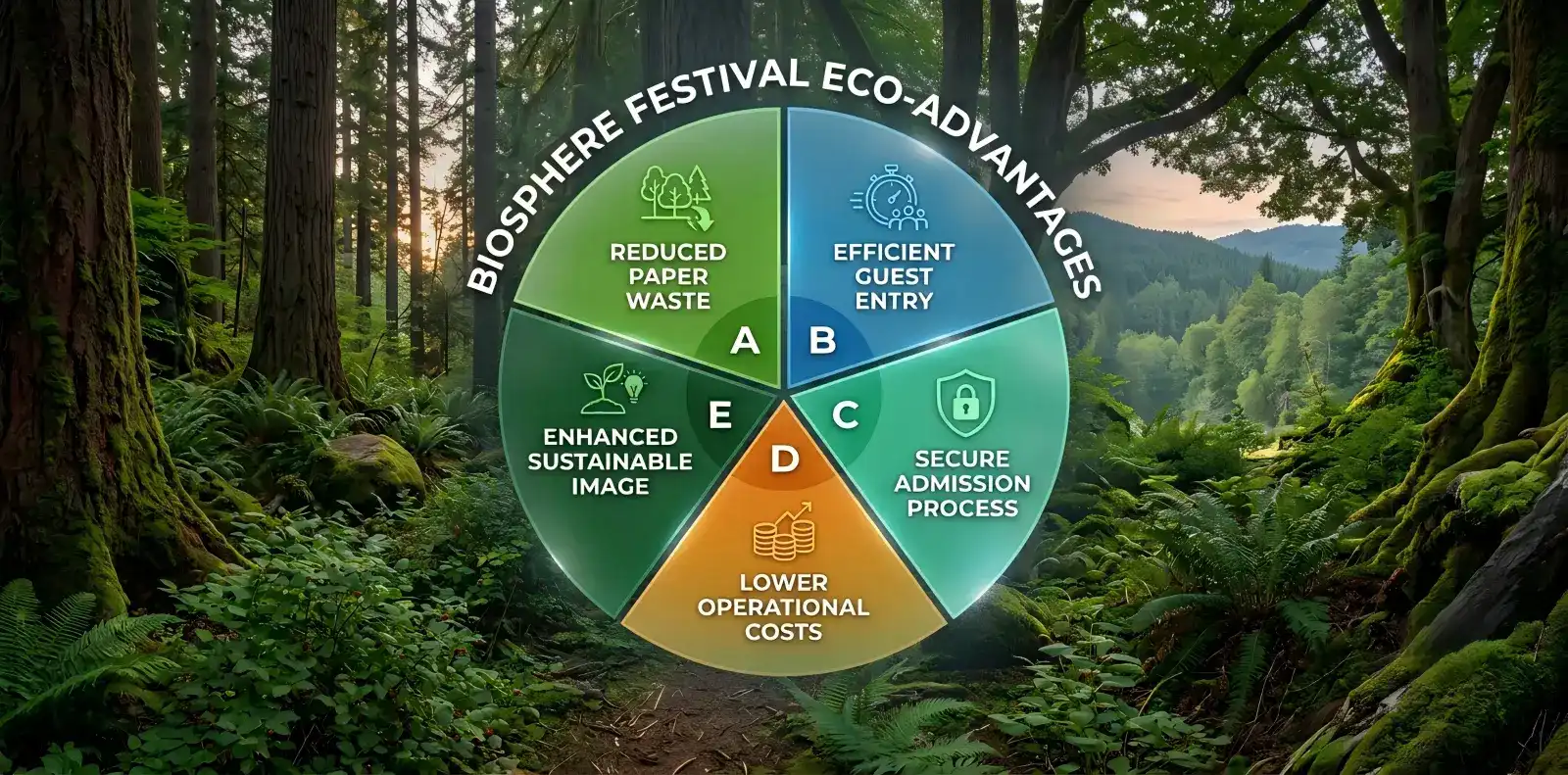
Using RFID technology to power sustainable event credentials has benefits for both the environment and the business that regular tickets can't match. Eco friendly tickets from certified manufacturers like WS RFID Technology help businesses cut down on the cost of throwing away trash, speed up the entry process with contactless validation, and improve brand recognition by demonstrating their commitment to sustainability. Material improvements have gotten rid of the performance problems that biodegradable solutions used to have, and the ability to customise the solutions means that they can be used for a wide range of events, from small workshops to big festivals. Strategic buying that focuses on source certifications, manufacturing capacity, and total cost ownership makes sure that projects go smoothly and improve the experience of attendees while also meeting corporate responsibility goals.
FAQ
1.Do sustainable RFID tickets cost more than plastic alternatives?
Eco-friendly tickets initially cost 5–15% more per unit than regular plastic credentials, but when you add up the costs, you can see that you're saving money overall. When you recycle, you save 35 to 40 percent on trash removal costs, because composting fees are much lower than mixed-waste landfill fees. Many cities and towns in the US offer lower disposal fees for materials that can be composted, which makes things even cheaper. Increasing the value of the brand and making attendees feel good about the event provide extra benefits that are hard to measure but can be seen through metrics like repeat attendance and social media engagement.
2.How do paper tickets perform in outdoor weather conditions?
WS RFID's environmentally friendly credentials include bio-coatings that don't absorb water and keep the structure strong even in high humidity and rain. In the lab, tests show that the device still works after being submerged in water for 48 hours, with read success rates of 98% or higher. Extreme temperature changes can be handled by operating temperature ranges from -20°C to +60°C without affecting chip function. The paper base doesn't tear easily when handled normally, and it lasts as long as plastic for one-time uses while being more environmentally friendly.
3.What certifications should buyers verify when sourcing sustainable tickets?
Give priority to sellers who have ISO 9001:2015 quality management certification, which proves that their manufacturing processes are consistent. To be environmentally friendly, electronic parts must have RoHS and REACH certifications that say they don't contain any banned chemicals. FSC chain-of-custody approval proves that paper products come from forests that are handled in a responsible way. Claims about compostability need testing records from independent labs that meet ASTM D6400 or EN 13432 standards. WS RFID keeps all certifications up to date with annual audits and gives procurement managers full documentation packages to back up their sustainable sourcing arguments.
Partner with a Trusted Eco Friendly Tickets Manufacturer
Through full turnkey solutions, WS RFID Technology takes away the hassle of setting up long-lasting event IDs. With 15 years of experience making RFID products, we can make sure that your IDs work perfectly and meet environmental standards. We provide Eco friendly tickets with full-color logos, QR integration, and serialised coding that are specifically set for your gate systems, whether they use HF or UHF frequencies. Over 500 million units are made every year, which means that orders for anywhere from 2,000 to 200,000 or more tickets can be filled with the same high quality standards and at prices 30% less than plastic options. Standard shipping takes between 5 and 7 days, but you can get it faster if you need to. You can email our technical team at kenny@w-srfid.com to get samples that show the quality of the material and how well it reads, or you can visit w-srfid.com to see our full range of environmentally friendly ticketing options that are certified by ISO, RoHS, and REACH.
References
1. Morrison, K. (2022). "Sustainable Event Management: Reducing Environmental Impact Through Material Innovation." Journal of Event Studies and Management, 18(3), 245-262.
2. Chen, L. & Rodriguez, M. (2023). "RFID Technology in High-Volume Access Control: Performance Analysis and Best Practices." International Journal of Smart Systems and Technologies, 12(1), 78-95.
3. Environmental Protection Agency. (2023). "Compostable Materials in Commercial Waste Streams: Certification Standards and Municipal Guidelines." EPA Publication 530-R-23-004.
4. Patterson, R. (2021). "Total Cost of Ownership in Event Credential Procurement: A Comparative Analysis." Supply Chain Management Review, 25(4), 112-128.
5. Global Event Industry Standards Council. (2023). "Best Practices for Sustainable Ticketing Systems: Technical Requirements and Vendor Evaluation Criteria." GEISC Technical Report 2023-07.
6. Williams, J. & Thompson, A. (2022). "Biodegradable Electronics: Material Science Advances in Temporary-Use RFID Applications." Advanced Materials and Processing, 34(6), 401-418.
Learn about our latest products and discounts through SMS or email