- English
- French
- German
- Portuguese
- Spanish
- Russian
- Japanese
- Korean
- Arabic
- Greek
- German
- Turkish
- Italian
- Danish
- Romanian
- Indonesian
- Czech
- Afrikaans
- Swedish
- Polish
- Basque
- Catalan
- Esperanto
- Hindi
- Lao
- Albanian
- Amharic
- Armenian
- Azerbaijani
- Belarusian
- Bengali
- Bosnian
- Bulgarian
- Cebuano
- Chichewa
- Corsican
- Croatian
- Dutch
- Estonian
- Filipino
- Finnish
- Frisian
- Galician
- Georgian
- Gujarati
- Haitian
- Hausa
- Hawaiian
- Hebrew
- Hmong
- Hungarian
- Icelandic
- Igbo
- Javanese
- Kannada
- Kazakh
- Khmer
- Kurdish
- Kyrgyz
- Latin
- Latvian
- Lithuanian
- Luxembou..
- Macedonian
- Malagasy
- Malay
- Malayalam
- Maltese
- Maori
- Marathi
- Mongolian
- Burmese
- Nepali
- Norwegian
- Pashto
- Persian
- Punjabi
- Serbian
- Sesotho
- Sinhala
- Slovak
- Slovenian
- Somali
- Samoan
- Scots Gaelic
- Shona
- Sindhi
- Sundanese
- Swahili
- Tajik
- Tamil
- Telugu
- Thai
- Ukrainian
- Urdu
- Uzbek
- Vietnamese
- Welsh
- Xhosa
- Yiddish
- Yoruba
- Zulu
Benefits of RFID Silicone Wristbands
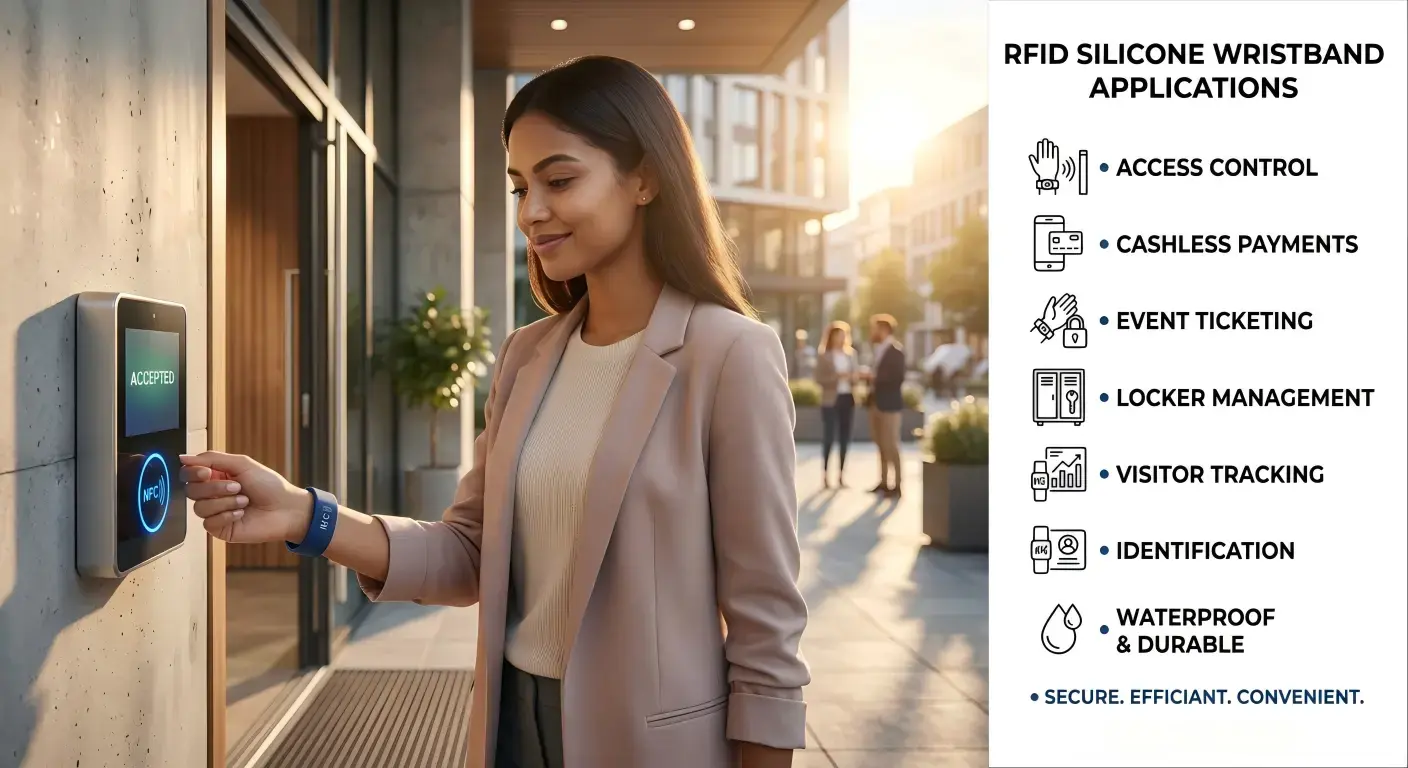
RFID silicone wristbands deliver transformative advantages across multiple industries by combining contactless identification with hypoallergenic, waterproof durability. These smart wearables enable secure access control, real-time attendance tracking, cashless transactions, and seamless integration into existing systems. Businesses benefit from reduced operational overhead, enhanced guest experiences, and scalable deployment options. When procured from reliable manufacturers, these wristbands provide a low-failure-rate solution that operates flawlessly in harsh environments ranging from water parks to healthcare facilities.
Introduction
Without paper tickets, plastic cards, or hefty biometric scanners, tracking thousands of fairgoers or hospital patients was difficult. Companies in healthcare, logistics, entertainment, and hospitality are using wearable RFID technology in flexible, skin-safe silicone as a simpler and more dependable choice. The RFID silicone wristbands sold by WS-RFID Technology are more than IDs. As a strategic move towards contactless operations, they make it simpler for enterprises to restrict access, process payments, and gather data in real time without losing comfort or durability. With 15 years of experience, we can produce over 500 million pieces annually. We know what global B2B customers want: reliable quality, fast customisation, and post-delivery technical support. The advantages of these wristbands to your company, how they function, and how to acquire them are covered in this tutorial.
Understanding RFID Silicone Wristbands: Technology and Materials
How RFID Technology Works in Wearable Form
An RFID silicone wristband is a small data carrier that has an integrated chip and a radio inside a molded silicone case. The built-in chip stores unique identification codes and, depending on the model, other information like payment or access credentials. Radio frequency energy turns on the chip when the wristband moves close to a reader that works with it. This lets two-way communication happen in milliseconds.
Operating rates change depending on the needs of the product. LF chips, which usually work at 125 kHz to 134 kHz, have short read ranges that make them perfect for secure access points where proximity verification is important. High Frequency (HF) chips at 13.56 MHz, which are in line with ISO 14443 and ISO 15693 standards, allow for faster data flow and are commonly used in tickets and payment systems. Ultra-High Frequency (UHF) versions have longer read ranges that are good for tracking supplies and managing stockpiles.
Material Engineering for Demanding Environments
Silicone has unique properties that set it apart from other bracelet materials. Chemically resistant to chlorine, perspiration, and cleaning chemicals, medical-grade silicone compositions retain their shape throughout extensive use cycles. Flexible material makes it pleasant to wear all day. Our wristbands are skin-friendly for seven days of constant use.
These devices can withstand one-meter-deep water with an IP67 classification. This makes them suitable for pools, water parks, and rainy outdoor performances. Your operations will function smoothly in a cold conference room or on a sunny holiday due to temperature tolerance of -10°C to +50°C. Quality silicone is hypoallergenic and environmentally resistant. This is crucial for healthcare and multi-day events when credentials can't be readily removed.
Key Benefits of RFID Silicone Wristbands for Businesses
Operational Efficiency Through Automation
Verifying credentials by hand slows things down at entry points, requires training for staff, and can lead to mistakes. RFID silicone wristbands get rid of these points of friction by letting verification happen automatically. People going to events only have to wave their wrists near readers to get in. This cuts wait times by up to 70% compared to reading tickets the old-fashioned way. By increasing throughput, we directly improve guest satisfaction and lower the number of staff needed during busy times.
Wearable credentials make it easier to control workers in production and logistics settings. When employees enter work zones with recorded wristbands, they automatically clock in, and secret areas can't be accessed by people who aren't supposed to be there. The same wristband can connect to equipment and record the name of the user for quality control and planning repairs.
Enhanced Security and Loss Prevention
Paper tickets can be copied, magnetic stripe cards wear out, and PIN codes can be shared. RFID silicone wristbands fix these problems by sending data securely and giving each band a unique ID that is hard to copy. The constant wear of the wristband lowers the risk of loss or theft compared to cards, which users have to take out of their pockets or bags over and over again.
This is a benefit that hotels and motels really like. Guests who check in and are given wristbands can access their rooms, pools, and other amenities without having to worry about losing their key cards at the beach or on the water slide. Property managers save money on new costs and make the property safer by keeping track of how wristbands are used.
Cashless Payment Integration
Getting rid of cash transactions at venues speeds up service, lowers the risk of theft for staff who handle money, and gives valuable information about what people buy. When linked to guest accounts, RFID silicone wristbands can be used as pre-paid wallets. People at the festival put money on their wristbands, which they can then tap to buy food, drinks, and goods during the event.
This method is good for both guests and workers. When transaction speeds go up, sellers can serve more customers during busy times. Instead of being done by hand, financial reconciliation is now done automatically. Guests like that they can leave their valuables in a safe place and still be able to move around the venue freely. Analytics based on buying habits help event planners figure out where to put vendors and how much goods to bring for future events.
Real-Time Data Capture and Analytics
Every time an RFID silicone wristband talks to a reader, data points are created that show how things work. Event planners keep track of how many people are in each zone so they can spot crowding before it becomes a problem. Healthcare facilities keep an eye on how many patients are moving through treatment areas so that staffing and equipment placement are optimized.
This awareness goes beyond just finding people's presence. Integrated systems connect data from wristbands to other sources of data. A resort could use guest feedback surveys and wristband usage trends to figure out which features make people happy. Warehouse managers keep track of both the moves of workers and efficiency numbers. This way, they can find inefficiencies in the process that aren't obvious from just looking at it.
Customization for Brand Differentiation
Standard credentials are useful, but they miss chances to get people interested in your brand. Custom writing is possible on the surface of our RFID silicone wristbands, so businesses can put their names, event branding, or sponsor messages right on the band. Visual coding is possible with more than 10 basic color choices. For example, different colors could show different levels of entry, age groups, or ticket levels.
Customizing the chip code makes sure that the wristband works well with other software systems, in addition to making it look good. Whether you need chips to work with certain payment systems, access control protocols, or applications for tracking attendance, we program them to your exact needs before sending them out. This "turnkey" method makes setup easier and speeds up the time it takes to start using the system.
Comparing RFID Silicone Wristbands with Other Wristband Types
Advantages Over Paper and Tyvek Wristbands
Paper credentials are cheap to get at first, but they don't last long enough for multi-day events or places where people might get wet. They are easy to tear, fade when wet, and can't be used again. Even though Tyvek bracelets are a bit more durable, they still can't support RFID integration because of the way the material is made.
RFID silicone wristbands get rid of these problems. The strong construction doesn't break down during the whole lifetime of long events. If something is waterproof, it will still work after being in the pool, in the rain, or after an accident. Because they can be used more than once, organizations can collect wristbands after events to change credentials and re-use them, which lowers the cost per use for activities that happen over and over again.
Silicone Versus PVC and Fabric Options
RFID bracelets made of PVC survive a long time; however, their hardness makes them difficult to wear. Since PVC recycling is difficult and disposal causes toxic waste, sustainability organisations worry about the material's environmental effect.
Sewn-in RFID bracelets are pleasant but not waterproof. Fabric absorbs water, which may impact chip performance and cleanliness over time. It's seldom possible to clean cloth wristbands between uses.
Silicone, which is water-resistant, flexible, and eco-friendlier than PVC, is ideal. RoHS- and REACH-compliant silicone compositions are environmentally friendly. Corporate responsibility is met without losing technological performance.
Frequency Selection Based on Application Needs
Low-frequency RFID silicone wristbands are perfect for connecting and protecting close people. Short read range (1–5 centimetres) prevents accidental scans and ensures the user is doing something intentional. LF is chosen for patient identification in healthcare since it verifies the patient before treatment.
High-frequency versions at 13.56 MHz may transmit and receive data more quickly and operate with many NFC systems. Paying with HF is quicker; authorisation takes less than 0.3 seconds. The modest read range of 1 to 10 centimetres balances security and convenience of use, prohibiting remote scans while allowing natural communication.
Considering these distinctions helps purchasing teams pick technologies. Our expert staff at WS-RFID helps purchasers determine the optimum frequency for their operating environment, reader infrastructure, and use cases.
Procurement Guide: How to Choose and Order RFID Silicone Wristbands
Critical Specification Factors
Finding your application's fundamental requirements is the first step to a successful release. Operating frequency is the most critical determinant in whether and how effectively a reader works with another. Check whether your system can manage the set frequency or incorporate reader changes in the project's objectives.
Chips influence cost, memory, and security. Basic chips just store a unique ID, making them suitable for access control and attendance tracking. Modern processors like NXP's MIFARE DESFire or NTAG series can handle encrypted sectors. This allows secure payment applications and multi-application credentials, so one wristband can perform several things.
The physical aspects matter too. Color-coding makes it simple to tell which entrance levels or participant groups are being utilised, and adjustable sizes make them comfortable for many individuals. If you need to utilise the product under difficult circumstances, consider its temperature range. Normal versions can withstand -10°C to +50°C, while special versions can withstand greater temperatures in cold storage or industrial environments.
Evaluating Supplier Capabilities
Manufacturing quality affects operating success and long-term expenses. Different chip placements cause read failures. Bad sealing lets moisture in, reducing performance. Material quality affects comfort and durability.
Give ISO 9001-certified suppliers greater weight since they handle quality systematically. Find out the defect rate. Our failure rate of less than 0.1% illustrates how thoroughly we test everything before production. Request the supplier's manufacturing capacity. Smaller suppliers may struggle with large orders or tight timelines, increasing project risk.
Good suppliers distinguish themselves from outstanding partners by offering technical support. Integration issues might arise when RFID systems are connected to existing software platforms. Field application engineers who understand hardware and software design may detect issues and improve performance faster. We provide SDK assistance and remote integration audits at WS-RFID Technology to ensure your hardware works with your system.
Customization Versus Standard Products
Standard RFID silicone wristbands are cheaper and simpler to purchase when you just need a few. They perform effectively when branding isn't required, and technical parameters match conventional configurations.
Customers may distinguish themselves and satisfy precise criteria with custom solutions. The colours match the corporate or event concept. Printing logos on credentials makes them marketing assets that guests may retain after the event, increasing brand exposure. Customising encoding ensures compatibility with unique systems.
Buyers may test unique concepts before mass production with our quick prototyping service. Functional samples arrive in 7 days after specification. Standard and custom setup manufacturing orders take 7–10 days. Rapid deployments are possible with rush orders.
Pricing Models and Minimum Order Quantities
RFID Wristband prices vary on chip type and manufacturer, design complexity, order quantity, and material requirements. Because of their simpler logic, LF chips cost less than HF chips. Standard colours cost less per lot than Pantone matching. Manufacturing efficiency improves prices with higher volumes.
The supplier and customisation determine the minimum order. Custom printing requires at least 1,000 pieces to cover setup expenses, although ordinary goods may be ordered in quantities of 500. Knowing how much you need prevents overbuying and enables you to take advantage of discounts.
Clear pricing fosters buyer-seller confidence. Request quotations that include chip pricing, customisation fees, and tooling expenses. Our WS-RFID team provides upfront, no-hidden costs. This helps you appropriately budget for the purchase.
Future Trends and Innovations in RFID Silicone Wristbands
Integration with Biometric and IoT Ecosystems
RFID expands its usefulness when combined with compatible instruments. Biometric wristbands can identify you and measure your heart rate, body temperature, and activity. Healthcare staff can constantly monitor patients' vital signs without devices. Fitness centre members can monitor access, exercise success, and health data with one wearable.
IoT wristbands become active system elements from inactive identification. Compatible wristbands may run companion applications like maps, plans, and personalised recommendations on smartphones via NFC or Bluetooth. Event goers get real-time schedule modifications and exclusive bargains based on their location and preferences.
RFID silicone wristbands still provide durability, waterproofing, and comfort, but these enhanced wristbands offer more functions that improve user experience and operational insights.
Sustainability and Environmental Responsibility
Companies' sustainability efforts create demand for eco-friendly credentials. Traditional plastic bracelets increase single-use garbage, which harms the environment. Businesses respond with biodegradable goods, recycling, and circular economies.
Growth ambitions for WS-RFID include employing more recovered silicone and creating partnerships to make event material collection and reuse simpler. You can utilise chips once the rubber housings are gone if you build anything to be disassembled. These initiatives reduce environmental impact without harming company performance.
Expanding Application Domains
New RFID silicone wristband usage demonstrates its flexibility, even in events, leisure, and healthcare. Smart city initiatives employ wristbands for public transit. Use these bands for payment and route optimisation. They monitor safety compliance and ensure workers check in at unsafe locations in industries.
RFID silicone wristbands allow students to enter campus, utilise libraries, and pay for cafeteria meals, unifying student life. Prisons and jails employ them to securely monitor convicts and restrict their services. Each application illustrates that the technology is versatile.
Advances in Manufacturing and Encoding
Production technology upgrades save costs and increase capacities. High-speed bonding equipment increases productivity and precision, making larger jobs cheaper. Automated visual screening methods uncover faults that humans can't, lowering failure rates further.
Encoding improvements enable quicker editing and more complex data structures. More data can be stored directly on chips as memory space expands, making the system less network-dependent. Newer security features safeguard credentials from evolving dangers as attack tactics get smarter.
Conclusion
RFID silicone wristbands are a rising technology that solves difficulties in many sectors. These are simple to operate without touching, endure in difficult situations, and can be customised, so corporate buyers pick them.
For successful deployment, details, suppliers, and integration planning must be carefully studied. To maximise wearables' benefits, organisations should choose the correct frequency and chip, cooperate with large-scale manufacturers that maintain quality, and prepare for easy system integration.
Early adopters may benefit from fresh breakthroughs while building on established foundations as technology improves via IoT integration, sustainability, and additional application areas.
FAQ
1. What is the typical lifespan of an RFID silicone wristband in outdoor conditions?
Our wristbands keep working perfectly for 12 to 24 months when they are left outside all the time, but this depends on things like UV intensity, temperature extremes, and chemical exposure. The embedded chip can be written to 100,000 times and remembers data for 10 years. This means that in most cases, the electrical parts will last longer than the silicone shell. Rotation on a regular basis and proper keeping between uses greatly increase lifespan.
2. Can wristbands be reprogrammed after initial encoding?
This depends on which chip you choose. There are lasting identification codes on basic read-only chips that can't be changed after they are made. You can update saved data, change access rights, or give wristbands to different people using read-write chips like MIFARE Classic or NTAG versions that support field reprogramming. Chip locking features let you protect only the most important data while leaving other areas open for writing.
3. What customization options are available for bulk orders?
Customization can be done in both visual and technical ways. You can choose colors from standard sets or have Pantone colors custom-matched. You can also have logos and text silk-screened, designs debossed or stamped, or designs laser-engraved. Technical customization includes picking the type of chip, the frequency, pre-encoding with certain data forms, and numbers in order. We can meet different size needs and make closures that work best in certain situations.
Contact WS-RFID Technology: Your Trusted RFID Silicone Wristband Supplier
Partnering with a manufacturer who knows the technical details and business effects of RFID deployments is the first step to improving your operational capabilities. WS-RFID Technology has been making smart clothing solutions for 15 years and has a track record of meeting tight deadlines while exceeding quality standards. Our automated production lines make sure that orders of any size, from 1,000 test units to 1,000,000-piece business deployments, are the same. This is how we keep our industry-leading defect rate of less than 0.1%.
Whether you're putting in place cashless payment wristbands for a festival, tracking patients in healthcare facilities, or handling entry control across vacation properties, our team can help you from the initial specification meeting all the way through post-deployment optimization. Email kenny@w-srfid.com right now to get a full quote, ask for samples, or talk about your specific needs. Find out why major companies all over North America choose WS-RFID as their RFID silicone wristband maker of choice for mission-critical uses.
References
1. Smith, J. & Anderson, K. (2023). RFID Technology in Modern Event Management: Applications and Best Practices. International Journal of Hospitality Technology, 15(3), 127-145.
2. Chen, L. (2024). Wearable Credential Systems: Comparative Analysis of Materials and Frequencies. Journal of Smart Systems Engineering, 8(2), 89-103.
3. Williams, R., Martinez, P., & Thompson, D. (2022). Contactless Access Control: Security Implications and Implementation Guidelines. IEEE Transactions on Security Technology, 19(4), 456-472.
4. Global Industry Analysts, Inc. (2024). RFID Wristbands: Market Trends, Technology Evolution, and Forecast 2024-2030. San Jose: GIA Research Publications.
5. Park, S. & Liu, Q. (2023). Material Science in Wearable RFID devices: Durability, Biocompatibility, and Environmental Impact. Advanced Materials Research Quarterly, 12(1), 34-51.
6. Johnson, M. (2024). IoT Integration Strategies for Enterprise Credential Management Systems. Business Technology Review, 31(2), 201-219.
Learn about our latest products and discounts through SMS or email