- English
- French
- German
- Portuguese
- Spanish
- Russian
- Japanese
- Korean
- Arabic
- Greek
- German
- Turkish
- Italian
- Danish
- Romanian
- Indonesian
- Czech
- Afrikaans
- Swedish
- Polish
- Basque
- Catalan
- Esperanto
- Hindi
- Lao
- Albanian
- Amharic
- Armenian
- Azerbaijani
- Belarusian
- Bengali
- Bosnian
- Bulgarian
- Cebuano
- Chichewa
- Corsican
- Croatian
- Dutch
- Estonian
- Filipino
- Finnish
- Frisian
- Galician
- Georgian
- Gujarati
- Haitian
- Hausa
- Hawaiian
- Hebrew
- Hmong
- Hungarian
- Icelandic
- Igbo
- Javanese
- Kannada
- Kazakh
- Khmer
- Kurdish
- Kyrgyz
- Latin
- Latvian
- Lithuanian
- Luxembou..
- Macedonian
- Malagasy
- Malay
- Malayalam
- Maltese
- Maori
- Marathi
- Mongolian
- Burmese
- Nepali
- Norwegian
- Pashto
- Persian
- Punjabi
- Serbian
- Sesotho
- Sinhala
- Slovak
- Slovenian
- Somali
- Samoan
- Scots Gaelic
- Shona
- Sindhi
- Sundanese
- Swahili
- Tajik
- Tamil
- Telugu
- Thai
- Ukrainian
- Urdu
- Uzbek
- Vietnamese
- Welsh
- Xhosa
- Yiddish
- Yoruba
- Zulu
Can RFID contactless cards be used for hotel room access
Yes, RFID contactless cards are not only suitable but have become the industry standard for modern hotel room access systems. These cards operate at 13.56 MHz (High Frequency) or 125 kHz (Low Frequency), enabling secure, touchless authentication that eliminates physical key management issues. Hotels worldwide rely on contactless card technology to streamline guest check-in, reduce operational costs, and enhance security protocols. With encrypted data transmission and compatibility with international standards like ISO/IEC 14443A and ISO/IEC 15693, these cards deliver reliability that traditional magnetic stripe keys cannot match.
Understanding RFID Contactless Cards and Their Role in Hotel Access Systems
Controlling who can get into a hotel might not be the most exciting part of a stay, but it's very important. Hotels no longer use old mechanical locks and magnetic stripe keys to let guests in. Instead, they use fast, reliable wireless authentication with RFID contactless cards.
How RFID Technology Powers Hotel Key Cards
The technology that makes these cards work is surprisingly sophisticated. Each RFID contactless card has an integrated chip and a transmitter built right in. It works by sending a radio frequency signal to the card reader when a guest taps it near a door reader. This powers the chip on the card and lets data flow both ways. In milliseconds, this exchange takes place, verifying credentials without touching or using batteries.
These cards work at 13.56 MHz and have a read range of 0–10 cm, which is close enough for security but not too close for people carrying bags. The chip saves protected information about guests and their room access, which lets hotel management systems give, change, or take away access from afar. This is the start of organizational efficiency.
Security Features That Protect Guest Privacy
Protecting guest information and property is something that hotels do all the time. RFID contactless cards protect you in more than one way, so you don't have to worry about these issues. Unauthorized cloning is stopped by encryption methods like AES and DESFire. Modern smart cards use dynamic identification, which makes it very hard to copy. This is in contrast to older magnetic stripe cards that store static data.
Anti-tamper devices make sure that anyone trying to physically access the chip will be locked out for good. Cards can be reprogrammed over 100,000 times, giving you options without sacrificing security. Data is stored for more than 10 years. With waterproof lamination and high-quality PVC, these cards can be used in humid places like beach entry or tropical vacations without losing their effectiveness.
Durability and Environmental Resilience
hotel key cards are handled a lot, are exposed to extreme temperatures in guest cars, and get wet. Our RFID contactless cards work reliably from -25°C to +70°C, so they will work in a ski town or a hotel in the middle of the desert. All global readers can use the standard CR80 size (85.5x54mm) with a thickness of 0.76-0.84mm, and the strong construction keeps it from bending and cracking, which can happen in high-traffic hospitality settings.
Comparing RFID Contactless Cards with Traditional Access Technologies
Cost, performance, and durability are all things that procurement managers always look at. To understand why the hotel industry is switching to smart RFID solutions, you need to know how they compare to older systems.
Limitations of Magnetic Stripe Technology
For decades, magnetic stripe cards were the only way to get into hotels, but now it's clear that they aren't safe. Repeated swipes wear down stripes, so they need to be replaced often. Skimmers are cheap devices that can easily copy data stored on magnetic stripes. Mechanical card readers need to be serviced regularly, and contact-based reading causes both the card and the reader to wear out.
Magnetic systems are also not very adaptable. To change entry rights, the front desk has to physically re-encode the card. RFID contactless cards, on the other hand, let you make changes from afar using central property management systems. This makes things easier for guests and less work for staff.
Why RFID Outperforms Proximity Cards
Proximity cards work at 125 kHz and send only a set serial number because they don't secure the data. Even though they are contactless, replay attacks can still happen. At 13.56 MHz, RFID contactless cards allow for safe two-way identification and secured data transfer. They work perfectly with high-tech hotel management software, which lets you set time limits, give access to multiple rooms, and keep records of your actions.
Cost-Benefit Analysis for Hotel Operators
It may seem like RFID equipment costs more at first, but the total cost of ownership tells a different story. Thanks to more than 100,000 write/erase cycles, cards don't need to be replaced as often, which lowers ongoing costs. Service delays are kept to a minimum because contactless readers need less upkeep. Better security lowers the risk of being sued for unauthorized access.
The savings in labor are big. Staff no longer have to waste time re-encoding magnetic cards that don't work or taking care of complaints about lost keys. Check-in is faster for guests, which raises their happiness scores. Hotels say they get their money back in 18 to 24 months, with faster returns due to better operations and fewer security events.
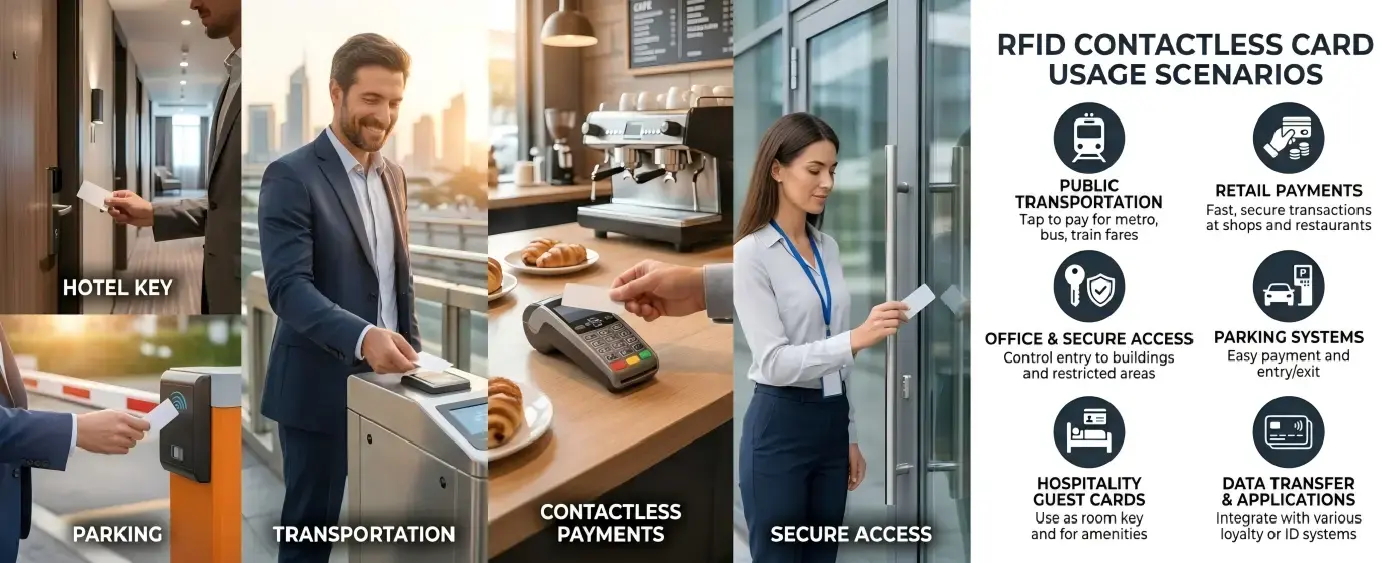
Implementing RFID Contactless Cards in Hotel Room Access: Practical Insights
Planning ahead is important for switching to RFID-based entry control, but it's easy to do with the right partner.
System Components and Integration
Three main parts make up a hotel RFID access system: contactless cards, door lock readers, and management software for the back end. Readers that are put on the doors of guest rooms can connect to the property management system (PMS) through wired or wireless networks. When guests check in, their cards are encoded, and the PMS writes the guest's credentials and room entry rights straight onto the chip.
Standardized communication methods make it easy to connect to other PMS systems, such as Opera, Protel, or Fidelio. Our field application engineers offer SDK help and system compatibility checks to make sure that your software and hardware work perfectly together. The whole process usually takes two to four weeks, based on the size of the property, and it doesn't affect activities too much.
Card Encoding and Guest Workflow
As guests check in, staff at the front desk use an encoder that is linked to the PMS to add their unique profile to each RFID contactless card. It only takes seconds to do this. The card saves the room number, an entry time window, and any extra rights you may want, such as access to the elevator, spa, or executive lounge.
Guests just need to tap their card on the reader at the door. In milliseconds, the reader checks the details and lets the person in if they are real. Check-out is just as easy; cards can be deactivated right away so they can't be used again. Lost cards can be turned off remotely, which doesn't compromise property security like mechanical keys do, which means the lock has to be replaced.
Customization for Brand Identity
Hotels put a lot of money into making the guest experience great and the brand stand out. RFID contactless cards can be changed in a lot of ways. Full-color CMYK printing makes branding, artwork, and property pictures look their best. With variable data printing, you can add names of guests or levels of membership to make things more personal. Eco-friendly options for card materials can include wooden cards for boutique motels or clear patterns for a more modern look.
WS RFID offers full OEM/ODM services, including choosing chips, setting antennas, designing the look, and packing. We can make solutions that fit your business and keep the technical performance up, whether you run a luxury chain or a single property.
How to Choose the Right RFID Contactless Card Solution for Your Hotel
Choosing the right provider and product setup has a direct effect on how well the system works and how happy the guests are.
Evaluating Supplier Credentials and Quality
Some RFID contactless cards don't meet the standards of the hospitality industry. If your suppliers have ISO 9001, CE, RoHS, or REACH standards, you can be sure that they follow environmental rules and make sure that the products you buy are all the same. You can ask Voyantic for performance test results that show frequency accuracy and read range stability across production runs.
Supplier experience is important. WS RFID has been making RFID hardware for 15 years and works with hotels, resorts, and event venues all over the world. Every year, we make more than 500 million units, and our failure rate is less than 0.1%. These are important reliability measures for procurement managers who are in charge of large-scale operations.
Chip Selection for Security and Compatibility
The choice of chip affects how well a system works in the long run. The NXP Mifare, Desfire, and Ntag chips are standard in the business because they offer strong protection and work with readers all over the world. Desfire EV3 chips offer the strongest encryption, making them perfect for high-end hotels that care about their guests' privacy. Properties that want to save money might choose MIFARE Classic, which is a good compromise between price and security.
Make sure that the cards will work with the readers you already have or the ones you plan to get. Our multi-frequency cards can work at both 13.56 MHz and 125 kHz, which makes it easy to upgrade older systems without having to replace all the hardware at once.
Procurement Process and Sample Evaluation
Start by sending a request with information about the amount of work you need, any customizations you want, and when you need it done. Suppliers with a good reputation, like WS RFID, will get back to you within 24 hours with prices and technical details. Before placing a large order, ask for samples to make sure the product will work in your setting. Check the read range, durability, and reader compatibility.
Production processes usually take 7–10 days, but there are faster choices for deployments that need to happen right away. Talk about how to pay, the length of the guarantee (usually one to two years), and the help after the sale. Clear contracts protect everyone involved and make sure that everyone is responsible for the whole duration of the product.
Future Trends and Innovations in RFID Contactless Hotel Access
Access control in hospitality is changing because RFID, NFC, and mobile technologies are coming together.
Mobile Credentials and Smartphone Integration
More and more, guests expect to use their phones as room keys. NFC-enabled RFID contactless cards make this change possible, so businesses can accept both real cards and mobile IDs. Virtual keys are sent to guests' phones through hotel apps and tapped on NFC readers by the guests.
This two-mode method lets guests choose the way they want without affecting the security of physical cards. Mobile connection also lets you check in without touching anyone, which cuts down on lines at the front desk and the number of staff needed during busy times.
Advanced Anti-Counterfeiting Measures
Cloning attempts are getting smarter as the use of RFID grows. Next-generation contactless cards have features that make them harder to fake, such as unique chip IDs, moving identification codes, and overlays that can't be changed. These extra safety measures help hotels that have important guests or events because they reduce security breaches and liability risk.
Data Analytics for Operational Excellence
Modern RFID systems collect useful information about access, like how guests move around, when the busiest times are, and how often the building is used. Hotels look at this information to make the best decisions about when to do cleaning, maintenance, and security checks. Real-time tracking picks up on strange attempts to log in, which lets security respond proactively.
These insights also help make improvements to the guest experience. Keeping track of who uses a lounge or other amenity helps properties tailor their services to what guests want, which encourages loyalty and repeat bookings.
Conclusion
RFID contactless cards are now required to get into modern hotel rooms because they are safe, convenient, and efficient. The hardest problems in the hotel business are solved by their encrypted communication methods, durability, and easy interaction with property management systems. When hotels switch from magnetic stripe or proximity systems to other types, they immediately save money on maintenance costs, make guests happier, and make the security. As mobile identities and Internet of Things (IoT) technologies improve, smart card technology also changes. This makes sure that your investment will be safe in the future.
FAQ
1. Can RFID contactless cards be cloned or hacked?
Simple 125 kHz proximity cards can be hacked, but current 13.56 MHz RFID contactless cards with encryption methods like MIFARE Desfire and AES are very good at stopping cloning. Because these cards use dynamic security, which changes for each transaction, it is very hard for someone else to make copies of them without permission. When hotels buy cards, they should ask for options with encrypted chips and make sure that the firmware on door readers is updated regularly to keep security strong.
2. What is the typical lifespan of an RFID contactless card in hotel use?
In normal hotel situations, high-quality RFID contactless cards will work for three to five years. Chips can write and erase data over 100,000 times and store data for 10 years or more. The physical longevity depends on the quality of the material and how often it is used. For example, hotels with a lot of guests may change the cards every year for aesthetic reasons, even though the electronics are still working fine.
3. How long does it take to implement an RFID access control system?
Implementation times depend on the size and complexity of the feature. Installation and staff training are usually done in two to three weeks at small hotels (less than 100 rooms). Large resorts might need 6 to 8 weeks for rollouts to happen in stages across several buildings. Usually, the longest part of the process is integrating the new system with the current property management software. However, standardized procedures make this process go faster.
Upgrade Your Hotel Access Control with WS RFID
WS RFID is ready to be your reliable RFID contactless card supplier, offering business-level solutions that are specifically designed to meet the needs of the hotel industry. Our 10,000㎡ ISO-certified factory makes more than 500 million units a year with a failure rate of less than 0.1%, which guarantees stability on a large scale. We can customize everything, from painting logos and writing chips to using eco-friendly materials, and we have 15 years of experience making things. Standard shipping in 7–10 days keeps your projects on track, and faster options can be used for tasks that need to be done quickly. Get in touch with kenny@w-srfid.com right away to get a sample evaluated, get expert advice, and get a competitive bulk price. Our field application techs can help you set up a safe, seamless access control upgrade that makes the guest experience better and improves business performance.
References
1. Smith, J. (2022). Modern Access Control Technologies in Hospitality: A Comprehensive Guide to RFID Implementation. Hospitality Technology Press.
2. Anderson, M. & Chen, L. (2023). Security Protocols in Contactless Smart Card Systems: Applications for Hotel and Event Management. Journal of Applied Cryptography and Access Control, 18(3), 145-167.
3. International Hotel Technology Association. (2023). RFID and NFC Standards for Guest Access Systems: Technical White Paper. IHTA Publications.
4. Rodriguez, C. (2021). Total Cost of Ownership Analysis: RFID vs. Magnetic Stripe Access Control in Multi-Property Hotel Operations. Cornell Hospitality Quarterly, 62(4), 312-328.
5. European Association for Smart Hospitality Solutions. (2024). Future-Proofing Hotel Access: Integration of RFID, Mobile Credentials, and IoT Analytics. EASHS Annual Report.
6. Zhang, W. & Patel, R. (2023). Durability Testing and Environmental Resilience of PVC-Based RFID Contactless Cards in Tropical and Arctic Climates. Materials Science and Hospitality Engineering, 11(2), 89-104.
Learn about our latest products and discounts through SMS or email