- English
- French
- German
- Portuguese
- Spanish
- Russian
- Japanese
- Korean
- Arabic
- Greek
- German
- Turkish
- Italian
- Danish
- Romanian
- Indonesian
- Czech
- Afrikaans
- Swedish
- Polish
- Basque
- Catalan
- Esperanto
- Hindi
- Lao
- Albanian
- Amharic
- Armenian
- Azerbaijani
- Belarusian
- Bengali
- Bosnian
- Bulgarian
- Cebuano
- Chichewa
- Corsican
- Croatian
- Dutch
- Estonian
- Filipino
- Finnish
- Frisian
- Galician
- Georgian
- Gujarati
- Haitian
- Hausa
- Hawaiian
- Hebrew
- Hmong
- Hungarian
- Icelandic
- Igbo
- Javanese
- Kannada
- Kazakh
- Khmer
- Kurdish
- Kyrgyz
- Latin
- Latvian
- Lithuanian
- Luxembou..
- Macedonian
- Malagasy
- Malay
- Malayalam
- Maltese
- Maori
- Marathi
- Mongolian
- Burmese
- Nepali
- Norwegian
- Pashto
- Persian
- Punjabi
- Serbian
- Sesotho
- Sinhala
- Slovak
- Slovenian
- Somali
- Samoan
- Scots Gaelic
- Shona
- Sindhi
- Sundanese
- Swahili
- Tajik
- Tamil
- Telugu
- Thai
- Ukrainian
- Urdu
- Uzbek
- Vietnamese
- Welsh
- Xhosa
- Yiddish
- Yoruba
- Zulu
Where to buy RFID woven wristbands in bulk online
When buying a lot of high-quality RFID Woven wristbands, procurement managers need a partner that can make the bands precisely and allow for easy customisation. Direct makers, such as WS-RFID Technology, offer prices that come straight from the factory, production that is ISO-certified, and quick response times. WS-RFID makes high-quality fabric-based wristbands with 13.56 MHz or UHF RFID chips. They have been making 500 million units a year for over 15 years. Our simplified online shopping method and ability to do ODM/OEM make buying in bulk easy and affordable for businesses, events, and hospitality settings all over the United States.

Understanding RFID Woven Wristbands and Their Applications
What Makes RFID Woven Wristbands Different from Standard Wristbands?
RFID Woven wristbands are made of polyester or nylon fabric and passive radio-frequency identification technology is built into it. These are better than disposable plastic or vinyl wristbands. This mix is comfortable and useful at the same time. The woven fabric construction lets air flow, which keeps skin from getting itchy when worn for long periods of time at conferences or festivals that last several days. The RFID chip inside the tag is protected by an ultrasonic seal, which lets contactless data transmission happen for things like controlling access, making payments without cash, and keeping track of attendees in real time.
The technology works on two main frequency bands: UHF for managing large crowds at long distances in large venues and 13.56 MHz for close-range interactions like door entry or payment terminals. Because of this, fabric RFID Wristbands can be used in a wide range of business-to-business situations where traditional barcode scanning causes problems or opens the door to security risks.
Key Industrial Applications Driving Demand
Woven RFID systems solve important practical problems in many fields. Music events use them to stop people from buying fake tickets because each one has a unique protected ID that can't be copied. Hotels and spas give season pass users washable wristbands, which cut down on replacement costs while still meeting hygiene standards. Biocompatible textile bands are used to identify patients in healthcare settings, and they must be comfortable to wear for long periods of time. Inventory tracking is useful in places like libraries and stores, where the wristbands can be used as staff IDs or asset tags again and again.
The fact that these wristbands can be washed makes them stand out when it comes to reuse. Gyms, tourist parks, and membership-based groups can clean and reuse the same units for multiple entry rounds, which saves them money compared to buying new ones every time. High-tensile strength fabric that doesn't fray, fade, or react with chemicals makes this last a long time. These are important qualities for outdoor events or industrial settings.
Criteria for Choosing the Right RFID Woven Wristband Supplier
Quality Indicators That Separate Reliable Manufacturers
When making purchases, companies should give more weight to sources that can meet measured quality standards. Look for manufacturers that are certified by ISO 9001:2015 certification. This makes sure that the production process is consistent and that the products can be tracked. Material compliance is important. Make sure that fabrics meet REACH and RoHS guidelines to protect people and the environment. Through fully automated production lines, WS-RFID keeps its defect rate below 0.1%. This lowers the chance that event operations will be interrupted by broken chips or antennas that don't work right.
Another requirement that can't be changed is waterproof integrity. Suppliers should include an IP67-rated cover for the RFID inlay to keep the chip safe during water park activities or concerts held outside when it's raining. Ask for tensile strength test results; expensive RFID Woven wristbands can withstand pull forces of more than 15 kg and have tamper-evident locking devices that stop people from taking them off without permission.
Evaluating Supplier Capabilities for Bulk Orders
Minimum order quantities (MOQs) vary a lot from one manufacturer to the next, so it's important to be clear on volume limits early on in the sourcing process. Several price levels are available from reputable sources, and discounts start to apply when you buy 5,000, 10,000, or 50,000 pieces. Timeliness of production is also very important. Standard production takes 10–14 days, but rush orders may cost more. Because WS-RFID has a lot of stock, things can be shipped in 5–7 days, which shortens the time it takes to launch.
Top-tier providers are different from general vendors because they offer more customisation options. Check with the manufacturer to see if they offer jacquard weaving or embroidery for brand logos. These methods create a design that is woven into the fabric instead of printing on the surface, which wears off over time. It's also important that suppliers can program chips. Suppliers should encode unique UIDs, set up memory sections, and enable AES-128 encryption during production instead of making these steps necessary after the fact.
When thousands of units are put into use, after-sales help is very important. Pick partners that offer field application engineering help to fix problems with read range or radio tuning. Technical teams that are quick to respond can find and fix RF interference issues in complex venue settings, making sure that they work well with your current access control systems.
Comparing RFID Woven Wristbands with Alternative Solutions
Why Fabric Outperforms Silicone and Plastic
Silicone wristbands were popular for years as a promotional item, but they don't work well for RFID uses that need to be worn for a long time. The non-porous material presses heat and moisture against the skin, making long-term use uncomfortable. Plastic bands with snap closures let more air flow through, but they also have pressure points that hurt wrists at events that last more than one day. RFID Woven wristbands, on the other hand, spread pressure evenly while letting air flow, which is very important for both customer happiness and brand image.
When looking at things from a technical point of view, fabric substrates give antenna designers more options. Engineers can put bigger, better antenna patterns inside the textile structure, which makes read ranges better without having to make tag housings that are too big. This thin profile keeps the high-end look that luxury brands want while still providing reliable performance in places with weak radio waves.
RFID Versus Barcode Technology in Access Control
Barcode wristbands need to be scanned with a clear line of sight, which causes lines to form at the entry gates during busy times. RFID gets rid of this problem by reading tags without touching them from up to 10 cm away for HF systems and up to several meters away for UHF systems. The speed advantage directly affects how efficiently the business runs—a single RFID reader can handle more than 200 attendees per minute, while barcode scanners can only handle 40 to 60.
Differences in security are just as important. Barcode data can be copied and captured, but RFID Woven wristbands use unique numbers that are locked at the chip level. Modern models come with cryptographic authentication protocols that check the card's legitimacy in real time, stopping fake entry credentials. This feature that can't be changed explains the higher initial cost for events that offer VIP admission or cashless transactions with real money involved.
All of these technical benefits explain why procurement teams are asking for fabric RFID wristbands more and more, even though they cost more. When you combine wearer comfort, practical speed, security strength, and reusability, you get a lower total cost of ownership than with disposable options for multiple events.
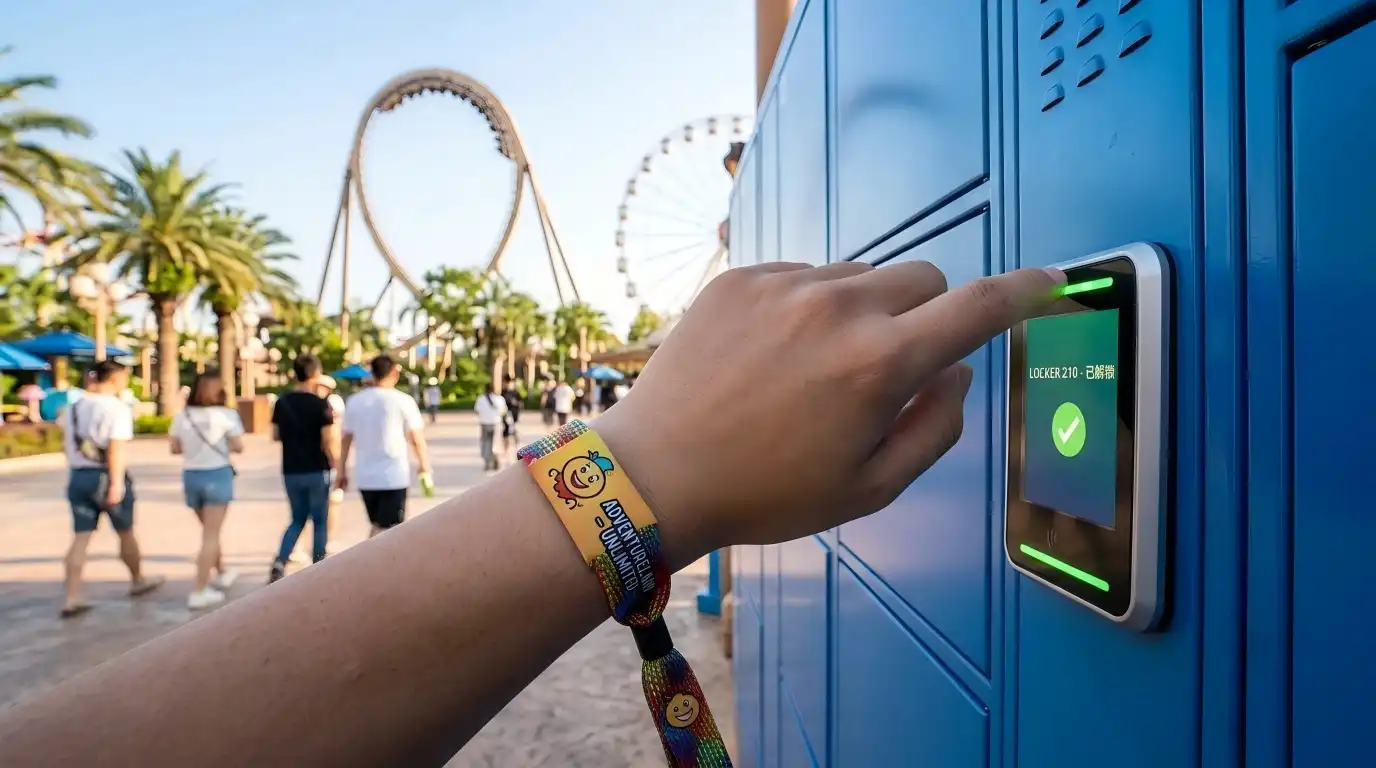
How to Buy RFID Woven Wristbands in Bulk Online: Step-by-Step Process
Defining Your Technical Requirements
First, make a map of your business needs to the timing requirements. When transactions happen at fixed reader locations, like payment kiosks or access turnstiles, choose 13.56 MHz RFID Woven wristbands. Choose UHF when you need to control the flow of people through large areas like parking lots, stadium seating areas, or event sites. Long read ranges lower the cost of infrastructure. WS-RFID engineers can help you figure out the best frequency for your hardware investment based on the layout of the venue and the amount of traffic you expect.
Make sure you know the exact size of your order. Figure out how many people you think will be there plus a safety margin for replacements—usually 5–10% more than expected for events with more than 5,000 people. Give specifics about the customisation, like the size of the woven logo, colour schemes that follow brand guidelines, and chip encoding needs. Clear technical paperwork at this stage keeps production from having to make expensive changes.
Vetting Suppliers Through Sample Validation
Don't commit to large sales until you see samples first. Ask for prototypes that show the real fabric weight, tightness of the weave, and quality of the locking mechanism. Test how well the RFID reader works with the readers you already have. Make sure that the sample works within the expected read ranges in real-life situations, such as when it's on a person's body, where the antenna's frequency is changed by the body's tissue.
Check how responsive the supplier was during the sample phase. Within 7 working days, WS-RFID sends buyers functional prototypes that they can test for comfort, looks, and technical performance before finalising their orders. This quick turn-around cuts down on deployment risks while speeding up the procurement process.
Negotiating Pricing and Managing Logistics
Compare prices from different makers, but be very careful about what's included. Some suppliers list the cost of the chip separately, while others include the cost of programming, packaging, and shipping in the price per unit. Make sure you understand the difference between FOB and DDP pricing, as it has a big effect on U.S. buyers' landing costs. With WS-RFID's straight factory approach, there are no markups for distributors. This means that prices are clear, which makes budgeting easier.
Shipping logistics need to be carefully planned out. For large amounts, standard ocean freight from Asian manufacturers takes 25–35 days but costs a lot less than air freight. The wait time is cut down to 5–7 days for air shipping, but there are fees that may double the cost per unit. Figure out how to balance the need for quick delivery with limited funds, and make sure that the supplier's packaging keeps RFID chips safe from electrostatic discharge while they're in transit.
Payment terms depend on the size of the order; for starters, you can expect to pay a 30–50% deposit and the rest before the order ships. If you already have a relationship with a maker like WS-RFID, you may be able to get net-30 or net-60 terms for buyers who buy from you often. This makes it easier to handle your cash flow across multiple events.
Top Trusted RFID Woven Wristband Manufacturers and Suppliers Online
Why WS-RFID Technology Leads in Manufacturing Excellence
WS-RFID has an ISO-certified building that is 10,000 square meters and has modern SMT lines and Muehlbauer bonding systems. This machinery makes sure that the quality of every production batch is the same. Whether you buy 5,000 or 500,000 units, the defect rate stays below the average for the industry. With a capacity of 500 million units per year, we can handle large-scale deployments without affecting delivery times.
Our OEM/ODM services are more than just creating logos. Engineering teams work together to tune antennas specifically for different settings, such as anti-metal designs for tracking industrial assets, small form factors for paediatric hospitals, or ultra-long-range configurations for accessing parking lots. With this level of technical depth, we go from being a supplier of parts to a partner in finding solutions to operational problems that standard products can't handle.
Rapid prototyping is possible because of in-house research and development and flexible manufacturing. Before committing to full production runs, buyers can make changes to designs based on feedback from field testing. For example, they can improve read ranges or make changes to the closure mechanisms. This flexibility cuts down on the time it takes to go from idea to implementation, which is very important for seasonal events that need to happen on short notice.
Navigating Online Catalogs and Custom Order Processes
When looking for suppliers online, give more weight to makers whose product pages have full technical specs. Look for datasheets that list chip models, frequency ranges, read distances, and certifications for the materials. The WS-RFID website (w-srfid.com) has a lot of information, like antenna diagrams and performance curves, that can help you decide what to buy.
Workflows for custom orders should be easy to understand. Leading providers have online configurators that let buyers choose the colour of the fabric, the type of chip, and other customisation choices. They then get quick price quotes. Email addresses like kenny@w-srfid.com give you direct access to expert sales teams that can explain specs and offer bulk discount structures for your RFID Woven wristband order.
Conclusion
When buying a lot of RFID Woven wristbands, you need to carefully look at the credentials, technical skills, and pricing structures of each supplier. Premium fabric-based solutions from companies like WS-RFID give important events the durability, comfort, and safety they need. Procurement teams find trusted partners that can grow with their business needs by putting an emphasis on ISO-certified output, customisable options, and quick technical support. The switch from one-time use wristbands to washable, reusable ones is part of a larger trend in the industry toward sustainability and total cost optimisation. For organisations that want to be ahead of the curve, fabric RFID wristbands are the best choice.
FAQ
1.Are RFID woven wristbands waterproof enough for outdoor events?
Ultrasonic-sealed tag housings that meet IP67 standards are found on high-quality RFID Woven wristbands. These protect chips from rain or water park use. In addition, the fabric itself dries quickly without losing its shape.
2.What lead times should I expect for bulk orders?
Most production runs are finished in 10 to 14 days. WS-RFID keeps stock, so popular setups can be shipped in 5–7 days. Custom orders, on the other hand, take the full two-week cycle.
3.Can the RFID chips be programmed with multiple access zones?
Modern chips can divide memory into segments, which lets event organisers store information about VIP access, digital payment details, and social media integration in a single wristband.
Partner with WS-RFID for Your Bulk Wristband Needs
WS-RFID Technology is ready to be your reliable RFID Woven wristband supplier. They have been making products for 15 years and offer direct factory pricing and full OEM capabilities. You can check the quality of our quick prototypes before placing a large order, and our 10-14 day production processes make sure that your events run smoothly. Please email us at kenny@w-srfid.com to talk about your specific needs. Our engineering team will then suggest the best frequency configurations, fabric options, and ways to customise your system for that purpose. You can count on ISO-certified production and quick technical support to make sure that everything works together smoothly, from placing your order to deploying your event.
References
1. International Organization for Standardization, ISO/IEC 14443: Identification Cards - Contactless Integrated Circuit Cards - Proximity Cards, 2018.
2. EPCglobal Inc., EPC Radio-Frequency Identity Protocols Generation-2 UHF RFID Standard, 2015.
3. Smith, J. and Williams, R., RFID Technology in Event Management: Security and Efficiency Analysis, Journal of Event Operations, 2022.
4. Chen, L., Material Science in Wearable RFID: Textile Integration Techniques, Textile Technology Review, 2021.
5. Anderson, M., Cost-Benefit Analysis of Reusable RFID Wristbands in Multi-Event Deployments, Supply Chain Management Quarterly, 2023.
6. Thompson, K., Waterproofing Standards for Wearable Electronics: A Comparative Study, Journal of Industrial Standards, 2020.
Learn about our latest products and discounts through SMS or email