- English
- French
- German
- Portuguese
- Spanish
- Russian
- Japanese
- Korean
- Arabic
- Greek
- German
- Turkish
- Italian
- Danish
- Romanian
- Indonesian
- Czech
- Afrikaans
- Swedish
- Polish
- Basque
- Catalan
- Esperanto
- Hindi
- Lao
- Albanian
- Amharic
- Armenian
- Azerbaijani
- Belarusian
- Bengali
- Bosnian
- Bulgarian
- Cebuano
- Chichewa
- Corsican
- Croatian
- Dutch
- Estonian
- Filipino
- Finnish
- Frisian
- Galician
- Georgian
- Gujarati
- Haitian
- Hausa
- Hawaiian
- Hebrew
- Hmong
- Hungarian
- Icelandic
- Igbo
- Javanese
- Kannada
- Kazakh
- Khmer
- Kurdish
- Kyrgyz
- Latin
- Latvian
- Lithuanian
- Luxembou..
- Macedonian
- Malagasy
- Malay
- Malayalam
- Maltese
- Maori
- Marathi
- Mongolian
- Burmese
- Nepali
- Norwegian
- Pashto
- Persian
- Punjabi
- Serbian
- Sesotho
- Sinhala
- Slovak
- Slovenian
- Somali
- Samoan
- Scots Gaelic
- Shona
- Sindhi
- Sundanese
- Swahili
- Tajik
- Tamil
- Telugu
- Thai
- Ukrainian
- Urdu
- Uzbek
- Vietnamese
- Welsh
- Xhosa
- Yiddish
- Yoruba
- Zulu
Where to buy RFID contactless cards
Finding reliable sources to purchase RFID contactless cards directly impacts your business operations. We recommend sourcing from certified manufacturers like WS RFID Technology, which offers ISO-certified production, factory-direct pricing, and turnkey customization. Direct manufacturer partnerships eliminate middleman markups, ensure consistent quality through automated production lines, and provide technical support throughout integration. With global compliance certifications and customizable options spanning chip selection to finished card delivery, sourcing from established manufacturers guarantees your access control, payment, or identification systems operate seamlessly across hotels, corporate campuses, transportation networks, and industrial facilities.
Understanding RFID Contactless Cards: Key Basics for Buyers
RFID contactless cards are a more advanced form of proximity smart cards. They have an integrated circuit chip and an antenna inside, which lets them send data wirelessly using radio frequency signals. Unlike older magnetic stripe or contact-based systems, these cards don't wear out and make transactions faster, which makes them perfect for places with a lot of people.
Core Technology and Frequency Bands
Buyers can better match cards to their operational systems if they know the frequency specs. Low frequency cards that work at 125kHz to 134kHz are usually used for basic entry control and have read ranges of 10cm or less. Due to their faster data flow rates of up to 848 kbit/s, 13.56MHz high-frequency cards that are compatible with ISO/IEC 14443A and ISO 15693 protocols are used a lot in library management and payment systems. These differences in frequency affect how well new readers work with old ones and how much it costs to set up systems like cash registers, parking gates, and hospital patient tracking systems.
Passive vs. Active Card Types
Passive cards get their power from the electric field of the reader. They don't need to be maintained and don't need batteries. This design works well for things like employee ID cards or hotel key cards that need to last longer than 10 years. Active cards have power sources built in, which lets them read from farther away, but the batteries need to be replaced every so often. This means they can be used to unlock vehicles or keep track of assets in large logistics yards. When choosing card architectures, buyers who are looking at the total cost of ownership must weigh the initial cost against the number of maintenance cycles.
Security Advantages Over Traditional Systems
Contactless smart cards today use AES encryption and mutual authentication protocols to stop unauthorized copying, which is a problem with older magnetic stripe technology. Cards with NXP Mifare DESFire or HID iCLASS chips offer safe data splitting, which means that a single card can handle multiple applications, such as time attendance, cashless payments, and entry rights, without the risk of data contamination. This design of multiple layers of security is very important for pharmaceutical companies that need to keep track of controlled drugs or financial institutions that need to keep vault access safe.
Industrial Applications Driving Adoption
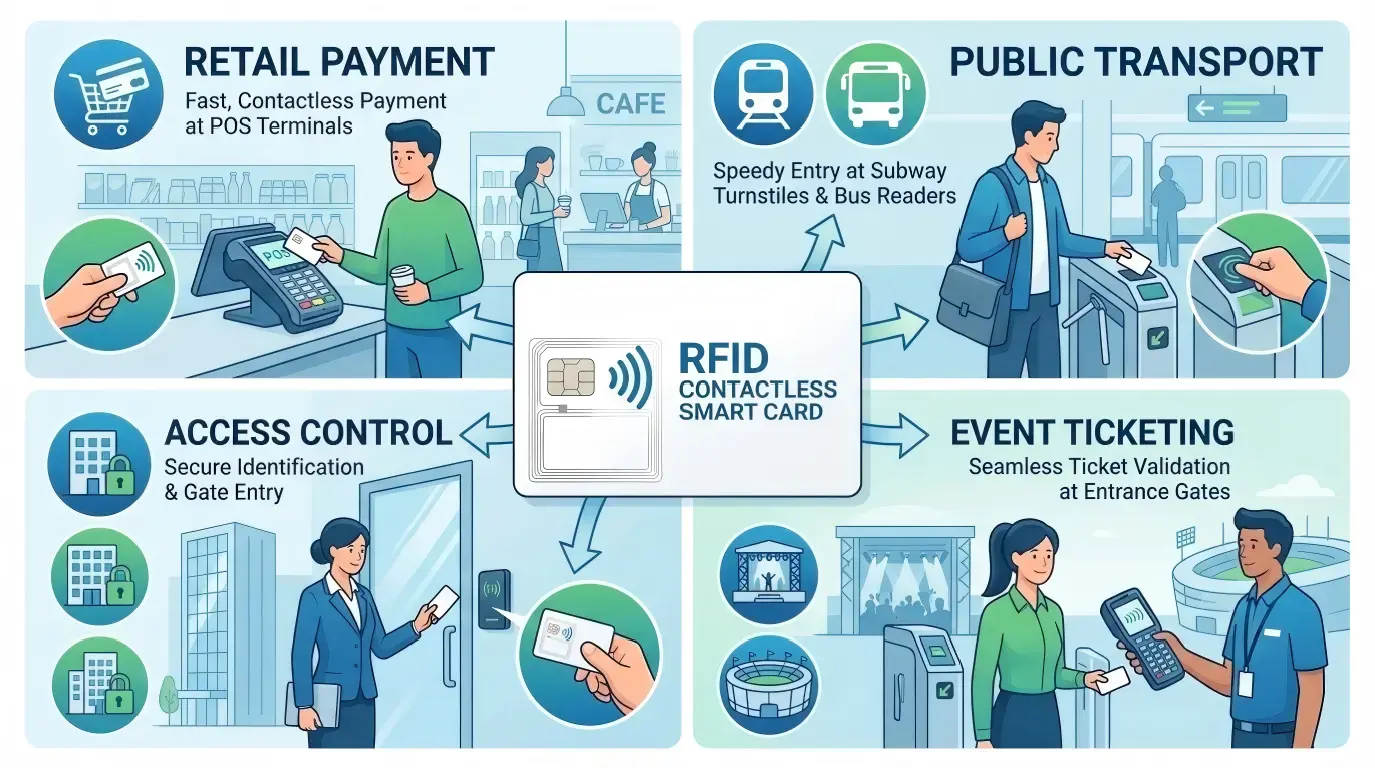
Different industries can use contactless technology to fix certain problems. Clothing stores use encoded cards to keep track of their stock, which cuts down on stock errors by up to 30% compared to reading barcodes. Healthcare facilities use patient wristbands with RFID chips to make sure that medications are being given correctly, which almost completely eliminates mistakes. Every day, public transit systems handle millions of tap-and-go transactions in milliseconds, keeping up with demand during rush hour. These real-life examples show why buying teams choose RFID solutions over older ways of identifying things.
Where to Buy RFID Contactless Cards: Sourcing Strategies for B2B Clients
Looking for RFID contactless cards? Here are some places to buy them for business clients. To choose a supplier, you need to know how to balance cost, quality, and service reliability. Procurement experts have to compare different sourcing channels based on their business goals and how much risk they are willing to take.
Direct Manufacturer Sourcing
There are clear benefits to working with companies like WS RFID Technology. When you deal directly with the factory, you don't have to pay extra for markups by distributors, which is important for bulk orders that need to stay within your budget. With automatic production lines, manufacturers can keep a closer eye on quality. WS RFID's plants have defect rates of less than 0.1% across 500 million pieces per year. With direct access to tech teams, antennas can be tuned to work best in difficult settings like warehouses full of metals or drug storage rooms full of liquids. When buyers get minimum order quantities, they have more negotiating power and can speed up production cycles for quick deployments.
Online Marketplaces and Distributor Networks
Platforms like Alibaba or regional distributors make it easy to buy a mix of technologies or do smaller pilot projects. Buyers can use these methods to make sure their cards work with each other before agreeing to large-scale rollouts. However, middlemen often hide where goods come from, which makes quality checks harder. Lead times may change depending on what the seller has in stock instead of production plans. To avoid getting fake chips or materials that don't follow the rules, buyers should check the certifications of the supplier on their own by asking for ISO 9001, RoHS, and REACH paperwork.
Evaluating Supplier Credibility
Doing your research helps keep the supply line running smoothly. Check how much a factory can produce compared to how much you want to buy. Suppliers who can't meet demand may hire unapproved facilities to do the work. Ask for references from clients in related fields. For example, a company that makes tags for tracking cars has experience with designing tough tags that can be used for industrial tool management. Check out the technical support infrastructure. Suppliers that offer Field Application Engineers for SDK integration show that they are committed to your success after the sale. Payment terms that allow for flexibility on sample orders before committing to bulk orders show that the business cares about its customers.
Bulk Purchasing Considerations
Buying in bulk can help you save money, but it needs careful planning. To keep budgets stable across fiscal periods, negotiate price levels based on yearly usage instead of single orders. Make sure that the minimum order quantities match up with the storage space available. Having too much inventory ties up capital and could become obsolete if technology standards change. Because custom encoding takes 10–12 days, procurement cycles need to be coordinated with rollout plans. This is especially important for businesses that are only open during certain times of the year, like event organizers or retail holiday campaigns.
Choosing the Right RFID Contactless Card for Your Application
Integration failures that cost a lot of money can be avoided by matching RFID contactless card specs to practical needs. The choice structure is made up of technical compatibility, environmental durability, and security features.
Frequency Compatibility with Existing Systems
Check the current reader equipment before deciding how often cards will be used. Older access control panels might only work with 125kHz cards, but newer payment terminals need to be able to work with 13.56MHz NFC cards. Multi-frequency cards that work with both high-frequency (HF) and low-frequency (LF) bands make retrofitting easier, but they cost more per unit. Dual-frequency solutions help buyers who are upgrading phased systems because they let readers be updated gradually without having to replace whole card populations at once. Verifying compatibility by testing samples against real readers that have been deployed gets rid of surprises after delivery.
Durability for Environmental Conditions
The operating setting determines the materials used and the way they are built. Standard PVC cards can handle temperatures in an office from -25°C to +70°C, which is enough for business campuses inside buildings. Cards used for parking outside are exposed to UV light and water, so they need plastic covers to keep them from coming apart. In industrial areas where chemicals are used, substrates made of ruggedized PET or Polycarbonate that can't be damaged by solvents are needed. The waterproof integrated encapsulation of WS RFID protects the antenna-to-chip links even in laundry tracking or sea logistics where there is a lot of moisture.
Security Features and Encryption Standards
The more sensitive the data, the higher the security requirements. Basic UID cards that send set serial numbers work well for low-risk tasks like keeping track of gym memberships. For example, Mifare DESFire EV3 chips that support AES-128 encryption and mutual authentication are needed for financial transactions and drug tracking. When cards allow access to high-value assets or are used as digital payment tools, anti-cloning protections become very important. Buyers should choose encryption protocols that meet the compliance standards of their industry, such as HIPAA rules for healthcare or PCI-DSS rules for payment processing.
Technology Comparison: RFID vs Alternatives
When you compare identification technologies, it's easier to make the best decisions. Magnetic stripe cards are cheaper at first, but they wear out faster and lose data more often, so they need to be replaced more often. Barcode readers need to be able to see the barcode, which slows things down at warehouse checkpoints or event entrances. NFC cards are better for consumer-facing apps because they work better with smartphones, but they have the same 13.56MHz frequency limits as regular RFID cards. UHF RFID tags let you read a lot of data from a distance of several meters, but they cost more and may be limited by law in some places. When making a choice, the decision matrix compares the initial cost to the benefits in daily efficiency and system life.
Procurement Process: How to Order RFID Contactless Cards Smoothly
Structured procurement workflows cut down on mistakes and shorten the time it takes to deploy. Every step, from the first set of specifications to the final delivery, needs careful attention to detail for ordering RFID contactless cards.
Custom Printing and Personalization
Customizing cards to fit a brand improves identity management and the user experience. Full-color CMYK printing can handle staff pictures, security holograms, and company logos. Variable data encoding gives cards unique identifiers that connect to backend systems. These identifiers could be employee IDs, account numbers, or permissions to view data. WS RFID's chip programming services pre-encrypt cards with protected data, so no one has to encode the cards on-site while they are being distributed. Customization includes card sizes for unique form factors like key fobs or wristbands, making sure that the actual design fits with places like amusement parks or exercise centers where the cards will be used.
Pricing Structures and Negotiation Strategies
Knowing what causes costs affects how you negotiate. Base prices depend on the type of chip used; high-end Desfire chips cost more than basic UID chips. It costs more to customize things, and simple black-and-white printing is cheaper than multi-layer security images. Bulk discounts are available for sales over 10,000 units, which usually lowers the cost per card by 20–30%. To find ways to save money, buyers should ask for detailed prices that break down the costs of making cards, providing encoding services, and shipping. Annual supply agreements protect prices against changes in raw materials, which is helpful for businesses that know when they need to replace things.
Ordering Best Practices
Reduce the risks of procurement by checking things in a planned way. Ask for production examples that match the final requirements for things like chip type, writing quality, and the accuracy of the encoding. To make sure that all reader models in your setup can read the samples, test them on all of them. Check a supplier's credentials by having a third party audit them or visiting their location, looking at their clean room procedures and bonding equipment calibration. Set clear acceptance criteria that include the acceptable read range, the validity of data retention, and the rate of physical defects. Legal terms should spell out who is responsible for batches that aren't good and how to change them so that operations don't have to be interrupted too much.
Logistics and Customs Considerations
International buying makes regulations more complicated. To avoid customs delays, make sure that the products you want to ship have CE and FCC certifications that meet the requirements of the country where they are going. Harmonized System numbers for RFID cards make it easier to figure out the right amount of duty to pay; misclassification leads to checks that extend clearance times. Work with freight forwarders who know how to handle importing electronics. They will make sure that the chips are properly packaged so that they don't get damaged during shipping. For projects that need to be done quickly, manufacturers like WS RFID offer faster shipping options that cut down on the usual 7–10 day delivery times. However, the higher freight costs mean that the budget needs to be adjusted.
Post-Purchase Support and Troubleshooting
Ongoing technical support gets the most out of an investment and keeps the system running. Successful deployments are different from difficult projects because they plan for common problems and get help from experts.
Common Technical Issues and Resolutions
Card failures typically stem from physical damage or compatibility mismatches. Bent cards change the internal antenna geometry, which can lower the read range or cause the card to fail completely. Teaching users how to handle cards properly lowers the number of cards that break. Readers that are set up to read certain types of chips may not work with other models. To avoid mass compatibility problems, make sure that the card and reader pair correctly before placing a big order. Interference from metal structures or electromagnetic noise in the environment lowers performance. Moving readers or changing the power settings can often fix the problem without replacing the card.
Programming Flexibility and Firmware Updates
More advanced cards can be reprogrammed, which increases their useful life. Because access rights are kept on rewritable EEPROM sectors, workers can be moved to different areas without having to get new cards. Reader infrastructure can get over-the-air firmware updates that keep it compatible as card chip generations change. WS RFID supports SDK interaction, which lets IT teams make their own apps that connect card data to ERP or building management systems. This adaptability protects investments from losing value as technology changes.
Warranty and After-Sales Support
Operational stability is protected by support equipment that works well. If a manufacturer gives you a warranty that covers manufacturing defects for one to two years, you can get your money back if something breaks too soon. Technical hotlines run by Field Application Engineers can fix problems with integration from afar, which cuts down on downtime compared to standard help centers. Clear authorization processes for returning goods speed up replacements for batches that are damaged. Buyers should check how responsive support is during pre-sale exchanges. Quickly sending samples and clear technical documents are signs of strong post-sale support.
Conclusion
To find contactless smart cards, you have to balance technology requirements, supplier dependability, and prices over the card's lifetime. For RFID contactless card procurement, direct relationships with approved manufacturers like WS RFID guarantee consistent quality, the ability to make changes, and quick support. Buyers must make sure that the frequency, security features, and durability of the RFID contactless card meet the needs of the application while also checking the credentials of the supplier through samples and certifications. Structured procurement workflows that include planning for customization, negotiating prices, and logistics reduce the risks of deployment for each RFID contactless card order. Long-term operating success is maintained in access control, payment, and tracking systems through after-sales support that includes troubleshooting advice and guarantee protection for every RFID contactless card supplied.
FAQ
1. What distinguishes RFID cards from NFC technology?
NFC is a type of HF RFID that works at 13.56MHz and focuses on direct communication between devices, such as smartphones and payment terminals. RFID covers a wider frequency range, including LF and UHF, which makes it best for sending data from a card to a reader in one direction over longer distances. RFID systems are better at managing inventory and controlling entry without needing any input from the user other than being close by. NFC cards, on the other hand, can be used for consumer-facing apps like mobile wallet integration.
2. How can buyers verify card quality before bulk orders?
Ask for production examples that are exactly what you need, including the chip type, printing, and encoding. Samples of test data from all installed reader hardware were used to prove that read ranges and data accuracy were always the same. Ask for certifications like ISO 9001 that show quality management systems and RoHS compliance that show materials are safe. Do peel strength tests to make sure the lamination is solid, and put the cards through external stress, like changing temperatures and being exposed to moisture, to make them feel like they've been used in the field for years.
3. What lead times should procurement teams anticipate?
Standard cards that aren't encoded usually ship within 7–10 days from when they are made and kept in stock by the maker. Depending on how complicated the design is, custom printing and chip programming can add 10 to 12 days to the lead time. For large orders of more than 100,000 units, it may take 15 to 20 days to align production capacity. Expedited services shorten wait times but cost more; buyers should indicate haste during the quotation process to check for possibility and extra fees.
Partner with WS RFID for Your Contactless Card Needs
WS RFID Technology has the best RFID contactless card options in the business and is ready to help you with your access control, payment, or identification projects. Our ISO-certified factory makes more than 500 million units a year with a defect rate of less than 0.1%. This guarantees that the quality will stay high for your important deployments. We can make any changes you need, from choosing the chip and setting the antenna to printing in full color and encrypting data securely, so that they work with your operations. As a reliable company that makes RFID contactless cards, we offer factory-direct prices, which cuts out the middleman and keeps us in strict compliance with RoHS, REACH, and CE standards. Get in touch with kenny@w-srfid.com right away to get samples, talk about your technical needs, or get a custom price. Our Field Application Engineers help with SDK integration and system compatibility checks to make sure that rollout goes smoothly in industries like healthcare, transportation, hospitality, and manufacturing.
References
1. International Organization for Standardization. (2018). ISO/IEC 14443: Identification cards — Contactless integrated circuit cards — Proximity cards. Geneva: ISO Press.
2. Finkenzeller, K. (2010). RFID Handbook: Fundamentals and Applications in Contactless Smart Cards, Radio Frequency Identification and Near-Field Communication (3rd ed.). Chichester: John Wiley & Sons.
3. Want, R. (2006). An introduction to RFID technology. IEEE Pervasive Computing, 5(1), 25-33.
4. Juels, A. (2006). RFID security and privacy: A research survey. IEEE Journal on Selected Areas in Communications, 24(2), 381-394.
5. Thornton, F., Haines, B., Das, A. M., Bhargava, H., & Campbell, A. (2006). RFID Security. Rockland: Syngress Publishing.
6. Landt, J. (2005). The history of RFID. IEEE Potentials, 24(4), 8-11.
Learn about our latest products and discounts through SMS or email