- English
- French
- German
- Portuguese
- Spanish
- Russian
- Japanese
- Korean
- Arabic
- Greek
- German
- Turkish
- Italian
- Danish
- Romanian
- Indonesian
- Czech
- Afrikaans
- Swedish
- Polish
- Basque
- Catalan
- Esperanto
- Hindi
- Lao
- Albanian
- Amharic
- Armenian
- Azerbaijani
- Belarusian
- Bengali
- Bosnian
- Bulgarian
- Cebuano
- Chichewa
- Corsican
- Croatian
- Dutch
- Estonian
- Filipino
- Finnish
- Frisian
- Galician
- Georgian
- Gujarati
- Haitian
- Hausa
- Hawaiian
- Hebrew
- Hmong
- Hungarian
- Icelandic
- Igbo
- Javanese
- Kannada
- Kazakh
- Khmer
- Kurdish
- Kyrgyz
- Latin
- Latvian
- Lithuanian
- Luxembou..
- Macedonian
- Malagasy
- Malay
- Malayalam
- Maltese
- Maori
- Marathi
- Mongolian
- Burmese
- Nepali
- Norwegian
- Pashto
- Persian
- Punjabi
- Serbian
- Sesotho
- Sinhala
- Slovak
- Slovenian
- Somali
- Samoan
- Scots Gaelic
- Shona
- Sindhi
- Sundanese
- Swahili
- Tajik
- Tamil
- Telugu
- Thai
- Ukrainian
- Urdu
- Uzbek
- Vietnamese
- Welsh
- Xhosa
- Yiddish
- Yoruba
- Zulu
Where can I find customized rfid silicone wristbands for festivals?
Finding customized RFID silicone wristbands for festivals has become simpler with specialized manufacturers like WS-RFID Technology. We offer factory-direct solutions for event organizers seeking durable, waterproof wearables that support access control, cashless payments, and attendee tracking. Our eco-friendly silicone wristbands operate at 13.56 MHz, comply with ISO 14443 and ISO 15693 standards, and feature IP67 waterproofing for continuous outdoor use. With production capacity exceeding 500 million units annually and a defect rate below 0.1%, we deliver reliable, customizable wristbands with standard lead times of 7–10 days, making us a trusted partner for festival procurement managers across the United States.
Understanding RFID Silicone Wristbands: Technology & Benefits
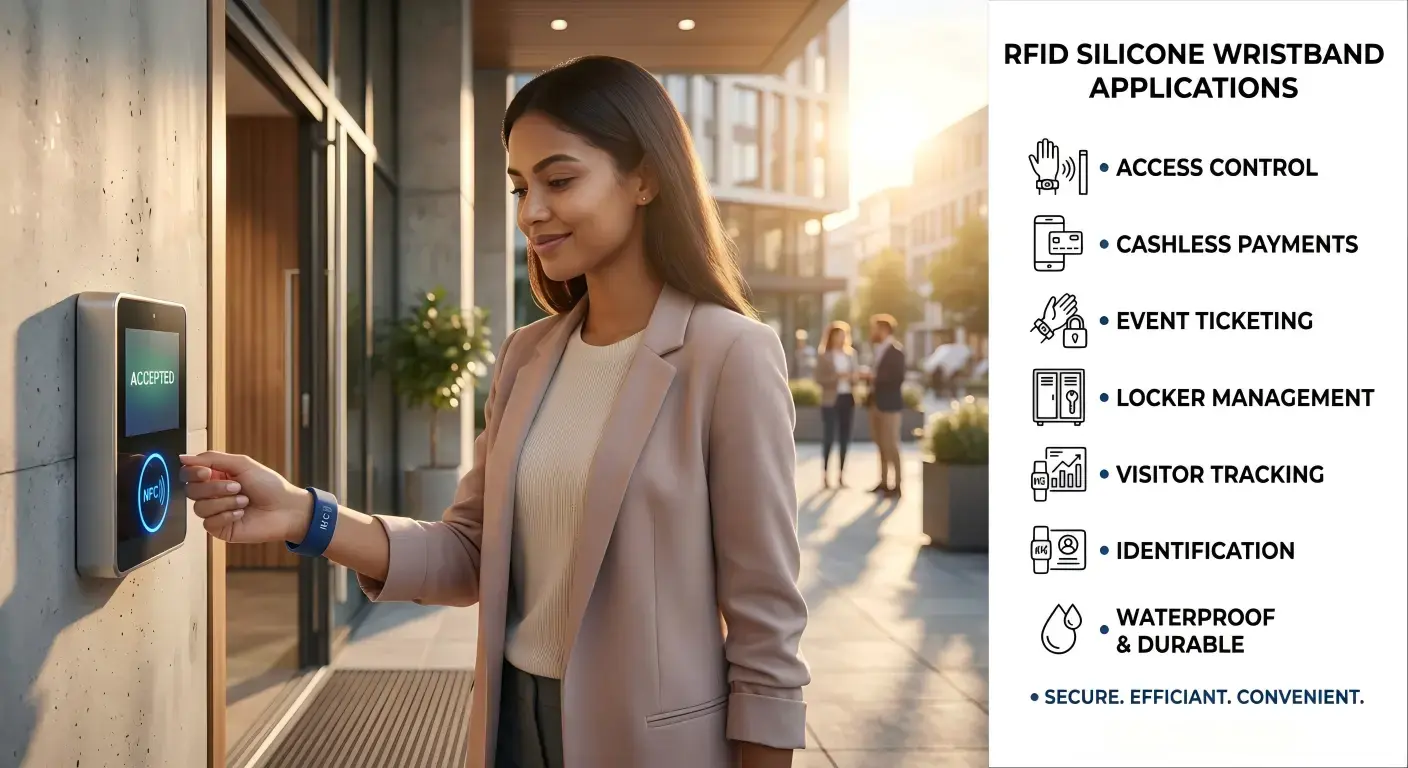
Today's events need technology that works perfectly even when things go wrong. RFID silicone wristbands have contactless identification chips built into flexible, hypoallergenic bands that make things easy for both organizers and attendees. When buying teams know how these wearables work, they can choose options that really meet business needs.
How RFID Technology Works in Festival Environments
A microchip and receiver are enclosed in medical-grade silicone in an RFID silicone wristband. When scanned by readers that are compatible, the chip sends stored data wirelessly, so verification can happen right away without touching the chip. Our wristbands mostly work at 13.56 MHz, which is a high frequency that works best for close-range uses like payment systems and entry gates. This frequency range lets you read from 1 to 5 cm away, which makes it perfect for controlled entry points that need to be safe and accurate.
The silicone case keeps the electronics inside safe from water, sweat, and mechanical stress. When used outside, silicone doesn't break down like paper tickets or PVC bands do. It stays strong even in rain, heat, and constant use. Our wristbands are rated IP67, which means they can be submerged in water up to 1.5 meters deep for 24 hours. This means they can be used at events that last more than one day and have a lot of different weather conditions.
Core Benefits for Festival Organizers
Using RFID silicone wristbands changes how the event works in ways that can be measured. Access control is faster and safer, and lines at entry points are cut by up to 60% compared to when tickets were checked by hand. Organizers can see in real time how many people are coming, how dense the crowd is, and how people are moving through the event. This lets them better allocate resources and enforce safety rules.
Adding cashless payment options gets rid of the need to handle cash, which speeds up transactions at seller booths and lowers the risk of theft. People just have to tap their wristbands on payment machines to make an exchange, and it's done in seconds. This ease of use usually leads to 15–30% more spending per attendee while making accounting and reconciliation easier for event managers.
Data analytics gives us information that helps us plan better events in the future. Our wristbands collect private interaction data that shows which stages get the most visitors, when the busiest times are, and what kinds of people come to the event. These insights help festival managers make the best decisions about where to put vendors, how to change the plan, and how to market future festivals.
Our silicone is hypoallergenic, which means that you can wear it for up to seven days in a row without getting skin pain. People like wristbands that stay comfortable while they're moving around, which lowers complaints and raises total satisfaction scores.
Choosing the Right Customized RFID Silicone Wristband for Festivals
To choose the right RFID silicone wristbands, you need to think about a number of scientific and practical issues. The right specifications make sure that the new system works well with the old one, and they also take into account the attendees' needs and budget.
Frequency Selection and Read Range Considerations
At festivals, different RFID frequencies are used for different things. It is important to have controlled contact at entry gates and payment terminals, which is why 13.56 MHz high-frequency (HF) systems are perfect for them. These methods make it harder to read by mistake and make security better by requiring close proximity.
Low-frequency (LF) options at 125 kHz work reliably near metal structures and in places with a lot of electromagnetic noise. LF wristbands work well when there is a lot of metal scaffolding or electronic equipment in the area that could interact with higher frequencies. They aren't used as much at events, though.
Ultra-high frequency (UHF) wristbands that work at 860 to 960 MHz can read signals from farther away, up to three meters away. This makes it easier to move quickly through high-volume entry points. But UHF systems need more complex reader infrastructure and may have behavior changes because of things in the surroundings. Most event managers agree that HF systems are the best mix of dependability, cost, and usefulness.
Material Quality and Durability Standards
Not every silicone is the same. Our RFID silicone wristbands are made from food-grade, eco-friendly silicone that has a Shore A hardness between 45 and 60. This makes them flexible without losing their structural memory. This means that wristbands will keep their shape even after being stretched many times and will stay comfortable to wear for a long time.
For outdoor events, waterproofing approval is very important. Our IP67 rating ensures protection against dust entering and brief immersion in water. Lower ratings might not work at an event with rain, spilled drinks, or water activities. The airtight closing process we use keeps the electronics inside safe from damage caused by moisture, so they will work during the whole event.
Temperature tolerance changes how well something works in different settings. Our wristbands work reliably from -10°C to +50°C, which is a temperature range that is common for outdoor festivals in many seasons and parts of the world. The bands don't change color or break down when they are normally worn because they are chemically resistant to sweat, sunscreen, and common cleaners.
Customization Options and Branding Opportunities
By changing the way they look, useful wristbands can be turned into marketing tools. We have more than ten standard colors, and we can also match colors to Pantone standards to make sure they match festival branding guidelines. Techniques like silkscreen printing, laser etching, and debossed color-filling make it possible to place logos that will last through mechanical wear and tear during the event.
In addition to changing the way something looks, you can also choose chips from top brands like NXP Mifare, Desfire, Ntag, and ICODE series. Each type of chip has a different amount of memory, security features, and levels of compatibility. Our technical team helps choose the right chips for each application, from easy access control to complicated payment systems with multiple vendors.
Options for encoding let you load information about attendees, ticket levels, or entry rights ahead of time. With variable data printing, each wristband can have its own unique identifier. This lets people have more personalized experiences and makes security better. Adjustable sizes between 200 and 250 mm fit wrists of different sizes, making sure that all attendees are comfy.
Where to Find Trusted Suppliers for Customized RFID Silicone Wristbands
Sourcing choices have a direct effect on the success of a fair. Working with dependable manufacturers guarantees that high-quality RFID silicone wristbands will be delivered on time and work as promised in real life.
Key Criteria for Manufacturer Selection
The ability of suppliers to meet big festival orders within the time frames needed is based on their production capabilities. Our factory makes more than 500 million units a year using automatic assembly lines that keep the quality the same from one production run to the next. Because of this, we can handle orders of 1,000 pieces for small fairs or millions of pieces for big events without having to change our delivery times.
Compliance and certification show that you are committed to high standards. We keep our ISO 9001:2015 approval for quality management systems up to date. We also follow CE, RoHS, and REACH rules to be responsible with the environment and make sure electronics are safe. These certificates aren't just pieces of paper; they're the result of strict testing and manufacturing standards that protect the image of your event.
Customization skills are what set true manufacturing partners apart from basic suppliers. Our engineering team can help you choose the right materials, tune your antennas better, and make quick prototypes. We send working samples for testing within seven business days, so buying teams can make sure the product works before committing to full production runs.
When connecting wristbands to event tools, the ability to provide technical help is important. Our field application engineers help with SDKs, integration audits, and troubleshooting during deployment. This responsive partnership approach makes sure that implementation goes smoothly instead of leaving you to figure out compatibility issues on your own.
Evaluating Procurement Terms and Flexibility
Planning a budget and keeping track of inventory are both affected by minimum order quantities. We offer competitive prices across a range of order sizes to strike a balance between production efficiency and client flexibility. Bulk pricing structures reward commitments that are bigger, while reasonable minimum thresholds make room for smaller festivals.
Lead time trustworthiness keeps people from having to scramble at the last minute before an event. Our normal production cycle of 7–10 days works for most planning situations, and we can also handle pressing needs with rush orders. Keeping a planned inventory of common parts makes it easier to respond quickly to chances or changes that come up out of the blue.
Sustainability Considerations in Modern Procurement
Environmental duty is becoming more and more important in buying choices. Our silicone formulations are safe for the environment because they are made from non-toxic materials that meet strict biocompatibility standards while still performing well. Silicone rings are less wasteful than single-use options because they can be used more than once.
We keep putting money into environmentally friendly ways to make things that don't hurt the quality of the products. The carbon footprint of getting and distributing wristbands is further reduced by packaging options that can be recycled and good logistics planning.
How to Program and Implement RFID Silicone Wristbands for Festival Use
For deployment to go smoothly, you need to do more than just buy RFID silicone wristbands. Understanding how encoding works and the best ways to integrate technology makes sure it does what it's supposed to do.
RFID Encoding and Data Management
Digital information is stored on wristband chips through encoding. Each chip is linked to a record of an attendee, a ticket level, or an account balance. As part of our production services, we pre-encode before shipping and add specific data based on the layout of your festival's database. Instead of encoding thousands of wristbands at event venues, this saves time and lowers the chance of making mistakes.
Planning the data layout tells us what kind of data each wristband will keep. For simple applications, unique identities that link to external databases might be all that's needed. This would reduce the security risk of losing wristbands. More advanced methods include encrypted access permissions that allow verification even when there is no network connection, like at a busy festival.
Security protocols keep private information about attendees safe and stop people from getting in without permission. Our compatible chip options use AES encryption standards to protect data integrity, even if wristbands are stolen or copied. Using the right encryption adds only a small amount of complexity while greatly improving system security.
Integration with Access Control and Payment Systems
Wristbands can work with current reader systems if the hardware is compatible. Our HF wristbands are compliant with ISO 14443 Type A/B and ISO 15693 standards. This means that they can work with most commercial RFID readers that are used for payment and access control. We give you technical specs and help with tests to make sure everything works together before you release it.
Software integration links wristband readers to backend systems that handle databases of attendees, payment processing, and analytics platforms. Our technology team helps IT teams set up smooth data flows between wristband readers and event management software by documenting APIs and sharing best practices for integration.
Real-World Deployment Case Studies
Our RFID silicone wristbands were used by 75,000 people at a big music event in Texas. Compared to paper tickets, they cut the time it took to get in by 58%. Because it was waterproof, it didn't break during unexpected rainstorms, so the access control worked perfectly during the three-day event.
Our badges were used with cashless payment systems at a food and wine event in California. The system handled over 150,000 transactions without any downtime. People who went liked how easy it was to buy things with a tap, and sellers said they got faster service and fewer mistakes with cash. After the event, analytics showed trends of presence that changed how the stage was scheduled the next year.
These examples show that RFID silicone wristbands can improve operations and make the experience of attendees better when they are properly defined and used.
Conclusion
Customized RFID silicone wristbands are now an important part of running a modern festival because they provide strong solutions for controlling access, making transactions without cash, and keeping attendees interested. To choose the right wristbands for a festival, you need to know about technical details like the frequency options, how long the material will last, and how it can be customized. Working with manufacturers with a lot of experience guarantees good products, on-time delivery, and help with integration during deployment. Our 13.56 MHz technology and hypoallergenic rubber are combined in our eco-friendly, waterproof wristbands to make them comfy and reliable for outdoor events that last more than one day. Procurement managers can safely put in place solutions that boost security, make operations more efficient, and give festivalgoers unforgettable experiences by putting an emphasis on supplier knowledge, compliance certifications, and quick technology support.
FAQ
1. What is the typical production lead time for customized orders?
After an order is confirmed, standard production for customized RFID silicone wristbands takes 7–10 business days. This time includes matching custom colors, printing logos, and inserting data. If you need something quickly, you can place a rush order. Depending on the number of sales and the level of personalization, the lead time can be as short as 5 days. If you want to make sure you have production times during festival season, you should call our sales team early on at kenny@w-srfid.com.
2. Can wristbands be reused across multiple events?
Our silicone material keeps its shape after being worn many times, which means that bracelets can possibly be used more than once. Chip decoding, on the other hand, usually locks data after the first setting for safety reasons. We have re-encodable chip choices that let you change details about attendees between events, but you need reader equipment that works with them, and it makes the distribution process more complicated.
3. How do I determine the right chip type for my festival?
Picking the right chip depends on what you want to use it for and how secure you need it to be. NTAG or Mifare Classic chips with limited memory and simple encryption work well for basic access control. For cashless payment systems, Mifare DESfire chips are helpful because they offer better protection and more memory. Our technical consultants can help you choose the right chips for your festival based on your budget and the way it is set up.
Partner with WS-RFID Technology for Your Festival Wristband Needs
RFID silicone wristbands from WS-RFID Technology, a leading manufacturer with 15 years of experience in the field, can completely change how your festival works. Our hypoallergenic, waterproof wristbands work consistently in harsh outdoor settings and keep attendees comfortable during events that last more than one day. We can match colors, print logos, and encode chips, among other customization options. Our quality is backed by ISO 9001, CE, RoHS, and REACH compliance certifications. We can make more than 500 million units a year, and our defect rate is less than 0.1 percent. This gives event buying managers the flexibility and dependability they need. Email our team at kenny@w-srfid.com to talk about your specific needs, ask for samples, or place an order. We're ready to help you make your event a success from the first meeting to the study after the event.
References
1. Smith, J. & Anderson, K. (2023). RFID Technology in Event Management: Best Practices for Access Control and Attendee Engagement. Event Technology Publishing.
2. Chen, L. (2022). "Waterproof Wearable RFID devices: Material Science and Performance Testing Standards." Journal of Smart Wearable Technology, 15(3), 127-145.
3. Rodriguez, M. (2024). Festival Operations Management: Integrating Contactless Technology for Enhanced Security and Revenue Optimization. Live Events Press.
4. National Festival & Events Association. (2023). "RFID Wristband Implementation Survey: Industry Trends and ROI Analysis." Annual Industry Report, 2023 Edition.
5. Thompson, R. & Lee, S. (2023). "Comparative Analysis of RFID Frequencies for Outdoor Event Applications." International Conference on Wireless Technology, Proceedings, 89-104.
6. Williams, D. (2024). Sustainable Event Technology: Eco-Friendly Solutions for Modern Festival Management. Green Events International.
Learn about our latest products and discounts through SMS or email