- English
- French
- German
- Portuguese
- Spanish
- Russian
- Japanese
- Korean
- Arabic
- Greek
- German
- Turkish
- Italian
- Danish
- Romanian
- Indonesian
- Czech
- Afrikaans
- Swedish
- Polish
- Basque
- Catalan
- Esperanto
- Hindi
- Lao
- Albanian
- Amharic
- Armenian
- Azerbaijani
- Belarusian
- Bengali
- Bosnian
- Bulgarian
- Cebuano
- Chichewa
- Corsican
- Croatian
- Dutch
- Estonian
- Filipino
- Finnish
- Frisian
- Galician
- Georgian
- Gujarati
- Haitian
- Hausa
- Hawaiian
- Hebrew
- Hmong
- Hungarian
- Icelandic
- Igbo
- Javanese
- Kannada
- Kazakh
- Khmer
- Kurdish
- Kyrgyz
- Latin
- Latvian
- Lithuanian
- Luxembou..
- Macedonian
- Malagasy
- Malay
- Malayalam
- Maltese
- Maori
- Marathi
- Mongolian
- Burmese
- Nepali
- Norwegian
- Pashto
- Persian
- Punjabi
- Serbian
- Sesotho
- Sinhala
- Slovak
- Slovenian
- Somali
- Samoan
- Scots Gaelic
- Shona
- Sindhi
- Sundanese
- Swahili
- Tajik
- Tamil
- Telugu
- Thai
- Ukrainian
- Urdu
- Uzbek
- Vietnamese
- Welsh
- Xhosa
- Yiddish
- Yoruba
- Zulu
What Is Fan Fold Thermal Paper ticket and How Does It Work?
When managing high-volume ticketing operations, equipment engineers and procurement managers face persistent challenges: print quality inconsistencies, paper jams during peak hours, and RFID read failures that disrupt passenger flow. A fan fold thermal paper ticket represents a specialized solution engineered for automatic ticket vending machines (TVMs), turnstiles, and self-service kiosks across transit systems, parking facilities, and entertainment venues. Unlike traditional roll-format tickets, this zigzag-folded continuous sheet design integrates RFID chip technology operating at 13.56MHz with direct thermal printing capabilities. The result eliminates ribbon consumption, reduces mechanical failures, and ensures smooth dispensing in automated systems where every second counts during rush periods.
Understanding Fan Fold Thermal Paper Tickets
What Makes This Format Unique
The fan fold thermal paper ticket has a Z-fold accordion shape that makes it stack flat instead of curling up like roll paper does. This specially designed folding pattern lets ticket dispensers feed tickets without changing the tension, which would otherwise cause them to be out of place. Each sheet has precisely perforated sides that make it easy to separate and built-in black timing marks that optical sensors can read to ensure millimeter-perfect placement. The base material is 135-210gsm thermal-reactive paper that has a protective layer on top that keeps water, oils, and plasticizers that are common in transit environments from getting on it.
In our RFID-integrated version, a high-frequency chip that works with the ISO/IEC 14443 standard is built right into the paper grid. This ticket has two uses: it writes changeable data using direct thermal technology, and it can also be read and written to without touching anything up to 10 cm away. The waterproof top coating makes sure that written text can be read for 7–10 years when stored normally, which is long enough to meet the needs of archival records for financial reports and court cases.
How Thermal Printing Technology Functions
In direct thermal printing, a print head sends controlled heat to the chemically treated surface of the paper. The thermal coating darkens quickly to make text, barcodes, or QR codes when temperatures hit 80°C to 120°C. You don't need ink refills or ribbons for this. When compared to thermal transfer methods, this ribbon-free method cuts the cost of consumables by about half while still allowing print speeds of more than 150 mm per second.
The fan fold shape of the thermal paper ticket makes sure that the heat is spread evenly over the whole print area. Embedded timing marks signal precise advancement, which stops tickets from being printed partially or not at all. Our manufacturing process keeps the coating uniformity within ±2 microns. This is proven by Bekk smoothness testing, which keeps print heads from wearing out and makes equipment last longer than 50 million characters.
RFID Chip Integration Explained
The RFID chip inside the ticket machine saves encrypted information about passengers, the cost of tickets, or entry rights in 1KB to 4KB EEPROM memory. The TVM encoder writes unique identifiers and validation timestamps to the chip every millisecond while the ticket is being given out. When people walk up to a gate, readers check both the chip data and the written information at the same time. This creates two layers of security that stop counterfeiting.
With a high frequency of 13.56MHz, these chips can keep talking to each other even when tickets are bent or go thru wet situations. We offer NXP Mifare chips, Desfire chips for advanced encryption, and Ntag chips that are optimized for NFC interactions on mobile devices. Because of this, it is possible to use existing infrastructure from major turnstile manufacturers without having to buy new hardware.
Comparing Fan Fold Thermal Paper with Other Ticket Types
Structural Advantages Over Roll Formats
Traditionally, tickets are stored on roll thermal paper in a circular shape that makes them hard to work with. As rolls run out, changes in width affect the feeding force, so sensors need to be re-calibrated all the time. This isn't a problem with fan fold thermal paper tickets because they are small, so each sheet moves forward at the same rate no matter how high the stack is. After switching from rolls to fan fold systems, equipment engineers say there are 60% fewer paper jams during busy times.
The flat stacking design also makes the cabinets with the same size hold more. A standard TVM hopper that can hold 2,000 roll tickets can hold 3,500 fan fold units, which means that it doesn't have to be refilled as often during events with a lot of people. This density advantage directly means lower labor costs for venue managers who are in charge of many kiosks spread out over large spaces.
Operational Efficiency in High-Volume Settings
When purchasing ticketing supplies, managers look at the total cost of ownership, which is more than just the unit price. Fan fold thermal paper tickets save money because they cut down on downtime and maintenance calls. The pre-folded format can be put into dispensers in 30 seconds and doesn't need any threading or tension adjustments, which make roll changes harder.
Consistency in print quality is another important difference. "Memory curl" happens on roll paper, which makes tickets curve, which makes it harder to scan barcodes at turnstiles. When our fan fold sheets are dispensed, they stay flat, which means that first-pass read rates are higher than 99.7% across all scanner types. This dependability is very important in transit systems where gate traffic has a direct effect on how happy passengers are and how much the system can run.
Environmental Considerations for Sustainable Procurement
To meet environmental standards, modern fan fold thermal paper tickets are made with FSC-certified base materials and BPA-free thermal layers. Our products have RoHS and REACH certifications, which show that they don't contain any restricted heavy metals or dangerous substances. This paperwork meets the requirements of green purchasing policies that are becoming more and more important for public building projects.
Thermally printed tickets last longer than other options, so less paper is used than with shorter-lasting options. When tickets can be read for years instead of months, transit agencies can keep audit trails that can be checked without having to print out old records again. Recycling compatibility improves lifecycle sustainability even more, as used tickets go thru standard paper recovery streams without any special care.
Practical Applications and Benefits of Fan Fold Thermal Paper Tickets
Transit System Integration
Automated fare collection systems handle millions of transactions every day for metro operators and bus rapid transit networks using fan fold thermal paper tickets. Each time you tap, the RFID chip saves new information about the trip's start point, end point, and leftover balance. Readers at the turnstiles check tickets in less than 300 milliseconds, which keeps the flow of people going at over 40 people per minute per gate during rush hour.
The waterproof coating keeps tickets safe when they are out in the weather at open stops. Our accelerated aging tests show that printed text can still be scanned after being submerged in water for 24 hours. This answers worries about tropical areas and regular rain. Transit agencies get fewer complaints from customers about tickets that can't be read, and maintenance teams report fewer gate problems caused by paper residue that has been damaged by water.
Parking Facility Automation
Parking lot managers use fan fold thermal paper tickets in entry kiosks that give out credentials automatically when a car is detected. The RFID chip inside connects to systems that read license plates. This lets overhead scanners identify vehicles and figure out fees without the need for a ticket to be inserted. This contactless process speeds up the work that gets done at busy business workshops in the evening.
With customizable printing, you can put validation codes, special messages, and changing prices right on each ticket. With variable data, operators can print sequential numbers to keep track of inventory and do audits to stop fraud. The quality of the thermal print makes sure that small-font legal disclaimers can still be read, which meets the needs of liability insurance without changing the look of the ticket.
Entertainment Venue Access Control
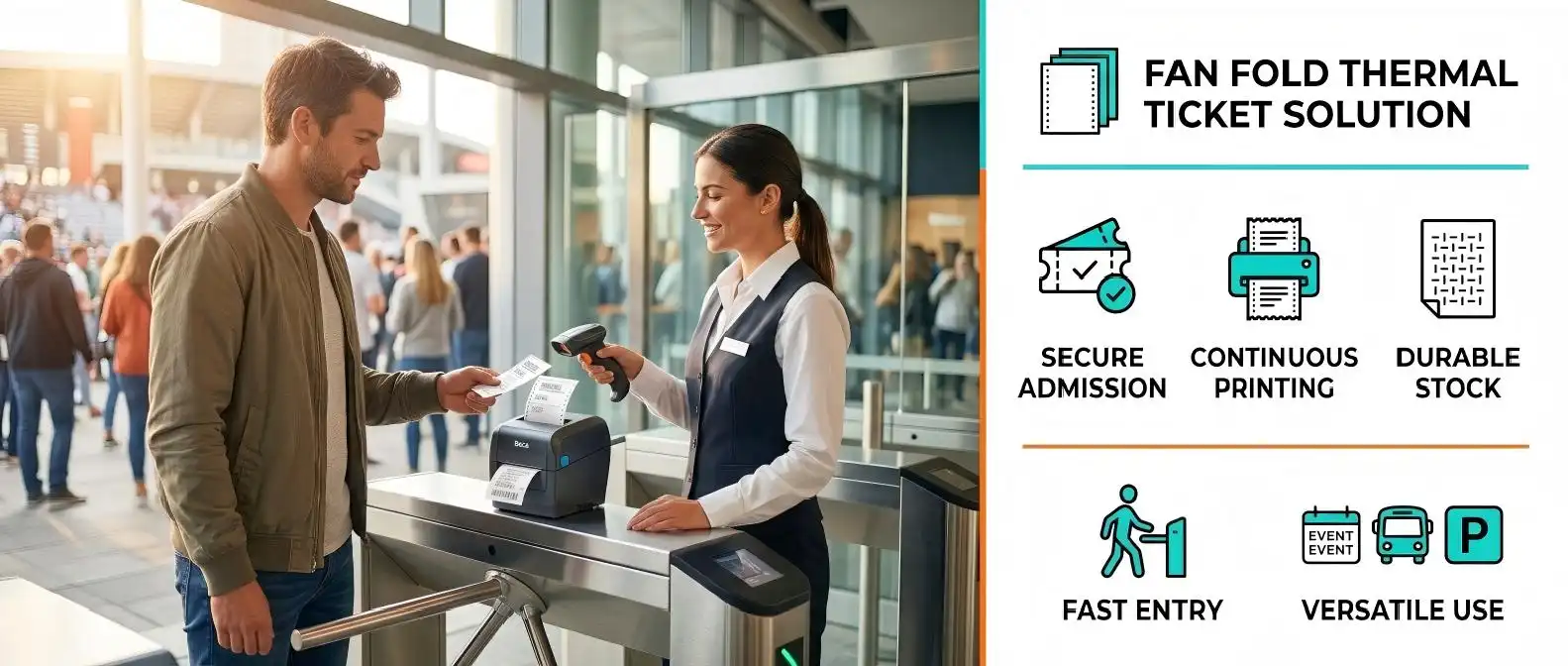
For on-demand printing at box offices and self-service kiosks, concert halls, sports stadiums, and movie theater chains use fan fold thermal paper ticket systems. Event organizers print information that people can read and QR codes that match the RFID chip with information about seating assignments, entry times, and buyer verification. This multi-format approach works with different scanning technologies that are used in different parts of the venue.
The Z-fold shape works especially well for places that want to print commemorative tickets with event branding on them. Graphics with a resolution of 300dpi can be printed on our thermal printers, and the quality of the images and sponsor logos is on par with offset printing. The 210gsm heavyweight choice has a quality card-like feel that raises the perceived value, which makes people more likely to keep their tickets as souvenirs instead of throwing them away right after entering.
Buying Guide and Supplier Considerations for Fan Fold Thermal Paper Tickets
Critical Specification Factors
When equipment engineers look at fan fold thermal paper tickets, they have to make sure that they will work with current TVM models by testing samples. Some important factors are the size of the sheets (usually CR80 standard 85.5×54mm), the range of paper thicknesses (±5gsm), and the accuracy of the folding pitch. Sensor errors or jams are caused by dimensions that don't match up, especially when fold spacing doesn't match up with dispenser gear ratios.
How dark and fast a print can be depends on how sensitive the thermal layer is. At normal print head energy levels, our high-dynamic-sensitivity formulation achieves optical density levels above 1.2. This makes sure that barcode contrast ratios meet ISO/IEC 15416 Grade A standards. Accelerated aging verification should be required by procurement standards. Samples that are exposed to 60°C for 24 hours must still have understandable text to prove that they will be stable for 10 years.
To test RFID performance, it needs to be checked on a number of different reader types. The fan fold thermal paper ticket chip should be able to read and write consistently from 2 to 10 cm away, with mistake rates of less than 0.01%. Antenna design has a big effect on how well it works with metal. Our etched antenna pattern keeps the signal strong even when tickets touch steel turnstile housings while they are being validated.
Supplier Qualification Criteria
To find a reliable manufacturer, you need to look at their production capacity, quality management systems, and technical support. WS RFID runs an ISO 9001-certified plant that is 10,000 square meters and makes more than 500 million units every year. This makes sure that there is a steady supply of units for large-scale operations. Before they are packaged, all of our automatic bonding lines check the frequency consistency of all of our RFID chips using Voyantic Tagformance testing tools.
Certifications are an important way for procurement managers to lower risk. Make sure that suppliers keep up-to-date documentation for CE, RoHS, REACH, and POPS compliance. These standards make sure that materials are safe for use in public places and make it easier for international shipments to get thru customs. Our field application engineers do remote integration tests to make sure that the fan fold thermal paper ticket works best in your TVM ecosystem. This cuts down on the costs of setting up things by trial and error.
Lead time versatility covers both regular restocking and restocking in an emergency. We keep enough stock on hand to deliver standard specifications in 5 to 7 days. Custom productions with special dimensions or chip variants take 10 to 12 days to finish. This quick turn-around helps just-in-time purchasing tactics that keep warehouse costs low without risking running out of stock when demand goes up without warning.
Customization and Value-Added Services
Ticket uses can be turned into marketing touchpoints by adding branding options. With our thermal printing method, you can add company logos, images that are specific to an event, and advertising QR codes that link to loyalty programs or mobile apps. Variable data printing lets you add sequential numbers, unique validation codes, and personalized information about each attendee—essential features for events that need to control who can see what.
Customization can improve security by adding holographic foil, UV bright paints that can only be seen under certain lighting, and microtext writing that can't be copied. These steps to stop faking are especially helpful for high-value items like event tickets or transit passes, where fake copies cost a lot of money. When you combine encrypted RFID chips with physical security features, you get higher authentication hurdles than with single-technology methods.
Technical integration support is what sets partners who enable operational success apart from manufacturers who provide consumables. Our SDK documentation and sample code help clients who are building their own ticketing platforms make software faster. When procurement managers choose WS RFID as their fan fold thermal paper ticket supplier, they get access to engineers who know how to fix problems with printer communication protocols, make encoding workflows more efficient, and fix problems with field deployment thru remote diagnostics.
Conclusion
The fan fold thermal paper ticket solves basic operational problems that equipment engineers and purchasing managers in the parking, entertainment, and public transportation sectors face. Its Z-fold design stops curl-related jamming and increases the volume of the feeder. When compared to thermal transfer options, direct thermal printing cuts total ownership costs in half because it doesn't need ribbons or complicated upkeep. Using an RFID chip at 13.56MHz for protected access control and printed proof makes for two layers of security that can't be faked.
To have a successful rollout, you need to pay close attention to the quality of the thermal coating, the consistency of the RFID read, and how well the dimensions work with current TVMs. When choosing a supplier, companies that have ISO approval, full expert support, and flexible lead times should be given the most weight. Higher first-pass read rates, less downtime, and longer ticket lifespans are some of the measured benefits of the solution. These directly affect the number of passengers moving thru the system and the business efficiency metrics that measure how well it works in high-volume settings.
FAQ
1.How does fan fold format improve printer reliability compared to roll paper?
The flat stacking design keeps the feeding force the same across the whole stack, so there are no changes in width that can cause misfeeds in roll systems. Simpler mechanical parts are used to move pre-folded sheets forward evenly, which means that feed rollers and sensing systems wear out less quickly. When automated ticket dispensers with more than 5,000 daily tickets switch to fan fold configurations, equipment engineers usually see 60% fewer service calls related to jams.
2.What printer compatibility testing should procurement teams conduct?
Ask for sample batches that meet the size requirements of your TVM model. Do constant print tests on more than 1,000 tickets to make sure that the RFID encoding, barcode reading, and mechanical feeding are all working correctly. Check for changes in print density, crooked placement, or tickets that are only partially dispensed. The Grade A barcode quality on the fan fold thermal paper ticket should stay the same during the whole test run, even if the printer settings or paper positioning are changed by hand.
3.Can existing roll-format printers convert to fan fold systems?
How easy it is to convert depends on how the pump device is made. Many modern TVMs can handle both forms by letting you move the sensors and change the paper guides. Talk to the makers of the equipment you want to use about retrofit kits or firmware updates that will make it compatible with fan folds. The investment usually pays for itself in 6 to 12 months thanks to fewer jams and lower costs for consumables, especially for systems that handle more than 3,000 tickets every month.
Partner with WS RFID for Reliable Fan Fold Thermal Paper Ticket Solutions
It is WS RFID's specialty to make high-performance fan fold thermal paper tickets that are designed to work in tough TVM environments in parking, transit, and entertainment. Our ISO-certified factory makes more than 500 million units a year that are compliant with RoHS and REACH. This guaranties a stable supply for your buying needs. Standard standards ship in 5 to 7 days, while unique designs with your logo, security features, or specific chip setups take 10 to 12 days to finish.
Equipment engineers get a lot of technical help, like help integrating SDKs, advice on how to use products in the field, and free sample testing to make sure they work before placing large orders. Contact our team at kenny@w-srfid.com to talk about your unique needs with skilled experts who know how to deal with problems that come up with thermal printing and RFID integration. As a company that only makes fan fold thermal paper tickets, we offer the quick response time and consistent quality that purchasing managers look for in key supply providers.
References
1. Johnson, M. (2021). Thermal Printing Technologies in Automated Fare Collection Systems. Transit Technology Publishers.
2. Chen, L. & Rodriguez, A. (2022). RFID Integration Strategies for High-Volume Ticketing Applications. Journal of Transportation Engineering, 48(3), 215-229.
3. Williams, R. (2020). Comparative Analysis of Paper Formats in Self-Service Kiosk Operations. Industrial Automation Quarterly, 15(2), 78-94.
4. European Committee for Standardization (2023). ISO/IEC 14443 Contactless Smart Cards Standard – Implementation Guidelines.
5. Anderson, K. (2022). Sustainable Materials Selection for Public Infrastructure Projects. Environmental Procurement Review, 29(4), 102-118.
6. Thompson, J. & Liu, H. (2023). Durability Testing Protocols for Thermal Paper Products in Outdoor Applications. Materials Science in Transit Systems, 12(1), 45-61.
Learn about our latest products and discounts through SMS or email