- English
- French
- German
- Portuguese
- Spanish
- Russian
- Japanese
- Korean
- Arabic
- Greek
- German
- Turkish
- Italian
- Danish
- Romanian
- Indonesian
- Czech
- Afrikaans
- Swedish
- Polish
- Basque
- Catalan
- Esperanto
- Hindi
- Lao
- Albanian
- Amharic
- Armenian
- Azerbaijani
- Belarusian
- Bengali
- Bosnian
- Bulgarian
- Cebuano
- Chichewa
- Corsican
- Croatian
- Dutch
- Estonian
- Filipino
- Finnish
- Frisian
- Galician
- Georgian
- Gujarati
- Haitian
- Hausa
- Hawaiian
- Hebrew
- Hmong
- Hungarian
- Icelandic
- Igbo
- Javanese
- Kannada
- Kazakh
- Khmer
- Kurdish
- Kyrgyz
- Latin
- Latvian
- Lithuanian
- Luxembou..
- Macedonian
- Malagasy
- Malay
- Malayalam
- Maltese
- Maori
- Marathi
- Mongolian
- Burmese
- Nepali
- Norwegian
- Pashto
- Persian
- Punjabi
- Serbian
- Sesotho
- Sinhala
- Slovak
- Slovenian
- Somali
- Samoan
- Scots Gaelic
- Shona
- Sindhi
- Sundanese
- Swahili
- Tajik
- Tamil
- Telugu
- Thai
- Ukrainian
- Urdu
- Uzbek
- Vietnamese
- Welsh
- Xhosa
- Yiddish
- Yoruba
- Zulu
Hotel Key Card: Modern Hotel Access Solutions
Walking into any hotel today, you're greeted by a sleek, branded card that unlocks not just doors, but a world of seamless hospitality experiences. A plastic hotel door key card has replaced the bulky metal keys of yesteryear, transforming how hotels manage security, enhance guest convenience, and streamline operations. These RFID-enabled credentials offer encrypted access, rapid check-in, and multi-functional capabilities—from room entry to spa access and cashless payments. For procurement professionals seeking reliable, scalable, and secure access control systems, understanding the technology behind modern hotel key cards is essential to making smart, future-ready investments.
Understanding Plastic Hotel Door Key Cards: Types, Functionality, and Benefits
What Makes Hotel Key Cards Essential?
In today's hotel industry, speed, safety, and happy guests are all important. Old-fashioned mechanical keys were dangerous. If you lost them, you had to pay a lot of money to get a new lock, and it was hard to keep track of which guests were entering. The plastic hotel door key card is a high-tech, customizable ID that lets you in using either RFID or magnetic stripe technology. These cards solve three major operating problems: they get rid of the chance of illegal copying, they allow for real-time audit trails, and they offer cheap, brandable media that can stand up to heavy use in a variety of climates.
Key Technologies Behind Access Cards
Following ISO/IEC 14443 guidelines, hotels usually use cards that work at 125kHz (Low Frequency) or 13.56MHz (High Frequency). Low-frequency cards are great at blocking electromagnetic interference, which makes them perfect for places with a lot of electronic equipment. High-frequency versions, such as NFC chips like NXP Mifare and Desfire, let you read data faster and protect it better. Both technologies support private communication methods that stop attempts at cloning and getting in without permission. There are chips with 1KB to 8KB EEPROM storage that can hold guest info, entry permissions, and transaction records.
Material and Durability Advantages
These cards meet the requirements of ISO/IEC 7810 ID-1 and are made from strong PVC or PET plastic. They are usually 0.76 to 0.84 mm thick. Their strong design means they can handle more than 100,000 write cycles and keep data for more than ten years. High-coercivity magnetic stripes at 2750 Oe don't let mobile devices demagnetize them. Cards are made to work reliably in temperatures ranging from -25°C to +70°C. This means that your property will always work, whether it's in a ski area or on a warm beach.
How to Choose the Right Plastic Hotel Door Key Card Solution
Evaluating Security Features
Security should be the most important thing you think about when choosing key cards. Even though magnetic stripe cards are cheap, they can be copied and skimmed. Switching to plastic hotel door key cards with RFID technology greatly improves security. Advanced chip-enabled versions have AES encryption and anti-cloning methods that keep guest data safe and stop illegal copying. Make sure it works with your current Property Management System (PMS) so that encoding, rescinding access in real time, and keeping detailed entry logs that help with compliance and investigations of incidents can all happen without any problems.
Material Selection and Environmental Resilience
PVC is still the standard because it is both cheap and good at what it does. But qualities that are used in hot places benefit from PET cores, which don't bend in very hot and humid conditions. Surface finishes, like glossy, matte, or frosted, change how things look and feel, which in turn changes how guests see them. Cards with UV-resistant overlays keep their colors and logos even after being in the sun for a long time. This is important for outdoor amenities and distribution places near pools.
Customization and Branding Potential
Your ID cards are like business champions. Full-color CMYK printing with offset, screen, or digital methods makes it possible to print names, slogans, and pictures that are very clear. Personalized encoding does more than just look good; it also lets you give different types of guests different levels of access to things like VIP rooms, meeting halls, and executive floors. Variable data printing can handle sequential numbers, QR codes, and guest names, which makes it easier to customize while keeping operations running smoothly. Customization turns useful credentials into unique touchpoints that help people remember your property.
Procurement and Supply Chain Considerations for Plastic Hotel Key Cards
Sourcing Strategies for B2B Buyers
Finding trusted plastic hotel door key card suppliers is the first step to efficient buying. When compared to distributors, direct manufacturers offer better prices, easier communication, and faster turnaround times. With 15 years of experience making things and more than 500 million units made every year, WS-RFID Technology is a great example of a factory-direct partner that can handle orders from small hotels of 500 cards to large businesses that need 500,000 units. Transparent supply chain management gets rid of markups by middlemen, which lowers the total cost of ownership and makes sure that quality stays the same from batch to batch.
Inventory Management and Lead Times
To keep operations running smoothly, it's important to keep product amounts in check. Standard ISO-compliant cards usually ship within 7–10 business days, which includes time for the print to dry and quality control checks. When manufacturers keep a lot of stock on hand, they can quickly fill orders within 5 to 7 days, which is very useful during busy times or when they need to restock quickly. Batch programming services pre-program cards based on your instructions so they are ready to be given out right away at check-in. This saves important time for front desk staff and cuts down on wait times for guests.
Quality Assurance and Certifications
Suppliers with a good reputation follow international rules and environmental certificates. Check that the cards are compliant with RoHS, REACH, and POPs to make sure they don't contain any harmful materials. Production facilities that are ISO 9001:2015 qualified use strict quality control procedures, such as Voyantic Tagformance systems to test peel strength, check dimensions, and make sure signals are consistent. These steps guarantee that all lock hardware will read cards 100% of the time, which will cut down on the frustration of "dead on arrival" cards that ruin guests' experiences and hurt the brand's reputation.
Security and Durability Insights of Plastic Hotel Door Key Cards
Vulnerability Analysis and Protection Mechanisms
Magnetic stripe cards can still be read by devices that read magnetic fields, and smartphones can still mess with the magnetic fields on cards. Getting high-coercivity (HiCo) bands or RFID chips lowers these risks. RFID technology uses handshake methods that are encrypted between the card and reader. This means that passwords that have been copied are useless. Chip-enabled plastic hotel door key cards use dynamic encryption keys that change with each transaction, preventing replay attacks and making sure only authorized cards can gain access. These advanced security layers should be given top priority by properties that deal with private guest data or high-value assets.
Material Performance Under Operational Stress
Cards in hospitality settings are constantly handled and are exposed to UV light, wetness, and human oils. Premium PVC and PET materials don't peel, warp, or lose their color when laminated. To make sure the antenna and chip bond is solid, torsion and twisting tests mimic repeated mechanical stress. Cards made with IP67/IP68-rated casings can handle splashes of water and short-term immersion, making them perfect for use by pools, spas, and beaches. This kind of sturdiness makes cards last longer, so they don't need to be replaced as often, which lowers long-term running costs.
Future-Forward Integration Trends
There are plans to use hybrid entry systems in the hotel business, which combine plastic hotel door key cards with mobile IDs and biometric proof. Mobile cards with NFC technology that work with smartphones let guests use digital wallets, and biometric readers make VIP areas even safer. New RFID standards and encryption technologies promise to make data even safer. By keeping up with these trends, you can make sure that the things you buy are in line with changing guest standards and protection needs. This will set your property apart as an innovator.
Implementing Plastic Hotel Door Key Card Systems: Programming and Best Practices
Encoding Technologies and Procedures
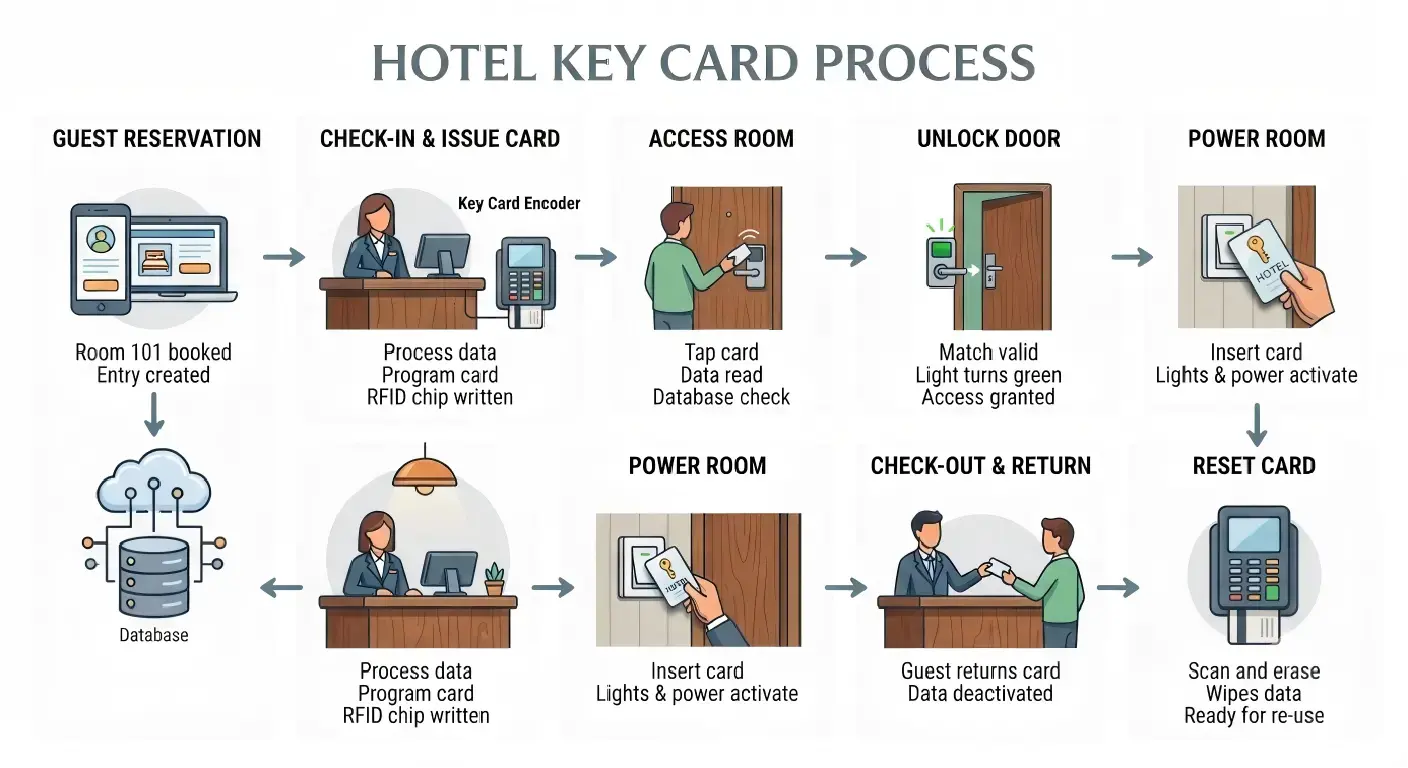
Accurate card programming is key to a successful deployment. Encoder hardware writes access permissions, room numbers, and expiration dates onto the magnetic stripe on magnetic stripe cards. RFID cards set up chip data wirelessly with contactless encoders that are often built into your PMS. As part of the programming process, the card is usually synced with guest bookings, an expiration date is set, and entry zones are defined. Staff training on these systems is very important; trained staff can quickly scan cards, which cuts down on wait times at check-in and makes guests happier from the moment they arrive.
Troubleshooting Common Issues
Even with strong engineering, problems do happen from time to time. Magnetic interference, a broken reader, or a chip that isn't aligned correctly are common reasons why cards won't open doors. Most problems can be avoided by keeping encoders clean and calibrated, storing unencoded goods in shielded storage, and making sure that the lock software is compatible. Setting up a quick replacement strategy will make sure that guests whose cards fail get new ones within minutes, keeping service standards high. Card readers should be serviced regularly so that the whole property's system stays reliable. This includes cleaning the contacts, updating the software, and checking the read ranges.
Case Study: Mid-Sized European Hotel Chain
WS-RFID made plastic hotel door key cards with RFID chips for a European hotel chain with 15 properties that switched from magnetic stripe cards. The upgrade cut down on unauthorized access by 40% and made it possible for spas and restaurants to work together so that guests could enjoy their experiences without using cash. The card's life span was increased from six months to more than two years, which cut the cost of replacing it by 60%. The satisfaction scores of guests went up by 18% because check-ins went faster and there were fewer problems with cards. Within 14 months, the chain saw a return on investment (ROI), showing that strategic procurement and system modernization were worthwhile.
Conclusion
Today's hotel access control is much more advanced than just letting people into rooms. A good plastic hotel door key card improves security, makes operations run more smoothly, and makes the guest experience better by being customizable, long-lasting, and using cutting-edge technology. Every purchase choice you make affects how well your property runs and how people see your brand. This includes choosing the right frequency and chip type and working with certified makers who promise quality and compliance. Procurement professionals can easily update access systems that meet current needs and can adapt to new developments in the hotel industry by reading this article. It includes technical specs, security features, and best practices for implementation.
FAQ
1. What is the difference between magnetic stripe and RFID hotel key cards?
Magnetic stripe cards have a magnetized strip that stores information. They need to be physically touched by a reader to work, which means they can get worn out and lose their magnetic properties. Radio bands (125kHz or 13.56MHz) let RFID cards talk to each other wirelessly. This allows for faster entry, better security through encryption, and longer life. RFID gets rid of the need to swipe, which saves time and money by cutting motor wear.
2. Can hotel key cards be customized with our brand logo and guest data?
Of course. Custom designs, artwork, and messages can be printed in full color using CMYK printing. Sequential numbers, QR codes, and guest names can all be printed with variable data. Encoding services set up access rights, room assignments, and expiration dates that are specific to each reservation. Customization helps with branding and gives you more operating freedom for VIP guests, standard rooms, and limited areas.
3. How secure are plastic hotel door key cards compared to smartphone access?
RFID cards with chips and AES encryption are very good at keeping copies and unauthorized access from happening. Smartphone-based solutions are more convenient, but they depend on how long the battery lasts and how stable the apps are. Using both physical cards and mobile credentials in a hybrid way gives guests backup, so they can still get in even if their phone dies. The best solution strikes a balance between security, guest preferences, and the ability to use existing infrastructure.
Partner with WS RFID for Reliable Hotel Key Card Solutions
If you want to improve your property's entry control, you can trust WS RFID, a company that has been making plastic hotel door key card solutions for 15 years. Our cards are ISO-certified, RoHS- and REACH-compliant, and work with 125kHz and 13.56MHz frequencies, making them compatible with most lock systems around the world. We offer full customization, from printing your brand's logo to encoding your own information, and our production scales are flexible enough to handle orders of 500 to 500,000 units. We make sure that your procurement deadlines are met without sacrificing quality by offering regular shipping in 7–10 days as well as faster choices. Our one-stop service includes choosing the chip, setting the antenna, and delivering the finished product. Field application engineers help with technical support and integration checks. Email kenny@w-srfid.com right now to get samples, talk about your needs, or get an affordable price that fits your hospitality needs. WS RFID's tried-and-true, high-performance entry solutions will improve the guest experience and make operations more efficient.
References
1. International Organization for Standardization. (2020). ISO/IEC 14443: Identification Cards – Contactless Integrated Circuit Cards – Proximity Cards. Geneva: ISO Press.
2. Hospitality Technology Magazine. (2022). Access Control Trends in the Modern Hotel Industry: A Comprehensive Guide. New York: HT Publishing.
3. National Institute of Standards and Technology. (2019). Advanced Encryption Standard (AES) in RFID Applications: Security and Implementation. Washington, D.C.: NIST Publications.
4. European Hotel Forum. (2021). Case Studies in Smart Hospitality: RFID Integration and ROI Analysis. Brussels: EHF Research Division.
5. Global Supply Chain Management Journal. (2023). Procurement Best Practices for Hotel Access Control Systems. London: GSCM Academic Press.
6. Journal of Hospitality Operations and Technology. (2022). Material Science in Hotel Key Card Manufacturing: PVC vs. PET Performance Analysis. Chicago: JHOT Publications.
Learn about our latest products and discounts through SMS or email