- English
- French
- German
- Portuguese
- Spanish
- Russian
- Japanese
- Korean
- Arabic
- Greek
- German
- Turkish
- Italian
- Danish
- Romanian
- Indonesian
- Czech
- Afrikaans
- Swedish
- Polish
- Basque
- Catalan
- Esperanto
- Hindi
- Lao
- Albanian
- Amharic
- Armenian
- Azerbaijani
- Belarusian
- Bengali
- Bosnian
- Bulgarian
- Cebuano
- Chichewa
- Corsican
- Croatian
- Dutch
- Estonian
- Filipino
- Finnish
- Frisian
- Galician
- Georgian
- Gujarati
- Haitian
- Hausa
- Hawaiian
- Hebrew
- Hmong
- Hungarian
- Icelandic
- Igbo
- Javanese
- Kannada
- Kazakh
- Khmer
- Kurdish
- Kyrgyz
- Latin
- Latvian
- Lithuanian
- Luxembou..
- Macedonian
- Malagasy
- Malay
- Malayalam
- Maltese
- Maori
- Marathi
- Mongolian
- Burmese
- Nepali
- Norwegian
- Pashto
- Persian
- Punjabi
- Serbian
- Sesotho
- Sinhala
- Slovak
- Slovenian
- Somali
- Samoan
- Scots Gaelic
- Shona
- Sindhi
- Sundanese
- Swahili
- Tajik
- Tamil
- Telugu
- Thai
- Ukrainian
- Urdu
- Uzbek
- Vietnamese
- Welsh
- Xhosa
- Yiddish
- Yoruba
- Zulu
Everything About RFID Key Fobs: Secure Access Guide for 2026
Because of how connected the world is now, keeping real places safe while still running efficiently has become important for businesses in all fields. An RFID key fob is a high-tech, contactless access card made up of an integrated circuit and a small antenna that are protected by strong materials like ABS or silicone. Radio-frequency identification technology is used in these devices to make entry easy and safe without any mechanical wear or touch. In 2026, if you are in charge of hotels, business buildings, or industrial sites, knowing how these credentials work and choosing the right option can completely change your security system.
Understanding RFID Key Fob Technology
To build a secure access control system, you need to know how these small credentials work and what makes them reliable in harsh conditions.
What Is an RFID Key Fob and How Does It Work?
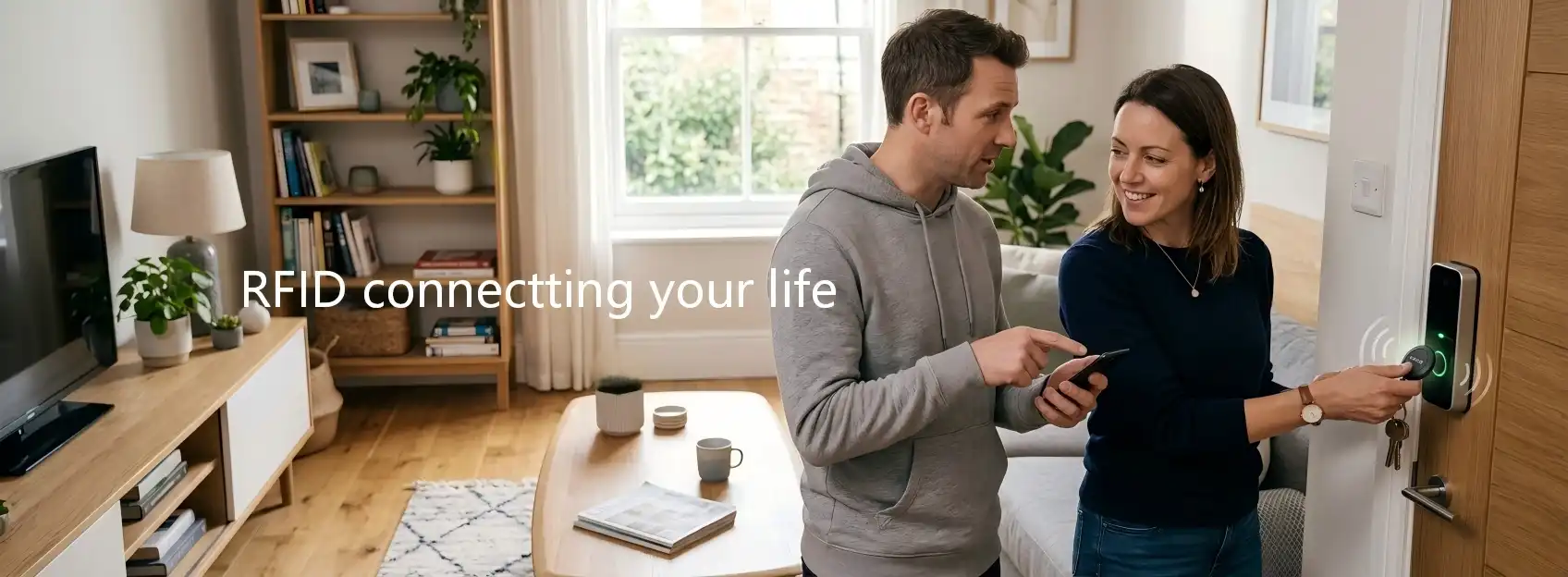
An RFID key fob works when a reading device and the chip inside the fob are electromagnetically coupled. The reader creates a radio-frequency field that charges the passive chip inside the fob when it is brought close to it, usually between 2 and 15 centimetres. The chip then sends its unique identification information back to the reader, which checks the details and either lets the person in or doesn't within milliseconds. Magnetic stripe cards need to be physically touched and wear out over time. Contactless fobs, on the other hand, don't have any friction points and last a lot longer. The whole transaction doesn't involve touching, so there is less chance of contamination and mechanical problems that happen in places with a lot of traffic. Millions of safe entry points around the world, from hotel room doors to computer racks in data centers, use this technology.
Frequency Bands and Communication Protocols
For different uses, different technology requirements are needed. Low Frequency (LF) systems that work at 125 kHz have short read ranges and basic identification, which makes them a good choice for simple access control situations. High Frequency (HF) solutions at 13.56 MHz support more complex protocols like ISO14443A and ISO15693. This lets you do encrypted transactions and use them for multiple things, like paying for things without cash and keeping track of time. Ultra-High Frequency (UHF) tags aren't used as much in access fobs, but they can be read from farther away, making them useful for identifying vehicles in parking lots. WS-RFID Technology makes IDs that work with both 125 kHz and 13.56 MHz frequencies, so they can be easily integrated with both old and new systems. International standards like ISO/IEC 14443 make sure that our credentials work consistently with readers from major global makers. This means that procurement managers planning long-term deployments don't have to worry about being locked into one vendor.
Security Features That Protect Your Facility
Access control security holes can let people in without permission and leak data. Modern RFID key fob solutions have security features that stop people from copying and replaying them. HF credentials with chips like MIFARE DESFire use AES-128 encryption to make secure channels that verify both the credential and the reader. At the chip level, anti-cloning features make attempts to copy something visible and useless. Each credential has its own unique digital fingerprint thanks to unique identifier encoding. This lets you keep track of who accessed which door at what time through detailed audit trails. Tamper-evident covers let security teams know if someone tries to physically get into the fob's internal parts. In fields where secret assets, private information, or high-value goods need strong protection against both outside threats and insider risks, these layered defences solve important problems.
Common Use Cases Across Industries
Access fobs are useful for a wide range of tasks in many industries. Hotels and resorts use them as room keys for guests, which saves money on replacement costs compared to traditional mechanical keys and lets new guests get in right away. They are used by corporate offices to control who can get into restricted areas like R&D labs, server rooms, and executive areas. They work well with time-and-attendance systems to make HR tasks more automated. Contactless credentials are used to open gates and use amenities in residential communities. This makes it easy and safe for residents to get in and out, and it also lets property managers give temporary credentials to guests and service providers. Industrial facilities use rugged fobs that can withstand harsh conditions like high temperatures, chemical exposure, and a lot of physical abuse. This makes sure that they work reliably in places like logistics warehouses and manufacturing plants. Schools control entry to the whole campus for students, teachers, and staff with a single ID that works in cafeterias, libraries, dorms, and classrooms.
Comparing RFID Key Fobs: Choosing the Best Option for Your Business
To choose the best access credential, you need to weigh your operational needs against technical specifications, environmental suitability, and total cost of ownership.
RFID vs. Magnetic Key Fobs: Security and Durability
Even though magnetic stripe cards are common, they have flaws that make them less secure. Contact with readers wears down both the card and the reader, which raises the cost of maintenance and the number of times the card needs to be replaced. Magnetic data can lose its magnetic properties when it comes into contact with magnetic fields, which can cause surprising breakdowns. It doesn't take much technical know-how to copy magnetic stripes, which is a big security risk. The service life of a contactless RFID key fob, on the other hand, is increased to 100,000 read cycles by completely eliminating mechanical wear. Putting internal parts inside materials that can't be damaged by impact saves them from drops, scratches, and stress from the surroundings. Encrypted data transfer and anti-cloning chip designs make it much harder to copy something without permission. The price difference between magnetic and RFID credentials has shrunk a lot, making RFID credentials a smarter financial choice when you consider how often they need to be replaced and how much safer they are over multi-year deployments.
Waterproof and Rugged Designs for Challenging Environments
Not all facilities work in controlled indoor environments. Credentials that can handle water, chlorine, and being submerged often are needed for theme parks, water parks, and fitness centers. Even when fully underwater, RFID key fob units with silicone cases that meet IP67 or IP68 standards keep water out. Manufacturing plants and shipping centers need tough housings, which are usually made of polyphenylene sulphide and can handle temperature changes from -25°C to +70°C, chemical splashes, and heavy impact. For cold storage warehouses, low-temperature-rated credentials are useful because they keep working when regular plastics crack. High-temperature-resistant tags are used on auto assembly lines to keep track of parts as they move through paint curing ovens and welding stations. To make sure their products will work in the field, WS-RFID Technology engineers make sure they have the right credentials for these harsh conditions by putting them through a lot of stress tests, such as salt spray corrosion tests, thermal cycling tests, and mechanical shock tests. Choosing the right environmental grade keeps activities running smoothly and saves money on repairs.
Evaluating Suppliers: Quality, Pricing, and Support
Buying choices involve more than just the original unit cost. Total ownership costs are affected by supplier dependability, product stability, and help after the sale in a big way. Direct makers like WS-RFID Technology don't add markups for distributors, so their factory-direct prices are 15–30% lower per unit than those that go through middlemen. Our 10,000-square-meter factory makes more than 500 million units a year, so we can scale up our supply for large deployments without having to wait for lead times. Quality certifications like ISO 9001:2015, CE, RoHS, REACH, and POPS compliance show that international standards are being met, which lowers the regulatory risks for global deployments. The warranty terms—WS-RFID covers you for one to two years—cover manufacturing flaws and early fails. Technical support services, such as field application experts and help with SDK integration, shorten the time it takes to launch and fix problems with compatibility. Before committing to bulk orders, buyers should ask for samples to test in real-world settings to make sure of read range, durability, and system compatibility.
How to Select and Implement RFID Key Fobs for Secure Access Control
A structured selection process will make sure that your investment gives you the most security and operational value.
Assessing Your Access Control Requirements
Make your deployment scope very clear. Find the needed amount by looking at the number of employees, the rate of employee loss, and the number of guests. For room keys and staff badges, hotel chains may need more than 10,000 credentials every year. On corporate campuses, accurate counts are needed across offices and levels of entry. The environment affects the choice of materials. For example, standard ABS enclosures can be used in an office, but UV-stabilized materials are needed for outdoor parking systems. The level of security determines the encryption needs. For example, basic perimeter gates may work fine with 125 kHz LF credentials, but pharmaceutical R&D labs need HF encrypted fobs that can be tracked. Different types of readers need different read ranges. Proximity readers usually work at 5–10 centimetres, but car access systems may need longer ranges. Due to limited funds, the initial cost of credentials should be weighed against long-term costs such as replacement rates and system integration fees.
Critical Selection Criteria: Frequency, Range, and Durability
Selecting RFID cards requires matching frequency, read range, durability, and memory capacity with application needs. LF and HF standards suit different systems, while chip choices balance cost and security. WS-RFID offers chips from NXP, Fudan, and Huada Electronics, providing customised solutions for various technical and budget requirements.
Programming and Ongoing Management Best Practices
Buying tools is only one part of a successful application. Before deployment, credentials should be encoded. Setting up unique identifiers, access permissions, and expiration dates ahead of time makes rollout easier. Professional encoders process thousands of units every day, and batch programming speeds up large deployments. Hardware vendors and access control system providers need to work together to integrate software. WS-RFID offers SDK documentation and expert support to make sure that all of these systems can work together without any problems. When a user signs up, the process should record credential identifiers that are linked to their identities. This way, audit trails can be created and lost credentials can be quickly deactivated. Regular checks of current credentials find entries from workers who have left or guests who have expired, keeping security clean. Replacement workflows should quickly handle lost or damaged credentials, with helpdesk protocols for deactivating and reissuing credentials. Readers' firmware changes make sure they stay compatible with new security standards and encryption methods.
Procurement Strategies: Where and How to Buy RFID Key Fobs in Bulk
Strategic buying makes the best use of costs while ensuring the quality and dependability of the supply chain.
Identifying Reliable Wholesale and OEM Suppliers
Direct manufacturer relationships provide better pricing, quality control, and customization options than traditional wholesalers. Supplier evaluation should include certifications, facilities, and customer references. WS-RFID supports orders from 1,000-unit pilots to large deployments. Choosing qualified suppliers and maintaining multiple sources improves supply stability, flexibility, and negotiation power.
Customization Options: Branding and Encoding
Generic credentials don't have the professional polish that helps organisations stand out. Custom printing services use offset, screen, or digital printing to add company logos, colour schemes, and serial numbers to useful items, turning them into brand champions. Variable data encoding writes unique access codes, employee IDs, or departmental ties directly on the product while it is being made, so there is no need for programming work to be done after delivery. Credentials can be changed to fit different uses by changing the form factor. For example, wristbands can be used for events and hospitality, key rings can be used in the workplace, and sticky-backed tags can be used to keep track of assets. There are different types of packaging, such as bulk bags for internal distribution and individually sealed cards in branded sleeves that can be sent directly to guests. WS-RFID Technology offers full OEM/ODM services, helping customers from the first design ideas to mass production after prototype approval. Free sample testing is available to make sure specifications meet expectations before large orders are placed.
Cost Optimization and Logistics Considerations
Volume-based pricing reduces costs for larger orders, while long-term agreements help balance price and supply flexibility. Payment terms, shipping methods, and Incoterms influence cash flow and logistics efficiency. WS-RFID maintains inventory for fast delivery of standard products within 5–7 days, while custom orders require 10–12 days for production.
Future Trends and Innovations in RFID Key Fob Technology
New technologies are changing what access credentials can do besides just opening doors.
IoT Integration and Mobile Convergence
Static entry credentials are being turned into dynamic, smart gadgets by connected ecosystems. Hybrid methods combine traditional RFID key fob hardware with mobile apps, giving users who prefer real credentials options as well as those who prefer the ease of using a smartphone. Mobile credential solutions use smartphones as access devices through Bluetooth Low Energy (BLE) or Near Field Communication (NFC) protocols to add to or replace physical fobs. Real-time credential management is possible with cloud-connected access control systems. This means that security managers can give, change, or take away rights at any time from anywhere. IoT sensors built into access points collect data on usage, such as traffic patterns, peak entry times, and credential utilisation rates. This helps facility managers make decisions about staffing, security deployment, and space optimisation. Integration with video management systems connects access events automatically to camera footage. This speeds up investigations into incidents and improves the ability to use forensics.
Advanced Encryption and Multi-Factor Authentication
Because threats are always changing, security steps need to get smarter. Next-generation chips use AES-256 encryption, which doubles the length of keys compared to AES-128. Mutual authentication protocols check the authenticity of both the credential and the reader. This stops relay attacks, in which attackers pick up and play back signals that have been captured. Multiple-factor authentication combines having the credential (the fob) with biometric proof (fingerprint or face recognition) or knowledge factors (PIN codes), making it harder for someone to steal your credentials. Blockchain-based password management systems offer audit trails that can't be changed and decentralised identity verification, which gets rid of the single points of failure that come with centralised databases. Post-quantum cryptography research looks ahead to the dangers that quantum computing could pose, creating encryption algorithms that can't be broken by attacks that use quantum computing. These attacks could weaken current security standards within the next ten years.
Sustainability and Smart Manufacturing
Environmental concerns are becoming more and more important in buying choices. Biodegradable credentials keep electrical trash from building up in dumps, which helps companies meet their sustainability goals and meets environmental regulations in places that care about the environment. End-of-life certificate recycling schemes get back valuable metals and plastics, which closes the loop on materials. Using less energy to make things lowers their carbon impact. For example, WS-RFID Technology's production sites use solar-augmented power systems and waste heat recovery. AI-driven quality inspection and predictive maintenance are two examples of smart manufacturing techniques that can improve yield rates and cut down on waste caused by defects. Longer credential lifespans through improved durability directly lower the number of replacements needed and the environmental damage that comes with them. RoHS and REACH compliance certifications make sure that products meet strict health and environmental standards. This keeps ecosystems and end users safe from harmful substances.
Conclusion
Technical standards, security needs, environmental demands, and cost considerations must all be balanced when choosing and applying RFID key fob options. Knowing about frequency bands, encryption options, and durability standards helps procurement workers choose credentials that perfectly meet business needs. If you look at a supplier's manufacturing capacity, quality certifications, and technical support, you can be sure that you will have a reliable partnership that goes beyond the initial transaction. As technologies change, like adding IoT platforms, making encryption standards stronger, and focusing on sustainability, businesses that adopt cutting-edge access control solutions will be able to compete while also improving security and practical efficiency.
FAQ
1.Can RFID Key Fobs Be Easily Cloned?
It is possible to copy basic 125 kHz LF credentials that use simple chip designs with technology that is easy to get. HF RFID key fobs solutions that use encrypted chips, such as MIFARE DESFire or HID iCLASS, use AES-128 or AES-256 encryption, which makes it very hard for someone else to make copies. Secure passwords have anti-cloning features built into the chip level, which can find and reject devices that have been messed with. Companies that deal with sensitive information should make sure that users' credentials are encrypted and do regular security checks to find attempts to get in without permission.
2.What Is the Typical Lifespan of an RFID Key Fob?
When used normally, high-quality credentials made with tough cases and industrial-grade parts should last between 5 and 10 years. Read cycle rates are higher than 100,000 processes, which is enough for decades of daily use. Specifications for data retention make sure that stored information stays the same for 10 years or more without power. Excessive temperatures, chemical contact, or mechanical abuse can shorten a product's life, so rugged designs are necessary for tough situations. Failure rates for WS-RFID Technology credentials are less than 0.1%, which means they will work for a long time.
3.How Does Metal Affect RFID Performance?
Radio frequency energy is reflected and absorbed by metal surfaces, which makes it hard for readers and credentials to communicate electromagnetically. When standard fobs are put directly against metal, their read ranges are limited or they stop working altogether. Anti-metal designs use ferrite layers to shift RF fields, so they can work reliably even when placed on metal surfaces. Specialised anti-metal RFID key fob designs are needed for applications that involve metal assets, such as tool tracking and equipment identification.
Upgrade Your Access Control with WS-RFID Technology
WS-RFID Technology provides enterprise-level access credentials that are trusted by businesses around the world in the corporate, healthcare, hospitality, and industrial sectors. With advanced encryption, ruggedised casings, and customisable designs, our dual-frequency RFID key fob options work with both 125 kHz and 13.56 MHz frequencies. We are your go-to RFID key fob provider for scalable, cost-effective deployments thanks to our 15 years of manufacturing excellence, yearly production topping 500 million units, and factory-direct prices. Standard orders are sent out in 5 to 7 days, and unique solutions take 10 to 12 days to arrive. Email our team at kenny@w-srfid.com to talk about your specific needs, ask for samples, and get personalised technical advice that will make sure the system works well with your current setup.
References
1. Rose, K., Eldridge, S., & Chapin, L. (2015). The Internet of Things: An Overview – Understanding the Issues and Challenges of a More Connected World. Internet Society.
2. Weinstein, R. (2005). RFID: A Technical Overview and Its Application to the Enterprise. IT Professional, 7(3), 27-33.
3. Finkenzeller, K. (2010). RFID Handbook: Fundamentals and Applications in Contactless Smart Cards, Radio Frequency Identification and Near-Field Communication (3rd ed.). Wiley.
4. Juels, A. (2006). RFID Security and Privacy: A Research Survey. IEEE Journal on Selected Areas in Communications, 24(2), 381-394.
5. Lahiri, S. (2005). RFID Sourcebook. IBM Press.
6. Want, R. (2006). An Introduction to RFID Technology. IEEE Pervasive Computing, 5(1), 25-33.
Learn about our latest products and discounts through SMS or email